
The Government’s Constitutional Convention will examine the issue of same sex marriage in April. 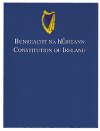
The schedule of issues to be covered by the Convention on its website shows that the issue will receive a full day’s consideration at its next meeting on the weekend of the 13/14 April.
The Convention met last week to discuss lowering the voting age and shortening the Presidential term from seven years to five years. It voted in favour of lowering the voting age, but against shortening the term of Presidential office.
Over the next year the Convention will consider a number of controversial issues, including same-sex marriage and the blasphemy provision.
The convention is made up of politicians and ordinary citizens.
Some 66 of the 99 delegates to the Convention are “citizen members” and the remaining 33 delegates comprise politicians from the Oireachtas and the Northern Ireland Assembly. One representative of each Northern party sits on the Convention with the Oireachtas representation reflecting party strength.
According to the Programme for Government, the Convention is set to look at proposals to remove the clause which refers to women in the home, removing the offence of blasphemy and proposals regarding the Dáil electoral system and letting emigrants vote in presidential elections.
Hearings of the convention will be screened live online on www.constitution.ie while focus groups discussions later on the weekend will be held in private.
Last year Taooiseach Enda Kenny promised that a referendum decision will be given on each recommendation four months after it is made.
Meanwhile, Justice Minister Alan Shatter has reiterated his support for the introduction of same-sex marriage.
In a speech to the Gay and Lesbian Equality Network yesterday, he said that civil partnership was “essentially marriage in everything but name” but that he understood the desire of same-sex couples for their unions to be recognised as marriages.
Mr Shatter went on to say that he was planning a Bill to recognise the parental rights of same-sex couples with children, and that he was looking at ways of amending Section 37 of the Equal Employment Act, which he said “can operate in a way that is unfair to LGBT persons”.
Section 37 allows religious institutions such as schools and hospitals to refuse to hire persons if on the grounds that they might undermine the ethos of the institution.
Mr Shatter said that the Constitution presently did not allow same-sex couples to marry.
He said: “A condition of human dignity and self-respect is the personal autonomy to pursue, on an equal footing with others, one’s own conception of a full and rewarding life.
“I personally believe that a democratic republic that professes a commitment to the principle of equal citizenship should not continue to prevent same-sex couples from entering into a legal partnership that is legally recognised and designated as being a marriage.”
He said he was “conscious that not every one shares my view on this important issue” but added that if the Convention recommends the holding of a referendum on same-sex marriage “this is a matter that will be treated with the utmost seriousness by Government”.
He also said that he was preparing a Family Relationships and Childrens Bill which he expected to be published this year.
He said: “Same-sex couples have been good and effective foster parents and there is a need to reform and bring clarity to issues relating to parentage, guardianship and custody of children of gay couples and in doing so to frame a law which ensures, as the Constitution requires, that the best interests of children are the paramount consideration.”
On the issue of Section 37, he said he had some ideas as to how reform might be approached, but that he was “open to opinions on how to refine these ideas”.
He proposed setting up a consultative process and said he intended to ask the Irish Human Rights and Equality Commissioners to examine the issue as a priority and to report on their views and recommendations.