
The HSE has begun rolling out its cervical cancer vaccine for 12 year old girls. It will be administered in 21 schools 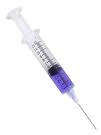 this month with the follow-up injection in September.
The HSE campaign plans to vaccinate over 30,000 teenage girls against the virus.
The vaccine Gardasil is being offered free and will be administered in three doses, around two-three months apart by HSE immunisation teams in schools.
However, similar vaccines have been questioned in other countries for not being frank enough about the fact that Human Papillomavirus Virus (HPV), which causes cervical cancer in many cases, is sexually transmitted and the more sexual partners you have the more likely you are to contract it.
In addition, in an article in the prestigious New England Journal of Medicine in 2008, leading experts on the virus, Drs Jane Kim and Sue Goldie from the Harvard School of Public Health suggested that ‘the impact of HPV vaccination on the rate of cervical cancer will not be observable for decades’.
Drs Kim and Goldie calculate that if the vaccine provides immunity from HPV types 16 and 18 for 10 years, the vaccination of pre-adolescent girls will reduce the risk of cervical cancer by only two per cent compared with screening alone. This raises questions about how cost effective the vaccine will prove.
They also suggest that there is a possibility that the HPV types targeted by the vaccine could be replaced with other high-risk types for which the vaccine offers no protection and the vaccination programme may have the effect of altering the sexual behaviour of young people or lead to the misconception that screening is no longer necessary.
The vaccine is being provided to first year secondary school girls and girls in sixth class, going into first year in secondary school this September. Schoolgirls who receive the vaccine this month will have to have their second injection in July, either at a HSE clinic or at their school.
The Government faced strong criticism in 2008 after it announced that the plan to provide the human papillomavirus vaccine (HPV) to girls to protect against cervical cancer was being shelved because of financial constraints.
The adminstration of the vaccine to girls will be subject to parental consent.
Parents and schools are being issued with information packs containing consent forms and other information about the programme, which is also explained on the HSE’s website.
The HSE is hoping for an uptake of over 80 per cent.