
When issues like abortion or euthanasia are debated, opponents issue warnings about the ‘slippery slope’ and predict that the ‘floodgates will open’. By this they mean that after either one is introduced, the grounds for it will expand, and the numbers availing of it will increase. Proponents deny either of these things will happen.
For example, during a Dail debate in March 2018, two months ahead of the abortion referendum, Fianna Fail’s Lisa Chambers poured scorn on those who predicted the ‘floodgates’ would open following the passage of the 2013 ‘Protection of Life During Pregnancy Act’. She said this by way of attacking those who predicted a big increase in the number of abortions if we repealed the 8th amendment.
She described the suggestion as “deeply insulting to women”.
Sinn Fein’s Louise O’Reilly and Martin Ferris also poured scorn on the ‘floodgates’ argument during the same debate. Catherine Connolly, now our president, did the same.
But what would they say now that they know almost 11,000 abortions are taking place annually in Ireland, a huge increase compared with the 6,666 which took place in 2019, the first full year of our current abortion law’s operation, and probably a doubling in the number which took place prior to the repeal of the 8th?
In the run-up to the referendum of 2018, then Taoiseach, Leo Varadkar, said that with the repeal of the 8th amendment, abortion in Ireland would be ‘safe, legal and rare’. Would 11,000 abortions strike him as ‘rare’? It would be a strange definition of ‘rare’ if it did.
Of course, none of these people will feel the least embarrassed by being so hopelessly wrong in their predictions or ever asked tough questions by journalists about what they said in 2018.
Voters were also assured back in 2018 that the abortion law to be introduced post-repeal would ensure certain safeguards for the unborn, including that women would have to wait three-days between requesting an abortion and receiving one.
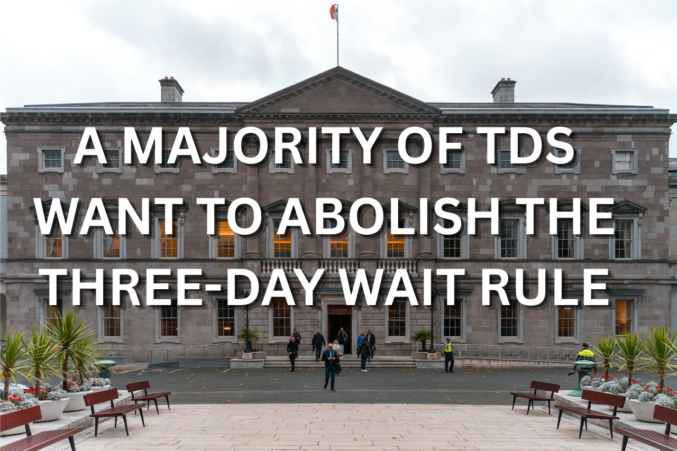
Pro-life groups warned at the time that once abortion was introduced it would be made ever easier to obtain. The slippery slope argument in other words. Well, this week the Dail went a fair distance down the slippery slope by voting to advance a Sinn Fein bill aimed at eliminating the three-day wait. The vote was 86 votes to 70 in favour. Both Micheal Martin and Simon Harris were on the Yes side. This was despite Harris arguing in favour of the three-day wait when the abortion bill back in 2018 went to committee stage. How quickly these people change their minds. Can they ever be trusted to keep a promise? Will they ever be held accountable for their broken promises?
Can they be trusted not to go further down the slippery slope in a few more years? Not at all. The Social Democrats recently tried to introduce a bill that would have gotten rid of the three-day wait, decriminalised abortion completely, and made it easier to abort a baby with a ‘fatal foetal abnormality’. No doubt further attempts will be made in the future to do the same.
We must hope, of course, that enough TDs can still be persuaded to oppose the Sinn Fein bill before it passes into law, but what happened in the Dail this week abundantly proves that the slippery slope is very real and the end of the slope is coming increasingly into view.