The latest Rotunda Hospital annual report contains a deeply troubling finding: three-quarters of babies found to have Down Syndrome via a prenatal test are aborted. This is obviously modern-day eugenics.
The report shows that in 2024, the hospital’s Fetal Medicine Department diagnosed 45 unborn babies with Trisomy 21, better known as Down Syndrome, and 32 of those babies were aborted. Only 11 pregnancies were continued. Two pregnancies miscarried. The report states that the “vast majority” of those who opted for termination following a diagnosis of Down Syndrome did so outside Ireland. This is because they would have been usually diagnosed after 12 weeks, and after that time babies must have a ‘fatal foetal abnormality’ in order to be aborted.
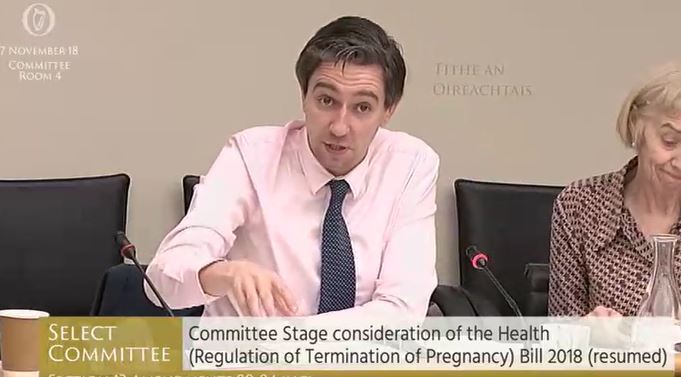
During the run up to the abortion referendum debate in 2018, Simon Harris took offence at the suggestion that any woman would have an abortion because she discovered her unborn baby had Down Syndrome.
He insisted: “I think it is somewhat offensive to suggest women in Ireland are seeking abortions for that reason” [Down Syndrome].
Pressed on the matter, he said: “I find it really, really difficult to discuss this.”
He added: “I’ve heard from parents of children with Down Syndrome in the last few days saying, ‘please do not manipulate or utilise my children to suit your political argument on this very sensitive matter’.”
He made these comments against the certain knowledge that in countries like Britain, 90pc of babies diagnosed with Down Syndrome were being aborted.
Given that 75pc of parents who are told by the Rotunda that their baby has Down Syndrome opt for an abortion, we are not far off the British level. What does Simon Harris think now?
We have just seen him back the removal of the three-day wait before a woman having an abortion, despite backing this during the referendum. As pressure grows to permit abortion here on ever wider grounds, can we really rely on him to resist allowing abortion here in cases of Down Syndrome, or other non-fatal foetal abnormalities? It seems highly doubtful.
As mentioned, Down Syndrome itself is not considered a fatal foetal condition under Irish law. Section 11 of the 2018 Act allows abortion where the baby has a condition likely to lead to death before or within 28 days from birth. Down Syndrome does not normally fall into that category.
This means that Irish law may not formally permit abortion specifically for Down Syndrome after 12 weeks, but in practice Irish babies diagnosed with Down syndrome are still being aborted, often abroad. The legal distinction does not alter the human reality. And what happens if earlier and better screening tests discover Down Syndrome before 12 weeks? Are abortions taking place here, if and when that happens? There is nothing to stop it.
In our paper “How Eugenics took hold in Ireland”, we showed that the Eighth Amendment had most likely saved hundreds of babies with Down Syndrome in this country.
Pro-abortion campaigners now want to remove the 28-day limit and allow abortion later in pregnancy for serious foetal conditions that may not be fatal, bringing Irish law closer to the British model.
A society that claims to value inclusion should be alarmed by this. People with Down Syndrome are visible in education, sport, work and public life. Yet before birth, babies with the same condition face a very different standard of acceptance.