
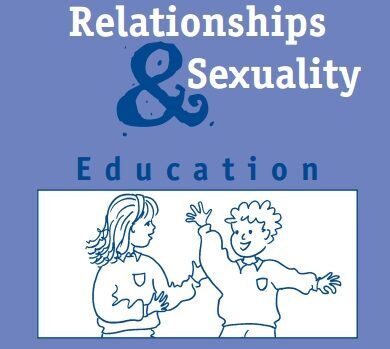
Schools will be expected to follow learning outcomes detailed in the document, says the Irish Times even if they believe it clashes with their ethos. More latitude, however, will be given to schools in the detail of how these issues are taught and the resources used. It is not clear how parents will be consulted which is required under the Education Act.
One of the ‘learning outcomes’ wants pupils to “recognise the factors and influences that shape young people’s self-identity, such as family, peers, culture, gender identity, sexual orientation, race/ethnic background, dis/abilities, religious beliefs/world-views.”
Another one says students should “appreciate the breadth of what constitutes human sexuality, and how sexual orientation and gender identity are experienced and expressed in diverse ways”.
The final curriculum specification includes some changes from an earlier draft, which referred to gender identity being experienced “along a spectrum”.
A reference to “cisgender” – which defined the term as “when someone’s gender identity aligns with the sex they were assigned at birth” – has also been omitted from the final document.

The Pontifical Academy for Life has said its president is against assisted suicide but thinks it is possible to have a “legal initiative” that would allow it to be decriminalised in Italy under “specific and particular conditions.”
The statement was issued following an outcry over a speech in which Archbishop Vincenzo Paglia defended legalising medically assisted suicide in Italy. The archbishop called it a “feasible” approach to the issue in Italian society, despite the Catholic Church’s clear teachings against it.
“Personally, I would not practice suicide assistance, but I understand that legal mediation may be the greatest common good concretely possible under the conditions we find ourselves in,” Paglia said in a speech on April 19 during the International Journalism Festival in Perugia, Italy.
It was the archbishop’s opinion that a “legal mediation” but “certainly not a moral one” is possible in order to keep assisted suicide a crime in some cases, while decriminalising it in other cases.

An increase in the sexually transmitted diseases chlamydia and gonorrhoea in women aged 20-24 years last year is a source of concern, according to a public health report.
It comes against a background of an overall rise in sexually transmitted infections since the Covid-19 pandemic.
Since 2019 the disease notification rate in women aged 20-24 years increased by 34pc.
Chlamydia went up by 35pc and gonorrhoea by 75pc in this age group.
The report from the Health Protection Surveillance Centre (HPSC) said notifications of sexually transmitted infections last year increased when compared to 2021, 2020 and the pre-pandemic year 2019.
“The groups most affected by were young people aged 15 to 24 and gay, bisexual and other men who have sex with men (gbMSM),” said the report.
Some infections have disproportionately affected gay and bisexual men including mpox, previously known as monkeypox.
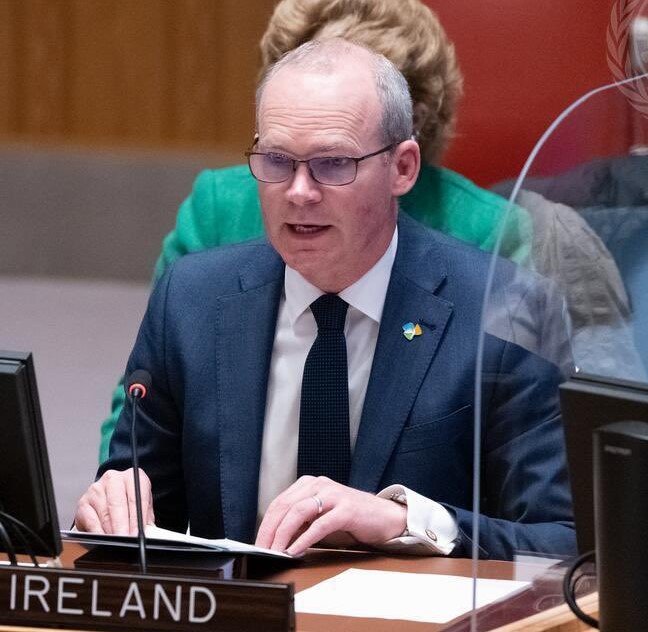
Taoiseach Leo Varadkar and Tánaiste Micheál Martin have both expressed caution about implementing some of the legislative changes recommended in the report by barrister Marie O’Shea.
Particular focus will now fall on Ministers in the Cabinet who voted “No” in the referendum, or who shifted their position in the run-up to the vote. Minister for Enterprise Simon Coveney was one of the leading political figures who changed his mind in advance of the referendum. He said at the time his ‘Yes’ vote was predicated on strong safeguards and protocols to guarantee a balance between abortion and the right to life.
Other Cabinet members such as Minister for Finance Michael McGrath and Minister for Housing Darragh O’Brien both voted against repealing the Eighth Amendment and have yet to comment on the review.

Justice Minister Helen McEntee authorised the Irish Prison Service to house a female-identifying biologically male prisoner in a women’s prison in March 2021, according to the records of a Freedom of Information request by the Irish Independent.
In November 2020, the director of operations in the Irish Prison Service (IPS), wrote to the Department of Justice, and said a 2007 Statutory Instrument did not explicitly require the separation of genders but “for obvious reasons of operational considerations and security” it was always the case that “both genders were separated”.
Rule 52 of the 2007 says: “Unless otherwise authorised by the minister, male and female prisoners shall be accommodated in separate areas to which prisoners of the opposite gender do not normally have access.”
The chain of records ends on February 14 with Ms McEntee’s approval sought in accordance with Rule 52 (1) of the prison rules.
Ms McEntee agreed with the Rule 52 recommendation on March 10, 2021.

A couple seeking parental recognition of the genetic mother of their son born through a foreign, commercial surrogacy arrangement are no longer pursuing their case through the High Court as they now anticipate the introduction of legislation in the area.
While surrogacy is banned in almost all of Europe, due to concerns about it commodifying babies and exploiting women, Health Minister Stephen Donnelly said last week he expects legislation to be enacted by the summer.
In court on Friday, the couple’s counsel, Nuala Jackson SC, said that, based on the information they have received, they have decided not to proceed further this case.
They were seeking a general adjournment of their case, with the ability to re-enter it if the need arises in future, she said.
Mr Justice John Jordan, who previously strongly criticised the Government in how it handled the introduction of this legislation, said it was “heartening” to see progress and wished the legislators well in dealing with a “complex area of law”.
“There is solid ground for optimism and for believing that this case and the Egans and Harry and Luke will not have to revisit the Four Courts,” he added.
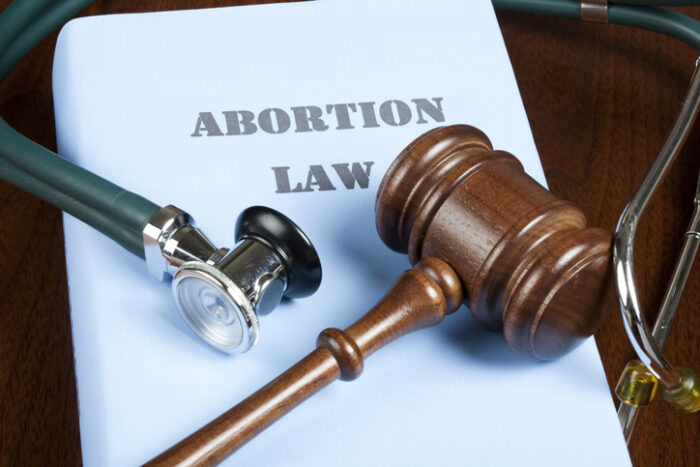
A review into the State’s abortion law is set to recommend sweeping changes that would further radicalise an already extreme abortion regime. Taoiseach Leo Varadkar said he would be “reluctant” to make changes but did not fully rule them out either.
It is understood the report recommends the removal of criminal measures against medics who provide abortion outside of the law.
It would also axe the mandatory three-day waiting period, retaining only a woman’s right to request one if she wants it.
Another recommendation could see even fewer restrictions on abortion when the unborn child is suffering a life-limiting condition. The current legislation allows for abortion where two medical practitioners form a reasonable opinion the foetus will likely die before or within 28 days of birth.
The review would also recommend an expansion of the range of circumstances where a woman is entitled to request an abortion without giving any reason.
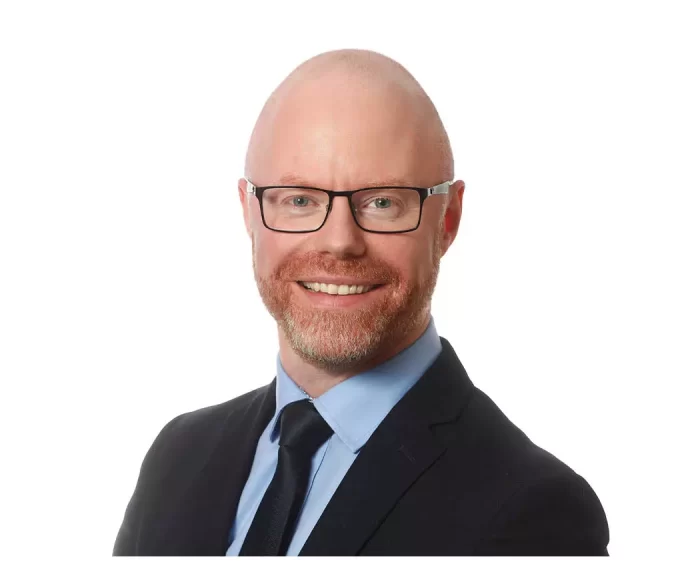
Mr Donnelly said he is working closely with the HSE to bring that figure to 17 hospitals this year and to 19 early next year.
He did not say how that will square with the conscience protections of medical staff.

The Minister for Health has said he expects new legislation on surrogacy will be drafted, debated, and enacted by the time the Dáil rises for the summer recess in July.
Almost all European countries either ban or do not recognise the practice because they believe it exploits women and commodifies babies.
Minister Stephen Donnelly told the Dáil the formal drafting process is well under way. He said legislation with this level of detail and complexity would normally take several years.
He said he hopes to bring it to Cabinet soon, after which it will be debated at the Health Committee.

Four in ten adults reported experiencing ‘sexual violence’ over their lifetime, according to a major new survey from the CSO, with young women suffering the most.
‘Sexual violence’ is broadly defined in the study as “a range of non-consensual experiences, from non-contact experiences to non-consensual sexual intercourse.”
There were clear differences by sex and age in terms of experiences of sexual violence. 52% of women have experienced sexual violence compared with 28% of men.
Young women (aged 18-24) reported the highest levels of sexual violence experienced in their lifetime at 65%.
By contrast, the corresponding figure for older women (aged 65 plus) was 35%.
Dr. Clíona Sáidléar, Executive Director, Rape Crisis Network Ireland, discussed the findings on Morning Ireland and said that only some of the difference in reported levels of sexual abuse between the age groups is due to a greater ability by young people to be “able to name something”.
But she added that “the CSO would have been very careful to control for that”. She said another explanation for the difference is the existence of “emerging forms of sexual violence” including “digitally enabled” sexual abuse, which is “much higher for the younger age group”.