

A large amount of research shows that divorce can have a negative impact on children and teenagers, according to a leading clinical psychologist.
Writing on the 25th anniversary of the introduction of divorce in Ireland, David Coleman says “research has consistently found that children and teenagers from divorced families do less well academically, on average, than children from intact ‘nuclear’ families. In the US that is reflected in estimates that children from divorced parents have an 8pc lower probability of completing high school and a 12pc lower probability of going to college”.
Likewise, “Psychologically and emotionally, there are also potential negative impacts of divorce. An Australian study found that children living with both parents are about half as likely to have emotional and psychological problems that require help than children who live in step-, blended or one-parent families. Studies have shown that depression and anxiety rates are higher in children from divorced parents. Echoing the finding about academics, however, children from high-conflict families often show improvements in their emotional wellbeing after divorce.”
On a more positive light, he adds that “one study showed that children from high conflict families (prior to divorce) may do better academically after divorce”.
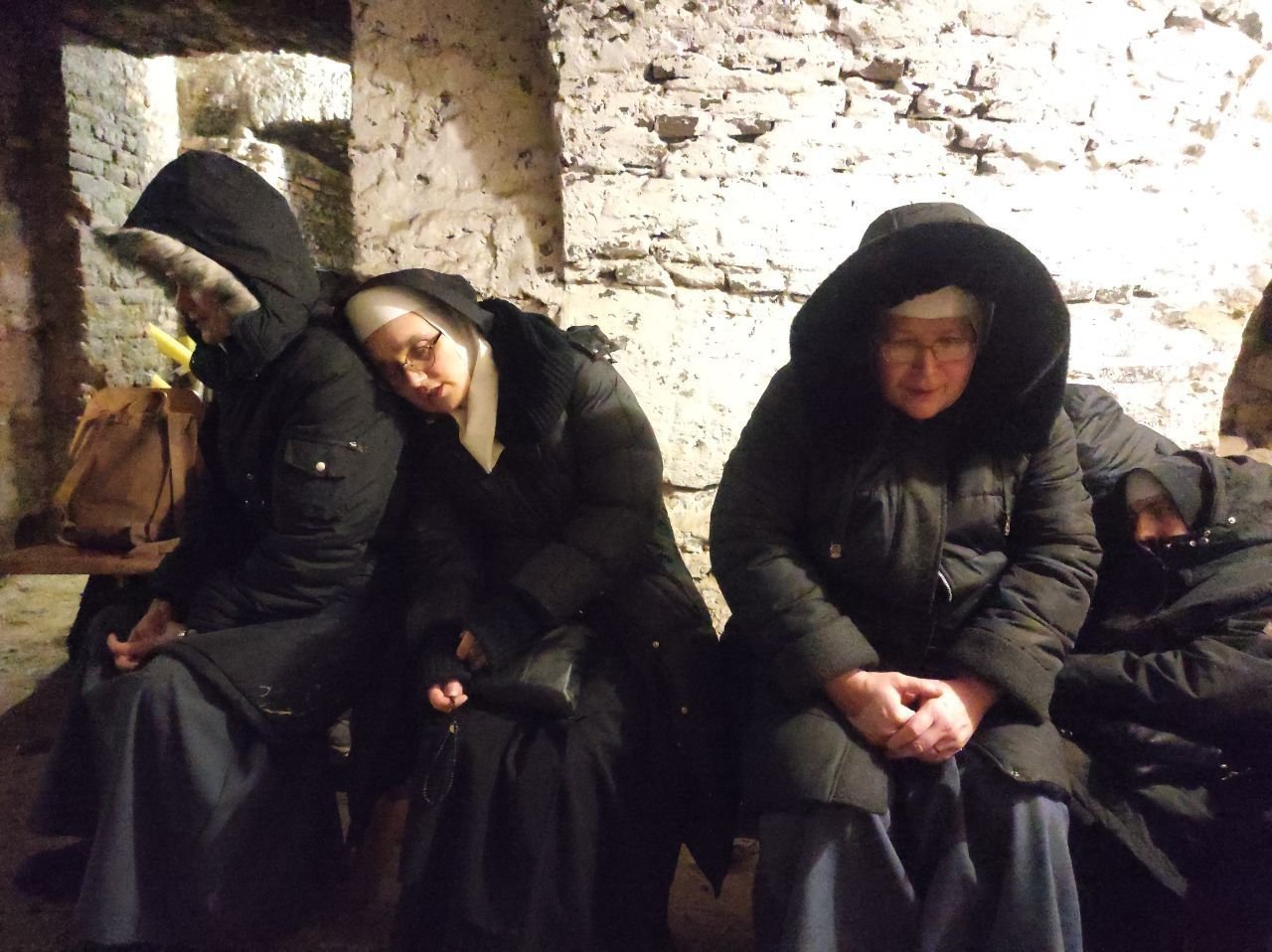
Religious communities have stayed behind in the Ukrainian warzone to continue working with the people they serve, despite the increasing risks from indiscriminate shelling and gunfire.
Magda Kaczmarek, Project Manager of Aid to the Church in Need (ACN) for Ukraine, is in constant touch with the foundation’s long-term partners.
Among others, she is in close contact with several orders of nuns in the war area. “The sisters are full of fear and anxiety, but they also feel upheld by prayer and by a worldwide wave of solidarity,” she reports.
Kaczmarek speaks movingly of a conversation with a nun from a convent in northern Ukraine. For security reasons neither the nun’s name, nor the location can be revealed, but media reports confirm there is fierce fighting in this town. Several times during the night the sisters have had to take refuge in the basement; they sleep therefore in their habits and veils, so that they can run out of their rooms at any time. At night the whole convent is kept in darkness, so as not to attract attacks.
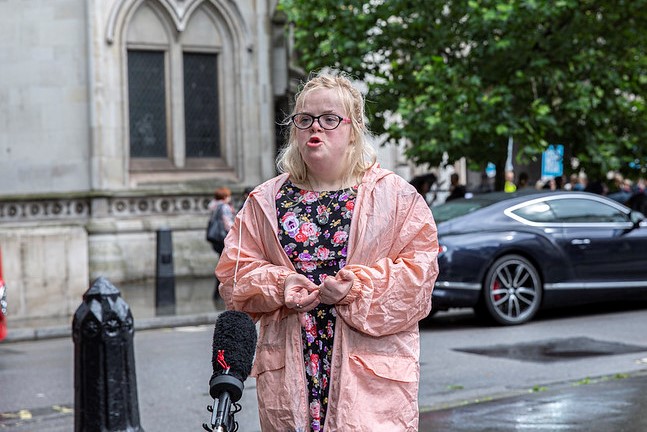
The UK Court of Appeal has announced that it will be hearing a landmark case against the UK Government over the current discriminatory abortion law that allows abortion up to birth for Down’s syndrome.
Heidi Crowter, a 26-year-old woman from Coventry who has Down’s syndrome, together with Máire Lea-Wilson from Brentford, West London, whose two-year-old son Aidan has Down’s syndrome, is challenging the UK Government over a disability clause in the current law.
Currently in England, Wales and Scotland, there is a general 24-week time limit for abortion, but if the baby has a disability, including Down’s syndrome, cleft lip and club foot, abortion is legal right up to birth.
There were 3,083 disability-selective abortions in 2020. 693 of these abortions were due to babies being diagnosed with Down’s syndrome, an increase of 5.64% from 656 in 2019. The actual figures are likely to be much higher – a 2013 review showed 886 fetuses were aborted for Down’s syndrome in England and Wales in 2010 but only 482 were reported in Department of Health records. The underreporting was confirmed by a 2014 Department of Health review.
The UN Committee on the Rights of Persons with Disabilities has consistently criticised countries that provide for abortion on the basis of disability.
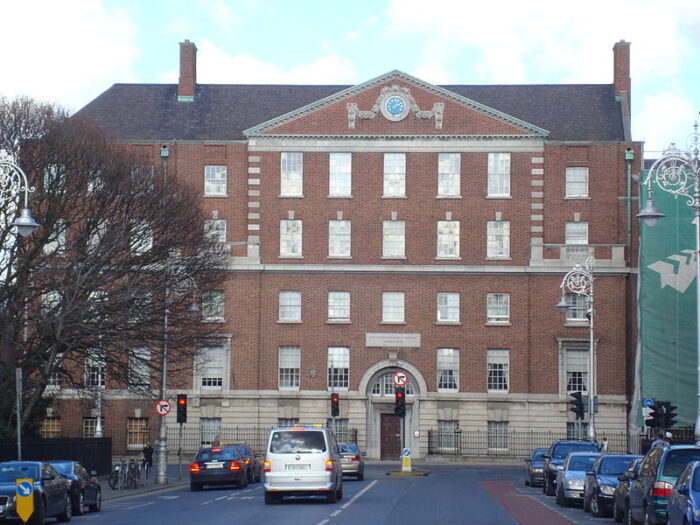
Proposals aimed at ensuring the independence of the National Maternity Hospital (NMH), so it can provide abortions when it moves to the St Vincent’s Hospital campus, will go to the HSE board “very shortly”, the Minister for Health has said. It has been claimed, without concrete evidence, that the Religious Sisters of Charity will somehow stop abortions taking place at the hospital because it will be built on land they have offered at no cost to the State.
Stephen Donnelly said a memo to Government setting out the terms of the legal licence for the proposed hospital would follow “very shortly after that”.
A lot of work had been done in the background over the last six months, the Minister told reporters, with Department of Health officials and other stakeholders poring over legal contracts defining the operational model that will apply at the proposed facility.
These, he added, would “provide Government with absolute assurance that everything there will be just like it is here [in Holles Street], that the only influence will be medical influence, that every service that is provided under law will be provided and that it will be independent”.
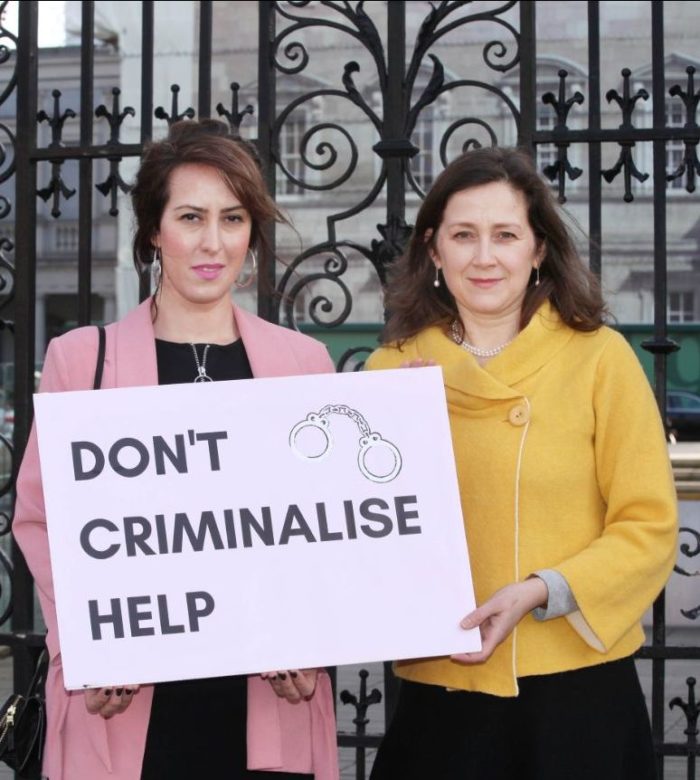
Legislation to enable exclusion zones around facilities administering abortions has been launched by Health Minister Stephen Donnelly. Gardai have previously said existing laws allow them to deal with harassment. No such incidents have been reported and no other EU country has a law like the one Ireland is proposing.
The law is part of the ‘Women’s Health Action Plan 2022’,
Meanwhile, Spanish legislators in the Congress of Deputies have approved legislation that will make offers of assistance, practical support and prayer outside abortion clinics punishable by imprisonment.
The penalty can range from three months to one year in prison or community service from 31 to 80 days. Furthermore, those who are prosecuted could be forbidden from returning to the abortion facilities for up to three years. The Congress of Deputies voted by 204 to 144 in favour of an amendment to the country’s penal code.
The legislation will now move on to the Senate.

The Catholic church has reached an agreement with the Department of Education which may give fresh impetus to the provision of greater choice in primary education provision for families.
The deal covers 5 towns, as well as the cities of Dublin, Cork, Limerick and Galway, and states that the church’s “Council of Education and relevant Bishops have confirmed their willingness to engage and co-operate fully with the Department in seeking to facilitate a more diverse school patronage in these towns and areas”.
The towns are Arklow, Athlone, Dundalk, Nenagh and Youghal, all of which currently have no multi-denominational primary school provision.
The agreement also states that “no other area is precluded from investigating a change in patronage”.
A Department of Education spokesperson has said guidelines will issue shortly to schools who may be interested in divesting from Catholic to multi-denominational patronage.

The General Medical Council (GMC) in the UK has dramatically lifted restrictions on an NHS consultant who had been banned from providing emergency support to women in crisis pregnancies, including abortion reversal treatment.
Caseworkers for the GMC dismissed every allegation against Dr Dermot Kearney and concluded that there is no case to answer. They found that the women he had supported had received high-level care and, following expert evidence, that abortion reversal treatment is safe.
Supported by the Christian Legal Centre, Dr Kearney, an experienced Hospital consultant who also provides medical emergency care, had been blocked from providing Abortion Pill Reversal treatment (APR) for up to 18 months in May 2021 by an Interim Orders Tribunal, following a referral from the General Medical Council (GMC).
APR involves administering the natural hormone progesterone to a pregnant woman who wishes to reverse the effects of the first abortion pill, mifepristone.
The ban had followed a spurious complaint involving what the GMC now describe as ‘hearsay’ evidence from MSI Reproductive Choices director, Dr Jonathan Lord.
Dr Lord has also been accused by a woman who had faced a crisis pregnancy of pressurising and ‘scaring’ her into giving evidence against Dr Kearney.

The HSE has admitted that women granted medical abortions after a phone consultation may be subject to coercion.
The Govt health agency was responding to a parliamentary question from Carol Nolan TD.
While claiming that remote consultation telemedicine abortion has been a success, the reply also concedes that “meeting the woman in person increases the likelihood of the provider identifying any coercion or domestic abuse”. And in another significant admission, the HSE states that “in-person consultations allow provision of personalised care and allow potential problems to be identified and mitigated.”
Earlier in the week, in a separate reply to Deputy Nolan, the Minister for Health himself completely dodged answering a question about the likelihood that government backed telemedicine ‘home abortions’ are putting women at greater risk of being coerced into having abortions.
A spokesperson for the Pro-Life Campaign called the HSE’s admission “an astonishing development” but one that tracks with what is generally known by both research and anecdotal evidence.
“Peer reviewed research has shown that up to a quarter of all abortions taking place likely involve some form of coercion from the woman’s partner or someone else close to her. Only last week, a man in Worcester, England was charged with a violent physical assault on his 27-year-old girlfriend after she refused to have an abortion”.
Meanwhile, Aontú leader Peadar Tóibín told the Dáil yesterday that the State Claims Agency has received 103 notifications of ‘adverse incidents’ arising from terminations carried out under the new abortion law. It remains to be seen what the precise nature and seriousness of these incidents amount to.
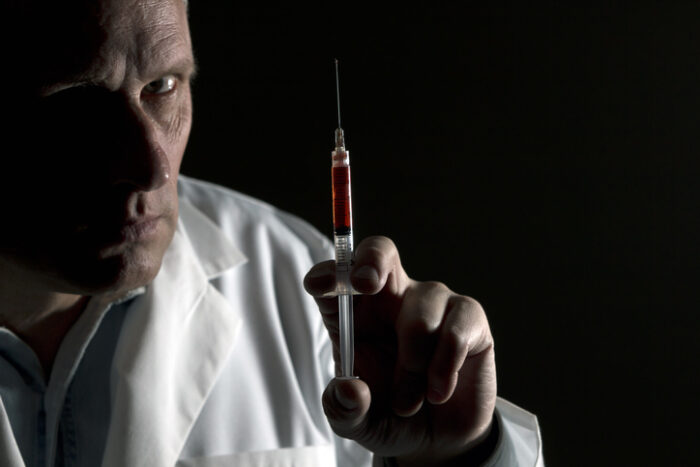
Legal euthanasia and assisted suicide have no impact on the reduction of violent suicides and might in fact increase their prevalence, a new study has shown.
The 35-page analysis in The Journal of Ethics in Mental Health debunks claims by “assisted dying” campaigners that prohibitions against assisting in suicides is driving people to take their lives by their own hands, often horribly.
The report, called “Euthanasia, Assisted Suicide and Suicide Rates in Europe”, found that the introduction of euthanasia and assisted suicide often “is followed by considerable increases in suicide (inclusive of assisted suicide) and in intentional self-initiated death”.
“There is no reduction in non-assisted suicide relative to the most similar non-EAS [euthanasia and assisted suicide] neighbour and, in some cases, there is a relative and/or an absolute increase in non-assisted suicide.”
The study says: “Furthermore, the data from Europe and from the U.S. indicate that it is women who have most been placed at risk of avoidable premature death.”
The peer-reviewed study was carried out by Prof David Jones, the director of the Oxford-based Anscombe Centre for Bioethics.
Professor Jones said that his study represented “further evidence that legalising assisted suicide or euthanasia will result in more people ending their lives prematurely”.
“It will not save lives. It will not help prevent suicide,” he said.
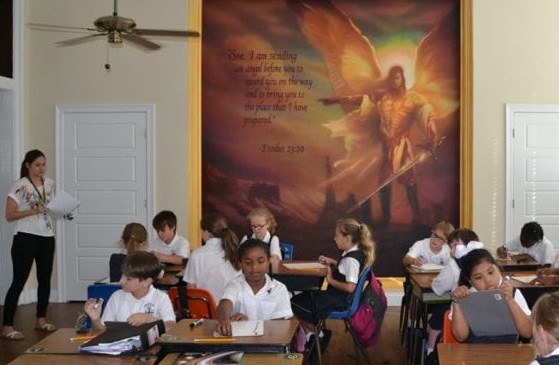
The Northern Ireland secretary, Brandon Lewis, said he wanted to see an acceleration in the number of schools opting for integrated status, believing it was an important part of the post-conflict journey of healing.
“This was one of the factors that people set out in the Belfast Good Friday agreement [BGFA] itself. We are 23 years on and still … such a small percentage of the population is able to be part of and benefit from integrated education. I think it’s just pretty poor progress,” said Lewis.
“We are in a situation where still, people in Northern Ireland first meet a Protestant or Catholic when they go to work or university. [Segregated education] just isn’t going to ever drive full reconciliation.”
Since its foundation in 1921, Northern Ireland’s education system has largely consisted of state-controlled schools, mainly attended by Protestant pupils, and Catholic maintained schools, almost exclusively attended by Catholics, says the Integrated Education Fund (IEF), a not-for-profit organisation supporting integrated education.
“I do believe in nudging and cajoling. Education is a devolved area, but that doesn’t mean that I don’t have an opinion and we don’t have a right as a co-guarantor and co-signatory of the BGFA to do all we can.”