
During a debate on Wednesday, Senator Sharon Keogan said that the legislation “may be the first time a bill has sought to criminalise the act of praying.”
She added that there was “more than a whiff of anti-Christian sentiment” about the Bill.
“The right to protest and assembly cannot be limited to what one wants. The law must treat all equally,” she concluded.
Senator Ronan Mullen asserted that the proposed legislation was “not constitutional” or “legally necessary.”
The Senator continued: “Article 40 of the Constitution “guarantees liberty for the exercise … subject to public order and morality … of the citizens to assemble”. This Bill would target the constitutional freedom of assembly of a specific group of people.
“None of this is permissible under the Constitution because everybody has the right to assemble peacefully and make their point.
He added: “I am afraid this legislation ultimately seeks to demonise people who want to offer positive alternatives to abortion. It is an attempt to deny there is a legitimate human rights argument in favour of protecting the unborn baby as well as a mother’s health and well-being. That counter narrative will always be there as long as abortion is legal in this country.”
Delegates representing a number of European countries have increased pressure on Ireland to further liberalise its already radical abortion regime. On Wednesday, Ireland was appearing before the UN Human Right Council for its latest ‘periodic’ review.
At the meeting, the Austrian representative recommended that Ireland “ensure that the three-year review of the Health (Regulation of Termination of Pregnancy) Act 2018 is comprehensive and directed at providing a human rights-compliant framework for abortion, including by identifying and eliminating barriers impacting marginalized groups”.
A representative from Denmark recommended the Government “ensure that the three-year review of the Termination of Pregnancy Act focuses on ways to expand access to voluntary termination of pregnancy, both in law and in practice”.
The Iceland representative recommended that Ireland “expand access to abortion and repeal the Protection of Life During Pregnancy Act”; and the Swiss representative recommended the establishment of “a plan of action to guarantee accessibility and availability of risk-free abortion services”.
While not making a specific recommendation in this regard, Egypt expressed concern about the legal changes relating to abortion “affecting the protection of the right to life”, and recommended Ireland “strengthen policies to support the family as the basic and natural unit of society”.
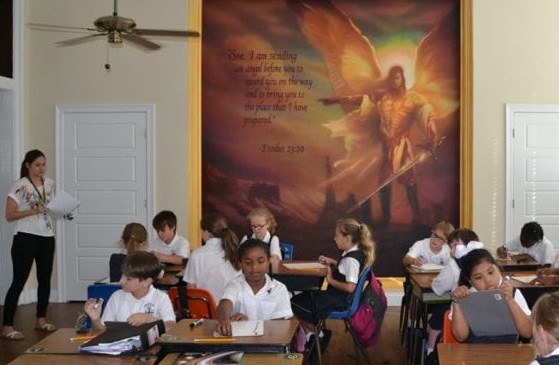
The Catholic Archbishop of Dublin Dermot Farrell has defended the Church’s role in the boards of management of State-funded schools, saying a true plurality of patronage in education “needs to ensure parental choice while enabling all patrons, including Catholic patrons, to be true to their own ethos and characteristic spirit”.
A great strength of faith-based schools “has been their rootedness in local communities. Those who do not share our faith come to our schools because they know that at their heart there is the acceptance of values motivated by our faith – values that present a specific vision or view of human life. Furthermore, inter-religious and inter-belief dialogue is at the heart of the Catholic school enterprise,” he said.
The Catholic school provided “academically excellent education; it provides faith-based formation that allows each student to develop a moral foundation on which to stand for the rest their lives and, it gives a vision and hope beyond the limits of value-free education,” he said.

Money is not the main reason Americans who desire marriage remain single, according to a recent survey by the Institute for Family Studies and the Wheatley Institute.
A survey of single Americans ages 55 or younger who desire marriage found that “it is hard to find the right person to marry” (58%) and “not ready for the commitment” (33%) are the top two reasons cited.
In contrast, only about a quarter of unmarried adults chose economic reasons, such as “can’t afford a wedding” or “don’t have a good job.”
The top two reasons for singleness are the same for those who make $100K+ a year as for those whose income falls below $50K.
Income does make a difference in a few areas: Nearly 3 in 10 lower-income unmarried adults cited “Can’t afford a wedding” as one reason they are single. Lower-income singles are also more likely than singles with higher income to cite lacking a good job as a reason for not being married (23% vs. 15%). On the other hand, higher-income singles are much more likely than their counterparts with lower incomes to cite working too much as a reason. A third of higher income singles said that they are “too focused on work to get married,” compared with 17% of lower-income singles.
The so-called “marriage penalty” also plays a much more significant role among lower income adults who are not married.
A public consultation on a draft of Ireland’s next State report under the UN Convention on the Rights of the Child (UNCRC) will continue until 5pm on Friday 12th November.
Ireland is due to submit its combined fifth and sixth State report to the Committee on the Rights of the Child in February 2022, with an oral hearing before the committee provisionally scheduled for the second half of 2022 in Geneva.
The draft combined fifth and sixth State report responds to a list of issues report provided by the UN committee in November 2020 and the government is welcoming comments until the end of this week.
Written submissions on the State Report are invited from interested parties and can be submitted to the Department at the following email address: [email protected]

Officials of Tongzhou district in Beijing shut down Golden Reed Kindergarten & Primary School Learning Center in September following an order to vacate the property and close the school, reported China Aid, a rights group led by Chinese exiles documenting human rights abuses and promoting religious freedom in China.
More than 100 mostly Christian students, including those with special needs like autism, studied in the school established by Golden Lampstand Church, an evangelical house church.

A woman and her husband are suing a fertility clinic in the US they say implanted a stranger’s embryo, lawyers have said.
The case resembles one before the Irish Courts in 2016 when a couple returned from abroad where they had picked up a child born through an IVF and surrogacy arrangement only to discover that the father didn’t have a genetic connection to the child, when he attempted to assert his paternity.
In the US case, when Daphna and Alexander Cardinale first saw their newborn daughter, conceived through IVF, they noticed the baby girl had jet-black hair and a much darker complexion than anyone in their family.
A DNA test several months later revealed the girl born in September 2019 was not related to either of them, and they had been raising another couple’s child.
Lawyers in Los Angeles say two laboratories connected by one doctor switched the embryos of two entirely separate couples and implanted them in the wrong mothers.
The couples eventually met and worked through the courts to gain custody of their genetic children.
Alexander Cardinale called the mix-up “heartbreaking”.
“Losing the birth child you know, for the genetic child that you don’t know yet… a truly impossible nightmare.”
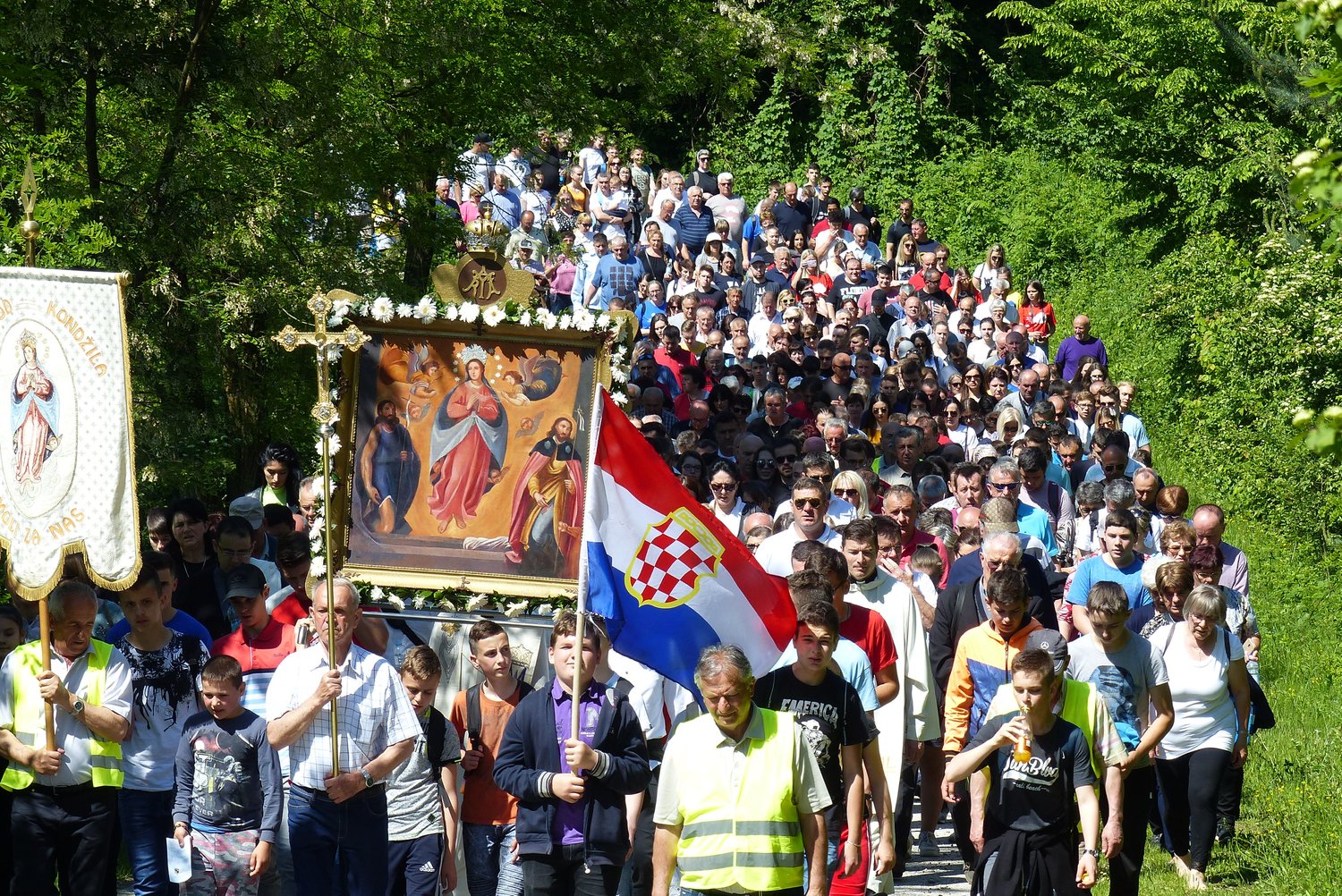
The Catholic minority in Bosnia and Herzegovina are facing great difficulties and discrimination, according to a local Bishop.
Franjo Komarica of the diocese of Banja Luka told Aid to the church in Need (ACN) that the country is not a functioning constitutional state.
He said Catholics, who represent about 15% of the former Yugoslavian Republic, are “going under”. “We are going to wrack and ruin, there is simply no place we can call home.”
He said many Catholics have Croatian names and it can be very hard for them to get jobs in parts of the country, as it is clear by their name that they are both Catholic and Croatian (and not Muslim-Bosniak, or Orthodox Bosnian-Serb). He added that Catholics can live without much issue in West Herzegovina, but even there Catholics are leaving.
Bishop Komarica also noted that in his diocese of Banja Luka, 95 per cent of the church buildings were destroyed or severely damaged during the war. He thanked charities such as ACN for doing so much for them to help them rebuild.

Children who have a good relationship with their father are happier, feel less anxious and are more engaged in physical activity, according to major new research published by the Economic and Social Research Institute (ESRI). It confirms the importance of fathers in the lives of children.
Using data from the Growing Up in Ireland (GUI) study, the findings show that most 9-year-olds (78 per cent) report getting on very well with their father and most (84 per cent) say they would talk to them if they had a problem.
Over half of fathers reported sharing most care and play activities with the nine-month-old infant equally with their partners, though mothers were more involved in personal care (such as feeding, dressing and bathing the baby). Fathers reported greater involvement where mothers were in full-time employment and less involvement if they themselves were working long hours. Fathers being more involved in care was linked to greater bonding with the infant and this had a lasting effect on relationship quality measured when the child was aged five and nine.
As the child grew older, fathers were very involved in activities and outings with the child, especially reading to the child, playing games with them and being involved in sports or other physical activity.
The research focused on fathers’ involvement with their children from nine months to nine years of age in two-parent households. It also looked at non-resident fathers. It finds that children who are not living with their fathers are less likely to report that they get on very well with them (65pc versus 79pc of those living with their fathers).
The ESRI said the numbers of lone fathers and same-sex couples in the GUI sample were too small to analyse separately.

The Bulgarian Constitutional Court has ruled that the term ‘gender’ according to the Constitution should be understood only in its biological sense.
The decision was taken by 11 votes in favour and one vote against.
This resolves a dispute as to how the concept of “gender” is to be imported from international law into Bulgarian law.
This question arose three years ago when the ruling GERB party refused to move the Istanbul Convention for ratification in parliament.
The Istanbul Convention uses the concept of “gender”, which the convention regards as stereotyping of both sexes and can consign women to traditional roles. But ‘gender’ can also be used to assert there are no real differences between men and women and that men and women can ‘change’ gender.
The court said the legal status of transgender people can be further resolved through changes in legislation. Bulgarian institutions cannot be obliged to accept the self-determination of citizens to a sex that is different from their biological one.