

At least four people are dead and several others were injured after a man crashed a vehicle into a Michigan church, opened fire with a rifle, and set the building ablaze during a Sunday service, authorities said.
The suspect died after exchanging gunfire with responding officers in the church’s parking lot.
Though officials have not given a motive, White House press secretary Karoline Leavitt told Fox News that the perpetrator was “an individual who hated people of the Mormon faith”.
Hundreds of people were attending the service at The Church of Jesus Christ of Latter-day Saints, also known as the Mormons, in a suburb of Flint, Michigan, when the incident occurred.
Ten people suffered gunshot wounds, including two who were pronounced dead at the scene. Seven of the hospitalised victims were stable, and one was in critical condition.
Two more bodies were discovered in the church as authorities searched through the burned out rubble.
The Federal Bureau of Investigation are investigating the incident “as an act of targeted violence,” said Reuben Coleman, the acting special agent in charge of the FBI’s Detroit field office.
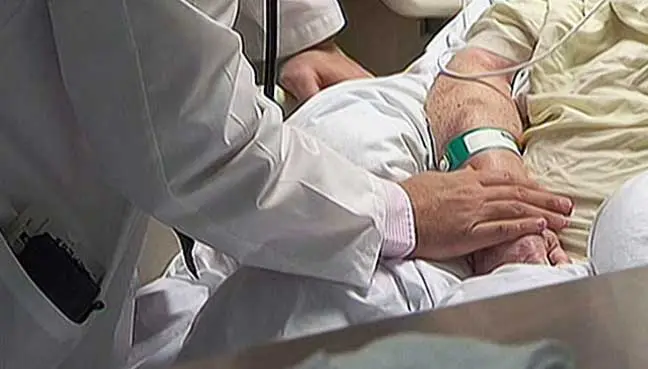
A friend of a British couple who died at a Swiss clinic for ‘assisted dying’ has raised concerns that the wife was coerced by her husband into ending her life.
Ruth Posner, 96, and her husband, Michael, 97, sent an email to friends on Tuesday announcing that by the time the message was read they would both be dead.
Julia Pascal, 75, a close friend of the couple, said that although they both openly discussed planning to take their own lives for two years, she felt that Mrs Posner, an actress, was emotionally controlled by her husband.
“Ruth was disempowered,” Pascal said. “He was very dominant. I spoke to them and sent emails, saying ‘please don’t kill yourselves’. I tried to talk Ruth out of it, but I felt it was too far gone, that she was totally under his control.”
Mrs Posner’s email account was used to send the message to friends and family stating: “The decision was mutual and without any outside pressure.”
At least 64 people have been killed in a brutal attack on a Catholic parish in the Democratic Republic of the Congo (DRC).
A violent onslaught by members of the Islamist rebel group Allied Democratic Forces struck the parish of Saint Joseph of Manguredjipa in the village of Ntoyo, North Kivu province, in the dead of night.
At least 64 people were slaughtered—many of them hacked to death—while others were shot or bludgeoned. The victims had gathered for a mourning ceremony, unsuspecting and vulnerable, when machetes, firearms, and hammers were unleashed. Some attackers then set homes ablaze. Local officials say the assault was clearly premeditated.
Aid to the Church in Need (ACN) has condemned the atrocity and expressed deep solidarity with the bereaved. The charity emphasises that such acts of violence are not isolated but part of a devastating pattern in eastern DRC, where Islamist militants aligned with IS-CAP (Islamic State’s Central Africa Province) operate with alarming impunity.

A new Social, Personal and Health Education (SPHE) curriculum for primary schools might undermine parental rights and introduce children to confusing and inappropriate concepts about gender at too young an age.
Psychotherapist Stella O’Malley has been outspoken in warning that the curriculum lacks both transparency and clarity. “The word gender is mentioned but it’s not defined,” she told the Irish Catholic, pointing out that the Department has used the phrase “sexual identity” instead of the more standard “sexual orientation.” According to O’Malley, such imprecise language risks either concealing an agenda or betraying a serious lack of understanding.
Parents, she believes, are being sidelined: “The consultation process has been little more than a tick-box exercise. Parents – not lobby groups – should be at the centre of any consultation about what children are taught.”
Adding his voice from the political sphere, Senator Rónán Mullen warned that while the Department of Education insists the curriculum is “inclusive, empowering, and deeply relevant,” in practice it risks being intrusive and manipulative. He cautioned that introducing complex ideas about sexuality and gender identity to children who may not be developmentally ready could cause harm.

The last remaining Christian town in Palestine is struggling for its survival amid increasing attacks by extremist Jewish settlers and onerous security checks by the Israeli authorities.
Fr David Khoury, the Greek orthodox parish priest of Taybeh said they are surrounded by about nine Muslim villages with whom they get on well. “We have no problem with them – only the settlers who are making trouble, mostly every day,” he told RTE’s Tony Connelly.
“With beer, 95% of the beer is water. And so when they attack these springs and they break the water pipes, the computer systems, the cameras, it limits the water that we get even more,” said his daughter and brew-master, Madees Khoury.
Settlers from a nearby hilltop village have been accused of stealing sheep, burning olive groves and attacking locals with the Israeli military randomly blocking access in and out of Taybeh.
Every aspect of the exporting process has become increasingly problematic, because everything has to be shipped through an Israeli port.
“It’s exporting, going through additional security checks for no reason, more delays getting the permits to pass through the commercial checkpoints to get to the port,” explained Madees Khoury.
Nadim believes the Israeli government is bent on annexing the West Bank and forcing out Palestinians, using settlers as a blunt instrument.
“I have a family tree of 600 years in Taybeh. I’m not going to leave my olive oil trees and my houses and my property. There is no way that I will go anywhere,” said Nadim.

Religious people self-identify as happier than non-religious people over and over again in the scientific literature, according to a leading expert on the sociology of religion.
Ryan Burge says there is no need for caveats, wiggle room or downplaying any findings. While it might be that happier people tend to be religious or that religious people tend to be happy “the upshot is still the same: religious nones are less happy than folks who identify with a faith tradition”.
As an example, he said the 2023–2024 Pew Religious Landscape Survey found those who never attend worship were the unhappiest cohort, while there is a steady increase in levels of happiness the more people do worship.
Data from the same survey found the conclusion holds true even when controlled for age and political ideology.
For example, among self-identified liberals born in the 1980s or 1990s who are non-religious and never attend a house of worship, 20% of them say that they are very happy.
For liberals born in the 1980s or 1990s who indicate that they are weekly church-attending Christians, 49% said that they were very happy.

The UK’s new Justice Secretary, David Lammy, fears that legalising ‘assisted dying’ will put pressure on some vulnerable elderly people to end their lives.
Mr Lammy was moved to the Ministry of Justice in a reshuffle earlier this month, meaning he would be partly responsible for implementing a law to enable terminally ill adults deemed to have six months or less to live to avail of assisted suicide or euthanasia. Critics oppose the bill in principle, and also say it does not contain the safeguards it claims for itself.
The former foreign secretary has previously expressed fears that his own mother would have opted for euthanasia if it had been available before she died of cancer.
Mr Lammy is expected to give evidence to a newly established Lords committee in the coming weeks, giving him an opportunity to share his personal concerns.
Wes Streeting, the Health Secretary, is also opposed to assisted suicide, meaning the two ministers who would have most responsibility for implementing the Terminally Ill Adults (End of Life) Bill, should it pass, do not agree with it.
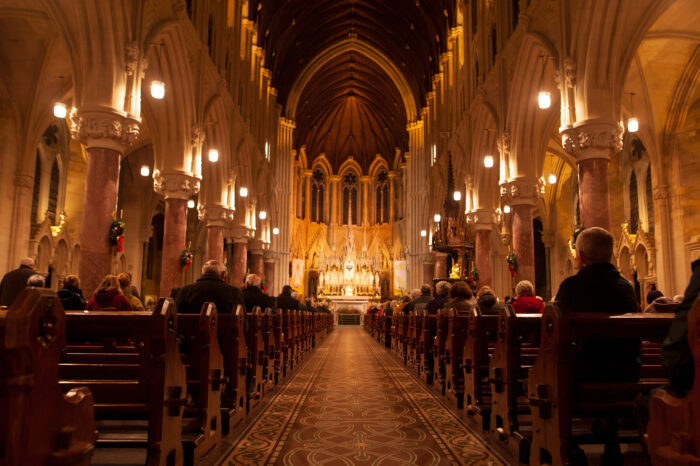
The Catholic Church in Austria saw an increase in Mass attendance, a decline in formal disaffiliation and a rise in those ‘returning’.
The Church measures Mass attendance by conducting a headcount on two Sundays in the year.
This two-part count found there were 309,000 worshippers on the first Sunday and 366,000 on the second Sunday in 2022, 321,821 and 347,891 in 2023, and 366,210 and 378,797 in 2024, indicating a steady rise in attendance.
While the 2024 figures suggest Mass attendance is recovering after a sharp drop caused by the COVID-19 crisis, the numbers remain below pre-pandemic figures, when around half a million people attended Mass.
The new figures also confirmed an ongoing decline in the number of formal Church “exits,” where individuals formally disaffiliate from the Catholic Church.
Austria’s Catholic community is seeing an increase in the number of people being readmitted after formally disaffiliating or being received into the Church as converts, which are treated as a single category by statisticians.
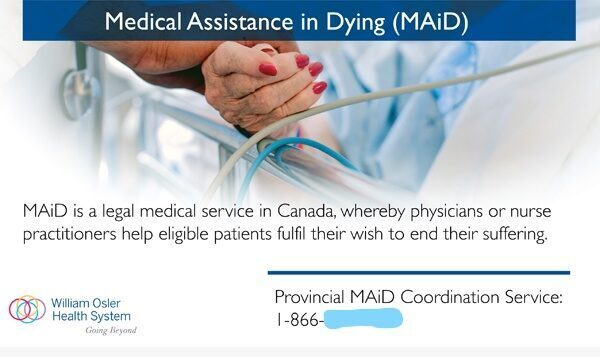
The Canadian euthanasia regime has had a significantly worse impact on persons with disabilities than predicted in the 2015 Supreme Court ruling that decriminalised euthanasia, according to a new research report from the Cardus think tank.
The report concluded that “Canada’s legalisation of assisted suicide has led to an intensified risk of premature death for vulnerable groups, and that the expected safeguards have failed to materialise.”
Contrary to the Court’s expectations it found “at least 42 per cent of all MAiD deaths were of persons who required disability services, including over 1,017 persons who required but did not receive these services.”
The 2019-2023 period also saw 19,720 Canadians who required disability services and received them being killed via euthanasia. The annual figure grew 233 per cent from 2,223 in 2019 to 5,181 in 2023.
A spokesperson for the report said “it really is quite sad” to read that a growing number of Canadians who request disability services are proceeding with assisted suicide because they are not receiving that help. She said there are also concerns that thousands of Canadians with disabilities receiving help are still ultimately being euthanized.

A US talk show host casually suggested ‘involuntary lethal injection’ for violent homeless people with mental health problems who refuse Government assistence.
He apologised four days later, describing his comments as “extremely callous”.
The remark was made by one of the hosts on a daytime talk show as they discussed the violent stabbing of a young woman on a metro train by a repeat offender who authorities described as mentally ill and homeless.
One host said the average citizen “shouldn’t have to live in fear” of being attacked on buses, trains or on the streets, and added that “billions” had been spent on “mental health and the homeless population” but that many had refused that help.
He added that they should not be given a choice, either they take the resources on offer or be locked up in jail.
To which his cohost replied, “Or involuntary lethal injection or something. Just kill ’em.”
He quickly moved on to say voters needed politicians who would be “tough on crime” without any protest from the other two hosts.
Four days after his comments went viral he issued an apology.