
The Government is facing growing pressure to explain why it continues to demand €26.2 million from the Legion of Mary to contribute to the Mother and Baby Homes redress scheme. The Department of Children is sticking to its position despite key findings advising against the action.
Speaking to The Irish Catholic, former Ceann Comhairle Seán Ó Fearghaíl TD criticised the Government’s stance, saying: “I fail to see however why the department views the Legion of Mary/Regina Coeli as a relevant organisation when neither the Commission of Investigation nor the independent negotiator found against them or recommended that they should contribute to redress.”
The Regina Coeli Hostel in Dublin, run by the Legion of Mary from 1930 to 1998, was examined by the Commission of Investigation into Mother and Baby Homes, but found it unique among the 18 institutions examined. It operated not as a mother and baby home, but as a hostel offering shelter to homeless women, including unmarried mothers, women struggling with addiction, mental illness, or poverty.
Moreover, unlike most institutions of the time, mothers were allowed to stay with their children indefinitely and to keep them. Records show that between the 1930s and 1980s, the percentage of mothers who kept their babies rose from under 30pc to over 87pc, although much of this was due to changing attitudes and more financial support from the State.
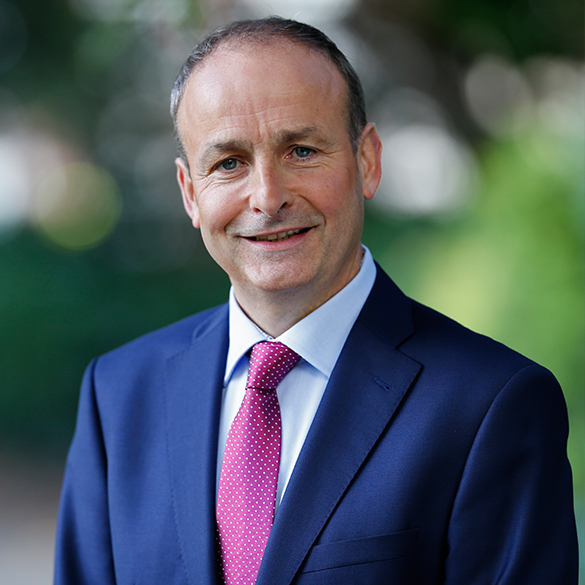
The Taoiseach has paid tribute to Daniel O’Connell for achieving Catholic Emancipation at two separate events on Aug 6th marking the 250th anniversary of his birth.
At the unveiling of a commemorative plaque at his birthplace, Micheal Martin underlined how deeply the anti-Catholic Penal Laws affected the people, such that “open practice” was banned, Catholics were “excluded from education, politics and professions” and attempts were made “to try to force the conversion of Catholic landed interests, such as the O’Connell’s, to the established religion”.
Reversing this was “the great cause of Emancipation” which O’Connell took up and he extended the arguments to a universal freedom of religion.
At the State Commemoration at Derrynane, O’Connell’s “tireless advocacy for Catholic Emancipation” was recognised.
The Taoiseach noted his rootedness in faith which, he said, he became much more personally and deeply committed to as he grew older.
He said O’Connell took up “the cause of Catholic Emancipation with all of the fire and determination he brought to his legal work”, and its achievement in 1829 “resonated throughout the world”.
A booklet accompanying the event also underlined the specific religious core of his work, mentioning the word “Catholic” no fewer than 19 times.
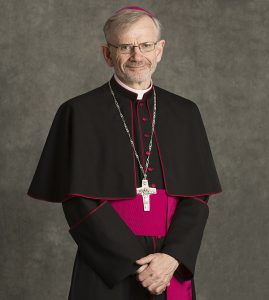
The Bishop of Down and Connor has encouraged priests to continue being generous with their ministry despite a brutal attack on a priest in the sacristy of a church while he was dispensing a sacrament.
Bishop McGuckian told The Irish Catholic that it was “very poignant” that Canon John Murray of Downpatrick, Co Down, had agreed before mass to hear the confession of a man who then viciously assaulted him with a wine bottle. The man is believed to have committed a homicide the night before and was seeking absolution.
“Canon Murray made himself vulnerable and invited the person aside into privacy for the sacrament, for ministry. It was then that he was attacked and I understand that priests will feel, ‘My goodness, are we all vulnerable all of the time?’ But I know that priestly sense of being there, and wanting to be available and wanting to reach out will always trump that!
“And I say to my priests as I say to everyone else. Take courage and do not be afraid.”
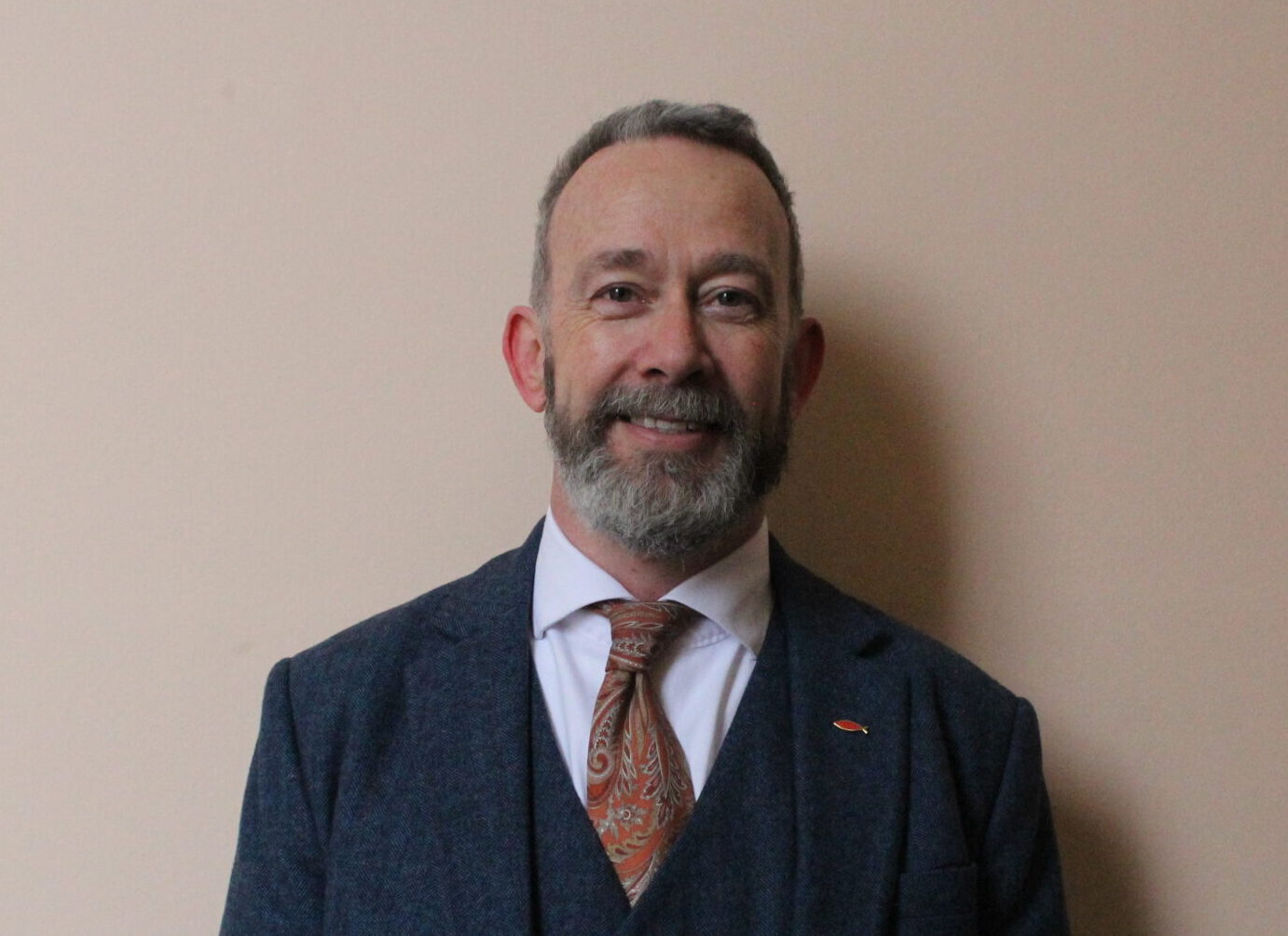
Parents views must be “central” to the Government’s planned National Convention on Education, according to a leading figure in Catholic education.
Alan Hynes, CEO of the Catholic Education Partnership (CEP) spoke after the Minister for Education, Helen McEntee, announced a new national conversation on education. Both the Irish Constitution and the UN Universal Declaration of Human Rights recognise the parents as the primary educators of their children.
He told The Irish Catholic that while the Government’s press release mentioned parents among other education stake-holders, “in the video the minister put on social media there was no mention of parents”.
“Parents ought to be central to this national conversation alongside the voices of young people,” he said, “I would take it that the Minister made a slip in not mentioning them in the video, but it is important that slip is not made again.”
“Parents are the only stakeholder specifically mentioned in the Constitution as having a priority regarding the education of their children. The Constitutional position of parents needs to be respected throughout this process,” Mr Hynes said.

Lone parent families are among those who face the highest risks of poverty and deprivation, according to the Economic and Social Research Institute (ESRI).
The new research examined persistent income poverty and material deprivation between 2015 and 2023.
The report says lone parent families, large families, and households with a working-age adult with a disability faced the highest risks of persistent annual at-risk-of-poverty [AROP] and deprivation.
It adds: “Children in lone parent families, in particular, are most at risk, with an average 33pc of them being persistently deprived, and 21pc being persistently AROP, between 2016 and 2023”.
Regarding policy implications, the report says the study highlights “the importance of understanding poverty as a dynamic and multifaceted issue, and the need for a multi-dimensional approach to poverty measurement and policy”.
Bertrand Maître, co-author of the report, said: “Research shows that the longer people stay in poverty, the harder it is for them to escape. This highlights the urgent need to tackle persistent poverty and to design policies that protect the most vulnerable groups from falling into long-term poverty.”

Men and women over the age of 80 in the UK are applying to become the legal parents of children they procured through surrogacy, according to official figures.
Data released by Cafcass, the government agency that represents children’s interests in the courts, revealed that between 2020 and 2025 several men over 80 applied for court orders to legally recognise them as the parents of surrogate babies.
The figures also show that in the same time frame there were applications from men aged 70-79 and women aged 60-69, 70-79 and over 80.
The new figures come after The Times revealed in May that a husband and wife, both aged 72, were granted a parental order to become the legal parents of a 14-month-old boy born via surrogacy.
The couple were granted the parental order for the baby, who was born six months earlier to a surrogate in California using the husband’s sperm and a donor egg, despite a judge’s concerns they could die before the boy reaches 18.
There is no legal age limit for intended parents in the UK, but anti-surrogacy campaign groups have condemned the rising trend of older people having babies through surrogates.

A national childcare subsidy for children under the age of three, has been announced by China.
It is the most significant central-level effort to reverse a deepening demographic crisis since allowing families to have three children in a country where the fertility rate has now dropped to half of what is needed to keep a population from declining.
The country will provide an annual subsidy of 3,600 yuan (€435) for every child born on or after January 1, 2025, until they turn three – regardless of whether they are the first, second or third child, according to a government announcement on Monday.
“The policy does mark a major milestone in terms of direct handouts to households and could lay the groundwork for more fiscal transfers in future,” said Huang Zichun, China economist at Capital Economics.
But he also pointed out that the sums involved were too small to have a near-term impact on the birth rate or household consumption.
The country is also among the world’s most expensive places to have children, in relative terms, according to a study by China-based YuWa Population Research Institute.
Moreover, decades of strict one-child policy enforcement not only curbed births but deeply affected social attitudes and the confidence to have children.

At least 43 people including nine children were killed July 27 in a brutal overnight attack on a Catholic church in Komanda in eastern Congo.
A terrorist group linked to the Islamic State group targeted faithful participating in an all-night prayer vigil, opening fire and using machetes before looting homes and attacking others sheltering nearby.
Father Marcelo Oliveira, a Comboni missionary who has been in the Congo for many years, said the victims were part of a movement called Eucharistic Crusade and were participating in the prayer vigil as part of a summer formation camp.
“The attack occurred at around 1 o’clock in the morning. The rebels entered the church and murdered a large number of children, both inside the church building and in the compound,” he said.
The United Nations’ mission in Congo, MONUSCO, detailed the 43 killed in the church, saying they included 19 women, 15 men and nine children.
“These targeted attacks against defenseless civilians, particularly in places of worship, are not only appalling but also in violation of all human rights standards and international law,” said Vivian van de Perre, A UN special representative in Congo.
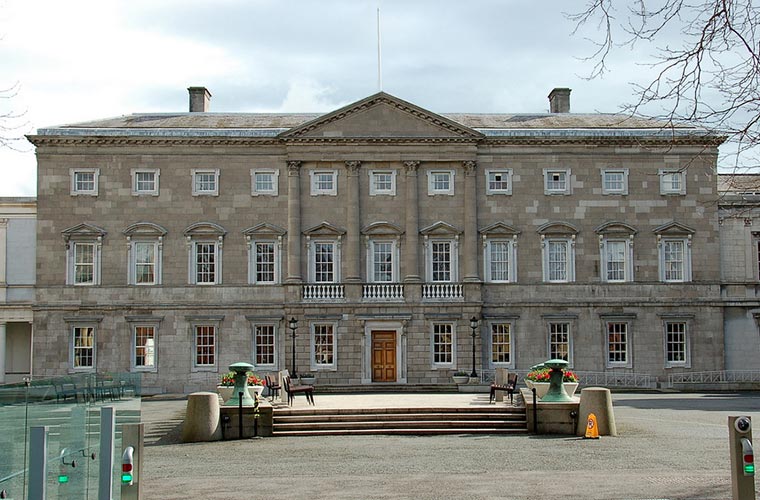
A group advocating for greater access to abortion performed a play for members of the Oireachtas.
The event was hosted by Independent Senator, Lynn Ruane, of the Trinty College Dublin panel.
An Instagram post on “Irelands Lottery of Care 2025 live performance in Leinster House”, described it as an “immersive presentation of Abortion in the Spotlight, an art based research project working with service users, providers and healthcare professionals. Accompanied by the performance was a zine, that reflects our suggestions for improving Irelands healthcare system based off our research”.
The group say they aim to “highlight the stigma and struggles in the healthcare system in Ireland in regards to abortion procedures”. On their website they invite “women and non gender confirming people to share their stories of having an abortion”.
The project is part of a Dublin-based activist group called The Performing Activism Collective. Founded in 2023, they describe themselves as “a group of women who create transgressive performances to fight for equality often seen at protests and days of action around Dublin city”.
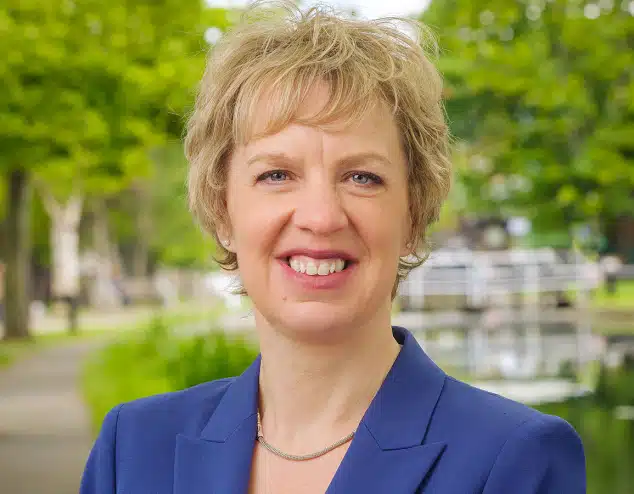
The leader of the Labour Party has called for a radical rewrite of the Irish Constitution to strip it of its remaining religious language and the Catholic social teaching that she says underpins its mains provisions.
In a major speech last year, Supreme Court Justice, Gerard Hogan, defended the Constitution from this sort of attack and said some of its religious provisions are not unusual in a European context.
Speaking at the MacGill Summer School last week, Ivana Bacik TD, said that while some religious references were removed, “we still see doctrinal teaching so influential in the text”.
“We see religion denominating throughout and that is a key reason why we need the radical rewrite and a key reason to say yes, the text is atrophied, and it is no longer fit for purpose in a 21st century secular, polarised republic”.
“A theocratic ethos is evident in the text, particularly in the Preamble and in provisions requiring that a religious Oath be taken by a newly-elected President, and by newly appointed members of the judiciary and of the Council of State.
“The same ethos is also evident in the Fundamental Rights Articles 40-44, which reflect religious doctrinal teaching, and recognise only a selective set of liberal rights”.
As the present text will turn 90 in 2027, she called for a new text to reflect 21st Century Ireland “framed in secularised language that is appropriate for our Republic”.