
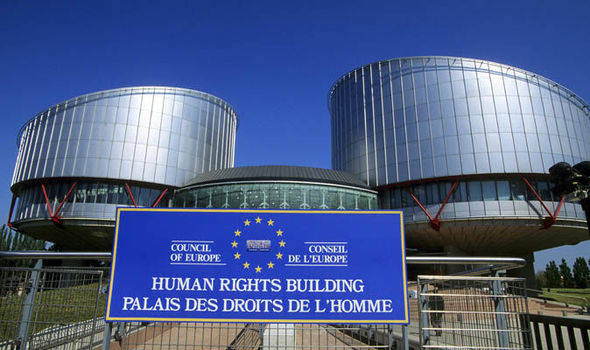
Belgian euthanasia law fails to protect the fundamental right to life, according to a legal brief filed with the European Court of Human Rights.
The filing on behalf of Tom Mortier identifies clear violations of the law in the case of his mother who was euthanized by lethal injection in 2012.
ADF International argues that International law has never established a so-called ‘right to die.’
“On the contrary, it solidly affirms the right to life – particularly for the most vulnerable among us,” said Robert Clarke, Deputy Director of ADF International and lead counsel for Tom Mortier.
“One look at the tragic facts of this case exposes the lie that euthanasia is good for society. The sick, suffering, elderly, and vulnerable in our society deserve the utmost respect and care. As this case reaches its final stage, we hope that it will bring Tom some small measure of justice, and help protect others”.
The Belgian law specifies that the person must be in a ‘medically futile condition of constant and unbearable physical or mental suffering that cannot be alleviated, resulting from a serious and incurable disorder caused by illness or accident.’ Tom’s mother was physically healthy, and her treating psychiatrist of more than 20 years did not believe that she satisfied the legal requirements of the Belgian euthanasia law. Nonetheless, she was euthanized in 2012 by an oncologist with no known psychiatric qualifications.
Mortier was informed the day after his mother had been euthanized with the explanation that she had been suffering with ‘untreatable depression’.
Belgium legalized euthanasia in 2002. In 2014, the law was amended to include children with no lower age limit. The youngest child to be euthanized in Belgium was only 9 years old. Between 2003 and 2018 the number of people euthanised grew by about 1000%.
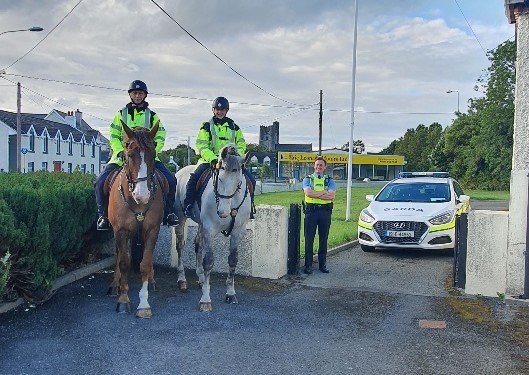
Gardaí will be on duty on all approaches to Croagh Patrick this Reek Sunday to enforce Public Health guidelines due to Covid-19.
Groups closely involved with organising the annual climb have appealed to people to stay away.
In a statement they said that many of the volunteer stewards who know the terrain and the routine are themselves cocooning. “The logistics of members of the public or volunteer emergency services coming to the assistance of someone who had fallen would create unnecessary public health risk”.
“It was furthermore confirmed to us by a consultant in public health medicine that Reek Sunday fell outside the criteria laid out in the roadmap for reopening the country. The public health advice is clear and we absolutely abide by it.”
St Mary’s administrator Fr Charlie McDonnell said that, despite the absence of infrastructure at the mountain and the season being closed for 2020, people were still turning up to climb it with as many as 1,394 there on the weekend of July 12th this year. Similar crowds were there last weekend, he said.
However Archbishop of Tuam Michael Neary will still celebrate the annual Reek vigil Mass at St Mary’s in Westport on Saturday July 25th at 6:30 pm. It will be offered for the intentions of all who had wished to make the pilgrimage to Croagh Patrick’s summit.
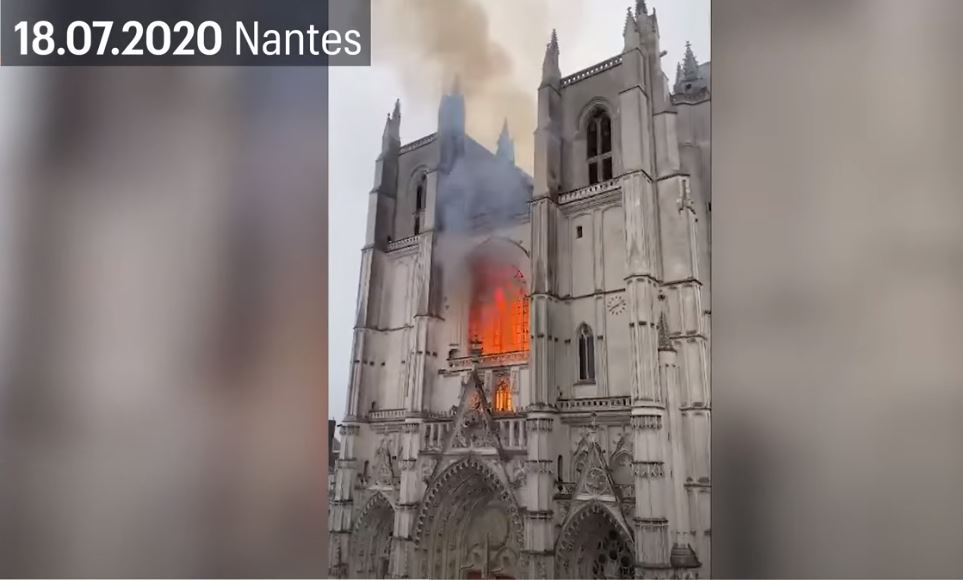
Three fires were started at the site and an investigation into suspected arson is under way, Prosecutor Pierre Sennes said.
The blaze destroyed stained glass windows and the grand organ at the Saint-Pierre-et-Saint-Paul cathedral, which dates from the 15th Century.
It comes a year after the devastating fire at Notre-Dame cathedral in Paris.
But the local fire chief said the fire in Nantes had been contained and was “not a Notre-Dame scenario”.
The fire began in the early morning, with massive flames visible from outside the building. More than 100 firefighters brought it under control after several hours.
Newsagent Jean-Yves Burban said he heard a bang at about 07:30 local time (05:30 GMT) and saw flames when he went out to see what was happening.
“I am shook up because I’ve been here eight years and I see the cathedral every morning and evening. It’s our cathedral and I’ve got tears in my eyes,” he told Reuters.
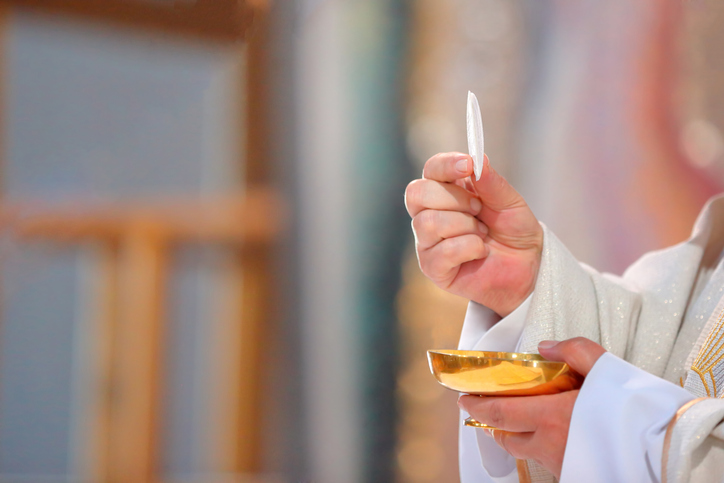
Priests and parishes are busy with the “huge task” of rescheduling thousands of First Communions, with social distancing doubling the number of ceremonies involved.
It remains unclear if children making their First Communion will have to wear masks.
One Dublin priest told the Irish Independent that the current guidelines suggest wearing a mask, but added: “We haven’t directly suggested to parents or children that they should wear one. We leave it up to individuals to choose”.
Fr Gerry Corcoran is moderator of four parishes in Donaghmede-Clongriffin-Balgriffin. In Holy Trinity parish in Donaghmede, there are 210 children for holy communion and 168 for confirmation from the parish’s seven schools.
Fr Corcoran stressed that the ceremonies would be “minimalist”, with no choirs, reduced in size and with everyone carefully socially distanced within the church in compliance with Covid-19 restrictions.

The Governor of Louisiana in the US has called for three days of prayer and fasting for people affected by coronavirus at a meeting with state religious leaders.
During a press conference on Thursday to discuss the state’s response to COVID-19, Democrat John Bel Edwards said that he received a request for the spiritual practice during a teleconference with religious leaders from across the state which he engages in every three weeks.
Acknowledging the unusual nature of the move, he said prayer and fasting are “a spiritual diet and exercise that I as a Catholic Christian believe is very important, anyway”.
The governor said he will be fasting from lunch Monday through Wednesday of this week, and “praying for the people of Louisiana,” especially the sick, their caretakers, and the families of those who have died from COVID-19.
“So if you’re inclined, please join me and the First Lady and faith leaders of Louisiana, regardless of your denomination or your religion, and we would ask that you join us in prayerful reflection and fasting,” he said.

The Catholic Church’s marriage service has welcomed Government funding in Northern Ireland to support marriage and family life during Covid-19.
Accord Northern Ireland Catholic Marriage Care Service has received £40,293 from the Department for Communities, in partnership with the National Lottery Community Fund. This funding will ensure that the charity can continue to support marriages, relationships and families during the Covid-19 crisis.
Accord’s NI Regional Director, Deirdre O’Rawe said; “The nature of the pandemic is having a significant impact on everyday life but its effects are very particularly felt amongst the most vulnerable in society. Accord NI is delighted to receive this funding and to continue playing a vital role along with other charities and voluntary sector agencies, in combating the impact of Covid-19 on marriages, relationships and families”.

Churches and clergy in Northern Ireland will not be forced to conduct same-sex marriage ceremonies, according to just published legal guidelines.
The regulations allow for officiants of churches to be appointed to solemnise same-sex religious marriages, with the consent of their governing authority.
However, they also put in place protections so that religious bodies (and individual officiants) “cannot be compelled by any means, including by the enforcement of a contract or a statutory or other legal requirement, to perform same-sex marriages or otherwise be involved in same-sex marriages.
The statement adds: “Equality law protections are also in place so that religious bodies and individual officiants will not unlawfully discriminate if they refuse to solemnise marriages because of the sexual orientation of the couple, and we have extended the protections to cover premises such as church halls and other buildings owned by (or on behalf of) a religious body, except where the premises are used solely or mainly for commercial purposes.”
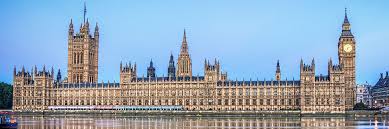
An attempt to add two extreme abortion proposals to the UK Government’s flagship Domestic Abuse Bill has failed.
One would have lifted all restrictions on abortion up to 28 weeks. Another would have allowed both medical and surgical abortions to take place in any location if a woman were in an abusive relationship.
However, a range of MPs with disparate views on abortion argued against the amendment on the basis that abusers would use the law to force abortions on women they were controlling.
Sensing defeat, Labour MP Diana Johnson withdrew the amendment, rather than have it be defeated in a vote, while the other proposal was not even put to a debate.
Additionally Pro-life MP Fiona Bruce MP put forward an amendment calling for a review of the current temporary measures allowing ‘DIY’ abortions. The amendment called for the Government to conduct an “an inquiry into the safety, number, and impact of abortions carried out under the temporary coronavirus crisis provisions where the place of abortion was the woman’s home”.
The Government subsequently agreed to a full inquiry into the temporary ‘at-home’ abortion measures.
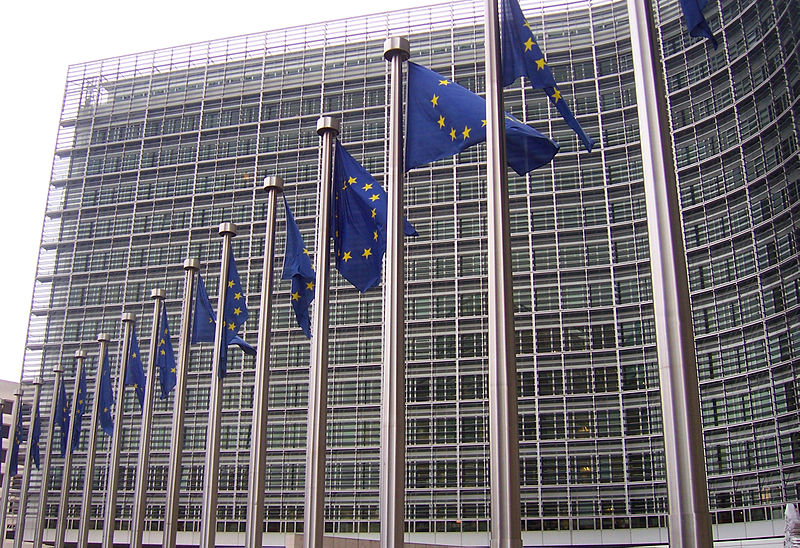
A Hungarian Christian Democrat member of the European Parliament has warned that growing secularism is to blame for Europe’s silence on human rights violations against religious minorities.
As the parliament debated the 2019 human rights annual report, György Hölvényi MEP insisted that “if Europe, guided by extreme secularism, is silent on violations against religious minorities, it commits complicity in the persecution and death of millions of people around the world”.
Mr Hölvényi warned that it is long-time experience that EU does not put enough pressure on governments that violate religious freedom in the world. Therefore, he said, repressive regimes simply see the EU attitude as one of consent. As a result, the governments concerned are free to continue violations, including against religious minorities.
“What needs to be done is clear: Europe must be strong and consistent. EU diplomacy must speak up whenever possible to protect persons and communities persecuted for their religious beliefs, both bilaterally and multilaterally,” he said.

The world is ill-prepared for a huge drop in population between now and the end of century. It is set to have a “jaw-dropping” impact on societies, say researchers.
Falling fertility rates mean nearly every country could have shrinking populations by the end of the century.
And 23 nations – including China and Japan – are expected to see their populations halve or almost halve by 2100.
Countries will also age dramatically, with as many people turning 80 as there are being born.
Researchers at the University of Washington’s Institute for Health Metrics and Evaluation showed the global fertility rate nearly halved to 2.4 in 2017 – and their study, published in the Lancet, projects it will fall below 1.7 by 2100.
As a result, the researchers expect the number of people on the planet to peak at 9.7 billion around 2064, before falling down to 8.8 billion by the end of the century.
“That’s a pretty big thing; most of the world is transitioning into natural population decline,” researcher Prof Christopher Murray told the BBC.
“I think it’s incredibly hard to think this through and recognise how big a thing this is; it’s extraordinary, we’ll have to reorganise societies.”
The falling fertility rates has nothing to do with sperm counts. Instead it is being driven by more women in education and work, as well as greater access to contraception, leading to women choosing to have fewer children.