
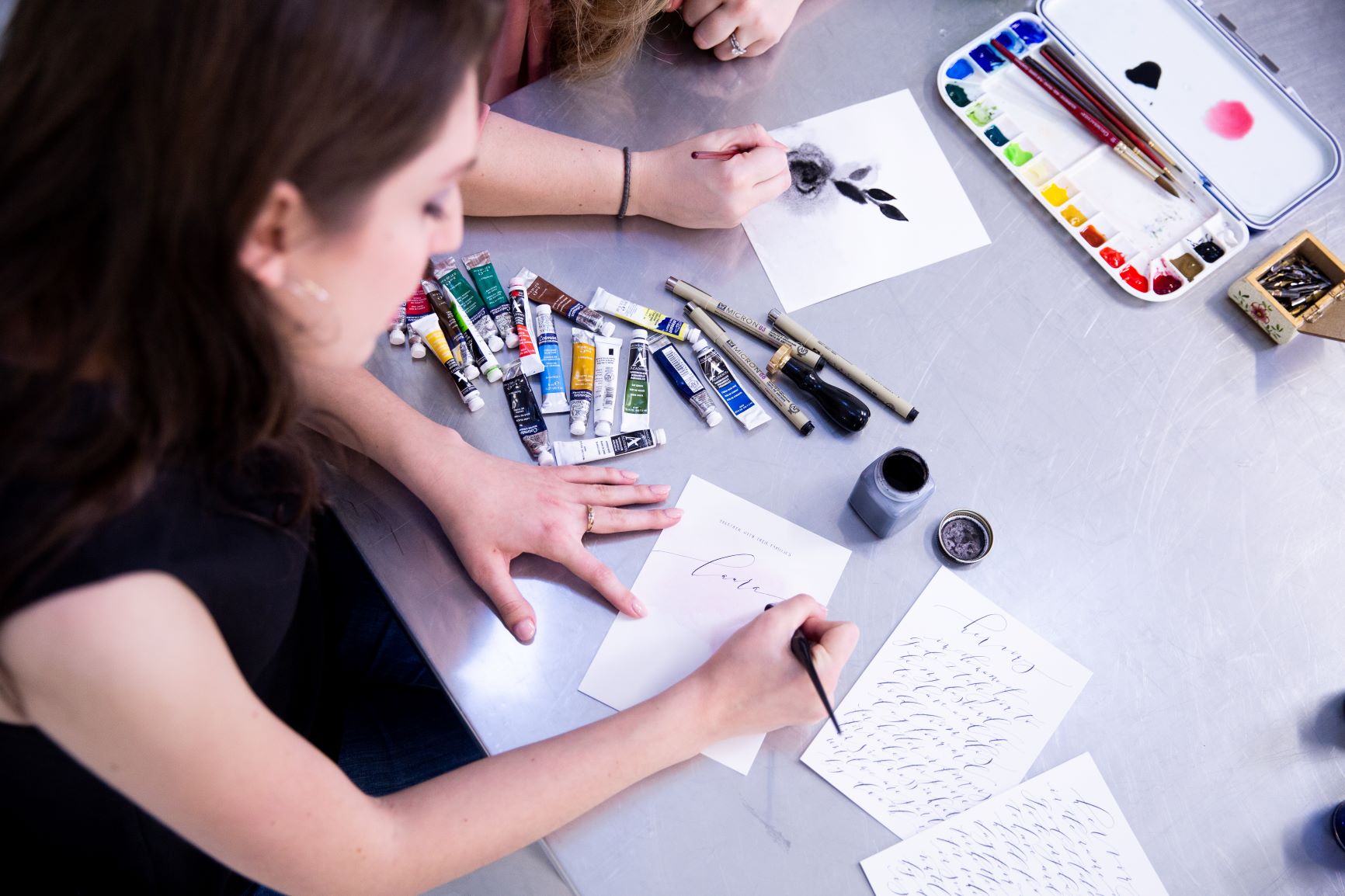
The Arizona Supreme Court has ruled that the city of Phoenix cannot use a criminal law to force two Christian artists to design and create custom wedding invitations expressing messages that conflict with their core beliefs, including same-sex weddings. Such coercion, the court held, would violate the fundamental principle that “an individual has autonomy over his or her speech and thus may not be forced to speak a message he or she does not wish to say.” The court ruled in favor of Joanna Duka and Breanna Koski, owners of Brush & Nib Studio, who were under threat of up to six months of jail time, $2,500 in fines, and three years of probation for each day the city would find them in violation of the law.
Alliance Defending Freedom attorneys representing Duka and Koski filed suit against Phoenix because it interprets its law in a way that illegally controls artistic expression and disregards religious liberty. The court agreed and found that the law violates the freedom of Duka and Koski to express messages consistent with their religious beliefs through their custom wedding invitations.
Pro-life groups in New Zealand have made submissions to a parliamentary committee tasked with reviewing a radical abortion bill which has passed the early stages of the legislative process.
Voice for Life said the Bill would enable women to have abortions on demand, with no restriction up to 20 weeks, and from then until birth if a Health Practitioner “reasonably believes the abortion is appropriate in the circumstances, having regard to the woman’s physical health, mental health and well-being”.
Criticising the proposals, the group said the Bill makes abortions only about a mother’s health and “does away with any recognition of the value of the unborn child”. They recommend rejecting the bill entirely, or at least moderating its most egregious elements.
Another pro-life group, Family First, said that abortion is both a health issue and a legal issue involving both mother and unborn child. They added that “New Zealanders don’t want an extreme abortion law – they want a law that works best for women’s health and well-being, and which considers all human beings involved in a pregnancy.”
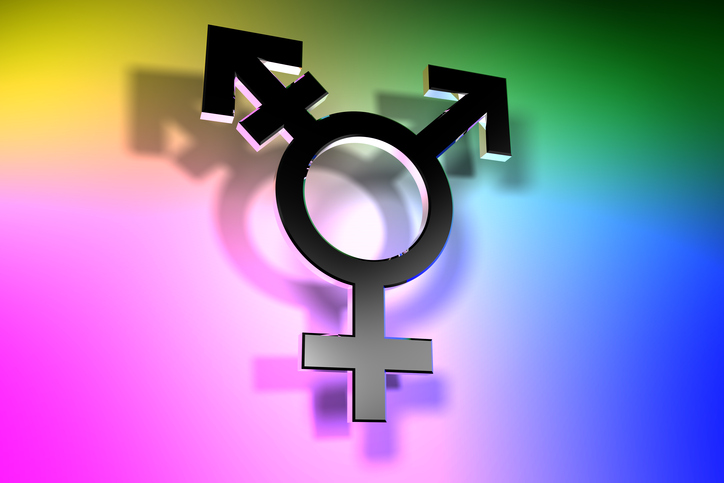
People could be permitted to choose their own sex on the upcoming census of England and Wales, if a controversial draft wording is approved.
In proposed advice for the “What is your sex?” question, the Office for National Statistics (ONS) allows people to give their preferred option instead of biological reality.
It is trialling the question and advice, along with voluntary questions on sexual orientation and gender identity, in four local authority ‘rehearsals’ this autumn.
The advice has been met with a chorus of criticism. University professor Rosa Freedman described it as “ludicrous”, saying, “if people could just pick a race or disability, we would all be up in arms”.
She added that the purpose of the census is to understand what the population is and plan for those demographics. “The census is not there to validate someone’s gender identity.”
Dr Julie Maxwell, an NHS paediatrician, said the change may affect national statistics and health provision. She added that her “biggest fear” is that children do not get “appropriate health services allocated for their needs because of messing around with statistics”.
In Scotland, there was a recent U-turn on the census with a non-binary option being shelved. It followed criticism from politicians who said the consultation process on the question had “serious deficiencies”.

Two Scottish politicians have spoken out about the existential threats to their careers from their own political party for cleaving to their Christian principles.
Dr. Lisa Cameron, a Scottish Member of Parliament (MP) faced deselection for her vote against legalising abortion in Northern Ireland.
Meanwhile, an SNP councillor, Chris McEleny of Inverclyde, has claimed party bosses told him to “curtail” his Catholicism if he wanted to be a parliamentary candidate, a claim deny by the Scottish National Party.
Ms Cameron, a clinical psychologist and devout Christian, was one of just two SNP MPs to vote against lifting Northern Ireland’s abortion ban in Britain’s House of Commons in July. After that vote, she said, “the local activists and officials who vet and select candidates said I wasn’t suitable to be an MP for the party because of my views. There were two calls to stand down from my position from local officials”.
Until Saturday, she was the SNP’s only sitting member of the Westminster Parliament not to have been approved as a candidate for the forthcoming general election.
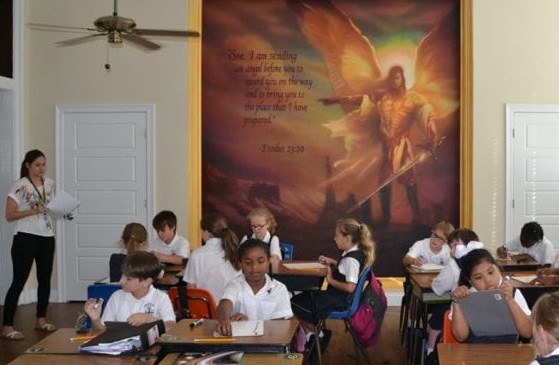
Parents are encountering difficulties opting their children out of religion classes despite a legal right to do so, campaigners have claimed.
Atheist Ireland says it is aware of dozens of cases where parents have been told the subject is a core subject and the right to opt-out should not arise.
One secondary school in Waterford is the subject of a formal complaint from a parent regarding their policy on religious education. However, it says that although religion is “an integral part of our programme”, it accommodates those who wish to opt out. It offers to parents the option of removing their child from the school premises for the duration of religious education. Alternatively, a child may stay within the classroom following an “educationally appropriate activity” but cannot include study or homework.
Meanwhile, a Catholic primary school has made the front pages of the Irish Times for giving out homework passes to students who attend communion choir practice, and none for students who don’t.

A new report detailing China’s crackdown on Christianity was launched in Dublin yesterday, followed by a call on the Irish Government to do more for those persecuted for their faith.
Complied by the advocacy group Church in Chains, it was launched by Dr Bob Fu, a former Christian prisoner in China.
The report documents President Xi Jinping’s “Sinicisation” policy – which aims at the creation of a Chinese version of every religion that conforms with and is subservient to the Chinese Communist Party.
Dr Fu said the persecution has increased dramatically in the last year such that it is now the worst since Chairman Mao’s cultural revolution.
He also called on the Minister for Foreign Affairs, Simon Coveney, to specifically raise the matter of Christian persecution. Speaking to Spirit Radio, Dr Fu said: “We urge the Minister for Foreign Affairs to publicly express concern about the way Christians are being mistreated by the Chinese regime. And we also urge the Irish Government to raise the matter with the Chinese Ambassador to Ireland here. And the Irish Embassy to China to actively engage with the Chinese Government”.
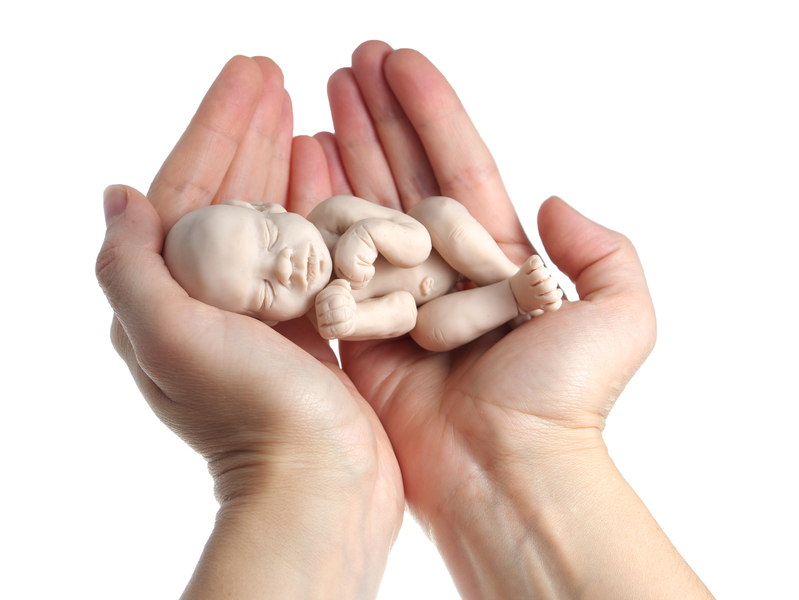
The remains of more than 2,200 medically-preserved aborted foetuses have been discovered at the home of a former abortion doctor who died last week.
Police said they were contacted by an attorney for the family of Dr Ulrich Klopfer on Thursday after they discovered the remains at the former doctor’s home in northeastern Illinois.
Authorities found 2,246 preserved remains, according to a statement from the sheriff’s office, but there was no evidence that medical procedures had been performed at the property.
Klopfer, who died on 3 September, performed hundreds of abortion procedures at a clinic in South Bend, Indiana, over decades.
His license was suspended in 2016 for failing to exercise reasonable patient care and violating documentation requirements, according to local reports.
Indiana Right to Life President and CEO Mike Fichter issued a statement to say he was “horrified” when he learned about the discovery last Friday, September 13th.
“This gruesome news underscores that abortion is not an issue in theory, it is an issue of life and death for unborn baby girls and boys. To think of these children being preserved, for whatever purposes, is simply sickening. This discovery opens a flood of questions that must be answered.”
He added: “We cannot just shake our heads at the horror of this discovery, and then walk away. The time for investigation is now.”
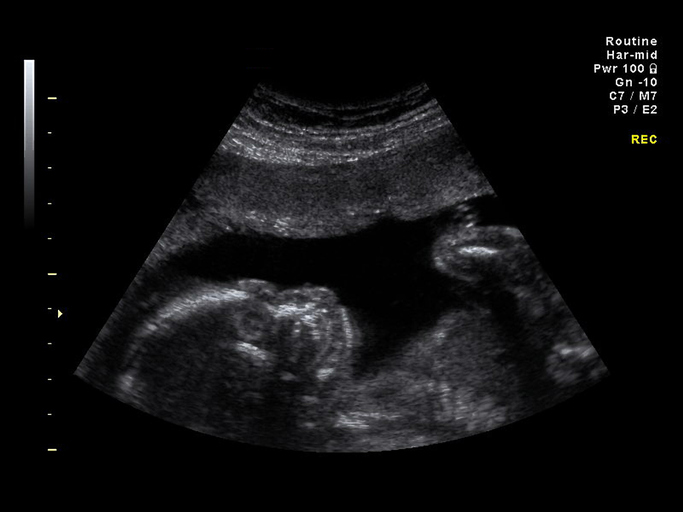
A couple whose healthy baby was aborted because of an incorrect diagnosis of a fatal abnormality are in dispute with the National Maternity Hospital (NMH) over who should lead the inquiry into the incident.
The couple claim that Pranav Pandya, the proposed chairman of the inquiry team and a consultant in foetal medicine at University College London Hospitals, has a conflict of interest because he co-edited a medical book that contained a paper jointly written by one of the NMH doctors involved in their case, reports The Sunday Times.
Pandya, who is chair of England’s foetal anomaly screening programme, was recommended to the NMH by the Royal College of Obstetricians and Gynaecologists in London.

New research suggests distinct but complementary roles for mothers and fathers in married and family life.
According to the research, a mother’s happiness is nearly twice as important as a father’s when it comes to family life and the chances of the couple staying together, according to a study by the UK’s Marriage Foundation.
The findings are based on the organisation’s analysis of the Millennium Cohort Study, which tracked 13,000 married and cohabiting couples, starting nine months after the birth of their child in 2000-1. They were interviewed again when the child was 14.
It found that if a mother was happy, she was more likely to have children who remained mentally well; more likely to remain close to her daughters when they were teenagers; and more likely to have a stable relationship with her partner. A father’s happiness had no bearing on his offspring’s mental health.
Sir Paul Coleridge, founder of the Marriage Foundation, which conducted the study with Lincoln University, said: “Despite all the social changes of the last 50 years, whether we like it or not, there is an ingredient for keeping the whole family happy, which is only available from the mother or mother figure.”

Norway violated the fundamental right to family life through the actions of its child welfare services, the Grand Chamber of the European Court of Human Rights ruled on Tuesday.
Strand Lobben v. Norway was one of several cases appealed to the European Court of Human Rights in which parents complained that Norwegian authorities unlawfully removed their children from their homes. In Strand Lobben, a three-week-old child was taken away from his mother in 2008 based on doubts about her parenting abilities after she had requested support. The child was placed in foster care and his mother was ultimately allowed only eight hours of contact per year with her son. Eventually, all visitation rights were denied, the mother’s parental rights were removed, and the child was put up for adoption.
A concurring opinion by six judges stated, “the authorities in the present case failed from the outset to pursue the aim of reuniting the child with his mother, but rather immediately envisaged that he would grow up in the foster home. This underlying assumption runs like a thread through all stages of the proceedings, starting with the care order.”