

There has been a call to eliminate tax individualisation and allow a childcare subsidy to all parents to be spent as they see fit.
Writing in the Irish Times on Saturday, Maria Steen criticised the Government’s policy preference for subsidising only one form of childcare and penalising single-income families. She wrote that for some children – such as those suffering separation anxiety – even a high-quality institutional care-setting may be unsuitable and so, the Government should support families who wish to choose another model of care for their children.
She added that parents opting to stay at home are at a major disadvantage financially, despite the valuable role they play in their children’s lives, in the life of the wider family and indeed society. “They are penalised by the tax system: a single-income household will pay more in tax than a double-income household with the same income. And they effectively subsidise other parents sending their children to centre-based care, while receiving no State aid for caring for their own children.”
Her proposed solution would be to eliminate tax individualisation, and offer a childcare subsidy to all parents regardless of the form of care they prefer for their children.
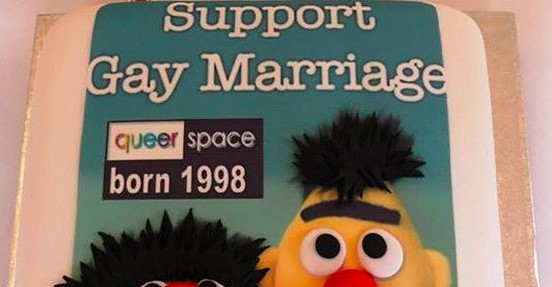
Lawyers representing a man from Northern Ireland who sued a bakery for refusing to make a cake with pro-gay marriage message are going to Europe to challenge a supreme court ruling that its evangelical Christian owners had a right to refuse to fulfill the order.
Belfast human rights law firm Phoenix Law confirmed on Thursday it had been instructed by Gareth Lee to take his case to the European court of human rights (ECHR).
Mr Lee was told by Ashers bakery in 2014 that it would not make a cake with the message “Support Gay Marriage” on it because it was contrary to the owners’ religious beliefs.
Five judges on the UK supreme court found that the bakery did not refuse Mr Lee’s order because of his sexual orientation. They ruled therefore that there was no discrimination on those grounds.
This time, Ashers will not be implicated as the case is being taken against the United Kingdom instead.

A civil rights panel cannot force a battered women’s shelter to admit a trans woman, a federal court in Alaska has ruled.
“Downtown Hope Center serves everyone, but women deserve a safe place to stay overnight,” said lawyer Kate Anderson of the Alliance Defending Freedom, a public interest law practice that represents Hope Center. “No woman—particularly not an abuse survivor—should be forced to sleep or disrobe next to a man. The court’s order will allow the center to continue in its duty to protect the vulnerable women it serves while this lawsuit moves forward.”
U.S. District Judge Sharon Gleason, who was appointed to the bench by former President Barack Obama, ruled for Hope Center, saying a civil rights ordinance banning discrimination in places of “public accommodation”, does not apply to homeless shelters because they are not places of “public accommodation.” The judge issued a preliminary injunction against the commission, barring it from bringing enforcement actions against Hope Center while the case continues.
The government of the Australian state of Victoria is introducing legislation aimed at forcing Catholic priests to break the seal of confession to report child abuse.
The Catholic church says that it supports mandatory reporting and encourages victims to report abuse to police, but will not break the seal of confession – regardless of the legislation or the threatened jail-time that would ensue for priests who disobeyed the law. The Catholic Church said that Catholics have an unconditional right to confess their sins to God using the Sacrament of Reconciliation.
“I uphold the seal of confession but I uphold mandatory reporting as well,” Archbishop Peter Comensoli said in August last year, when the state government first flagged this legal change.
“The principle of the seal of confession is a different question. It has a different reality to it. The practicalities of winding back the seal of confession I think is something that can’t be easily done.”
“There’s been no change in our position,” a spokesman for the Catholic Archdiocese of Melbourne said on Tuesday, adding that it would wait to see the legislation before commenting further.
Priests who refuse to report sexual abuse disclosed during confession will face up to three years in jail under the new laws. The laws will apply to religious and spiritual leaders of all denominations and religions, but will not be retrospective.

Only five priests were ordained in Belgium this year. In the once predominantly Catholic country, the number of newly ordained priests has ranged between three and eight over the last few years.
A new study out of by Georgetown University’s Center for Applied Research in the Apostolate (CARA) found that Belgium has the worst ratio of newly-ordained priests per Catholic head of the population, ranking it 108th in the world.
CARA based the rankings on the most recent figures for priestly ordinations (for 2015, 2016 and 2017) and Catholic population data for 2017 from the Vatican’s Annuarium Statisticum Ecclesiae. In order to avoid skewed results, researchers only included countries that had at least 100,000 Catholics, at least nine ordinations in 2015-2017 and a minimum of one ordination in each of the three years studied.
It found that Belgium had just 19 ordinations from 2015 – 2017, giving a ratio of one ordination for every 431,158 people in its population of 8,192,000 Catholics.
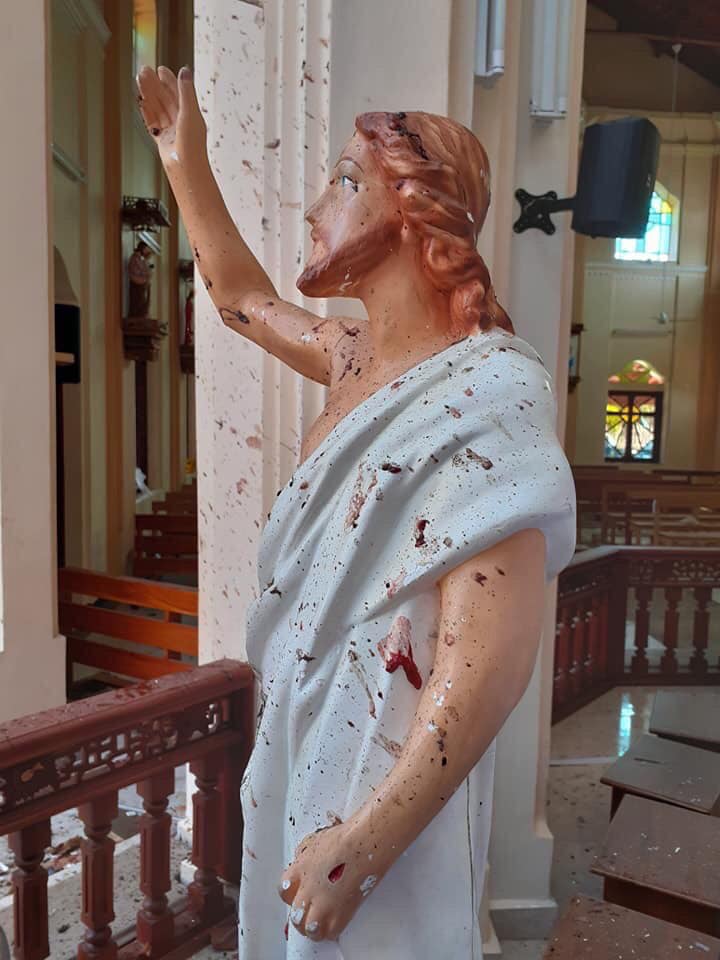
At least 176 children lost either one or both of their parents in the Sri Lanka Easter Sunday bombings, according to the Archbishop of Colombo, Cardinal Malcolm Ranjith.
Of the more than 250 people who died in the bombings in three churches and three hotels in Sri Lanka, 54 were from St. Anthony’s, announced the priest, Fr. Jude Fernando during the service, as armed military personnel guarded the church and frisked all visitors. At least 106 worshippers were wounded in the explosion, he added.
Islamist extremists bombed three churches, including St. Sebastian’s in Negombo (outside Colombo, close to the international airport) and the evangelical Zion Church in the city of Batticaloa in the Eastern Province, several hundred miles from the capital.
On July 21, St. Sebastian’s held their first service since the terror attacks.
In Batticaloa, some injured victims remain hospitalised, some still unaware that their children or spouses have succumbed to injuries, Raghu Balachandran from the National Christian Evangelical Alliance of Sri Lanka said.
Helping victims and survivors deal with their emotional trauma is the biggest need at the moment, but there are few Christian counsellors available, he added.
After the revocation of Kashmir’s special status, Christians in the region are fearful that the change will lead to a wave of Hindu ultra-nationalism and with it, an increase in persecution.
Before the Indian government revoked Article 370 of the Indian Constitution last week, the Muslim-majority region had enjoyed special autonomous status, with its own flag, separate constitution and internal administration.
Many Christians in Kashmir are former Muslims who face pressure within their communities because of their conversion. Now they fear that they will see an increase in persecution under a Hindu ultra-nationalist agenda, Open Doors reports.
There are also concerns that the anti-conversion laws that have made life increasingly difficult for India’s Christians will now be applied to Kashmir.
The laws have been introduced to several Indian states and effectively make it a crime for individuals to convert from the Hindu faith to Christianity, or to seek to persuade Hindus to change their faith.
Hindu radicals are calling to impose the anti-conversion legislation at the national level.
Dr Matthew Rees from Open Doors said: “The tensions in Kashmir are very worrying for religious minorities across India and particularly for those living in Kashmir. This includes the local Christian population, many of whom are from a Muslim background and already experiencing severe pressure from their community. Sources in Kashmir have told Open Doors that they are concerned that this latest development will increase the already high levels of fear amongst the minority communities in the Kashmir. The events in the region make it very clear that no minority in India can expect any level of special protection.”

Women should be able to get the Pill free of charge from their local chemist, according to the Irish Pharmacy Union in order to reduce the number of abortions, despite the lack of evidence that it has this effect.
At present, women need a prescription from a family planning clinic or doctor to be able to buy the contraceptive pill, which costs between €5 and €14.50 per pack. They also have to pay €45 for a appointment every six months to renew their prescription. The initial consultation for the Pill is €60, according to the Irish Family Planning Association. Women who have a medical card can access free contraception.
Access to free contraception for all women was recommended by the Oireachtas Committee on the Eighth Amendment in 2017.
Over the last five years, India has seen an outbreak of religious hate crimes, with an average of one happening every week. While some of them have drawn mass protests, social media outrage, hashtags and even a response from the government, others have gone almost unnoticed.
In April this year, 55-year-old Prakash Lakda, a member of a Christian tribe, was lynched by a mob of Hindu villagers who suspected him of slaughtering a cow in the central Indian state of Jharkhand. Three other tribals from his village were also attacked, leaving them grievously injured.
Now, a police investigation has shown that Lakda’s death might have been as much a result of police complicity as it was of the violent mob. Last week, the investigation revealed how Lakda and the three other victims were ignored by the police for over an hour and a half, as they lay on the street, writhing in pain, after having been attacked for over four hours.
The police, however, have now gone on to charge the three victims on charges of cow slaughter, an offense under local laws that can lead to 10 years of imprisonment, or a fine of 10,000 rupees ( €126). The complaint against them was lodged by the mob that lynched Lakda.
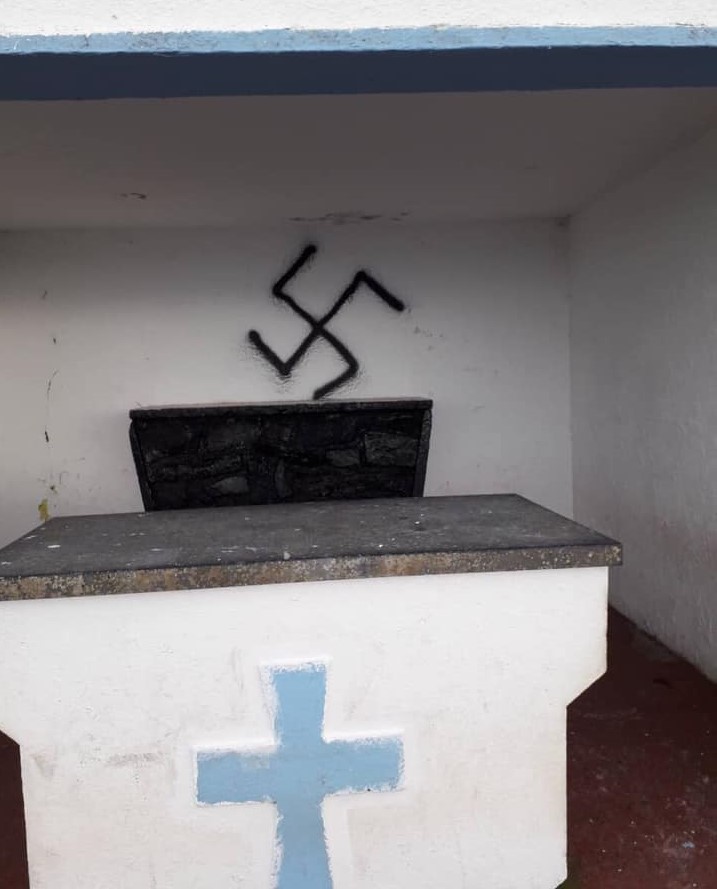
Catholics will suffer more attacks on their local churches, a Tipperary-based priest has warned after Nazi swastikas were painted on a Catholic oratory in his parish. The warning follows three attacks on churches in the midlands as well as numerous other acts of vandalism on religious buildings and statues.
Fr Michael Toomey told the Irish Catholic newspaper that Christians in Ireland are “going to be open to more and more criticism and perhaps sadly attacks” on their churches.
He added that nowadays churches are viewed as public buildings without any sacred quality to them, which leads to people chewing gum and drinking coffee at Mass.
“It is actually the House of God and it’s not that people are being disrespectful deliberately, it’s just the society we live in they see it as just another public building perhaps,” he said, adding that “we need to bring ourselves back to the sacredness of it”.