

Minister for Education Richard Bruton is set to commence key provisions of the School Admissions Act on Wednesday which will prevent Catholic schools from giving enrolment priority to baptised children for the 2019/2020 school year.
Minority faiths, such as the Church of Ireland, jewish and muslim schools, will be allowed to prioritise members of their religion in order to protect their ethos in cases where they are over-subscribed.
Mr Bruton said that exclusion had been introduced to help ensure children of minority faiths could still access a school of their own religion.
However, some schools who are mid-way through processing their admissions for the coming year say the short notice of the change is set to cause “chaos”.
Ultan Mac Mathúna, principal of Holy Cross primary school in Dundrum, Dublin, said: “We’ve been left in the dark as to the application of this rule. It will cause chaos. We can’t give parents a straight answer. Changes to admissions require a decision by the board, and need to be approved by the patron and published.”
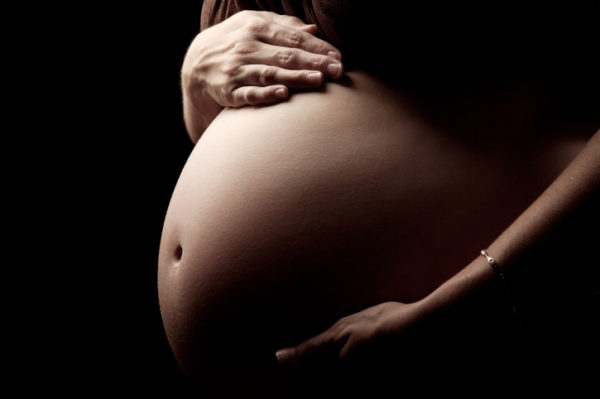
An ideology of total control over pregnancy and unborn children has been proposed by the state-funded National Women’s Council as a jurisprudential philosophy to undergird further liberalisation of Simon Harris’ extreme abortion legislation.
In a submission released yesterday, the NWCI said they believe the effect of our abortion laws should be two-fold: “(1) to ensure safe, equitable, accessible and legal abortion for women, and (2) to institutionalise women’s autonomy over reproductive decision-making.”
Toward that end, the group called for changes to the bill including a preamble to indoctrinate future generations into a politics that paints the crusade for abortion as part “of the long fought for changes to protect women’s health.” This preamble would “serve to reflect Ireland’s past restrictive abortion laws and the legacy of how women have been treated in Ireland.” There is no mention of how unborn children unwanted by their parents are treated, nor how abortion abortion ends the lives of such children in a cruel and callous manner.
The submission also calls for a wider range of healthcare workers to be involved in abortion, that the law be so clear that doctors would never be ‘needlessly cautious’ in applying the criteria for abortion, and that conscience rights of medical personnel which they refer to as “so-called ‘conscientious objection’” would be carefully circumscribed so that no woman would ever be denied an abortion.
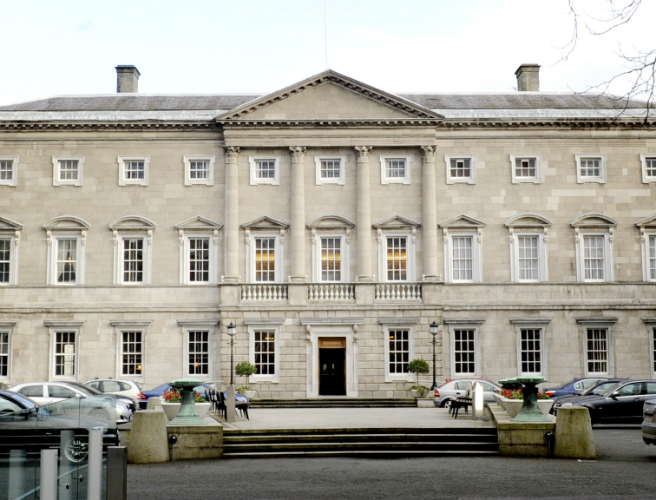
Louth TD Peter Fitzpatrick is resigning the Fine Gael whip over the party’s unstinting support for abortion and he will stand at the next election as an Independent candidate.
Speaking on Tuesday about the reasons for his departure, Mr Fitzpatrick said for the “last 15 months no one was listening to me, I felt isolated, like I was just there to push a button.”
When asked on RTÉ’s Sean O’Rourke programme whether the 8th Amendment had influenced his decision, he replied: “that’s only one thing. I do have a problem with abortion. There’s no way Peter Fitzpatrick is going to vote in favour of 12 weeks.”
Taoiseach Leo Varadkar said he was sorry Mr Fitzpatrick had made this decision. “I know that he has been unhappy for some time and was a strong opponent of holding a referendum on the Eighth Amendment,” Mr Varadkar said.
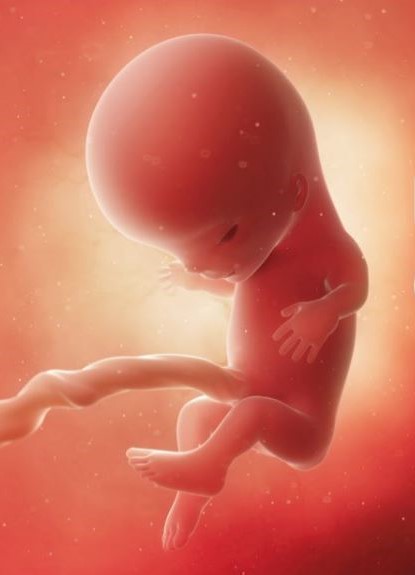
Blood tests that screen for abnormalities such as Downs syndrome are being offered at maternity hospitals as early as nine weeks into a pregnancy and are being urged on pregnant women as a better alternative than amniocentesis. Prof Fergal Malone, master of the Rotunda Hospital in Dublin, says the blood test can be taken from the woman’s arm and it is 99.9pc accurate. A result is returned within a week. Only women who get a positive reading go on to have the diagnostic amniocentesis test for confirmation later in their pregnancy.
Prof Malone said: “Floating around in the pregnant woman’s blood are tiny amounts of the baby’s DNA. A blood sample is taken from the mother’s arm and sent to the lab and it is back in about a week.”
The test can tell the woman if her baby will have Down’s syndrome as well as other abnormalities such as Edwards Syndrome which might result in the child dying naturally before or some time after birth. The screening test costs about €350 in the Rotunda and is not yet available free on the public health system, but amniocentesis is provided without cost.
Prof Malone told the Irish Independent that the Rotunda is now doing around 2,500 screening tests annually. He said: “They are expanding the range of conditions they can test for all the time.
“I find that pregnant women who are older are now very aware of the risk of Down syndrome and they bring it up early on.”

The most senior Family Court judge in England and Wales is set to rule on a case involving a transgender ‘man’ who conceived and gave birth to a baby but is suing to not be designated as the child’s mother.
If granted, lawyers say the child would become the first person born in England or Wales to not legally have a mother.
The baby is the child of a single parent who was born a woman but now lives as a man after undergoing surgery.
Judges have heard that the man had been biologically able to get pregnant and give birth but had legally become male when the child was born.
He wants to be identified as the child’s “father” or “parent” on a birth certificate but a registrar has told him that the law requires people who give birth to be registered as mothers.
Sir Andrew McFarlane, President of the Family Division of the High Court, is due to decide whether only either “father” or “parent” can be listed on the child’s birth certificate following a trial scheduled to take place at the High Court in London in February.
The man has taken legal action after complaining of discrimination.
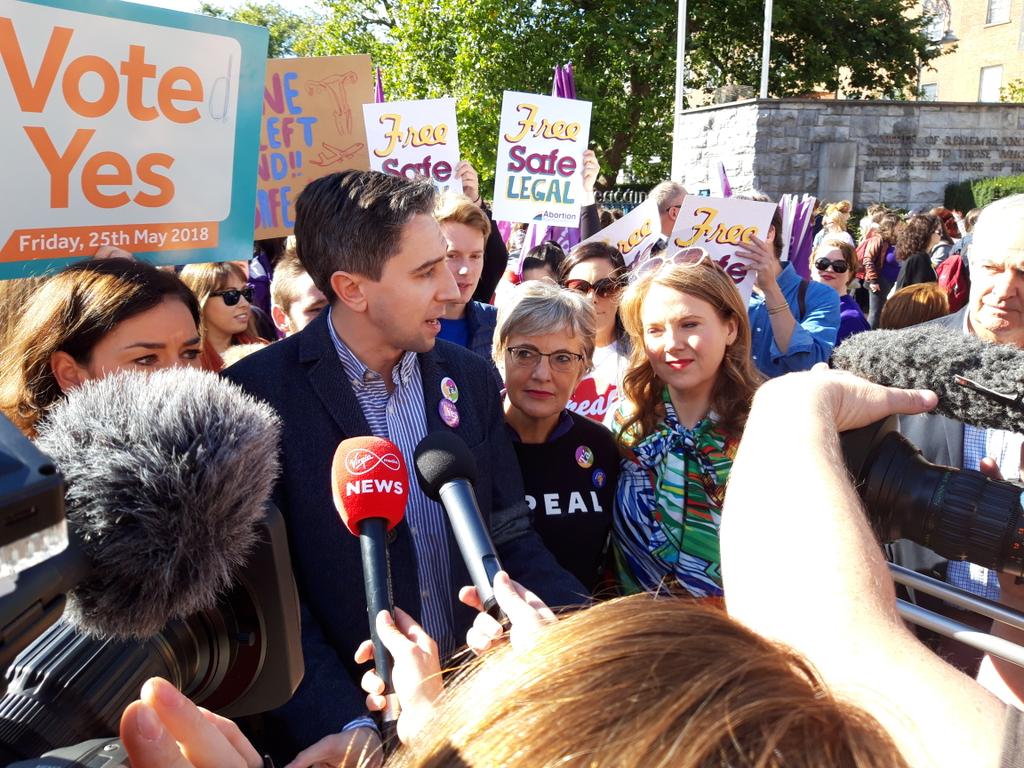
Health Minister Simon Harris participated in a march on Saturday calling for ‘free, safe, and legal’ abortion and he told TDs to ‘get on’ with the task of legislating for abortion. About 2,000 people participated in the march but they included prominent members of the Government such as Children’s Minister Katherine Zappone, Kate O’Connell, TD, and Senator Catherine Noone.
Minister Harris told reporters that women have waited far too long already for abortion and the people of Ireland had, with the referendum result, given a very clear instruction to the Dáil and Seanad “to get on with it.” The march was about ensuring a “focus” was kept on the issue.
During the campaign itself, Referendum Commissioner, Isobel Kennedy, said people were voting simply to retain or repeal the 8th and that there were not voting on subsequent legislation.
The Health Minister also said he wanted the medical community to “step up” and engage with legislators in dealing with the matter.
However the Pro-Life Campaign, in a later press release, said Mr Harris was intending to “railroad” his abortion legislation through the Dáil.
“Minister Harris promised during the referendum campaign that there would be ‘ample time’ to debate the provisions of the abortion legislation. Like so many of the other promises Mr Harris has made, he is now reneging on that commitment,” the group said.
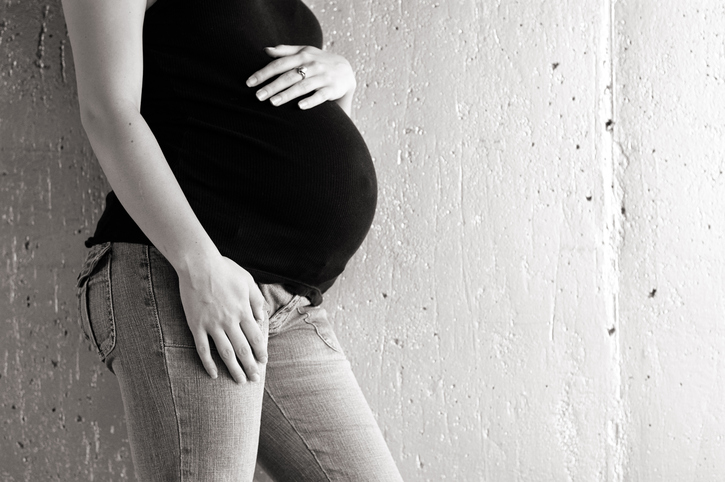
Women will be urged to seek abortions as early as possible so they fall within the 12 week time frame for unrestricted abortion and to avoid ‘less safe’ later term abortions. The instruction will be part of a communications campaign by the Department of Health and the HSE.
One of the key messages, Ministers have been told, will be “emphasising the importance of attending services early, particularly where a termination of pregnancy is being sought under section 13 of the Bill, where the termination must take place before 12 weeks of pregnancy”.
“Early attendance for services is key from a patient safety perspective,” a document given to the Cabinet on Thursday said. “All the international evidence confirms that the earlier the procedure is undertaken, the safer it is for the woman and her health.”
In order for women to obtain an abortion at their GP’s using abortion pills, they will need to attend their doctor before nine weeks of pregnancy. Between nine and 12 weeks, the women will be referred to a hospital for a surgical abortion.

A Government package aimed at forcing taxpayers to fund free abortions will cost the exchequer about €50 million a year, the Cabinet was told as it formally approved abortion legislation at its meeting yesterday. The package will include sex education and free contraception.
Minister for Health Simon Harris told his colleagues of an ongoing delay in negotiating fees with GPs, but he was hopeful of reaching agreement in the coming weeks.
Mr Harris declined to reveal the cost of providing free abortion, but The Irish Times has established that Ministers were told yesterday that the full-year cost for the GP service will be approximately €5 million.
All abortions after nine weeks of pregnancy will take place in a hospital. The full-year cost of performing abortions in acute hospitals is expected to be €7.35 million. The vast majority of abortions take place in the first three months of pregnancy and most are induced through the abortion pill. The Government is also committed to implementing recommendations from the Oireachtas committee that considered the Eighth Amendment on maternity services, which are expected to cost €26.5 million in a full year, plus €3 million in minor capital costs and €1.4 million to cover perinatal hospice services.
It also recommended a programme of sexual health promotion and crisis pregnancy prevention which costs €9.5 million annually.

A former Supreme Court judge has warned against protecting the rights of carers in the home in the constitution, claiming that it would be difficult to define and would also be contrary to the separation of powers.
Her intervention came as support groups said that the Government risked sending a message that it did not value the unpaid work of stay-at-home parents and carers if it did not create an amendment to replace article 41.2.
Catherine McGuinness said that calls to replace a constitutional reference to a woman’s place in the home with a new gender-neutral amendment could have unintended consequences and appeared to back the Government’s preferred path of simply repealing the clause and not replacing it with anything.
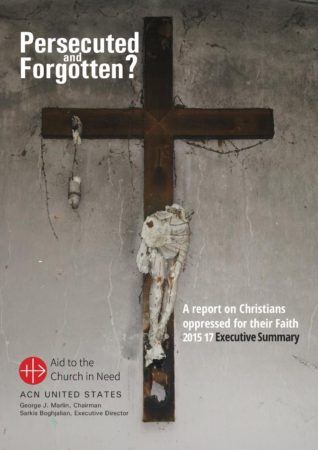
Authorities in India have charged a group of 271 Christians of trying to illegally convert Hindus and have shut down their place of worship. The group are being defended by the international human rights organisation, the Alliance Defending Freedom (ADF). Tehmina Arora, Director of ADF India said nobody should be persecuted because of their faith. “In Uttar Pradesh we now sadly witness the results of anti-Christian propaganda that we have had to put up with over the last few years. 271 people have been wrongly accused and put on trial. The only thing they have done wrong is to be faithful Christians,” he said.
“We should no longer stand by and watch as radical groups target Christians and other minorities for their faith. India’s Constitution protects the right to freely live out one’s faith. The right of Pastor Yadav and many others to follow the faith of their choice without fear of reprisal is clearly being violated.”
The Christians face the accusation of illegally converting hindus by spreading false information about Hinduism to persuade people to embrace Christianity. They allegedly drugged visitors with illegal medication and substances in order to induce them to convert. Moreover, the pastor has been charged with “demonic worship.”
In India, Christians, Muslims, and other religious minorities face the highest levels of discrimination. The most recent PEW Research Center report on restrictions on religion, from 2016, ranked India number one on its list of countries with high social hostility against religious groups.