

The Teachers’ Union of Ireland have launched a ferocious broadside against the Minister for Education’s recent circular that schools must provide alternative classes to students who opt-out of religion.
TUI General Secretary John MacGabhann described the policy, which had arrived “out of the blue yonder” without any consultation, as extraordinary, ham-fisted, poorly thought out, badly worded, premature and lacking in resources. He also criticised an apparent inequality in its implementation as it would only apply to ETB schools and community colleges, but not to other schools.

A new sex education Bill proposed by Solidarity TD Ruth Coppinger TD seeks to remove religious ethos from the Relationships and Sexuality Education (RSE) curriculum entirely, even in religious schools, and require the curriculum to be delivered “factually and objectively”. At the launch of the Bill in Dublin on Wednesday representatives of the Rape Crisis Network, the National Women’s Council, the Irish Family Planning Association and LGBTQI+ advocacy group ShoutOut called for the removal of “religious ethos” from the teaching of relationships and sexuality education in schools. The launch was also attended by representatives of of Atheist Ireland and UCD Students Union. Ms Coppinger said her Bill would require the religious and sexuality education curriculum to be separated and sex education ‘delivered factually’ to cover contraception, sexuality, gender, LGBTQI+ issues and consent.
The bill received pushback from some unlikely quarters with The Times , Ireland, journalist Sarah Carey responding to the National Women’s Council’s endorsement of the bill by saying she finds it “odd to see people complaining, that saying in school, that sex best practiced in loving relationship is a bad thing, when it’s pretty clear that hypersexualisation masquerading as liberation is clearly not serving young women very well”. She continued: “If we’ve a generation of women who seem to have no confidence in their right to say NO – who live under expectation & pressure that they MUST have sex, why is the ONLY source of positivity around relationship based sex being attacked? By feminists!”
The Teachers’ Union of Ireland is expected to refuse to comply with a directive from the Minister for Education to provide alternative classes to pupils who opt out of religious instruction in ETB schools and community colleges. The union is concerned that no additional resources have been provided to schools to cope with implementing the directive and will vote on whether to cooperate with it at their annual meeting this week.
TUI president Joanne Irwin said the circular had “come out of nowhere” and offered no additional resourcing for its implementation. Addressing Minister for Education Richard Bruton after his speech at the conference on Wednesday she said: “You are expecting schools to offer ‘alternative tuition’ – meaning subjects – to students at the time that religion instruction takes place. How can this be done? Have you even considered the implication this will have for the provision of the 400 hours wellbeing as part of Junior Cycle Reform? Minister, we would have brought all these concerns to you if you or your Department consulted with us. Why, Minister, are you singling out some schools and not others?

The planned revision of the school sex education programme announced by Education Minister, Richard Bruton, must accord with the wishes of parents, Iona Institute Director, David Quinn, has said. Speaking to The Irish Times he stated that the Institute had “no objection in principle [to consent being taught in schools], always keeping in mind that parents are the primary educators, with the schools as back-up.” He hoped that “as well as being taught what proper consent is, the children would also learn to get to know and like each other properly first”. At primary level, he said he would hope this would not be before sixth class and that it would be taught in an age appropriate way. He also said “the ethos of the school has to be taken into account”.
Minister Bruton has asked policymakers to review the 20-year-old curriculum on relationships and sexuality education (RSE) to ensure it meets the needs of young people in Ireland today with a special emphasis on information on sexual consent at both primary and secondary level. In addition, he wants topics such as safe use of the internet, the effect of social media on relationships and LGBT issues to be included in sexual education classes at both primary and secondary level.
Speaking on RTE’s Sean O’Rourke show, Minister Bruton said that the challenges young people face have changed dramatically since the RSE programme was first put in place, “for example, we voted for marriage equality, we have changed the definition of consent”. He continued: “I am asking specifically that some issues would be looked at, issues such as consent, the role of social media and internet use, the role of LGBTQ+ matters which have clearly become much more prominent”.
Parents and students are to be consulted on whether smartphones should be allowed in schools. The use of smartphones and tablet devices among young people has been a source of rising concern, with some campaigners calling for an outright ban. Minister for Education Richard Bruton is to issue a circular to all schools shortly asking them to decide whether smartphone or tablet devices should be permitted and, if so, in what circumstances. The Minister’s position stands in stark contrast to Government policy on the age of digital consent for social media accounts. The EU allows member States to set the age anywhere between 13 and 16. While countries such as France and Germany have set it at the maximum possible, Ireland have decided to set it at the minimum possible, precisely because they thought a child’s welfare might require the child having access to social media despite the objections of their parents.

‘We are Family’ has been chosen as the theme for Dublin’s LGBTQ Pride festival in June. The decision was taken by organisers in response to what they called “the exclusion of representation of LGBTQ+ families in literature” for the World Meeting of Families in Dublin in August, which will be attended by Pope Francis.
The liberal Catholic We Are Church group has called for LGBTQ+ families to be granted “a place of honour” at the Meeting “to dispel the implied rejection of LBGTQ + families from this Catholic event”.
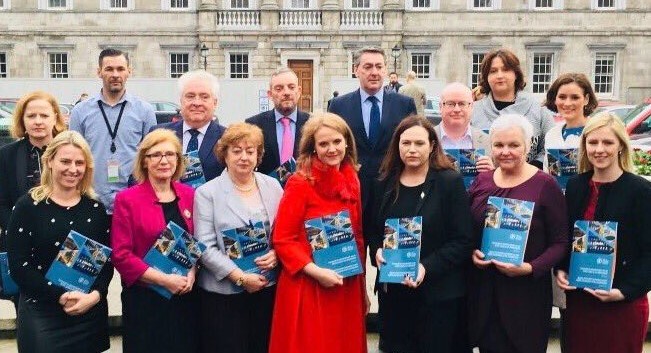
A Fine Gael senator took to social media Easter Sunday to complain that a priest at Knock Shrine brought up the topic of abortion during a homily at Mass on Easter Sunday. Senator Catherine Noone, who chaired the Oireachtas Committee on Abortion, tweeted her six thousand followers: “Easter Mass in Knock Basilica this afternoon with my parents – an octogenarian priest took at least three opportunities to preach to us about abortion – it’s no wonder people feel disillusioned with the Catholic Church.”
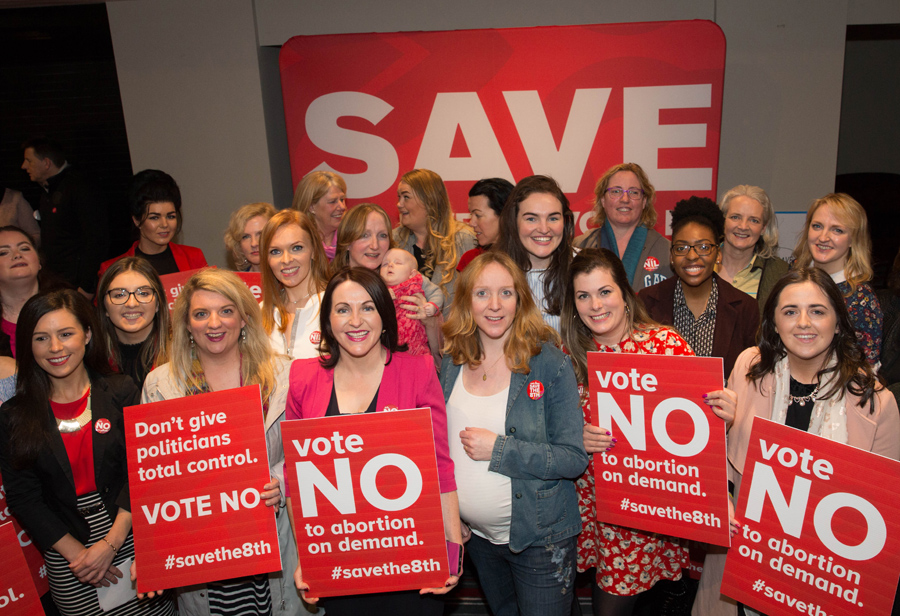
Pro-life groups and members of the faithful pushed back hard against the Senator. The Save The 8th campaign called for Ms Noone to withdraw the comment, claiming it was “embarrassing and wrong”.
“Yes campaigners are allowed to engage in open ageism against our senior citizens,” a spokesman said.
“This is a running theme in the Yes campaign – that old people, who are more likely in their view to vote No, are consistently denigrated,” he added.
Two key moves to restrict denominational education in Ireland will be made by the Government within weeks. Plans by Education Minister Richard Bruton to remove the so-called ‘baptism barrier’, whereby schools may give preference in admissions to pupils of their own faith community in the event of overcrowding, are at an advanced stage. So too are moves to survey parents as to who should run their local Catholic primaries; a first step to actually transferring those schools to non-denominational patrons. According to Katherine Donnelly of the Irish Independent, the twin initiatives represent a “head-on challenge to the foundations of Catholic education,” and comes in the midst of the abortion referendum campaign and while the Church is busy making preparations for the visit by Pope Francis in August.
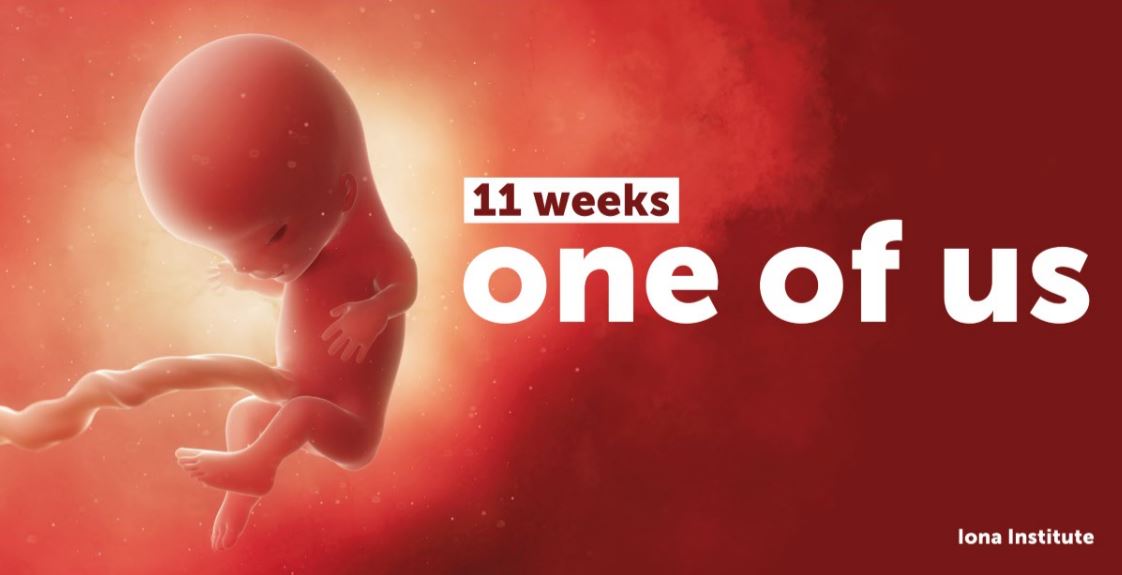
The two most senior Church of Ireland leaders yesterday re-affirmed their opposition to unrestricted access to abortion, and called the proposal to repeal the Eighth Amendment a “stark decision” as the Government have now confirmed that unrestricted access to abortion, for the first 12 weeks of pregnancy, would follow upon repeal of the amendment.
The Most Revd Dr Richard Clarke, Archbishop of Armagh and Primate of All Ireland, and The Most Revd Dr Michael Jackson, Archbishop of Dublin and Primate of Ireland said they had previously expressed concern that the referendum was being understood as something like an opinion poll on abortion. “However, now that the Government has made known the general scheme of a Bill which it would introduce should the referendum on the repeal of Article 40.3.3 of the Constitution of Ireland be passed, voters face a stark decision.” While they said the present amendment was not entirely satisfactory, and might need some modification, “what is now being proposed by the Government – if the Article is repealed – is unrestricted access to abortion up to twelve weeks of pregnancy”.
They continued: “unrestricted access to abortion in the first twelve weeks of pregnancy, or indeed at any stage, is not an ethical position we can accept. There is, for Christians, a very clear witness in the Scriptures that all human life, including before physical birth, has a sacred dignity in the eyes of God”. They concluded: “We therefore ask Church members to think through the issues involved carefully and with prayer over these coming weeks.”