

The Department of Health will publish a policy paper this week outlining the legislation preferred by the Government if the Eighth Amendment is repealed. The 10-page document will largely follow the recommendations of the Oireachtas Committee on the Eighth Amendment to legislate for abortion “with no specific indication” up to 12 weeks, and for ‘risks to health’ after 12 weeks. In the UK, 97pc of abortions take place on ‘mental health’ grounds.
Taoiseach Leo Varadkar had indicated previously that the latter category would have to be a “serious risk” but, according to the Irish Times, it is understood it will not be specific about the potential risk to a woman’s life or health.
It is also understood two doctors – a gynaecologist and a doctor with speciality in the area concerned – will determine whether a woman’s life, health or mental health is at risk before a termination can be provided beyond 12 weeks. This is the same “restriction” mandated by the permissive UK abortion law which allows 1 in 5 pregnancies end in abortion.

The Supreme Court is due to deliver its judgement tomorrow on an Appeal by the Sate against recognising any rights of the unborn beyond the right to life. According to a legal analyst who has followed the case closely and live-tweeted the public hearings, there are three possible outcomes. First would be a partial upholding of the High Court judgement whereby the Supreme Court asserts that the unborn is distinct from a born child and therefore does not enjoy rights under Article 42A, resulting from the 2011 children’s referendum, but does enjoy some rights beyond life. He thinks this is the most likely outcome.
Another possibility is that there are no circumstances, now or in the future, where the unborn could assert rights outside of Article 40.3.3. This is in essence what the State argued and he thinks it less likely because it would be more illogical and would depart from previous Supreme Court jurisprudence.
The third possibility would be to uphold the High Court decision that the unborn is a child and enjoys all the rights of a child, except those rights which necessarily require a child to already be born before they can be enjoyed. While the Law Library expert thinks this would be the most rational outcome, he also sees it as the least likely.

Contrary to the claims of activists, sex isn’t “assigned” at birth—and it can’t be “reassigned” at some later point in life through surgical or hormonal interventions that are often called “sex changes”. That’s according to Ryan Anderson whose latest book “When Harry Became Sally: Responding to the Transgender Moment” argues that sex is a bodily reality that can be recognized well before birth with ultrasound imaging. According to Anderson, the sex of an organism is defined and identified by the way in which it (he or she) is organized for sexual reproduction. Indeed, he argues that that organization isn’t just the best way to figure out which sex you are; it’s the only way to make sense of the concepts of male and female at all.

Surrogacy support groups and family lawyers have criticised a proposed ban on commercial surrogacy in Ireland, The Sunday Times reports. They say this would force 80 couples a year to go abroad to avail of the practice. Many countries ban commercial surrogacy on the grounds that it commodifies children and exploits women.
However, Families Through Surrogacy which is hosting its annual conference in Croke Park next Sunday, has argued the proposed legislation on Assisted Human Reproduction would not be in the best interests of children.
The government plans to allow only non-commercial surrogacy, where only ‘reasonable expenses’ are paid to the birth mother. In countries like Canada these can still run into tens of thousands of dollars.
“We hoped the new legislation might encourage Irish citizens to engage at home to decrease the reliance on overseas arrangements,” spokesman Sam Everingham said. “But the clunky processes, and the exclusions proposed, defeat that purpose”.
‘John’ told The Sunday Times that he and his male partner advertised for a surrogate on a UK website, but found a woman who lived close to them in Dublin.
“At first I was opposed to the idea of this woman using her own egg but she insisted that she was OK with it,” said John.
“She was a very nice lady who had children of her own, and we got to know her very well. I thought it would be better to have an egg donor as there might be issues with the handover otherwise. But after getting to know her, we decided to go for the ‘traditional’ surrogacy route.” This means the woman will hand over her own biological child at the end of the nine months. This is banned almost everywhere.
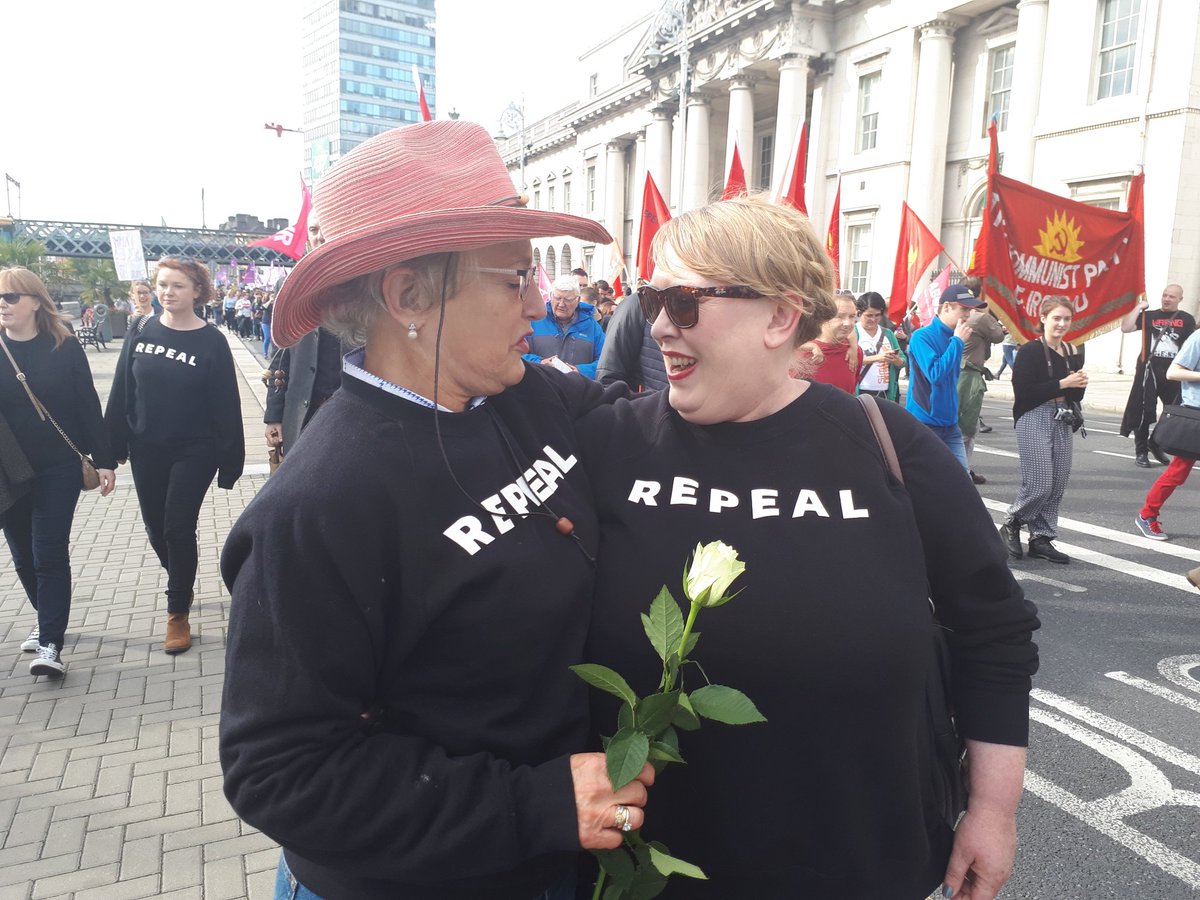
Children’s Minister Katherine Zappone has said the upcoming World Meeting of Families should “not be used as a platform for remarks which exclude, isolate or hurt any family”.
She pointedly told the organizers, led by the Archdiocese of Dublin, to reflect on the fact that Ireland is a country where people support same-sex marriage and adoption by LGBTI people whereas many of the participants at the WMOF will come from countries where “LGBTI people are discriminated against, threatened and abused”.
The World Meeting of Families then provides “a unique opportunity to confront such inequality, discrimination and hate,” and “provide global leadership on inclusion”.
“LGBTI Families like all families should be celebrated and not excluded – that’s the message that should be coming not just from the World Meeting of Families, but from all who believe in justice, equality and fairness,” she concluded. Previously, Minister Zappone called on the Government to lobby the Catholic Church to change its teaching on abortion.

Women who want an abortion after 12 weeks and potentially at any time up to birth “for health reasons” will not have to prove that they are at a “real and substantial” risk under plans for new legislation, reports The Times, Ireland.
According to the newspaper, the Department of Health policy paper on abortion law is believed to closely follow the recommendations of the Oireachtas committee on the Eighth Amendment, which recommended free access to abortion up to the end of the first trimester and then on British-style grounds after that. In Britain, one in five pregnancies end in abortion, almost all on the ‘mental health’ ground.
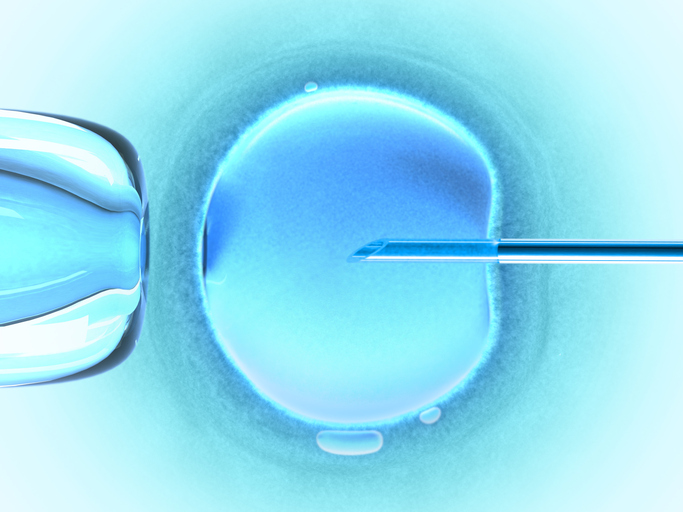
An Oireachtas Committee has been assured that while unwitting incest occurring due to the use of donor sperm and eggs in surrogacy arrangements is a possibility, nonetheless it shouldn’t be a barrier to legislation as significant numbers of children are already risking incest due to being fathered through extra-marital affairs.
President of the Irish Fertility Society Dr John Waterstone made the comments at the Health Committee during pre-legislative scrutiny of the forthcoming Assisted Human Reproduction (AHR) Bill 2017.
Fianna Fáil’s Billy Kelleher stated that “An issue that is raised sometimes, primarily from people who are opposed to IVF and human assisted reproduction, is the whole issue of consanguinity and potential sexual relationships with brothers or half-brothers or sisters and all that flows from that due to the anonymous nature”. He then Dr Waterstone to “elaborate on whether that is just something that is being raised to a level that is unnecessary in terms of the debate around this issue, or is it something that we should be conscious of?”
Dr Waterstone responded that “the possibility that a half-brother and half-sister could unwittingly have babies together because they were both the product of the same donor … is a theoretical possibility.
“But I would like to point out the elephant in the room – in this case it’s misattributed paternity.
“There are a lot of people out there who conceive quite naturally without assisted reproduction at all and whose daddies aren’t the men they think they are.”
“Even conservative estimates say that possibly between 2-5% of children are in this situation where, because of extra-marital affairs, their father isn’t the man that they believe to be the case.”
He added: “Already in society there is the possibility of unwitting consanguinity. So it isn’t just assisted reproduction that can bring about the possibility. There is a far more common situation of unwitting consanguinity for babies that are naturally conceived.”

The French Supreme Court has overturned the assignment of a new “gender neutral” category which had been granted to one person by judicial fiat. The court determined that the distinction between male and female is “necessary to the social and legal organization, of which it is a cornerstone”, and that the recognition of a neutral gender would have “deep repercussions on French law” that would require legislative changes.
The Government here has said it supports a Sinn Fein proposal to introduce a third ‘gender’ class to Irish law called ‘gender non-binary’.
The case concerned a 65 year-old psychotherapist who lives in eastern France who said that he had been “given” a male first name. After years of cover-up, he got married at age 42 and then adopted a child with his wife. In August 2015, a judge from the family court in Tours, his birth city, accepted the mention of “neutral gender” in his documents. However, a Court of Appeals overturned the ruling, saying that it would require “recognizing, in the guise of a simple rectification of his personal records, the existence of another sexual category”.
According to the man’s lawyers, “the Supreme Court refuses to recognize the true identity of these people who are neither men nor women”. In a statement, the plaintiff’s lawyers said that “this decision constitutes violence and discrimination of the applicant and more widely intersex people”.

Lifelong republican Francie Brolly, who was Sinn Féin MLA for East Derry from 2003 to 2010, and father of former GAA All-Ireland winner and RTE commentator, Joe Brolly, has resigned from the party in protest at its complete embrace of abortion politics. “I can’t accept that my conscience can be subjected to public policy,” he said. “My conscience is mine. It’s basically the only important thing I own in the world, and I just can’t accept that Mary Lou McDonald can tell me ‘no, I’m very sorry, we have a policy on this and your conscience is irrelevant’.”
Sinn Féin changed its policy on abortion at its ardfheis in November 2017, voting to support abortion on almost unlimited ‘health’ grounds, and even denying its representatives a conscience vote. Mr Brolly is opposed to abortion under any circumstance.
He said Sinn Féin’s new position demonstrated a sharp disconnect between urban and rural voters. “We’re aware here in the North and all over Ireland that there are basically almost two states down there now, there’s Dublin and the rest, or possibly the cities and the rest. Certainly Dublin will decide which way the repeal vote goes, but I have no doubt in the more rural counties like Donegal that they would not vote for the Eighth Amendment to be repealed. I have absolutely no doubt, and plenty of proof that people are very uneasy.”

The legislature of the US state of Oregon has passed a bill that purports to update the law on advance directives but also paves the way for healthcare representatives to remove access to food and water for vulnerable people with dementia and Alzheimer’s.
“Oregonians should be able to trust their elected officials to act in their best interests,” said Lois Anderson, Oregon Right to Life’s executive director, in an email to LifeNews. “This bill is a betrayal of that trust. The brief hearings held in committee showed significant problems with the bill, especially the testimony from doctors who know well what Oregonian patients need.”
She added: “Supporters of this bill are touting it as a ‘fix,’ but the only fixing that is happening is fixing it so vulnerable Oregonians are left without protections and their right to basic care like food and water,”
The bill now goes to the governor, Kate Brown, to be signed into law.