

Numerous Churches in Australia have joined together to call for a Religious Freedom Act, similar to a charter of rights, that would enshrine in law and spell out in detail the human right to religious freedom of faith communities. “We’ve never needed to protect religious freedom before, but now we do,” said author Patrick Parkinson, a professor of law at the University of Sydney.
Essential to the proposed law, submitted to a Government review of religious freedom, is the right for church-run organisations – including schools and aged care homes – to hire and fire staff in accordance with their values. That would extend to employees who enter into a same-sex marriage following its legalisation late last year. The proposal described that freedom as “an existential issue for faith communities of all kinds”, saying if a Christian school cannot select its employees then it “will be indistinguishable from the state school next door”, just as Christian health facilities would “quickly lose their character”.
The churches have also asked for: changes to the Marriage Act to ensure facilities such as school chapels cannot be used for same-sex weddings against the wishes of the diocese, even if the school principal gives permission; the right for parents to remove their children from public school programs that don’t accord with their values; and the creation of a “national religious freedom commissioner” within the Australian Human Rights Commission.
While the issue of religious freedom was sparked by the legalisation of same-sex marriage, the churches said the issue was much broader, and it was a “completely false dichotomy” to claim religious rights were in conflict with LGBTI rights.
“The new frontier is gender identity,” the churches argued, deeming it a “new and popular” cause. It was also about “the normalisation of a particular, boundary-free attitude to consensual sexual conduct that conflicts with the moral values of a great many Australian parents”.
The Government inquiry into religious freedom was told extra protections for people of faith were necessary in an increasingly secular era in which there is “hatred against people of faith” and where “there is no longer a consensus that religious freedom matters”. Professor Parkinson said a federal law to codify religious freedom “may be rarely invoked” against the states and territories, but would have a “more educative effect” as to the legal boundaries.


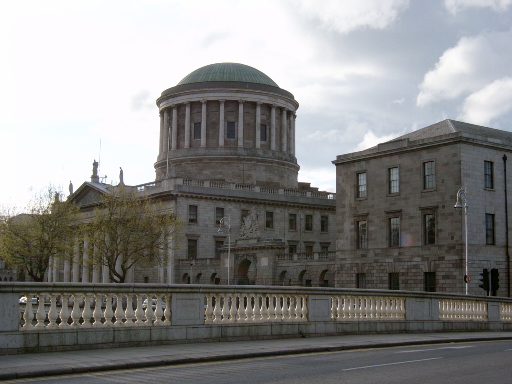
A dispute between a school’s patron and its board of management over the proposed sale of playing fields has escalated with the Minister for Education now seeking the advice of the Attorney General on the matter. At stake is whether the patron of the School, the Christian Brother’s led Edmund Rice Schools Trust (ERST), has the right to sell school property despite the objections of the board of management led by parents of students in the school. The board have taken a case to the High Court prompting the ERST to begin the process of dissolving the board for not acting in the best interests of the school. If the board is dissolved, then the High Court case would likely cease. However, the permission of the Minister for Education is required to effect the dissolution of the board, and he has now sought the advice of the Attorney General on the matter.
A spokeswoman for the Minister told The Irish Times: “The statutory process of dissolution is under way in which the Minister for Education must make a decision having considered the submissions made. The Minister has sought clarity from the office of the Attorney General in relation to the correct procedures to be followed as part of this process. It would not be appropriate to comment on the matters that are related to the dissolution.” It is not known when the Attorney General’s advice would be presented to the Minister, or when he would announce his decision. If the Minister sides with the board of management in this row, it could mark a major shift in the control of schools all over the country out of the hands of denominational patronal bodies.

Sinn Féin TDs will not be allowed a conscience vote on abortion and anyone who deviates from the party line will be disciplined, the party’s new leader Mary Lou McDonald has said. “It’s a matter of private conscience but it’s also a matter of public policy,” Ms McDonald told RTÉ’s The Week in Politics on Sunday. Asked if TDs could vote in accordance with their conscience, she said: “They do have to respect and uphold and vote in accordance with Sinn Féin policy.” If not, she said, they will be subject to disciplinary action by the party.
Her position stands in stark contrast to that of Fine Gael and Fianna Fáil, and even members of the cabinet, whose members freedom to vote and campaign in accord with their conscience on matters of fundamental beliefs is guaranteed. One of the most prominent and outspoken pro-life members of the Dáil is Sinn Féin TD, Peadar Toibin. He previously sacrificed his membership of the Sinn Féin parliamentary party when he voted against the 2013 abortion Act. He has already stated his opposition to repealing the Eighth amendment.

Minister for Health Simon Harris has offered his political support and assistance to two pro-choice campaign groups seeking a repeal of the Eighth Amendment. Mr Harris met the Women’s Council of Ireland and the Coalition to Repeal the Eighth Amendment on Friday afternoon to discuss the upcoming abortion referendum and legislation that would follow its passage. After the meeting, he told The Irish Times, “I was delighted to meet with representatives of the Coalition to Repeal the Eighth Amendment and the National Women’s Council of Ireland to brief them. A strong civil society campaign will be key in the weeks ahead and I look forward to helping in any way I can.”
The Pro Life Campaign, however, accused the Minister of crossing a line. Spokesperson, Dr Ruth Cullen said: “Minister Harris has crossed a line by giving a private briefing to groups campaigning for abortion on demand. I think this latest initiative on his part will be widely perceived as unfair and even undemocratic. He is privy to the information he is imparting to them because he is a minister so any attempt to excuse it as something any TD could do simply doesn’t add up”
Dr Cullen continued: “As Minister for Health, Simon Harris has pointedly failed to meet or engage with people from the pro-life side, including families who say they owe the life of their child to the Eighth Amendment. He is also the Minister who is overseeing the referendum. With this role comes an obligation to maintain a high standard of objectivity. The way the minister is behaving at present does not inspire confidence that the forthcoming debate will be in any way fair.”

A new Catholic school divestment process has been launched by the Minister for Education, Richard Bruton. Parents of pre-school children around the country will be asked to vote on whether they want a greater choice of primary schools in their area. A similar survey, which included parents of schoo-age children, was conducted in 2012. It found that less than 10 percent of parents wanted divestment.
The survey will be finished before the end of March and there is a commitment to agree detailed arrangements on school transfers by the end of June.
The survey will be conducted by local education and training boards (ETBs), which will compile a report on the process to be published on the Department of Education website. Where demand for the transfer of at least one Church-run school is identified, the local bishop will be expected to consult with the school and parents about options offered by other patron bodies.
The reconfiguration of a school from its Catholic patronage would also differ with school buildings being leased from the bishops for a small fee, rather than being sold through the legally complicated process of property transfers.

Dr Brendan O’Shea, of the Irish College of General Practitioners, has said: “A doctor has an ethical obligation not to allow his or her personal moral standards to influence treatment of patients”. He was speaking to the Irish Independent in response to a concern that women in some parts of the country could face difficulties accessing abortion locally, if groups of GPs decide to opt out of providing the abortion pill on conscience grounds. Dr O’Shea said that “Where the doctor has a conscientious objection to a course of action, they must explain this to the patient and provide the names of other doctors available to the patient”, adding that, “The GP must enable women to reach an informed decision, to minimise emotional disturbance, whatever decision is made, and to lessen the risk of further unwanted pregnancy.”

“In Britain, where abortion was introduced with the conviction that it would only be in exceptional cases, today one in five pregnancies end in abortion,” he said. In a pastoral message to the Limerick diocese, Bishop Leahy said “any conversation around the upcoming referendum is not easy for people. While I too find it difficult to talk about it, nevertheless the Gospel and my conscience convince me that I am obliged to speak”.
Addressing those who had an abortion or who knew someone who had one and who may find the current public discussion upsetting, he said “I do not wish to upset. Remember Jesus’ words: ‘do not let your heart be troubled; trust in God’, the God who loves you immensely and whose mercy embraces you like a mother.”
Regarding the unborn child, he said in the midst of the discussion about the Amendment and legislation and how politicians are going to vote, “we can become so distracted that we end up desensitised to the preciousness of the unborn baby”.
“We do indeed need to love both mother and baby in pregnancy, but I believe that in our public commentary at the moment we are often forgetting the unborn baby. And we are talking about a baby. Make no mistake about it. It is a baby,” he said.