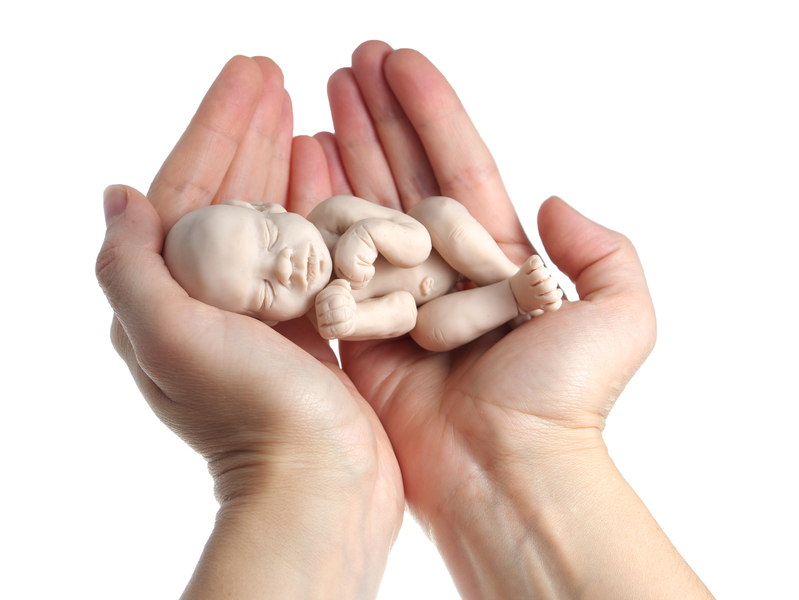
A massive 300,000-strong petition against any change to abortion laws in Northern Ireland has been presented to the Stormont Assembly. In what is believed to be the largest ever petition on any issue placed before legislators in Northern Ireland, the petition was compiled by the pro-life group Precious Life in answer to an earlier Amnesty International initiative which saw a petition of 45,000 signatures backing wider availability of terminations in the region. Presenting the latest petition, Democratic Unionist MLA Jim Wells pointed out that eight million babies have been aborted in the rest of the United Kingdom since the introduction of the 1967 Abortion Act, and added: “I am absolutely convinced the people of Northern Ireland do not want that law to extend to this part of the United Kingdom.”
A new report in Britain insists that more protections for religious believers are needed in the country. The document, issued by the independent think tank ResPublica, is calling for reasonable accommodation of religious beliefs in any forthcoming legislation on a British Bill of Rights. It goes on to point out that existing rights, once used to bolster diversity in Britain, are now used to “erode difference and enforce a uniform and unwelcome conformity on society”. By way of example, ResPublica highlights the current reality in which the right not to be discriminated against on the grounds of sexual orientation trumps that of religious liberty. A truly pluralist society, it argues, should “protect difference and ensure equity between those of different dispositions”.
The Government will refuse to offer the United Nations Human Rights Committee a commitment to altering Ireland’s abortion laws in the wake of an opinion by the Commitee that a woman has suffered “cruel and inhuman treatment” because she could not abort her terminally ill child in Ireland. The State has offered €30,000 to the woman, Amanda Mellet. However, in an expected formal reply to the UN, the Government will give no undertaking to change the law and instead will refer to the ongoing work of the Citizens’ Assembly on the issue and the fact that a constitutional amendment passed in a referendum would be necessary before any legislative change takes place.
Britain’s Prime Minister Teresa May has said that Christians should be able to speak openly of their faith in the workplace. Ms May’s comments came during Prime Minister’s Question Time in Parliament when MP Fiona Bruce raised concerns that Christians are reluctant to mention their faith in public due to a raft of cases in which believers were sanctioned for expressing their beliefs, not least in work settings. In reply, Ms May insisted that Britain has a “very strong tradition” of “religious tolerance and freedom of speech”, and added that the nation’s “Christian heritage is something we can all be proud of”. Agreeing that the ability to “speak freely, respectfully and responsibly about one’s religion” should be a “jealously guarded principle”, she added: “I am sure we would all want to ensure that people at work do feel able to speak about their faith, and also feel able to speak quite freely about Christmas”. The parliamentary exchange follows a report by the Equality and Human Rights Commission (EHRC) which criticised organisations which suppress Christianity for fear of causing offence or breaching equality legislation.

A medical technique to provide for ‘three-parent babies’ could be introduced in Britain within weeks after a panel of experts cleared the way for its use. Mitochondrial replacement therapy allows for inherited diseases to be ‘side-stepped’ but its use of eggs, sperm and DNA from three individuals means it remains controversial, given the unknown consequences for future generations of altering DNA in the process. Despite such concerns, Britain’s Human Fertilisation and Embryology Authority (HFEA) is likely to give final approval to the technique when it meets this month, clearing the way for the first treatments in March of 2017.
The protection afforded freedom of religion in Ireland is weakening, according to a new report. Compiled by Aid to the Church in Need and listing incidents where freedom of religion has been curtailed, the report states that “from June 2014 – May 2016 evidence suggests that religious freedom in Ireland decreased. It warns: “The ability of people to adhere to their religious beliefs is becoming increasingly difficult with, for example, Catholic hospitals being required to implement legislation such as the Protection of Human Life in Pregnancy Bill (2013).” This requires Catholic hospitals to performs abortion under the terms of that law.
The time set aside for the teaching of religion in Irish schools may become ‘discretionary’ under new proposals to be published next month. The proposals, contained in a National Council for Curriculum and Assessment report on primary school education look set to recommend that a planned religion, beliefs and ethics class be incorporated into the wider core curriculum as opposed to becoming a separate class. Thus areas of religion could, for example, be covered in a geography class. The resultant overlap with areas such as faith formation means that a school could have the flexibility to decide how much time to devote to this. While the Education Act (1998) protects the right of schools to set aside reasonable time in each school day for subjects relating to the school’s ethos, it does not specify how much time should be set aside for this subject, allowing for flexibility on the part of schools.
Britain’s Equality and Human Rights Commission (EHRC) has criticised organisations which seek to remove references to Christianity or discipline Christians arising from cases of deeply held beliefs. In a new report, the EHRC criticises UK cinemas for banning a Church of England prayer advert and laments the decision by British Airways for suspending a staff member who refused to remove a cross she wears. One section of the report states: “There is no right in Britain not to be offended and, in our view, respect for people’s right to express beliefs with which others might disagree, is the mark of a democratic society.” Chief of the EHRC, David Isaac, also hit out at public bodies which relabel their Christmas celebrations with secular terms such as ‘Winterval’, for fear of giving offence.

Catholic bishops and other religious educators have stated that the Government’s draft proposal to teach world faiths in schools is “unworkable”. In responses offered to the National Council for Curriculum and Assessment’s (NCCA) invitation for submissions on the world religions proposal, Bishop Alphonsus Cullinan of Waterford and Lismore said, “In its current form, [the curriculum] would be impossible to implement in Catholic schools under my patronage.” Bishop Denis Nulty, meanwhile, said the curriculum represents a threat to Catholic school ethos. In separate submissions, both the Catholic Primary School Management Association and the Association of Trustees of Catholic Schools echoed the bishops’ concerns, describing the curriculum as flawed and potentially unconstitutional. “We cannot recommend to the parents of children in our schools that they would support this planned programme and as representatives of the trustees of the said schools we have no choice but to reasonably object to same,” the Association said.
British former MP Ann Widdecombe has warned that Christians there face increased persecution. Commenting in the wake of the Ashers Bakery ruling, which she described as “something of a nonsense”, Ms Widdecombe pointed out that, historically, being forced to affirm beliefs contrary to conscience is “rightly recognised as the hallmark of totalitarianism itself” and said that the Ashers outcome had been a failure to uphold freedom of conscience. She added that gay rights legislation, and a refusal to allow dissent from it, has led to the closure of adoption agencies, and obstacles being put in the way of Christians becoming B&B owners, adoptive or foster parents, and even bakers. Ms Widdecombe went on to call on people of faith to not “sleepwalk through this” at the risk of seeing more of their liberties removed.