
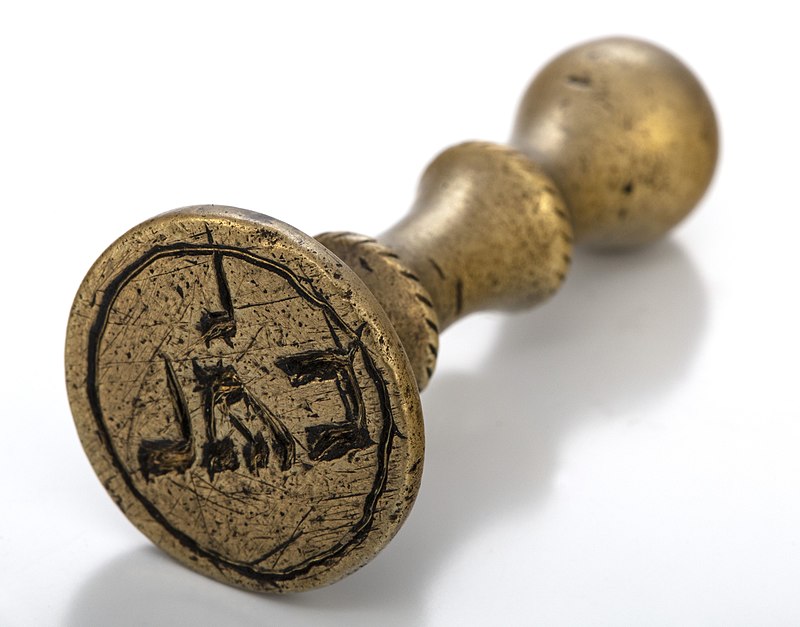
The “entire Jewish community stands fairly and squarely” behind a London-based rabbi who came over to Ireland to perform a number of infant circumcisions and was arrested. Rabbi Jonathan Abraham is allowed to conduct circumcisions in Britain, but not in Ireland and was arrested by Gardai. Three non-Jewish families had hired him to circumcise their babies. Circumcision of baby boys is universal among Jews and Muslims and is also widely practiced in much of Africa. Non-religious circumcisions are also commonplace in some countries including the US.
Ireland Chief Rabbi, Yoni Weider, is concerned that it may soon become impossible for Jewish families to access religious circumcision in Ireland. No rabbi is believed to have been arrested for carrying out a circumcision anywhere in Europe since World War II.
Rabbi Abraham, 47, was arrested in Dublin on July 30 for carrying out circumcisions without being a registered medical practitioner. In countries like Britain it is enough to be trained in the practice. He appeared in court this week.
There were three babies, including a set of twins, aged between three and six weeks, in the house, but only one circumcision had taken place.
The babies present when Gardaí arrived were from Muslim and Christian backgrounds.
The court heard Rabbi Abraham’s fees were £70 for travel, £350 for each child with a €70 discount for twins.
47-year-old Claire Elyse Brosseau struggles with bipolar disorder while 83-year old John Scully, a former journalist and war correspondent, is suffering from post-traumatic stress disorder, anxiety and depression.
Their challenge was launched in response to the Trudeau government’s decision to delay expansion of the program to include those whose only reason for wanting assisted is for reprieve from struggles with mental illness.
“They think it’s begging for death, which it is, but it’s begging for my life, to please, please, please, just let me be free and take it away. Make it stop,” Brosseau told the National Post.
According to the challenge, the exclusion infringes on sections 7 and 15 of the Charter of Rights and Freedoms, which says every person is guaranteed “the right to life, liberty and security.”
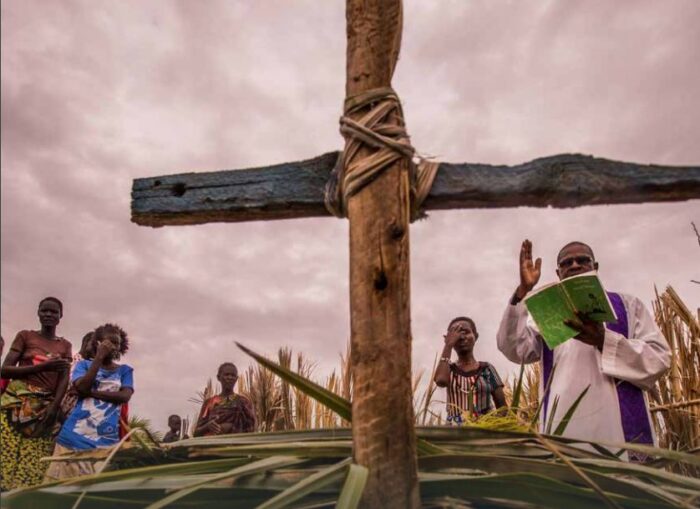
More than 70 Nigerian Christians were killed and another 20 Christian medical students were kidnapped in separate violent attacks in the southeastern Nigerian state of Benue over the past few weeks, according to reports.
The attacks have renewed calls from religious freedom advocates that Nigeria be placed on a watchlist of countries responsible for severe violations of religious freedom.
The Nigerian newspaper The Sun reported that herdsmen, with the assistance of local bandits, attacked the predominantly Christian village of Ayati in the Ukum Local Government Area, killing at least 74 people earlier thid month.
In another incident, at least 20 Nigerian Medical Association students were kidnapped in Benue state while traveling to a conference organised by the Federation of Catholic Medical and Dental Students in Enugu.

Secondary school pupils want more religion in their classrooms and not less, according to a survey by the Children’s Ombudsman.
The survey revealed that 34% of 1,036 young people surveyed desired more religious education in schools while also indicating that only 3% wished to see religious education removed entirely from the curriculum.
A leading figure in Catholic education, Alan Hynes of the Catholic Education Partnership (CEP) welcomed the results of the survey. And said that the young people’s responses need to translate into a new appreciation for religious education.
Mr Hynes, CEO of the CEP, told the Irish Catholic: “I found it very interesting because these were the voices of young people,” he said. “It’s positive from our point of view. This idea that young people are interested and intrigued by these things and why wouldn’t they be?
“The downplaying of religion in the education system that’s becoming vogue, not just among the patrons but you would commonly see people arguing that religion shouldn’t have any place in schools. I think that’s a mistake.”
Assisted suicide could be encouraged by doctors to ease pressures on the public health system in the UK, the public fears.
A survey has found more than four in ten (43 per cent) believe the practice could be used in that way.
The public also feared, by 56 per cent to 27 per cent, that it could lead to a culture where suicide became more normalised.
The finding has emerged in a major poll of the public on euthanasia and assisted suicide which found most people supported legalising it but believed it would backfire in practice.
The survey of just over 2,000 adults revealed 60 per cent backed legalising “assisted suicide” where a doctor handed a patient lethal drugs so they could end their life. Only 11 per cent opposed it.
But nearly half of the public (46 per cent) believed there were too many complicating factors to make it a practical and safe option to implement in Britain.
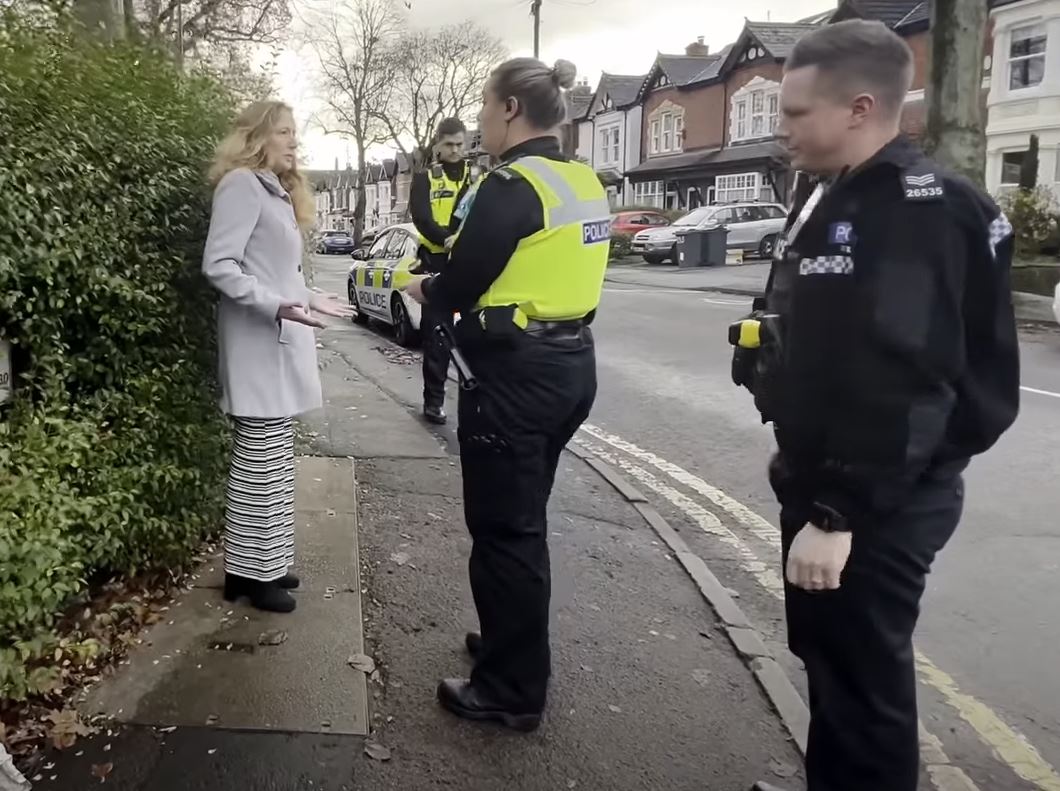
A Christian charitable volunteer who was arrested twice for praying silently in the vicinity of an abortion clinic has received a payout of £13,000 from UK Police in acknowledgement of her unjust treatment, and breach of human rights.
Isabel Vaughan-Spruce issued a claim against West Midlands Police for two wrongful arrests and false imprisonments; assault and battery in relation to an intrusive search of her person; and for a breach of her human rights both in respect to the arrests, and to the onerous bail conditions imposed on her.
The news comes days after reports that Britain’s new Labour Government will intensify a crackdown on silent prayer near abortion facilities by expressly criminalising it in upcoming “buffer zones” legislation.
Commenting on the news of the settlement and payout from West Midlands Police, Isabel Vaughan-Spruce said: “Silent prayer is not a crime. Nobody should be arrested merely for the thoughts they have in their heads – yet this happened to me twice at the hands of the West Midlands Police, who explicitly told me that ‘prayer is an offence’.”
“There is no place for Orwell’s ‘thought police’ in 21st Century Britain,” she added.
‘Assisted dying’ now constitutes the fifth-leading cause of death in Canada.
A new study conducted by research body Cardus, found the number of Canadians being killed by “medical assistance in dying” (MAiD) has risen thirteenfold since legalisation. In 2016, the number dying in this way was 1,018. In 2022, the last year for which data are available, the number was 13,241.
The Canadian scheme is now the world’s fastest-growing euthanasia/assisted suicide program.
It is tied with cerebrovascular diseases as the fifth-leading cause of death in Canada. Only cancer, heart disease, Covid-19, and accidents exceed the number of deaths from MAiD.
MAiD assessors and providers are increasingly failing to treat it as a last resort. The percentage of requests that are denied continues to decline (currently it is just 3.5 percent). Such requests can even be assessed and provided in a single day.
Figures for 2023 may be even worse, with more than 15,000 people lethally injected according to preliminary data.
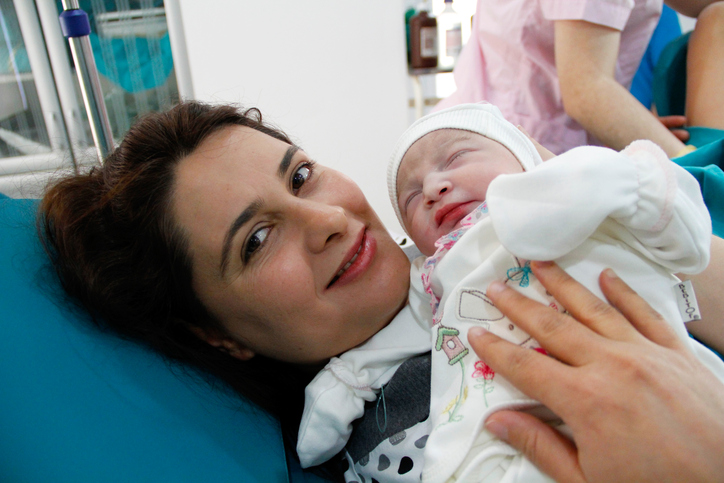
The fertility rate in Hungary is again decreasing despite years of lavish state subsidies.
From a record low of 1.23 children per woman in 2011, the country’s fertility rate rose to 1.59 in 2020, but in recent years it has fallen and levelled off at about 1.5.
However, in the first half of this year the fertility rate stood at only 1.36 babies per woman, the lowest in a decade, according to state statistical service KSH. The fertility rate in Ireland is now 1.5 and is well below the replacement level of 2.1 in almost all European countries despite varying family policies.
In January–June 2024, 37,898 children were born in Hungary, which was 4,059 or 9.7% less than in the same period last year.
In June alone, births fell to a record monthly low of barely 6,000 children in the country of 10 million, or about half the level of live births seen a generation ago.
That total of 6,040 children was 17% or 1,217 fewer than in June 2023.

Too many school children are receiving no faith formation at all, according to Fr Patrick Moore, a priest who has been involved in education for the past 20 years.
Speaking to The Irish Catholic, he said: “I think it is absolutely appalling that [many] young people… have no formation in Faith whatsoever. I’m told they have civics classes in which they talk about world religions, you might as well be talking about various species of butterflies. It has little impact on Faith practice – it’s pretty serious”.
Fr Moore said that in his experience under the Education Training Boards (ETBs), established in 2013, there has been an “appalling lack of faith formation”.
He commented that it would be “terrible negligence” to allow children to receive no faith formation regardless of changing demographics.

‘Assisted dying’ for reasons solely related to an eating disorder (ED) has occurred in multiple countries, including those which restrict the practice to individuals with a terminal condition.
That’s according to a new systematic review published in the interdisciplinary journal Frontiers in Psychiatry.
The aims of the review were to identify all known cases of assisted suicide among patients with EDs and to describe the clinical rationales used to grant patients’ requests for assisted suicide.
The study identified at least 60 cases of women in US, Netherlands and Belgium who availed of assisted suicide because they suffered with anorexia. Most were young women.
Reports emphasised that patients with EDs who underwent assisted suicide were not necessarily terminally ill.
However, most government reports did not include descriptive-enough data to verify psychiatric conditions.