

A proposal to criminalise “influence” in public spaces near abortion facilities was debated in the Scottish parliament yesterday, despite warnings from free speech campaigners that such legislation could result in “thoughtcrime” prosecutions as seen in England.
The Bill was launched by Gillian McKay MSP of the Scottish Green Party, who are no longer members of a coalition government following First Minister, Humza Yousaf’s decision to dissolve the Bute House Agreement last week.
The Stage One debate comes despite 77% of respondents to the Scottish Parliament consultation opposing the introduction of so-called “buffer zones”.
Lois McLatchie Miller of ADF UK commented on the odd juxtaposition of pushing an extreme piece of social legislation even as the Government is on the brink of falling: “Following the international embarrassment marking the launch of the recent ‘hate speech’ law, the last thing Scotland needs is more censorial legislation. Yet, even amidst the chaos of a collapsing Yousaf administration, our parliament continues to push measures which could see citizens criminalised for engaging in peaceful conversations, or even offering help”.
An official petition with more than 203,000 signatures has triggered a parliamentary debate in the UK on legalising assisted suicide.
Critics have decried the debate as ‘ideological’ and lamented the lack of focus on palliative care.
The petition calls on the Government to allocate time for ‘assisted dying’ to be fully debated in the House of Commons and to allow a vote on the issue.
It adds: “Terminally ill people who are mentally sound and near the end of their lives should not suffer unbearably against their will.”
However, Dr Gordon Macdonald, chief executive of the campaign group Care Not Killing, said: “Instead of discussing this dangerous and ideological policy, we should be talking about how to fix the UK’s broken and patchy palliative care system so everyone can have a dignified death.”
Responding to the petition, the Ministry of Justice said assisted suicide “is a matter for Parliament to decide and an issue of conscience for individual parliamentarians rather than one for government policy”.
The Petitions debate will not end with a binding vote.
MPs last voted on assisted suicide in 2015. That bill was defeated by 330 votes to 118.
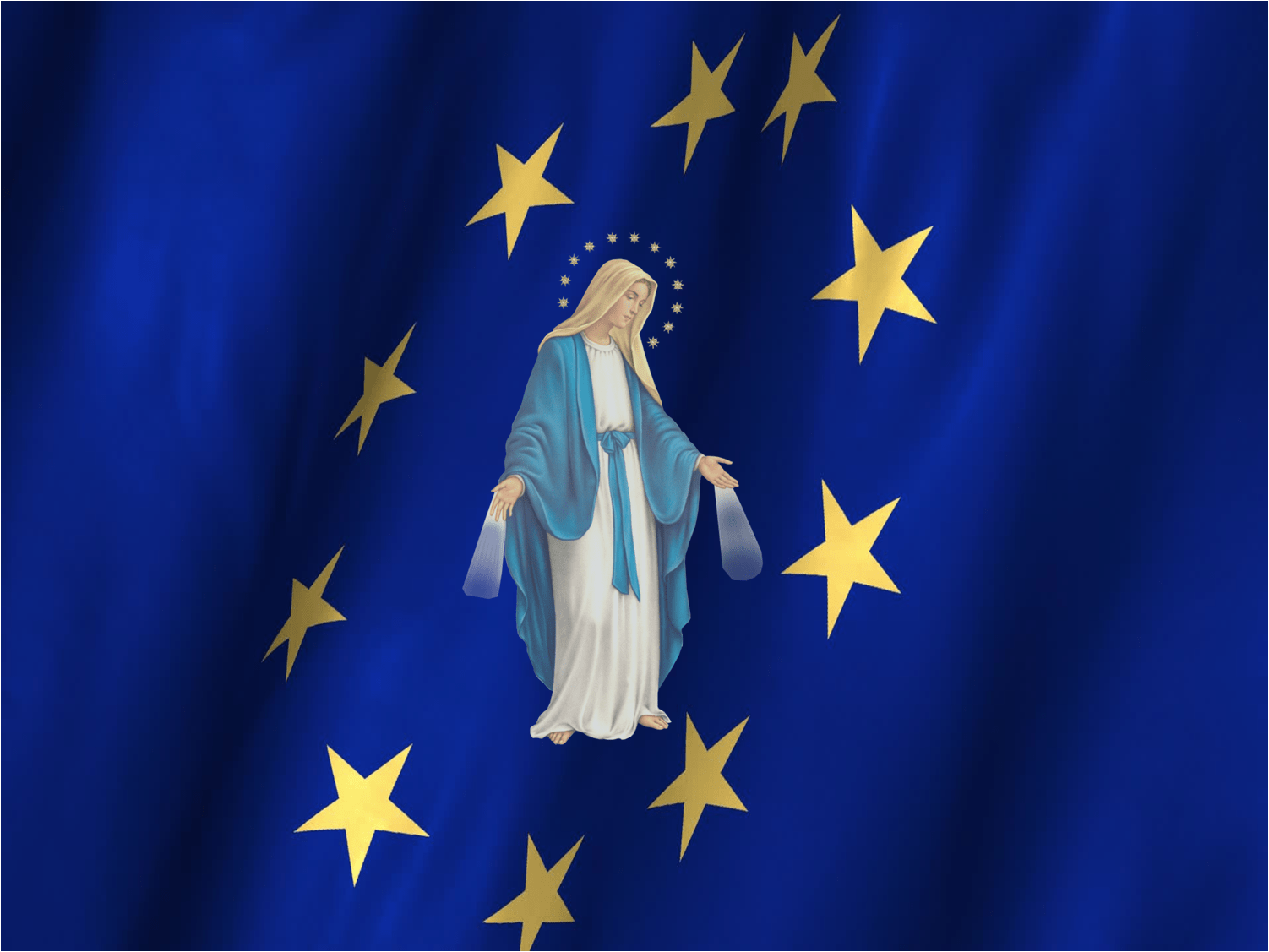
Catholic bishops from four EU countries have issued a new pastoral letter in advance of the European Parliament elections in June.
Adopting a pro-EU stance, the bishops have urged people to “improve it with the tools that democracy offers us” and to “choose candidates who support the European project”.
The bishops recall the foundations of European integration and the issues it faces today, including national, geopolitical, economic, and migratory crises.
Confronted with this “crisis of European consciousness”, they say there is a need for “a new breath to choose unity in diversity and solidarity with individuals”. The prelates refer to a “European humanism” which they say encompasses the values shared by all Europeans and which should guide voting in the upcoming elections.
In particular, the Catholic leaders highlight a “humanism of dialogue” and an openness “to foreigners and migrants,”, while warning against the temptation of “closing off” one’s borders.
During the unveiling of the document, the bishops paid special tribute to Robert Schuman, a sainthood candidate who was declared “Venerable” in 2021.

Younger staff in Catholic schools are less likely to believe in God, according to new research, but it is still a clear majority at 67pc.
The study found widespread ignorance around key documents which set out the vision and purpose of Catholic schools, with up to 80 per cent of school staff either unsure or not aware of these publications.
While the proportion of school staff who say they believe in God is more than 90 per cent among the over-50s, it falls to 67 per cent among those under the age of 30.
Similarly, the proportion of self-declared Catholics who attend mass once a week is 41 per cent, while among the under 40s it falls to 18 per cent.
At primary level, more than half of teachers in Catholic schools “do not believe in a personal God” and under half, 49 per cent, state that they are “not committed and practising Catholics”.
The report notes that most children in Catholic primary schools are being prepared for the sacraments by staff who describe themselves as being other than practising Catholics.
In Catholic secondary schools, one third of religion teachers are not committed and practising Catholics.
The study was undertaken by a team of academic researchers based at Mary Immaculate College and the Mater Dei Centre for Catholic Education, as part of the Global Researchers Advancing Catholic Education project.
The creation of abortion buffer zones which could potentially criminalise “private thoughts” has advanced in the Scottish Parliament.
The proposed “safe access zones” would extend 200 meters around any facility in which abortions are performed and could be extended even further upon request.
The Scottish Parliament’s Health, Social Care and Sport Committee published its “Stage 1” report, expressing broad support for the proposed law.
While the Committee recognizes the “right to protest and private thought as a cornerstone of a free democracy”, it notes that any extension of ‘safe access zones’ or similar prohibition of vigils or protests “would require additional and separate primary legislation and the scrutiny and proportionality assessments that accompany it”.
The report states that the committee had extensive discussion on the issue of silent prayer and “remains unclear how the intent of those silently praying can be interpreted.”
The committee admits that “it could be difficult for the police to reach a clear decision whether the law has been broken by people standing silently praying, in the absence of any other behaviour.”
A debate and vote in the Scottish Parliament scheduled to take place April 30.
The National Women’s Council (NWC) is pushing a European Citizens’ Initiative to gather one million signatures to demand easier access to abortion across the EU.
The aim is to circumvent restrictions on abortion in some states by paying for people to have the procedure done in other, more permissive states.
The ‘My Voice, My Choice’ petition asks the European Commission to “submit a proposal for financial support to Member States that would be able to perform safe termination of pregnancies for anyone in Europe who still lacks access to safe and legal abortion.”
NWC director Orla O’Connor said: “Across Europe, more than 20 million women do not have access to abortion. Here in Ireland, in spite of the success of Repeal, hundreds of women are still forced to travel abroad for care.
“The mandatory three day wait, 12-week limit, and ongoing criminalisation of medics all feed into this situation.
“That’s why we’re joining with sister organisations in Slovenia, France, Spain, Finland, Poland, Austria and Croatia to demand reproductive justice across the continent.”
The European Parliament has broadened the definition of human trafficking beyond labour and sexual exploitation to include the exploitation of surrogacy, forced marriage and illegal adoption.
The EU Council needs to formally approve the agreement. Member states will then have two years to implement its provisions.
MEPs voted on Tuesday with 563 in favour, 7 against, and 17 abstentions to expand the scope of current measures to combat and prevent human trafficking.
The directive says that while some of the newly added practices may already be covered by anti-trafficking laws, they should be recognised as such explicitly.
It continues: “More specifically, as regards trafficking for the exploitation of surrogacy, this Directive targets those who coerce or deceive women into acting as surrogate mothers. The amendments to Directive 2011/36/EU made by this Directive are without prejudice to the definitions of marriage, adoption, forced marriage and illegal adoption, or to those of offences related thereto other than trafficking, where provided for in national or international law. Those rules are also without prejudice to the national rules on surrogacy, including criminal law or family law.”

The Parliamentary Assembly of the Council of Europe (PACE) has unanimously adopted a Report on “The protection of children against online violence”.
It treats child exposure to pornography as a type of online violence that children are particularly vulnerable to as they watch it massively and suffer serious consequences.
Written by Irish Senator Joseph O’Reilly of Fine Gael, the text says that “Preventing the exposure of children to pornography is particularly important, given the established effects on behaviour and development”.
It notes that “pornography consumption [is] significantly associated with an increase in verbal and physical aggression”. It also highlights the existence of “a link between pornography consumption and compulsive sexual behaviour disorder” and “a correlation between pornography and sexual violence between young people”.
It also states that “Pornography must be understood as a public health issue, for which States are responsible for taking appropriate measures, including education and awareness-raising measures”.
It now goes to Committee of Ministers to act on it.
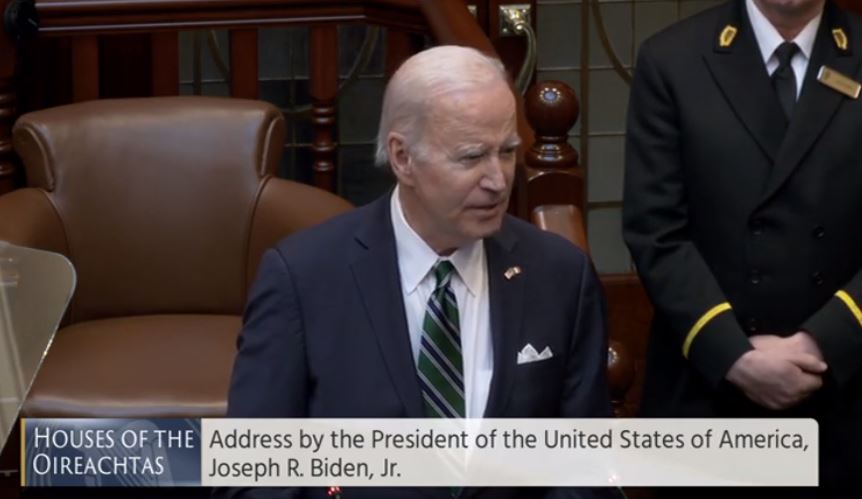
Landmark US civil rights legislation protecting women from sex discrimination has been redefined to prohibit discrimination based on a person’s “gender identity” instead.
This means rules that used to protect women and girls’ spaces from men might now be used to ensure biological males who identify as women can access those same spaces.
It is unclear how this will be applied to female bathroom and changing areas and to female sports competitions.
The new interpretation of the Title IX protections, issued by the US Department of Education on Friday, April 19, apply to all schools and universities that receive federal funding.
According to the executive, such educational institutions cannot carry out “different treatment or separation on the basis of sex,” which includes a prohibition on any policy or practice that “prevents a person from participating in an education program or activity consistent with their gender identity.”
Alliance Defending Freedom Legal Counsel Rachel said, “the Biden administration’s radical redefinition of sex turns back the clock on equal opportunity for women, threatens student safety and privacy, and undermines fairness in women’s sports.”

Facebook has restricted two of The Irish Catholic newspaper’s posts saying they are suspected of breaching ‘hate speech’ and ‘violence and incitement’ community standards respectively even though the two posts did no such thing.
The first post linking an article with the headline ‘Priest will continue blessing planes despite airport ban’, was flagged for potentially going against their standards for ‘violence and incitement’.
The second post, highlighting the Catholic Education Partnership’s (CEP) stance on defending the integrity of faith-based programmes in Catholic schools which ran under the headline ‘Catholic schools staunch on religious cert requirements as INTO put on pressure’ was flagged as potentially contravening their ‘Hate speech’ standards.
Facebook states: “We define hate speech as language that attacks people based on their: Race, ethnicity, national origin or caste; Religious affiliation; Sexual orientation; Sex, gender or gender identity; Serious disabilities or diseases.”
A review has been requested by The Irish Catholic but no response has yet been received. There was also no response from their press office.