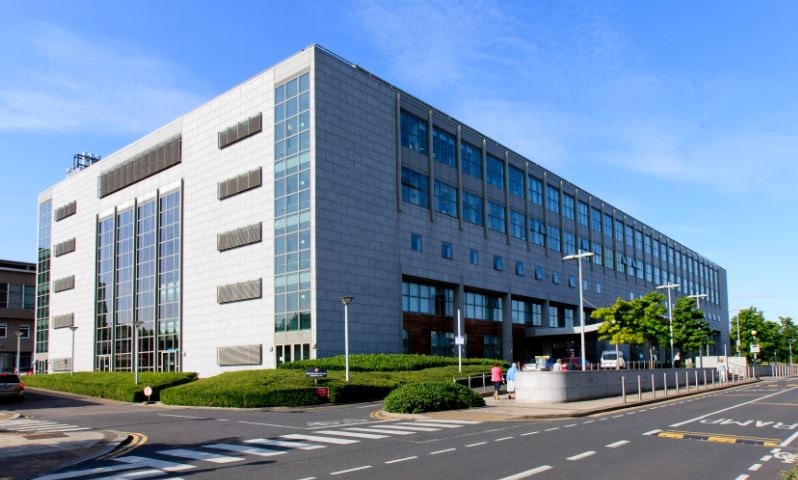
Staff and patients are upset at the removal of all Catholic imagery from St Vincent’s University Hospital, after the hospital’s controversial transfer from the Religious Sisters of Charity (RSC).
All crucifixes and holy images – including of the hospital’s founder Mother Mary Aikenhead – were removed from public display this year in the hospital, while the Blessed Sacrament will no longer be housed in one of the two chapels in the South Dublin hospital.
In a statement to the Irish Catholic, St Vincent’s Holding Group (SVHG) said all religious artefacts had been removed and an inventory taken following the transfer from the Sisters to the SVHG. A new National Maternity Hospital will be built on the same campus as St Vincent’s public and private hospital. The land on which the maternity hospital will be built has been leased long-term to the State.
It is unclear why the religious artefacts have been removed. Other publicly-funded hospitals such as the Mater in Dublin still have such artefacts.
The hospital had already removed a large statue of Our Lady from the Merrion Road end of the campus following upgrades to the car park.
The main chapel will continue to facilitate daily Mass and a chaplaincy service is available to patients.
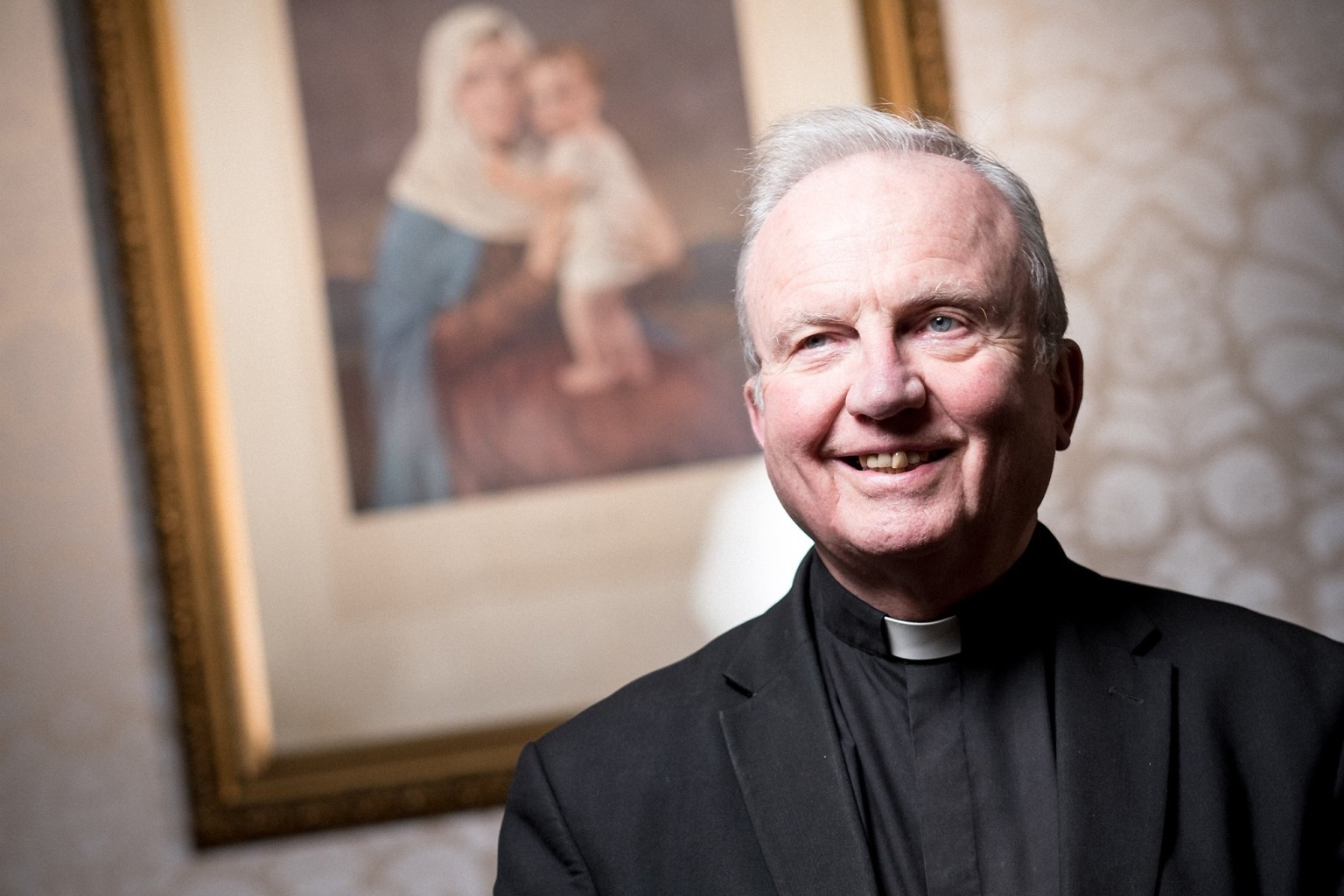
A Catholic bishop has criticised a plan for school sex education class to include lessons on how to obtain an abortion. The order to do so was ordered by the Northern Secretary. The Secretary, Chris Heaton-Harris, said he was doing so following a recommendation by the UN.
Bishop of Derry Donal McKeown said he was concerned that schools not offering the lessons could be “criminalised”.
He added: “Schools want to offer pupils education, not just information.
“If anyone wants to find out about abortion you get something called Google and you type in abortion,” he said.
He enforced the move in Parliament, based on recommendations made in a United Nations report. UN recommendations are not legally binding.
Separately, the Presbyterian Moderator, Dr John Kirkpatrick, said that parents may withdraw their children from the new curriculum, while teachers may boycott the teaching of it.

Childbirth in England and Wales fell to its lowest recorded level over the past decade in all educational groups, a study reveals.
The research, from the University of Oxford’s Leverhulme Centre for Demographic Science, found women had fewer children, and did so later in life, between 2010 and 2020.
Better educated women were delaying childbirth at a greater rate than those who were less well educated, researchers discovered.
The birth rate for well-educated women whose parents were also highly educated dropped from 1.8 to 1.4 children per woman during the period.
Less-educated women had their children younger in life, but the birth rate for this category also saw a drop — showing all women were having children later. The study said it had found a “substantial decline in each education group”, defined either by women’s parents’ education alone or by a woman’s own education relative to her parents’ education.

The Moderator of the Presbyterian Church in Ireland, Dr John Kirkpatrick, said the Northern Ireland Secretary was trying to “impose a particular worldview on the education of children in Northern Ireland”.
Among other things, the course would instruct pupils on how to access abortion.
“In an increasingly pluralistic context, RSE of course should be taught in a sensitive and inclusive manner, where teaching is reinforced and supported by policies and processes that schools have in place around safeguarding, bullying and pastoral care,” he said.
“Young people should have the opportunity to explore their own personal morals, values and beliefs including the moral and ethical considerations around sensitive issues like abortion and contraception.
“The secretary of state’s actions run contrary to these aspirations,” he continued.

Ireland has the highest levels of loneliness in Europe according to a new survey.
Data on more than 20,000 Europeans was collected at the end of 2022 from an online consumer panel.
Findings show that on average, 13pc of respondents reported feeling lonely most or all of the time in 2022, while 35pc reported being lonely at least some of the time.
According to the survey, loneliness is most prevalent in Ireland as over 20pc of respondents reported feeling lonely.
Luxemburg, Bulgaria and Greece followed behind while the lowest levels, all below 10pc, are observed in the Netherlands, Czech Republic, Croatia and Austria.

Irish, UK and US doctors are carefully monitoring gonorrhea detections amid concern at a new antibiotic resistant strain and its potential public health impact given the rate of increase of the illness in Ireland.
Medical chiefs urged people to take sexual health precautions amid warnings about the dangers of presuming such sexually transmitted infections are easily treated.
One strain of gonorrhea, caused by the bacteria Niesseria Gonorrhoeae, is exceptionally resistant to normal antibiotics and treatment regimes.
“It is a reminder that gonorrhea is becoming increasingly resistant, increasingly hard to treat,” warned Dr Jeffrey Klausner who is a consultant with the US Center for Disease Control (CDC).
“We don’t have any new antibiotics. We haven’t had new antibiotics to treat gonorrhea for years and we really need a different treatment strategy.”
The latest Health Protection Surveillance Centre (HPSC) report starkly revealed that case numbers of all five major STDs increased over the past 12 months in Ireland – with all five now being notified at higher levels last year than at 2018, two years before the pandemic struck.
Detections of gonorrhea soared from 2,098 in 2021 to 4,075 last year.

An abortion bill which passed its second stage in the Dáil on Wednesday evening, “goes miles beyond what people voted for”, according to Minister for Health Stephen Donnelly, who is himself strongly pro-choice.
The Bill removes virtually all restrictions on the procedure.
Government TDs were given a free vote. Although an opposition Bill, it passed by 67-64. There were eight abstentions.
Mr Donnelly told Newstalk Breakfast that he abstained because the Bill did not respect the will of the people expressed in the referendum of May 2018.
“I actually looked at the Bill in great detail. The Bill goes miles beyond what people voted for in repealing the Eighth. I made this point to Deputy Smith and to others who were supporting the Bill during the second stage debate.
“I campaigned very hard for Repeal, but the Bill does not respect that vote at all because it goes way beyond that vote.”
Taoiseach Leo Varadkar also sounded a note of caution. He campaigned for repealing the right to life, “but I also believe that when we called for a Yes vote at the time we gave people certain assurances. Those assurances were set out at the time.”
Mr Varadkar said: “This is a sensitive issue, it’s an issue of conscience. It’s about the rights of woman and also about the rights of children.”

The Cork South-West TD said despite the Census figures, nearly 90 per cent of the State’s primary schools remain Roman Catholic and asked would the Government conduct a review of the divestment programme “as a matter of urgency”.
“People shouldn’t be forced to go to school with an ethos which they don’t believe in because of a shortage of multi-denominational schools,” she said. “But this is happening because of a failure of the school divestment programme”.
The UK Government has introduced legislation to ensure that all school pupils in Northern Ireland will be told how and where they can obtain abortion and contraception.
Northern Ireland Secretary Chris Heaton-Harris said he was updating the requirements for relationship and sexuality education (RSE) in the curriculum.
The move has been criticised by DUP MP Carla Lockhart, who claimed that majority opinion in Northern Ireland remains opposed to abortion.
The regulations will make “age-appropriate, comprehensive and scientifically accurate education on sexual and reproductive health and rights, covering prevention of early pregnancy and access to abortion” a compulsory component of the curriculum for students.
The number of births recorded in Ireland in 2022 has plunged by 20pc compared with 2012, according to new CSO figures, despite a big rise in the population overall. The fertility rate is now just 1.7, whereas 2.1 children per woman is needed to replace the current population.
There were 57,540 births registered in 2022. In 2012, there were 72,225 births were registered.
The number of births over deaths has almost halved over the same period from over 43,000 to just under 23,000. This is leading to a fast-aging population.