
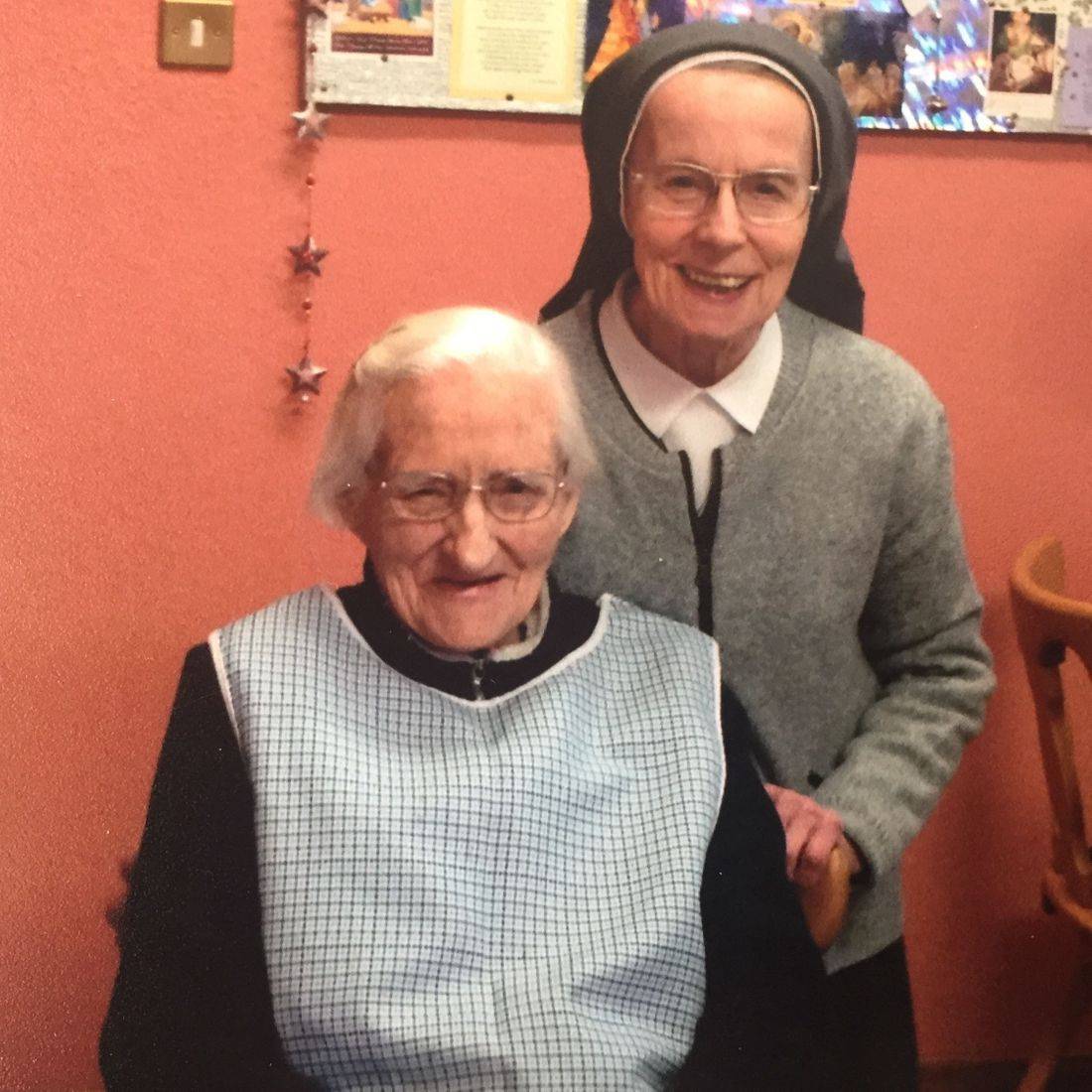
The number of women religious in Ireland has halved in the last 20 years.
This is according to the most recent figures from the 26 dioceses on the island of Ireland. Some of the figures relate to 2021 and so include the effects of the first year of covid.
However, the figures from the other dioceses relate to pre-Covid times and so are expected to drop further once updated statistics are released.
Commenting on the figures, Dr Bronagh Ann McShane told The Irish Catholic the future for female religious life in Ireland and elsewhere is “very uncertain”.
“We’re at a turning point,” she added.

A whistleblower last week leaked a January report from the FBI’s Richmond office entitled: “Interest of Racially or Ethnically Motivated Violent Extremists in Radical-Traditionalist Catholic Ideology Almost Certainly Presents New Mitigation Opportunities.”
According to the report, “radical-traditionalist Catholics” are characterised by their devotion to the Latin Mass, their disdain for modern popes, and their “frequent adherence to anti-Semitic, anti-immigrant, anti-LGBTQ, and white supremacist ideology.”
It also noted its lack of evidence that “radical” traditionalist Catholics have done anything to warrant targeting.
The FBI retracted the document once it was made public saying it didn’t meet the Bureau’s “exacting standards” and was being removed from its system.
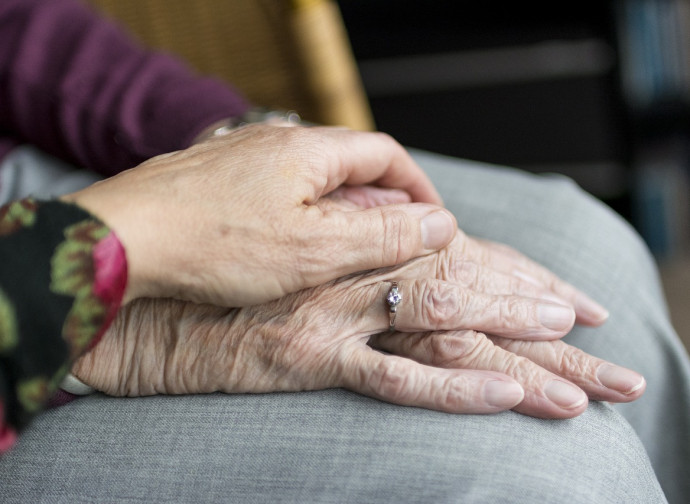
Almost one in three Germans (30 per cent) expect that pressure on the old and sick will increase as soon as active euthanasia is legalised.
This was the result of a survey conducted by the market and social research institute INSA-Consulere on behalf of the Protestant news agency IDEA.
Half of the people (49 per cent) do not share this fear. 18 per cent do not know their opinion, and 4 per cent did not answer.
Remarkable is that young people especially expect increased pressure on the elderly and sick. Among 18- to 29-year-olds, 37 per cent have this fear.
Euthanasia is a much more sensitive issue in Germany than in other European countries. When neighbour-country The Netherlands legalised euthanasia in 2000, the German Minister of Justice, Herta Däubler-Gmelin spoke about a “terrible breach of taboo”.
The reason for the German reluctance lies in the Nazi era. Before and during the Second World War, the word “euthanasia” was used for a killing program for disabled people.

The Seanad has heard that at least ten families in the State have broken up, leaving mothers or a second father with no legal rights to a child born through commercial surrogacy, a practice that is not permitted in almost every European country because critics say it commodifies babies and exploits low income women.
Fine Gael Senator Mary Seery Kearney called for speeding up legislation in the area, because she said women and second parents are ending up “in a very abusive, coercive situation” where children are being “weaponised”.
A bill going through the Oireachtas would provide for future surrogate babies and address those already born through surrogacy where one parent has no standing in law. Italy is currently planned to heavily fine adults who go abroad to use commercial surrogacy. Ireland is on course to have one of the most permissive regimes in Europe.

A charity volunteer and a Priest on trial for praying in an abortion exclusion zone have both been acquitted of all charges in a ruling handed down by Birmingham Magistrates’ Court this morning.
In a viral video in December, Isabel Vaughan-Spruce was seen being searched and arrested by three police officers after saying that she “might be” praying inside her head while standing near an abortion clinic.
The area surrounding the facility is subject to an order which prohibits prayer, distributing information about pregnancy help services, and other activities deemed “protest”.
Reacting to the verdict this morning, Vaughan-Spruce said she was glad she’d been vindicated of any wrongdoing, but added: “I should never have been arrested for my thoughts and treated like a criminal simply for silently praying on a public street”.
“When it comes to censorship zones, peaceful prayer and attempts to offer help to women in crisis pregnancies are now being described as either “criminal” or “anti-social”. But what is profoundly anti-social are the steps now being taken to censor freedom of speech, freedom to offer help, freedom to pray and even freedom to think. We must stand firm against this and ensure that these most fundamental freedoms are protected, and that all our laws reflect this.”

The terms ‘male’ and ‘female’ should not be used in science because they assume sex is binary, a group of researchers has suggested.
The recommendation is one of many made by the EEB (Ecology and Evolutionary Biology) Language Project, which includes scientists in the United States and Canada.
“Much of western science is rooted in colonialism, white supremacy and patriarchy, and these power structures continue to permeate our scientific culture,” some of its members wrote in a paper published in the journal Trends in Ecology and Evolution. In their view, the language used by researchers often bolsters a discriminatory status quo and should change.
Instead of male and female they recommended that biologists use terms such as “sperm-producing” or “egg-producing” to avoid reinforcing “heteronormative views”.
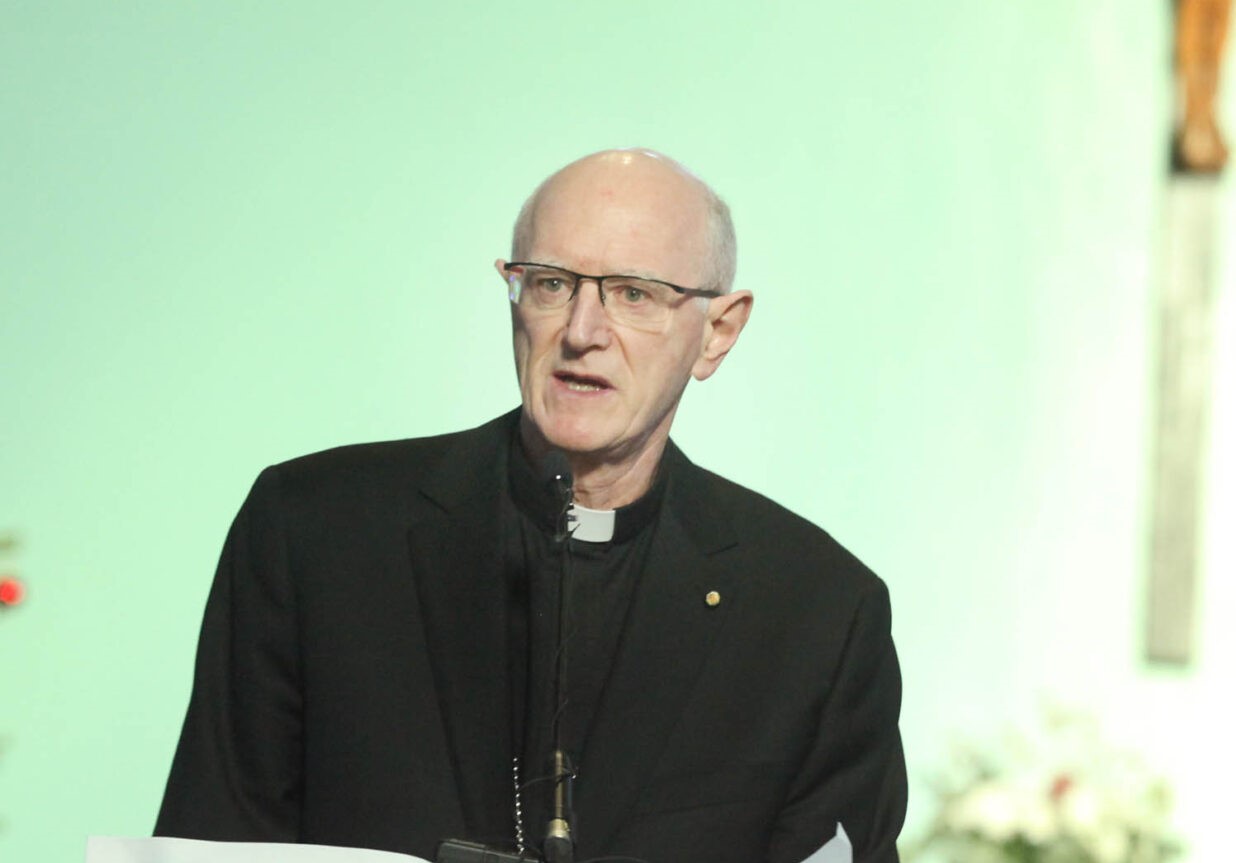
Last year the archdiocese sought the rezoning of more than 30 churches in the city and their surrounding lands so they could be used for housing, but Dublin City Council, chief executive, Owen Keegan opposed the rezonings.
The properties on the council’s list include a large number of chapels in the city and suburbs such as the Church of St John the Baptist on Clontarf Road, the Church of St Agnes in Crumlin and Our Lady Queen of Peace on Merrion Road in Dublin 4.

The British state is perpetuating infanticide by allowing late-term abortions, one of Scotland’s most high profile businessmen has claimed.
Sir Brian Souter, the multimillionaire co-founder of the Stagecoach transport empire, was delivering a guest sermon at a Glasgow evangelical church where he cited the biblical slaughter of the innocents by Herod.
“Some may think and say; ‘What relevance has this Brian, this story of infanticide in a modern Britain?’, he said. “In this modern Britain you can terminate the life of a child at 39 weeks if that child has a disability and that disability can be something as insignificant as a hare lip.”
“In 21st century Britain, evil is never far away”, he added.
Souter, a member of the Church of the Nazarene, continued: “There is an epidemic of suicide and self harm happening in Scotland among our young people. It’s like Satan has put a spirit of despair on our youth and our young men in particular.
“Those of us who believe in the power of God’s spirit need to pray against this because it’s running through our nation and destroying the lives of our young people.”

During one online news program in late 2021, Yusuke Narita, an assistant professor of economics at Yale, said “I feel like the only solution is pretty clear, . . . In the end, isn’t it mass suicide and mass ‘seppuku’ of the elderly?”
Last year, when asked to elaborate, Dr. Narita graphically described a scene from “Midsommar,” a 2019 horror film in which a Swedish cult sends one of its oldest members to commit suicide by jumping off a cliff.
Now however, Dr. Narita, 37, said that his statements had been “taken out of context,” and that he was mainly addressing a growing effort to push the most senior people out of leadership positions in business and politics — to make room for younger generations.
But critics worry that his comments could summon the kinds of sentiments that led Japan to pass a eugenics law in 1948, under which doctors forcibly sterilized thousands of people with intellectual disabilities, mental illness or genetic disorders. In 2016, a man who believed those with disabilities should be euthanized murdered 19 people at a care home outside Tokyo.

Though both high-school girls and boys reported experiencing mental-health challenges, girls reported record high levels of sexual violence, sadness and suicide risk, the CDC said. In 2021, 57% of high-school girls reported experiencing persistent feelings of sadness or hopelessness in the past year, compared with 36% in 2011. Thirty percent reported they seriously considered attempting suicide in 2021, up from 19% in 2011.
The CDC found that 29% of high-school boys reported experiences of persistent feelings of sadness or hopelessness in 2021 compared with 21% in 2011. Meanwhile, 14% of high-school boys reported to have seriously considered attempting suicide, up from 13% in 2011.