Families of the dead from last Sunday’s church massacre in Nigeria are suffering grief and trauma in the aftermath of the horrific terrorist attack.
One woman, Theresa Ogbu, took two of her five children to mass on Sunday to celebrate Pentecost, a joyful occasion for a devout Catholic, but the boys came home without a mother.
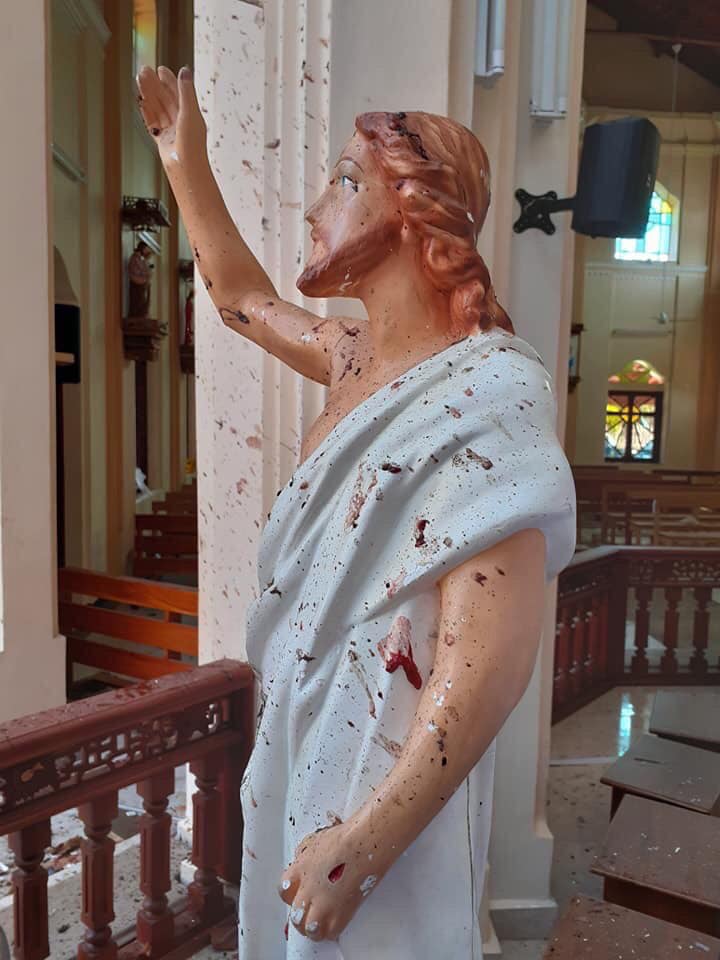
Ogbu, 51, was shot in the head as she tried to escape from St Francis Catholic Church in Owo, Nigeria, where the congregation came under attack from unknown assailants firing guns and hurling explosives.
“I miss my mother so much,” said Victor Ogbu, 13. He and his brother escaped unharmed, only to discover later that their mother lay dead in a pool of blood in a church aisle.
Inside the church, streaks of blood on the floors and walls, broken furniture, shards of glass, plaster debris and abandoned shoes testified to the violence of the attack.
At the family home, Benedict Ogbu was grieving for his wife and wondering how he was going to face life as a single father of five.
“It is just like somebody have two hands and they cut one hand,” he said. “Something that the two hands is carrying, you try to use one hand to carry it. In fact it is very heavy.”
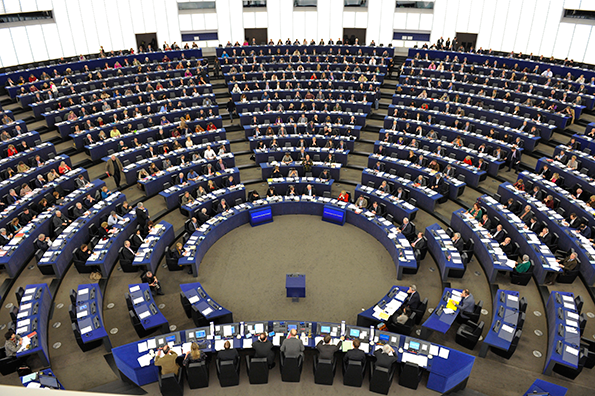
A Catholic bishops’ commission has criticised a resolution before the European Parliament on the U.S. Supreme Court’s possible overturning of Roe v. Wade.
In a statement, Father Manuel Barrios Prieto, the secretary general of the Commission of the Bishops’ Conferences of the European Union (COMECE), expressed “surprise” that the European Union’s law-making body intended to discuss “the impact of a leaked draft opinion of the U.S. Supreme Court concerning abortion.”
“This is an unacceptable interference in the democratic jurisdictional decisions of a sovereign state, a country that is also not a member state of the EU,” he said.
“The adoption of a resolution by European Parliament that endorses this interference will only discredit this institution.”
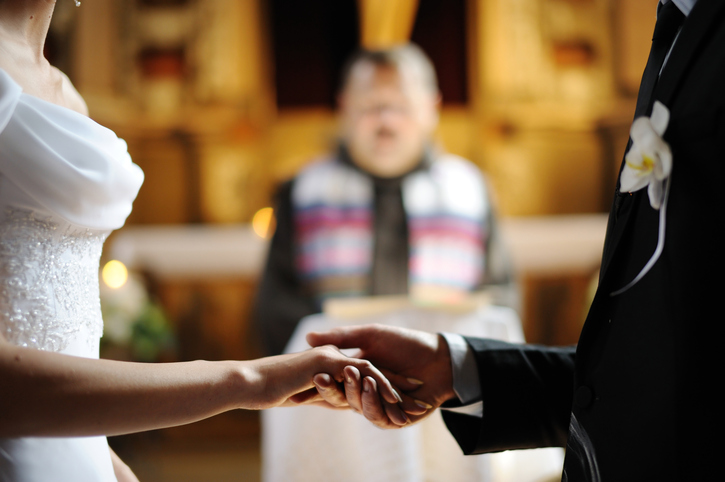
President Miloš Zeman said he would veto a bill that would redefine marriage in the Czech Republic to allow same-sex couples avail of it.
The lower house of parliament received a bill amending the Civil Code to that effect with support from five deputy groups.
The motion was not supported by Christian Democrats (KDU-CSL) and the Freedom and Direct Democracy (SPD), though parties generally allow their MPs a free vote on such matters.
However, President Zeman opposes such changes. “Same-sex couples are entitled to all the benefits of a registered partnership, “but a family is a union of a man and a woman. Period,” he said.
Instead, the president would support a constitutional amendment that would define marriage as the union of a man and a woman – an amendment some Christian Democrats are currently pushing for.
Reports vary on the number killed with some putting the total at more than 50, with the local hospital starting to run short of supplies needed to treat survivors.
Assailants attacked the congregation with guns and explosives during a mass to celebrate the feast of Pentecost.
In a statement, President Higgins said that such an attack was made in a place of worship “is a source of particular condemnation”. He also condemned “any attempt to scapegoat pastoral peoples who are among the foremost victims of the consequences of climate change”.
Authorities have given no information about the identity or motive of the attackers. Many attacks on Nigerian Christians are carried out by Islamists.
Some Owo residents and one Catholic bishop have suggested that the attack may be linked to conflict between nomadic ethnic Fulani herdsmen and local farmers over land use.
Fulani terrorists are regarded as responsible for tens of thousands of deaths in Nigeria since 2009, most of them Christians, but also Muslims from farming communities in Nigeria’s northwest.
The violence has moved further south in recent years, with the Pentecost attack – if it was perpetrated by Fulani terrorists – being one of the southern-most acts of Fulani terrorism.
In recent months, other Nigerian churches have been attacked by Fulani terrorists, with parishioners either being kidnapped or shot by terrorists.

Making the word “women” less prominent in NHS health advice risks harming patients, an expert has warned.
The main NHS web pages on ovarian, womb and cervical cancers no longer refer to women. They have instead been “desexed”, using gender-neutral language that includes people who have female body parts but do not identify as women, such as transgender men.
England’s NHS website used to introduce ovarian cancer as “one of the most common types of cancer in women”. Now it says: “Anyone with ovaries can get ovarian cancer, but it mostly affects those over 50.”
Campaigners said they worried that less literate people, including those without English as a first language, may not realise the health messages applied to them.
Dr Karleen Gribble of Western Sydney University, lead author of a recent review on the importance of sexed language in birth and childcare, said: “I think that the changes to desex language are well intentioned, but we are seeing that they are making communications less clear and when it comes to critical health issues that has great potential to place the health and wellbeing of individuals at risk.”
https://www.thetimes.co.uk/article/bdfde88a-e5b6-11ec-aa87-2eea7c6e5b01
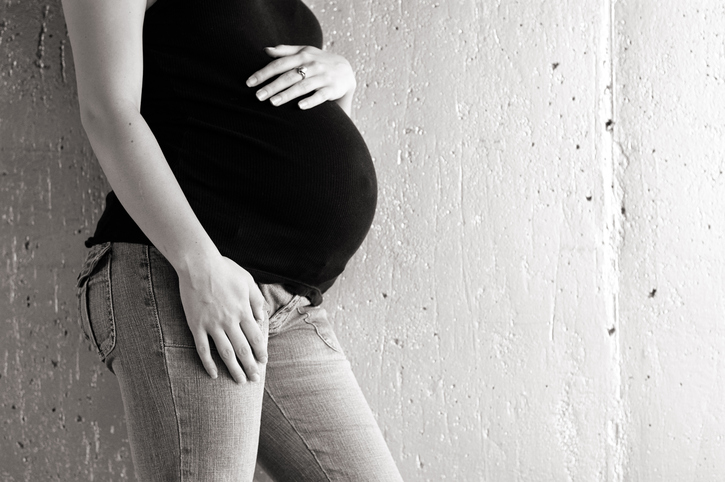
Women’s rights activists and opposition politicians have criticised the move, calling it the creation of a “pregnancy register”, and said it could be misused by a government that has expanded the country’s extensive pro-life laws.
He added that it is part of moves to align Poland with other European Union states as part of the International Patient Summary, which is set to operate from next year.
“Its implementation is obligatory for all EU states,” he noted. “Including pregnancy…is absolutely justified considering the importance of this information in terms of the healthcare process.”
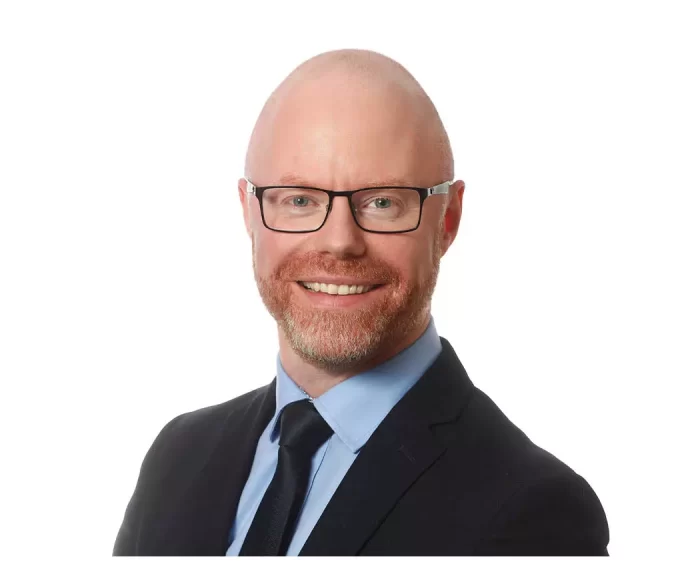
Stephen Donnelly has been accused of going on an “ill-informed” solo run, causing “untold” hurt to families with children born through international commercial surrogacy, a practice banned or not recognised by almost every European country.
The Health Minister had suggested that international surrogacy might not be included in a new Assisted Human Reproduction (AHR) bill, and attempting to do so was delaying a long-awaited push to publicly fund IVF.
Speaking in the Seanad last week, Mr Donnelly said “We need to regulate this sector [AHR] domestically. It’s at committee, and it has been paused. I was asked to stop it for several months, I’ve stopped it for several months. But I’m very keen that we get going with the AHR bill quickly.”
TDs and senators sitting on a special committee on international surrogacy reacted with dismay.
Mary Seery Kearney, a Fine Gael senator who had her own daughter via surrogacy, said Mr Donnelly’s remarks “caused absolutely untold hurt and upset amongst families with children via surrogacy.”
Kathleen Funchion of Sinn Féin said she “literally couldn’t believe” Mr Donnelly’s remarks. She said she was “sick” of the committee being accused of delaying a bill, which has been in pre-legislative scrutiny for the last five years.
Jennifer Whitmore, the chair of the committee, said that she believed Mr Donnelly was “moving the goalposts” at a late stage.
The dead have been taken to the morgue while about 50 wounded people are still being treated in hospital following the attack at the St. Francis Catholic Church in Owo town in Ondo state, said Kadiri Olanrewaju, head of Nigeria’s National Emergency Management Services in Ondo.
The Ondo Police Command has not made any arrests yet nor have they confirmed the identities of the attackers. Islamist radicals have been attacking Christians in many parts of Nigeria.
“We can only confirm that explosives were used and we found three undetonated IEDs (improvised explosive devices) at the scene,” police spokeswoman Odunlami Funmilayo told the AP.
The attackers “sneaked into” the church premises, said the police. Some of them were “disguised as congregants while other armed men who had positioned themselves around the church premises from different directions, fired into the church,” the police added.
The attackers opened fire on the worshippers just as the Pentecost Mass was ending, survivors said.
“There was no warning, no threat, this place has been peaceful,” said Sunday Adewale, who works in the palace of the local chief. “They just looked for people’s soft spot when people are relaxed.”
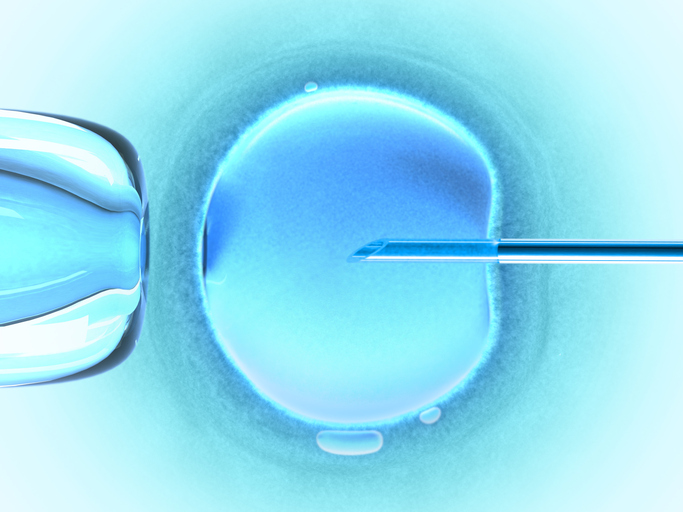
Anonymous, unidentifiable sperm and eggs may no longer be used for creating embryos in the US state of Colorado.
Gov. Jared Polis last week signed a landmark bill to make the state the first in the nation to give donor-conceived individuals the right to learn their donor’s identity when they turn 18, and access that person’s medical history before that.
The “Donor-Conceived Persons and Families of Donor-Conceived Persons Protection Act,” which takes effect Jan. 1, 2025, also caps the number of families that can use a specific donor and will require sperm and gamete banks to permanently maintain a donor’s records and regularly update their medical history. The minimum age to donate will be raised to 21.
“This is groundbreaking,” said Jody Madeira, an Indiana University law professor and expert on fertility law. “We’re really not sure what these bills should look like ideally, but we have one now.”
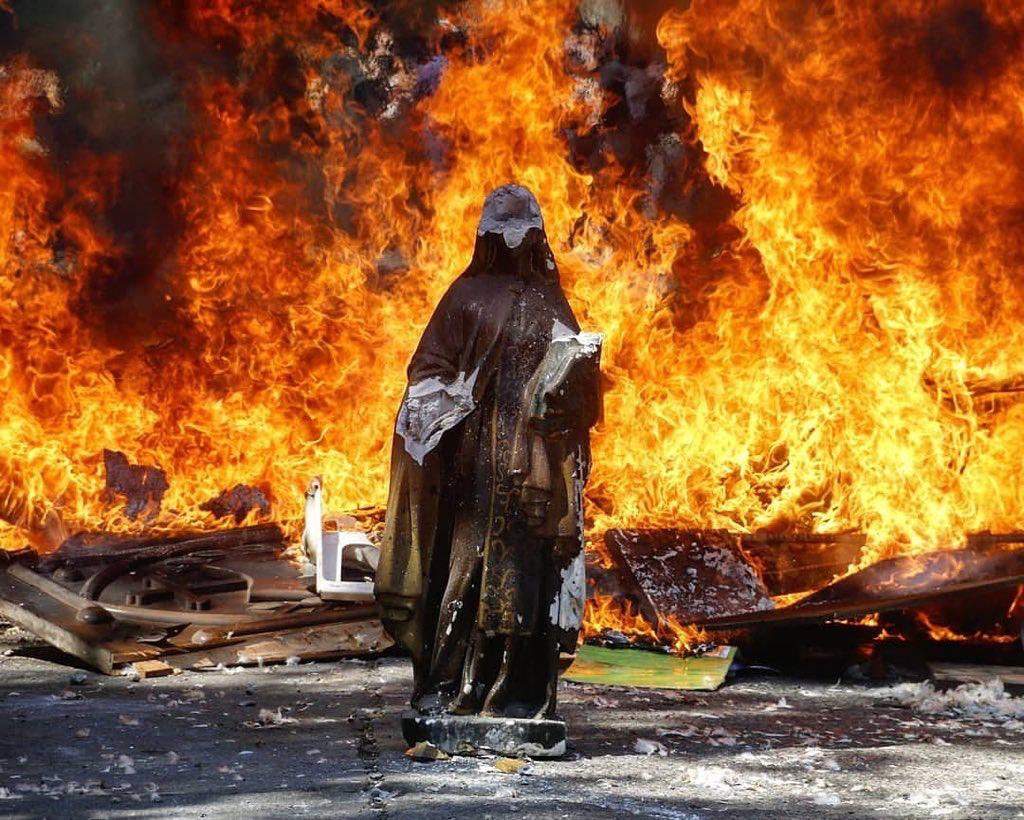
An Irish nun working on the missions has criticised the “frightening” lack of attention paid to Nigeria by the global community.
Sr Kathleen McGarvey’s comments come as the European Parliament rejected a motion on Christian persecution, prompted by the murder of teenager Deborah Yabuku in the Sokoto, Nigeria.
Ms Yabuku was accused by classmates of blaspheming against Muhammad and was stoned to death.
Sr McGarvey tsaid that most Muslims do not approve of such actions, but expressed her disappointment that “some Muslim candidates were afraid to criticise the lynching for fear they’ll lose support in an upcoming election”.
She added that Nigeria is “in a very bad situation, it’s worse than ever”, saying that violence is on the rise throughout the West African country.
“There is banditry, kidnapping has become commonplace – it’s causing huge insecurity,” Sr McGarvey told The Irish Catholic. “It’s against Christians, against Muslims. Everyone there feels the insecurity.”
She added that it’s “frightening that it doesn’t get attention worldwide. It’s an awful lot to do with the fact… our attention is on conflicts of more economic interest”.