

Children born to surrogates suffer from a “legislative vacuum” in Ireland, the government’s special rapporteur on child protection has told politicians today.
New rules proposed by the Department of Health will provide stronger regulation but only for domestic, non-commercial surrogacy. Most European countries ban commercial surrogacy outright on the basis that it commodifies children and exploits low-income women.
Conor O’Mahony, the government’s special rapporteur on child protection and a law professor at University College Cork, told the joint committee on children and youth that there is a legal limbo for children born through commercial surrogacy abroad.
“Even if domestic surrogacy is regulated, there will always be families who will opt for international arrangements, whether due to the availability of surrogates or other issues. It is unsustainable to allow these families to remain in the legal twilight zone they currently inhabit,” he is expected to say today.

Drafted by Labour education spokesman Aodhán Ó Ríordáin, the proposed Bill would amend legislation introduced in 2018 that limited to 25 per cent of the first-year intake the number of such places.
Mr Ó Ríordáin said the Bill, which has not been opposed by the Government to date, would remove what he calls an “elitist” piece of legislation included, he argued, solely at the behest of certain influential fee-paying schools.
“This is a deliberate attempt to keep the royal bloodlines of succession through particular elite second-level schools, and it was done at the behest of those elitist second-level schools,” he said on Monday.
The JMB counters: “Schools, like families, are not solely operational entities; they thrive on relationships, values, continuity, local community cohesion and loyalties built up over time and, indeed, over generations,” it says.
The submissions suggest that the numbers of schools which operate the parent and grandparent rule is a small minority, and the criterion is usually below that of catchment area, feeder schools and the sibling rule.

Most women in England and Wales no longer have a child before they are 30, official figures show for the first time.
An Office for National Statistics (ONS) report found 50.1 per cent of women born in 1990 were childless by their 30th birthday.
It is the first time there has been more childless women than mothers below the age of 30 since records dating back to 1920 began.
A third of women born in that decade had not mothered a child by the age of 30, for comparison.
Women born in the 1940s were the most likely to have had at least one child by that milestone (82 per cent).
But there has been a long-term trend of people opting to have children later in life and reduce family size ever since, the ONS said.
The most common age to have a child is now 31, the ONS estimates based on latest data, compared to 22 among baby boomers born in the late 1940s.

A Catholic priest was killed in a knife attack in Vietnam on Saturday.
Father Giuse (Joseph) Trần Ngọc Thanh, O.P, was attacked Jan. 29 at a mission of Dak Mot, about 40 miles northwest of Kon Tum. He was hearing confessions before the last Mass of the evening, according to his religious order, the Dominicans.
The Diocese of Kon Tum said he was murdered in his house, and that a suspect has been arrested.
Fr. Trần was born in 1981 in Ho Chi Minh City, and took his religious vows in 2010. He was ordained a priest in 2018.
A funerary ceremony was held Jan. 30 at the Dominican monastery in Kon Tum.
His interment will be held Jan. 31 at St. Martin Chapel in Biên Hòa.
“Please unite to pray so that Father Guise’s soul may soon enjoy the glory of God,” the Diocese of Kon Tum said Jan. 30.
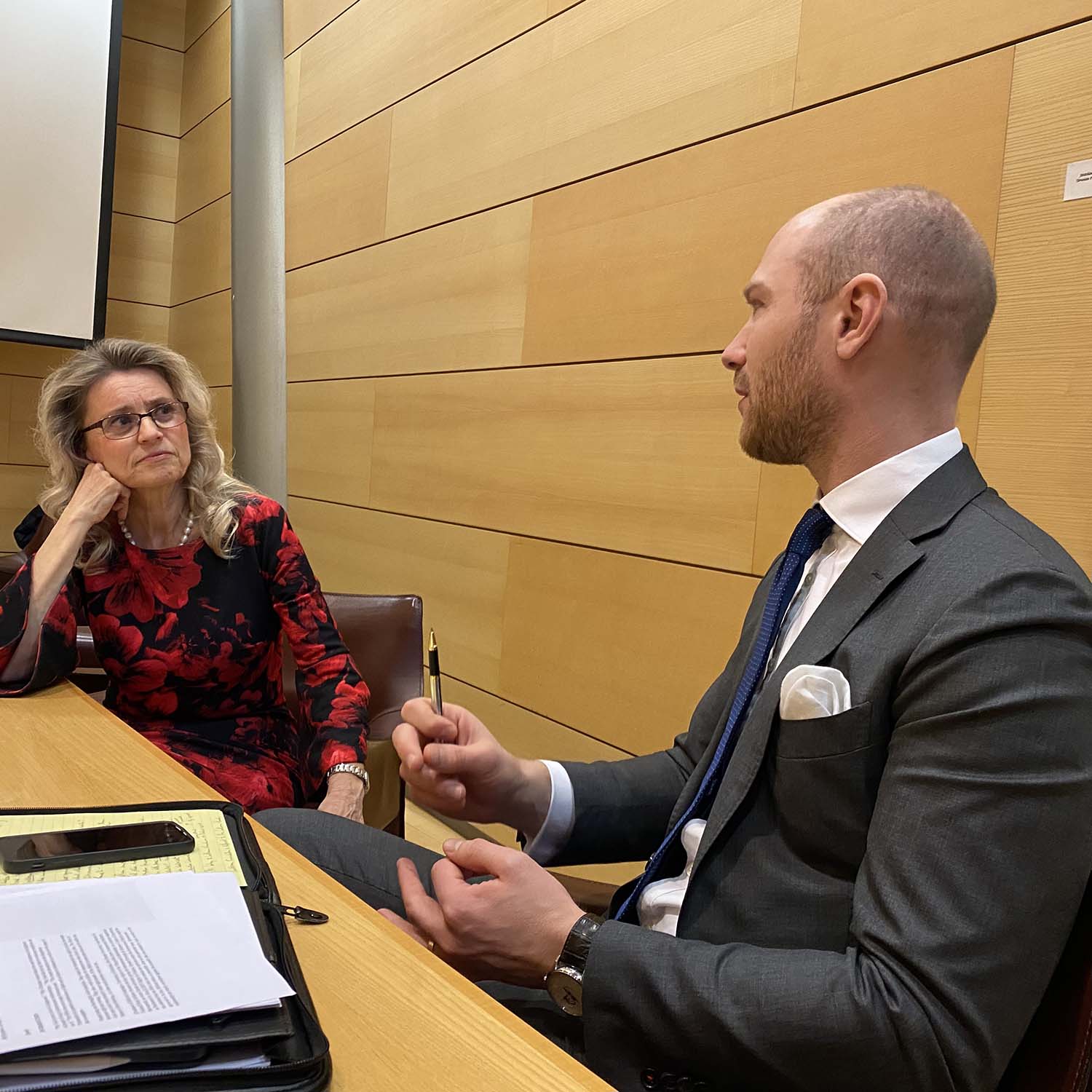
Five US Senators have raised the “alarming” prosecution of a Christian politician in Finland on grounds she is guilty of ‘hate speech’.
Päivi Räsänen, a former interior minister, had attacked the Lutheran Church in Finland in 2019 for associating with a Gay Pride parade. In a tweet she quoted a Biblical passage condemning homosexual acts. The case has sparked a debate about ‘hate speech’ laws versus free speech. She potentially faces time in prison.
The Senators said in a letter to the US Ambassador-At-Large for International Religious Freedom: “We are greatly concerned that the use of Finnish hate speech law is tantamount to a secular blasphemy law. It could open the door for prosecution of other devout Christians, Muslims, Jews and adherents of other faiths for publicly stating their religious beliefs that may conflict with secular trends. We believe that, regardless of whether Finnish prosecutors agree with the religious beliefs that MP Räsänen and Bishop Pohjola have expressed, all people have a fundamental right to the freedoms of religion and speech, which should be upheld without fear of government interference,”
Räsänen, who is also a doctor, was brought before court last week. Finland’s Prosecutor General brought three criminal charges against Räsänen over the contents of a pamphlet Räsänen wrote on these topics in 2004, for engaging in a debate on a 2019 radio show and for a tweet containing a picture of Bible verses Räsänen directed at her church leadership. Bishop Juhana Pohjola also faced trial alongside her for publishing a pamphlet for his congregation that Räsänen wrote on the topic over 17 years ago.

He made his remarks in the Seanad on Thursday.
The appointment was already under attack over the manner in which it happened.
Health Minister, Stephen Donnelly had given a public guarantee that a transparent tendering process would take place to ensure the appointment of an ‘independent’ chairperson. Last week, however, the Minister was forced to concede in replies to parliamentary questions from TDs Peader Tóibín and Michael Collins that a “small number of candidates, identified as having suitable experience for the position, were contacted and invited to apply for the role of independent Chair.”
Potential tenderers for research positions with the Review were told that the Department “has a very limited budget available for this project” and would be looking for value for money.
Furthermore, a spokesperson for the Pro-Life Campaign noted the “embarrassing speed” with which The National Women’s Council welcomed the appointment of barrister Marie O’Shea as chairperson, and the way they paid tribute to the Minister’s decision to abandon the tendering process “has all the signs of a coordinated effort to move things in a particular direction, with the Minister caving to the demands of strident pro-abortion campaigners”.

Recognising international commercial surrogacy arrangements, where women in foreign countries are paid to have babies for Irish parents, could be “difficult to justify”, according to an options paper drawn up by officials for a special Oireachtas committee. Some European countries ban all forms of surrogacy.
It says: “Commercial surrogacy raises complex ethical issues and concerns about commodification of children and exploitation of surrogate mothers. These issues are heightened in international surrogacy, especially where intending parents from a wealthy country such as Ireland undertake a commercial arrangement with a surrogate mother in a poorer country, or one where the rights of women are less protected.”
The options paper drawn up by officials to guide TDs and Senators on the committee contains a numbers of warnings about international surrogacy. It also appears to reject recommendations by the Government’s special rapporteur on children’s rights relating to the recognition of international surrogacy arrangements.
It says legislation enabling commercial surrogacy arrangements outside the State, while prohibiting such arrangements in the State, “would create a double standard”. It adds that any route to attempt legal recognition should not have negative consequences for the identity rights of those children and the rights of the surrogate mother and genetic parents who provide the gametes.
Noting widely condemned adoption practices of the past, it says: “From the perspective of the child, informed by historic adoption practices, it can be hugely distressing for an individual to learn of possible exploitation of a birth mother.
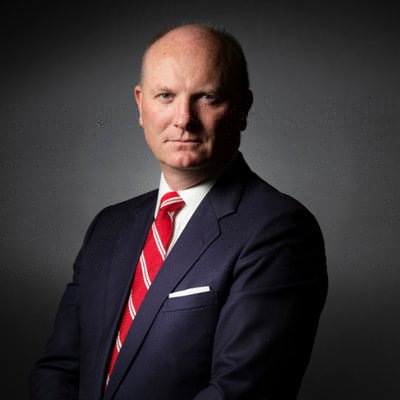
The High Court has ruled that businessman Declan Ganley is entitled to just half of the legal costs he incurred for his challenge against the ban on attending religious services during the Covid-19 lockdowns. Ireland had the longest ban on public worship anywhere in Europe. Similar legal challenges elsewhere succeeded.
Mr Justice Charles Meenan held that the Co Galway businessman had raised points of general public importance in his action, including the balance between the right to public worship and public health.
The Minister’s lawyers had argued that the court should make no orders as to costs, meaning that each side would pay their own legal bills.
The Judge ultimately never heard the case, deciding that it was pointless to do so once the mass-ban was lifted.
Neil Steen, SC, had argued that Mr Ganley should be awarded his full costs against the Minister, and said his client’s case was a straightforward one.
He added that one would have thought the Minister would have had all the material he required to justify the regulations readily available to him, but due to the large volume of material generated by the Minister in response to the action one could infer that there was an attempt to “swamp” Mr Ganley and delay the proceedings.

The Minister of State for Disability Anne Rabbitte has said while concerns “continue to circulate” in relation to the potential involvement of the Religious Sisters of Charity in the new National Maternity Hospital, the order will not play any role in the governance or operation of the hospital. Critics say, without evidence, that the congregation will have influence over the hospital.
Ms Rabbitte said there has been further engagement with stakeholders in relation to the draft legal framework for the hospital and “this process will continue as we work towards the finalisation of these legal arrangements”.
She was speaking during a Dáil debate on a motion calling for the compulsory purchase of the site for the hospital at Elm Park in Dublin, which was put forward by Independent TDs Joan Collins and Thomas Pringle, on Thursday.
While the Government has said it will not oppose the motion, it has not changed its position and does not intend to purchase the site.
Instead, it is seeking to conclude a long-term lease – expected to last 299 years – with the St Vincent’s Healthcare Group, owners of the site adjacent to St Vincent’s hospital in Dublin 4.

A bill making a father’s financial responsibility to his child and his child’s mother begin when the child is conceived, has been proposed in one US state.
Announcing the legislation, pro-choice Democrat, Forrest Bennett, said “If Oklahoma is going to restrict a woman’s right to choose, we sure better make sure the man involved can’t just walk away from his responsibility.”
Pro-lifers were swift to respond with a resounding, “Yes, exactly!” The pro-life movement, believing as it does that human life begins at conception, has long favored requiring fathers to support their children from that point. Writing at NRO, Alexandra De Sanctis said “We know that many if not most women who have an abortion do so because of lack of support, usually from their partner, and policies such as this one might make it easier for many pregnant mothers to choose life. They’re also good in principle, recognizing as they do that life begins at conception and that both mothers and fathers are responsible for their children from the moment they come into existence”.
But, abortion supporters were less than thrilled with Bennett’s bill. The trouble, it seemed, is that the bill implicitly affirms that human life begins at conception, an enormous concession to the pro-life argument.
In response to the pushback, Bennett was swift to apologise and promise to rework his legislation. “I understand how the language in my message and bill both hurt the cause instead of helping it, and I apologise for not being more thoughtful,” he tweeted.