
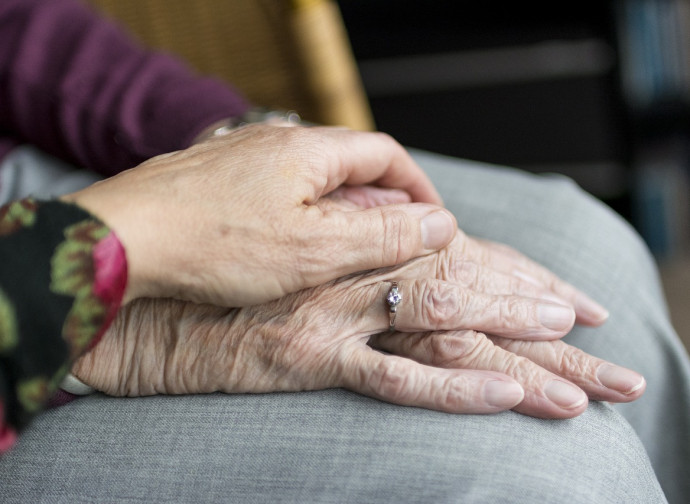
The Minister for Health has failed to say whether the Government would be receiving any advice from a State advisory body on bioethics.
Laois Offaly TD, Carol Nolan had asked him whether he would direct the National Advisory Bioethics Committee (NACB) to investigate the ethical implications of assisted suicide, assisted dying and physician-assisted suicide.
The NACB was established by the former Minister for Health, Dr. James Reilly, in March 2012 to advise on the ethical and social implications of scientific developments in human medicine and healthcare.
The Minister said the multi-disciplinary group has met on a number of occasions since its establishment and considered various complex and sensitive issues that society in general, and the healthcare system in particular, confront.
He added that the most recent work published by the NACB, entitled “Nudging in Public Health – An Ethical Framework”, was published in April 2016.
“No decision has been made regarding the next topic on the work programme for the NACB”.
https://www.oireachtas.ie/en/debates/questions/?member=%2Fie%2Foireachtas%2Fmember%2Fid%2FCarol-Nolan.D.2016-10-03
The Government have proposed setting up a special Oireachtas committee to examine legalising assisted suicide.
The move is designed to delay by 12 months Gino Kenny’s “Dying with Dignity bill”. The socialist TD’s proposal is due for a Dail debate on Thursday, and a vote to send it for pre-legislative scrutiny on Wednesday of next week.
A special Oireachtas committee would instead allow a far wider scrutiny of the issue than a legislative committee.
Nonetheless, the Government may allow non-Cabinet members a free vote on the Kenny bill so it may yet pass.
Aontú TD for Meath West Peadar Tóibín said he is opposed to the bill, and if the law is going to change in this direction, it needs to be scrutinised so TDs know exactly what they are dealing with.
He said “this is a radical change in Irish law, which seeks to legalise one adult ending the life of another adult”, which he said he understood under the law currently to be manslaughter.
Mr Tóibín said he has invited the Irish Palliative Medicine Consultants’ Association to the Dáil to discuss this and he said the association is opposed to the bill.
He said there are a number of wide open gaps in the legislation, such as not giving a time limit to a terminal illness.
Mr Tóibín said it is important that people do not underestimate the pressure that can be brought to bear on older people who are in very vulnerable situations, where their value changes within society and they can come under strong pressure.
He said: “Palliative care and the weakness in palliative care in this country should not be short-circuited by introducing assisted suicide into this country and we need to invest in end of life.”
The Aontu leader opposes the change and said TDs need to know exactly what’s being proposed.

Women seeking support after abortion increased significantly in Cork last year.
According to the 2019 annual report from the Cork Sexual Health Centre, it provided some 236 counselling sessions in 2019 to women who had abortions – a 50 per cent increase on the 2018 figure when it provided 157 counselling sessions. Over 7000 Irish women had abortions last year (6,666 domestic, 375 abroad), an estimated 40% increase in the number of abortions in previous years.
The Centre’s executive director Dr Martin Davoren said he felt the increase reflected changing attitudes in Irish society—that it may have encouraged people who had abortions in the past to talk about them now.
The Centre saw a growing demand for all of its services throughout 2019, including a rise in the number of people engaging with services for sexual health, post-termination, crisis pregnancy, HIV, sexuality and relationship advice.

In recent months, media outlets have increasingly covered stories of young girls in Pakistan who have been abducted, forcibly converted to Islam, and subjected to rape and sexual abuse.
That’s according to Ewelina Ochab, a human rights advocate, author and co-founder of the Coalition for Genocide Response.
Writing for Forbes, she said while all these stories are tragic, these cases are not isolated occurrences. They are part of a larger problem that continues to be neglected – the issue of ideologically motivated sexual abuse that targets women from religious minorities.
“Indeed, recent cases from Pakistan show how religious minority women and girls are abducted, forcibly converted, forcibly married and abused, but also how their families are unsuccessful in their attempts to challenge these crimes using legal avenues. While the abductions, forced conversions, forced marriages and abuse are perpetrated by individuals, the fate of religious minority women and girls is often sealed as the existing laws or handling such cases deem any legal recourse unavailable or ineffective”.
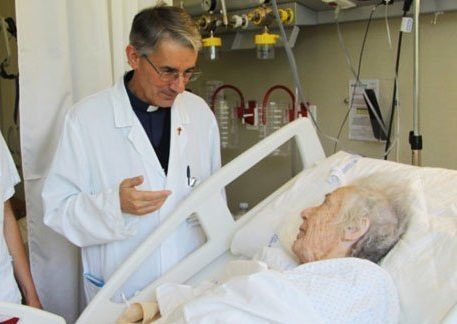
Nearly 700 Christian ministers in the UK have called on political leaders warning about the side-effects of “unnecessary and authoritarian restrictions” imposed on society to stop the spread of the COVID-19 coronavirus.
The signatories said they are “troubled by policies which prioritize bare existence at the expense of those things that give quality, meaning and purpose to life.”
The letter was sent to UK Prime Minister Boris Johnson; First Minister Mark Drakeford of Wales; First Minister Nicola Sturgeon of Scotland; and First Minister Arlene Foster and Deputy First Minister Michelle O’Neill in Northern Ireland.
The Albert Gubay Charitable Foundation has donated €500,000 to help six Catholic charities in the Republic with their work helping the poor and vulnerable through the Covid-19 pandemic.
It has approved €360,000 for Crosscare, the Dublin archdiocese’s social care agency; €70,000 for the St Vincent de Paul; €50,000 for parishes in Dundalk and on the Cooley Peninsula in Co Louth; €10,000 to Little Flower Penny Dinners, based in Dublin’s south inner city; and €9,600 to the Irish Council for Prisoners Overseas.
Born in Wales of an Iraqi-Jewish father and a devout Catholic mother from Co Clare, Mr Gubay, who died in 2016, founded the Kwik Save Discount chain in the UK during the 1960s and the 3 Guys chain in Ireland in the late 1970s as well as Total Fitness some years later.
In interviews later in life he said he had made a promise to God when young and penniless that if he became wealthy he would give half his fortune to the Catholic Church.
In 2010, when he was 82 and living in the Isle of Man, he set up the Albert Gubay Charitable Foundation and donated almost all his €500 million fortune to it, retaining £10 million for personal use.
In February 2011, Pope Benedict XVI bestowed on Mr Gubay the title Knight Commander with Star of the Order of St Gregory the Great for his philanthropic work.

A Muslim man in northern India beheaded his Hindu wife one-and-a-half months after their marriage because she refused to convert to Islam, a local newspaper reported.
Police this week found the beheaded body of the 23-year-old victim, identified as Priya Soni, in a forest area near Preet Nagar area of Sonbhadra district in the state of Uttar Pradesh, according to The Tribune.
The suspect, Soni’s husband who was identified as Ejaz Ahmed, and his friend, identified only as Shoaib, have been arrested. Police said they recovered the mobile phone of the victim, a knife and an iron rod from the suspects.
The district’s police chief, Ashish Srivastava, was quoted as saying that officers used social media to identify the woman’s body. Her father, Laxminarayan, identified her from her shoes and clothes.
Priya married Ahmed against the wishes of the family and was being pressured to convert to Islam, police said, adding that they were considering charging the accused under the stringent National Security Act.
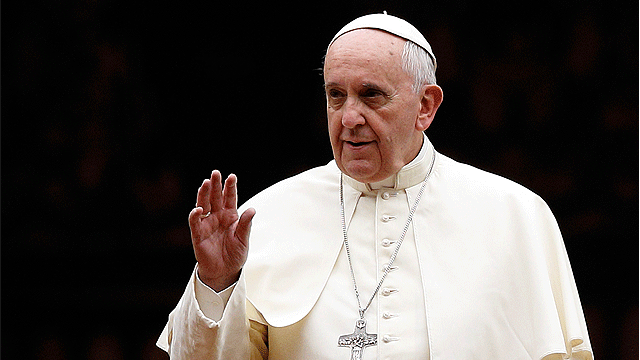
Pope Francis made a plea at the United Nations Friday on behalf of all children born and unborn, with a particular emphasis against abortion and in favour of family life.
“Unfortunately, some countries and international institutions are also promoting abortion as one of the so-called ‘essential services’ provided in the humanitarian response to the pandemic,” Pope Francis said in his address to the UN Sept. 25.
“It is troubling to see how simple and convenient it has become for some to deny the existence of a human life as a solution to problems that can and must be solved for both the mother and her unborn child,” the pope said.
Pope Francis also urged world leaders to be especially attentive to the rights of children, “particularly their right to life and to schooling”.
He reminded the UN that the first teachers of every child are his or her mother and father, adding that the Universal Declaration of Human Rights describes the family as the “natural and fundamental group unit of society”.
“All too often, the family is the victim of forms of ideological colonialism that weaken it and end up producing in many of its members, especially the most vulnerable — the young and the elderly — a feeling of being orphaned and lacking roots,” Pope Francis said.
“The breakdown of the family echoes the social fragmentation that hinders our efforts to confront common enemies,” he added.
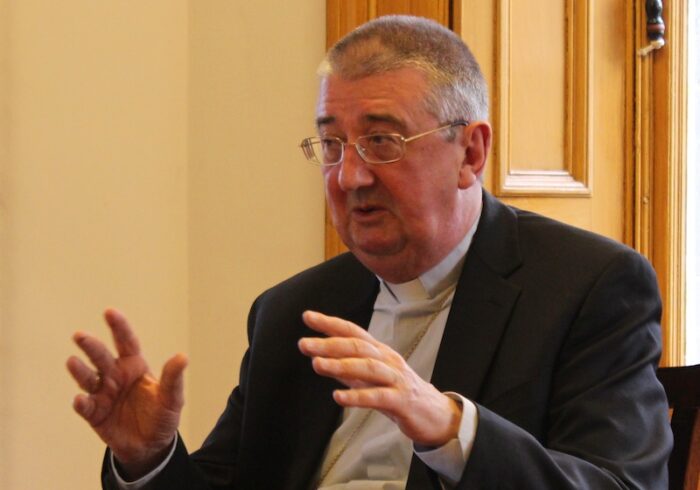
A loss of more than €5m in donations during the Covid lockdown was suffered by Dublin’s Catholic archdiocese.
Regular income from collections had “fallen off a cliff” because of the shutdown of churches between March 15 and September 2020, an archdiocese spokeswoman told the Sunday Independent.
Donations have dipped again as level three health measures have stopped religious services in the capital.
The long lockdown period and the restricted sizes of congregations caused income to drop by more than 70pc, or €5.5m, compared with the same period last year.
The second collection for Share, which supports struggling parishes and the administration of the archdiocese, had fallen by €2.3m to €750,000, a drop of 75pc.
A voluntary redundancy scheme was offered to 77 central services staff and parish pastoral workers, with 25 expected to apply – but that number was exceeded.
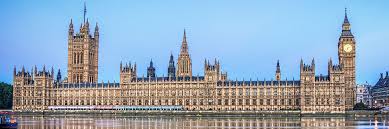
The passage of an abortion clinic censorship zone bill through the House of Commons has been delayed.
The Bill would introduce exclusion zones around abortion clinics in England and Wales.
The zones would criminalise the offering of practical and emotional support to women entering abortion clinics, bringing a possible prison sentence of up to two years for those who offer support to women within 150 metres of abortion clinics.
The private members bill from an opposition Labour MP failed to pass through its second stage reading after an objection from one MP. It will return to the Commons on Nov 13th.