

A bill introducing “no-fault” divorces in England and Wales has passed its first hurdle in the Commons by 231 votes to 16 against.
In a letter to the Telegraph, MPs including Sir Desmond Swayne, Sir John Hayes and Fiona Bruce urged the government to focus on helping couples reconcile instead of “undermining the commitment of marriage”. They said the bill was badly-timed, arguing that many “otherwise durable” marriages were under “intense Covid-related strain”.
Currently, in order to start divorce proceedings immediately, one spouse has to allege adultery, unreasonable behaviour or desertion has taken place.
Under the proposed law, they will only have to state that the marriage has broken down irretrievably.
The bill – which has already been passed by the House of Lords – also removes the possibility of contesting the decision to divorce.
At the moment, someone wishing to obtain a divorce without the consent of their spouse must live apart from them for five years.
Divorce proceedings will still be challengeable on certain grounds including fraud and coercion. Currently fewer than 2% of divorce cases are contested.
The bill also introduces a new option, allowing couples to jointly apply for a divorce, where the decision to separate is a mutual one. Under the proposals, there must be a minimum six-month period between the lodging of a petition to the divorce being made final.
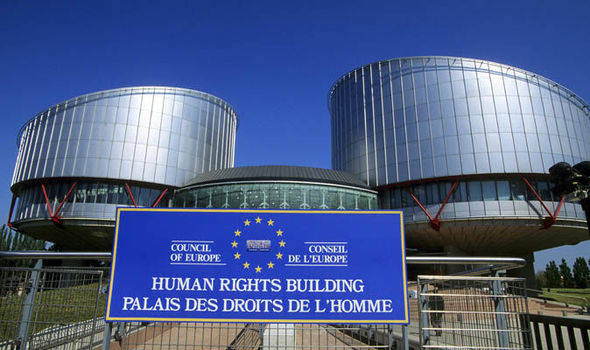
The European Court of Human Rights (ECHR) is considering a case against the Irish State over the constitutional requirement that the president and Council of State members must make a religious declaration before taking office.
The court has asked the parties to make efforts to reach a “friendly settlement” prior to any hearing taking place.
The case concerns articles of the Constitution which provide, that before taking office, the president and members of the Council of State must swear a declaration “in the presence of almighty God”.
Social Democrats TD Róisín Shortall, Sinn Féin TD John Brady, Independent Senator David Norris, former Barnardos chief executive Fergus Finlay and Trinity College chancellor David McConnell in October 2018 asked the ECHR to admit their case alleging the declarations breach their rights.
The applicants claim the articles exclude conscientious non-Christians, non-believers and those who do not wish to violate their consciences from the Office of President and membership of the Council of State.
The UK government has said it remains legally obliged to introduce an extensive abortion regime in to Northern Ireland regardless of a motion passed in the North’s Assembly rejecting the “imposition” of abortion legislation enacted at Westminster.
“While I respect the Assembly’s right to state their position on this, it doesn’t have any bearing on the legal obligations which have been placed on us by parliament,” the Northern Ireland Office (NIO) minister, Robin Walker, told the House of Commons on Thursday.
He was responding to an urgent question from the DUP MP Jeffrey Donaldson, who called on the UK government to withdraw the regulations.
In a statement issued afterwards, Mr Donaldson said the regulations had been “foisted upon Northern Ireland when devolution was in abeyance” and the Assembly had “considered the regulations and rejected them on the basis of their discriminatory approach to unborn babies with non-fatal disabilities.
“We want MPs to be aware that the regulations are not what the majority in Northern Ireland want,” he said. “It is time for the government to withdraw these regulations and allow the Northern Ireland Assembly to deal with the matter.”

The UK’s NHS has quietly changed its advice on the health and safety of certain invasive “treatments” offered to children suffering with gender dysphoria.
Regarding the use of hormone blockers to repress a child’s natural puberty development, the website of the NHS used to say, “The effects of treatment with GnRH [gonadotrophin-releasing hormone] analogues are considered to be fully reversible, so treatment can usually be stopped at any time….”.
However, on May 28th, it was changed to read: “Little is known about the long-term side effects of hormone or puberty blockers in children with gender dysphoria. Although the Gender Identity Development Service (GIDS) advises this is a physically reversible treatment if stopped, it is not known what the psychological effects may be. It’s also not known whether hormone blockers affect the development of the teenage brain or children’s bones.”
The change, which was effected quietly, was noticed by James Kirkup, the Director of the Social Market Foundation. He asked why the NHS is still using such treatments on children given that they now acknowledge that the long-term effects on the physical and mental health of those children is unknown.
He also asked what are the children and parents who were reassured by the earlier NHS advice supposed to think now.
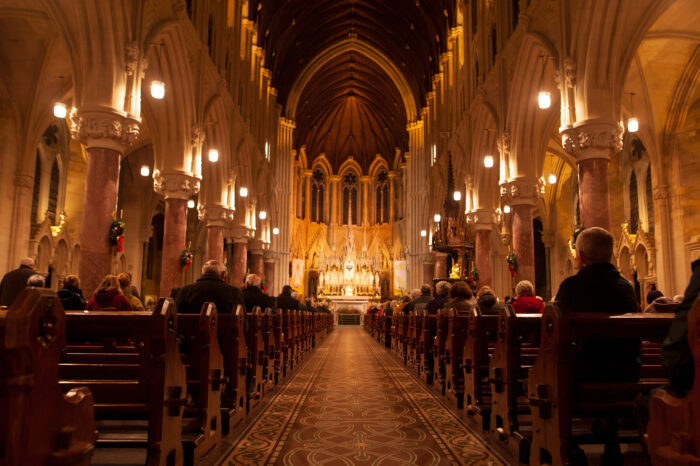
The Taoiseach has announced an accelerated schedule for easing lockdown restrictions which paves the way for a return of public masses by June 29th.
From Monday 8 June when what Leo Varadkar called “Phase 2 plus” commences, up to 25 immediate family and close friends may attend funeral services.
People can attend services at places of worship from the beginning of Phase 3, on June 29th, with physical distancing measures in place. Catholic Archbishop of Dublin, Diarmuid Martin, has welcomed the announcement and said “this will be a consolation to many people and preparations will be intensified to ensure this can be done safely.”
Archbishop of Armagh, Eamon Martin also welcomed the announcement which opens the way for a return to public Mass and the sacraments soon. He said at a meeting of the Catholic Bishops Conference next week, “we will finalise our framework and advice for parishes”.
He had announced last week that the bishops’ had been working on a National Framework Document on reopening churches that would include a helpful checklist for parish priests and Covid19 Parish Support Teams on physical distancing and hygiene. “This will help you evaluate progress made to date and guide any necessary improvements in practice within your parish,” he said.
Meanwhile, the Belgian authorities announced that religious services may resume there from next Monday, June 8th. They are the last country on the continent to announce a return of church services. Up to 100 people will be allowed attend, and strict social distancing of 1.5m plus other precautionary measures must be employed. On July 1st, the numbers allowed congregate will increase to 200 people.

The Department of Education received more than 50 complaints from parents and teachers about plans to reform sex education with virtually every single letter opposing the proposed changes.
In response, Education Minister Joe McHugh reacted angrily, saying there appeared to be a campaign of “malicious scaremongering” surrounding his plans to change the RSE curriculum.
In one letter, a student primary school teacher said they were “disgusted and shocked” by the proposals which they said was “completely inappropriate and over-sexualises young children”.
They said they opposed teaching the material and having “my own children taught about things such as porn literacy and self-stimulation at the age of eight and even younger”.
Another person wrote: “There may be people who have no regard for the innocence of the children and it is bound to be too much for them and not easy for the teachers.”
Agriculture Minister Michael Creed forwarded a letter that said: “I have serious concerns about the sexualisation of my children. I as a parent have a right to decide when my child is ready to hear about these matters, not a government pushing an agenda.”
Another parent said they believed planned changes were not being discussed in a transparent manner.
“I have genuine concerns that the proposed RSE changes are intended to sexualise children and generate conflict in accepting their own family values, culture, and gender,” they wrote.
A poor Christian couple from central Pakistan have had their appeal against their death sentence for “blasphemy” delayed again. Shagufta Kausar and her husband Shafqat Emmanuel have spent the last six years in jail waiting for their trial to conclude.
The final hearing at Lahore High Court had been scheduled for Wednesday this week, before it was postponed, with a new date due to be announced.
Their lawyer, Saif ul Malook, who also represented Asia Bibi, another Christian woman who had a death sentence for blasphemy successfully overturned, told the BBC the evidence used to convict the couple was deeply flawed.
But, he warned, that judges can be “fearful” of acquitting suspects, in case they are targeted themselves by extremists. Court proceedings have also slowed in recent weeks as a result of the coronavirus outbreak.
The married couple were convicted in 2014 of sending blasphemous text messages insulting the Prophet Muhammad to a local imam. Blasphemy is punishable by death in Pakistan, and though no-one has ever been executed for it, dozens have been killed by mobs after being accused of the crime.
Shagufta’s brother Joseph, who requested his surname not be published, told the BBC the couple were innocent, and he doubted they were literate enough even to have written the abusive messages. Shagufta worked as a caretaker in a Christian school, whilst her husband Shafqat is partially paralysed.
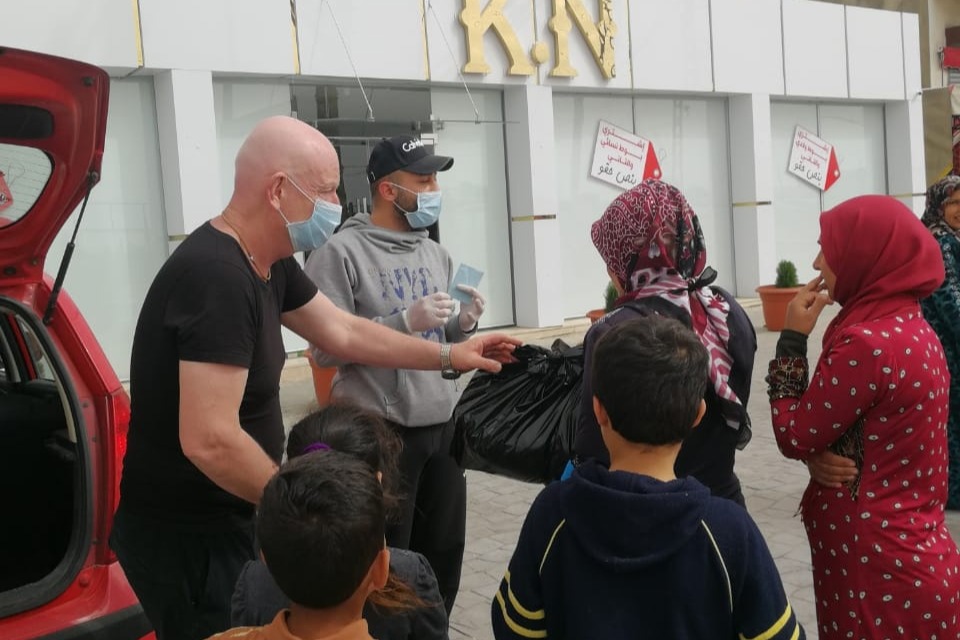
While NGOs have fled refugee camps because of the coronavirus, one Christian charity has moved in to take up the slack.
Dublin priest, Fr William Stuart, helps provide schooling to children of Syrian refuges in the city of Tyre, Lebanon, but he has had to refocus on providing basic food aid as NGOs have abandoned their posts.
The school building he used to use has been closed down so he delivers worksheets directly to children in the refugee camps. His group have also been distributing food aid, and helping families plant gardens beside their tents in the camps.
“The situation is critical, all NGOs are gone. People are starving,” Fr William Stuart has told parishioners in Dalkey, Co Dublin, where he had previously served.
“All the NGOs have gone to ground and are ‘working from home’ with the result that refugees are receiving no aid,” he wrote in a stark message.
He told the Irish Times his group view themselves as frontline people “who don’t have the luxury of ‘working from home’ nor can we abandon the most vulnerable in this most difficult of times. To my disappointment this view is not shared by the NGO sector who have wholescale abandoned ship.”
The most urgent need among the refugees was for food, he said. “With no sign of aid agencies and the body politic only helping the Lebanese, things are not good.”
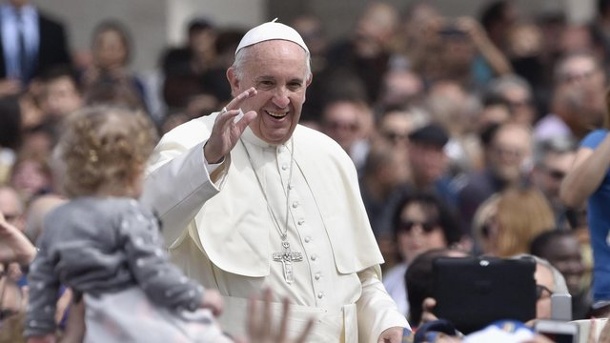
The Vatican Museums and the Pope’s summer residence of Castel Gandolfo reopened their doors to the public this week.
The reopening coincided with Italy’s gradual easing of the nearly 3-month lockdown, which allows many businesses and activities to restart.
The Vatican Museums are ensuring a very careful balance between safety and health needs and the dynamics of a museum visit, without compromising the essence of such a visit, the Holy See Press Office said..
In keeping with the norms of hygiene and physical distance, visitors to the Museums will be subject to a body temperature check and will be allowed in only with a facemask.
A medical and health team from Italy’s Misericordie volunteer group and the Vatican’s Health and Hygiene Department will ensure every need during the opening hours.
Other important requirements for the reopening of the museums will be revised from time to time as the current emergency situation evolves.

A recent ruling by the UK Supreme Court has brought the legalisation of commercial surrogacy, and its funding by taxpayers in the United Kingdom, several steps closer. Commercial surrogacy involves paying a large fee to the surrogate mother and is banned by most countries as a form of baby-buying.
On April 1st, the Supreme Court’s since-retired President, Lady Hale, provided the leading Judgment in Whittington Hospital NHS Trust v. XX. This Judgment has, for the first time, legitimised compensation claims against the taxpayer-funded National Health Service (NHS) in order to pursue commercial surrogacy services abroad that are illegal in the UK.
The coronavirus pandemic has so far kept this Judgment off the media radar, but according to Gary Powell, the European Special Consultant to the Center for Bioethics and Culture, California, it represents “an ominous development”.
The court upheld a claim from a woman to pursue four commercial surrogacy pregnancies in California at the expense of the UK taxpayer. The judgment is notable in that commercial surrogacy is illegal in the UK, and two Supreme Court Judges dissented from the Judgment on the grounds that it is against public policy for a court to award damages to enable conduct abroad that is illegal in the UK.