

At least 25 people were killed and 63 injured in an attack on a Greek Orthodox Church in Syria during a Sunday evening Divine Liturgy attended by nearly 400 faithful.
The atrocity has been blamed on the Islamic State terrorist group and is the first deadly, religiously motivated attack on Christians since the toppling of the Assad regime in December.
Eyewitnesses reported that one attacker fired at worshippers from outside the Church while another entered to detonate a grenade.
Two parishioners, Jiris and Boutros Bishara, intervened and wrestled the explosive device away from the second man, preventing an immediate detonation. However, while being dragged outside, the attacker activated his suicide belt, resulting in a massive explosion that killed and wounded dozens and caused extensive destruction.
The attack has been condemned by the Country’s Islamic leadership with President Ahmad al-Sharaa calling it a “heinous crime” and vowing to bring the perpetrators “to face their just punishment.
French President Emmanuel Macron also denounced the “horrible” attack while Greece’s Prime Minister Kyriakos Mitsotakis expressed anger and called on the authorities “to take concrete measures to protect all ethnic and religious minorities”.
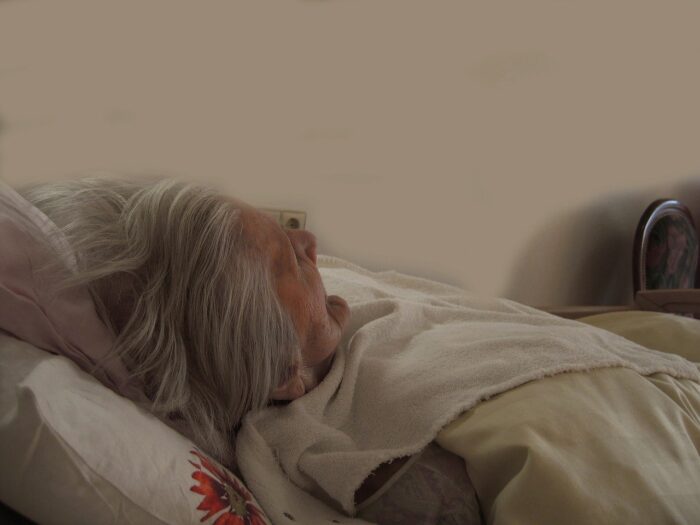
A growing chorus of voices have decried the progress of assisted suicide legislation through the House of Commons on Friday.
The bill which would enable terminally ill adults with six months to live to request medical help to kill themselves, passed its third reading by a vote of 314 to 291 and now passes to the House of Lords.
Speaking on behalf of the Catholic Bishops of England and Wales, Archbishop John Sherrington said that allowing the medical profession “to help patients end their lives will change the culture of healthcare and cause legitimate fears amongst those with disabilities or who are especially vulnerable in other ways”.
Archbishop of Westminster Cardinal Vincent Nichols described the vote as “a watershed moment in the history of our country” that “fundamentally changes society’s long held values and relationships on matters of life and death”.
Professor David Jones, director of the Anscombe Centre, said the “encouragement of suicide” violated the right to life of people with serious illness and contradicted the principles of care on which the NHS and hospice movement were founded.
Robert Clarke, director of advocacy for ADF International, said the vote was a “grave and chilling development for the United Kingdom”.

One in three women cannot afford to have a baby, or another child, while a quarter will delay having children until they’ve reached certain financial or career goals. In addition, only 51pc said they would like to start a family and 20pc said they definitely do not want children.
That’s according to The Irish Examiner Women’s Health Survey of 1,078 women over 16, carried out by Ipsos B+A.
This is occurring while Ireland’s fertility rate is just 1.5, well below the replacement level of 2.1.
The survey found that a third of women feel they cannot afford to have a baby, or another child, with younger women in particular putting family plans on hold.
To the statement, “Financially I don’t feel I am in a position to have a child/another-child”, 20pc of respondents said they agree strongly; 15pc agree somewhat; 13pc neither agree nor disagree; 6pc disagree somewhat; 5pc strongly disagree; 40pc don’t-know/not-applicable.
A quarter of women surveyed will delay having children until they’ve reached certain financial or career goals. This jumps to 65pc of women aged between 18-24.
The survey also found that just under half of mums would like to have more children. Younger mums and those from less affluent backgrounds were most keen to extend their families.
Moreover, 20pc of women have difficulty getting pregnant, with half of those considering fertility treatment.
Family sizes continue to fall, with just half of mothers with a single child saying they would like to have a second. The average Irish family is now 2.29 children, reflecting falling fertility rates worldwide.
Meanwhile, a poll in the US shows those in their 20s and 30s plan to have fewer children than in the past. The desired number of children averages out at 1.8 per couple.

The future of many care homes and hospices will be in grave doubt if an assisted suicide/euthanasia bill becomes law in England and Wales, according to the local Catholic hierarchy.
The Bill which is due to be voted on in the House of Commons tomorrow enables terminally ill adults aged 18 or over the right to request medical help to kill themselves.
In a statement, the Bishops said that a right to assisted suicide “is highly likely to become a duty on care homes and hospices to facilitate it. We fear that this Bill will thereby seriously affect the provision of social care and palliative care across the country”.
They added: “Institutions whose mission has always been to provide compassionate care in sickness or old age, and to provide such care until the end of life, may have no choice, in the face of these demands, but to withdraw from the provision of such care.
“The widespread support which hospices attract from local communities will also be undermined by these demands which, in many cases, will require these institutions to act contrary to their traditional and principled foundations.
Meanwhile, new polling reveals widespread concern that introducing assisted suicide will have a negative impact on disabled people and many will die early as a result.
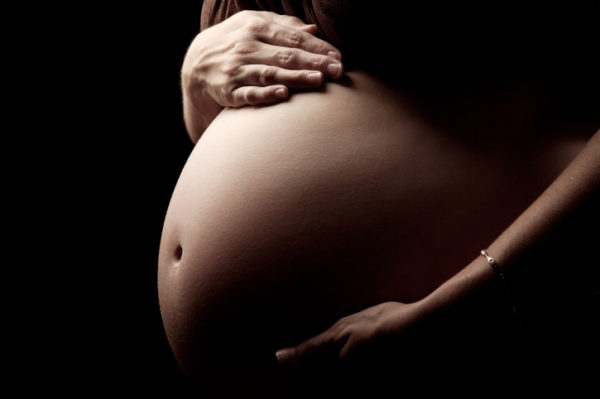
The House of Commons has voted 379 – 137 to remove all criminal sanctions from pregnant women who induce an abortion at any point in their pregnancy.
Pro-life advocates had fiercely opposed the move and condemned the result.
It now goes to the House of Lords where it must pass before it can become law.
New Clause 1 (NC1), proposed by Tonia Antoniazzi MP, would disapply the crimes of ‘unlawful procurement of miscarriage’ (Offences Against The Person Act 1861) and ‘child destruction’ (the Infant Life (Preservation) Act 1929) from women who cause their own abortion. This means that no woman could be prosecuted for aborting her own child at any stage of pregnancy, including immediately before birth, and for any reason.
A still more extreme proposal would have repealed the two crimes altogether, meaning that abortionists, whether or not medically qualified, would face no penalties for causing the death of an unborn child at any stage of pregnancy, but this was withdrawn.
The Anscombe Bioethics Centre said the change would increase the danger of coercion of women into abortion and the risk of dangerous late-term abortion without medical supervision.

Just over 40pc of children experiencing deprivation live in lone parent households, according to research by the Economic and Social Research Institute (ESRI). Raising a child alone is regularly linked with poverty partly because a maximum of one income will be coming into the household.
Its latest study found the number of children defined as deprived but not at risk of poverty has increased, with 17pc of children defined as such in 2023 compared to 12pc in 2020.
The biggest risk factor identified was lone parentage with disability following close behind:
“39% live in households where at least one person over the age of 16 has a disability, and 41% live in lone parent households”.
Regarding policy implications, the authors said the findings suggest that “efforts to address child poverty need to address the substantial risks faced by lone parents and people with disability.”
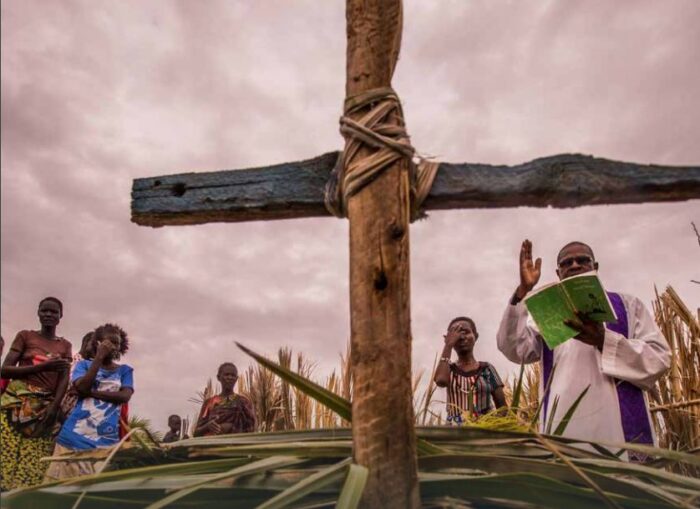
Up to 200 Christians were reportedly killed by Islamic militants in a brutal attack in the central Nigerian state of Benue on Friday night.
Details of the atrocity has been reported by Aid to the Church in Need (ACN), Genocide Watch, and Amnesty Nigeria.
ACN spokesperson, John Pontifex, said the militants targeted displaced families, setting fire to their buildings as they lay asleep inside and macheting any who tried to flee.
The IDP families were in buildings repurposed as temporary accommodation when the militants stormed in, shouting “Allahu Akhbar” (“God is great”), before killing people at will.
Initial reports confirmed that at least 100 people died in the three-hour killing spree but later data collected by Diocese of Makurdi’s foundation for justice, development and peace (FJDP) estimated a full total of 200.
The death toll makes it the single-worst atrocity in a region where there has been a sudden upsurge in attacks amid increasing signs that a concerted militant assault is underway to force an entire community to leave the region.

UK MPs are set to vote next Tuesday on an amendment that would reinstate in-person consultations with a medical professional prior to an abortion taking place at home.
New polling shows widespread public support for the law change, with two-thirds of women supporting the move and only 4% wanting the status quo.
Additionally, only 16% of the public support a proposal that would render it no longer illegal for women to perform their own abortions for any reason, up to birth.
The amendment (NC106) has been signed by a cross-party group of over 30 MPs from six parties including former leader of the Conservative Party and cabinet minister Sir Iain Duncan Smith, former Lib Dem leader Tim Farron, and former health minister Neil O’Brien.
According to Right to Life UK, this amendment “would protect women by ensuring they have an in-person consultation with a medical professional before they could take abortion pills at home. This would enable an accurate assessment, in person, of any likely health risks for a woman taking abortion pills, her gestational age and the possibility of a coerced abortion”.

The findings come from a massive new global survey of over 14,000 people by the United Nations Population Fund (UNFPA) – spanning 14 countries on five continents: four in Europe, four in Asia, three across Africa and three from the Americas.
The UNFPA used to be one of the main global organisations warning against overpopulation but now most people live in countries with below replacement level fertility and ageing populations.
More than half of respondents said financial factors such as affordable housing, childcare options and job security were things that had limited, or would limit, their ability to grow their families.
One in four said health issues were holding them back, while a fifth of respondents mentioned fears about global issues including climate change, wars and pandemics.
“Vast numbers of people are unable to create the families they want,” said Dr Natalia Kanem, executive director of the UNFPA.
“The issue is lack of choice, not desire, with major consequences for individuals and societies”.

The U.S. Supreme Court has unanimously held that the state of Wisconsin violated religious freedom when it denied a tax exemption to a Catholic charity after claiming that the group’s undertakings were not “primarily” religious.
The state allows organizations “operated primarily for religious purposes” to be exempt from paying into the state’s unemployment system. But the charity was denied this status because it offers its services to people of all faiths and does not focus its efforts on converting the people it serves to Catholicism.
The Catholic Charities Bureau is the social ministry arm of the Catholic diocese in the city of Superior and it provides “services to the poor, the disadvantaged, the disabled, the elderly and children with special needs”. It does not discriminate on the basis of religion or require the recipients of its charity to be Catholic.
The ruling means that religious freedom doesn’t apply narrowly to the worship and evangelising aspect of churches, but also applies to their social outreach.