

The man who bombed a California fertility clinic last week, taking his own life and injuring four others, appears to have been motivated by an ultra-extreme anti-birth ideology which thinks humans are a blight upon the planet, according to police.
Dubbed ‘efil-ism’ — “life” spelled backwards — supporters of the philosophy argue that people should not have children in order to bring the human race to extinction.
In an online manifesto attributed to him, the bomber dubbed his views “pro-mortalism.”
“All a promortalist is saying is let’s make it happen sooner rather than later (and preferably peaceful rather than some disease or accident), to prevent your future suffering, and, more importantly, the suffering your existence will cause to all the other sentient beings, . . . The end goal is for the truth (Efilism) to win, and once it does, we can finally begin the process of sterilizing this planet of the disease of life.”
Anti-natalists oppose procreation for a variety of reasons. Some believe humans are unfairly born without consent into a life of suffering, while others cite global overpopulation and concerns about climate change.
While it is a fringe philosophy, circulating primarily among a small group of online adherents, that opposes human life in every form, a more academic version of the philosophy called anti-natalism is primarily associated with the South African philosopher David Benatar, who has written extensively on the thesis.

Patients in hospices will not be protected from offers of assisted suicide, even in religious-run homes, according to critics of a proposed bill going through the UK Parliament.
On Friday the House of Commons rejected an amendment to protect hospices from having to provide assisted suicide on their premises.
While advocates of the bill implied that the amendment was unworkable, Professor David Albert Jones, Director of the Anscombe Bioethics Centre, said that without it, the Bill “would allow doctors to raise the issue proactively with patients, and to provide patients with lethal drugs, and be present with patients when they took these drugs, all within the walls of a Catholic hospice or nursing home”.
He added: “Voluntary aided hospices would have no legal way to avoid becoming suicide clinics. Catholic patients would have no safe haven where they could receive palliative care without the threat of being offered assistance in suicide”.
“Hospices could be compelled to provide assistance in suicide or forced to close. This Bill not only threatens the right to life of vulnerable patients, it threatens freedom of conscience and freedom of religion”.
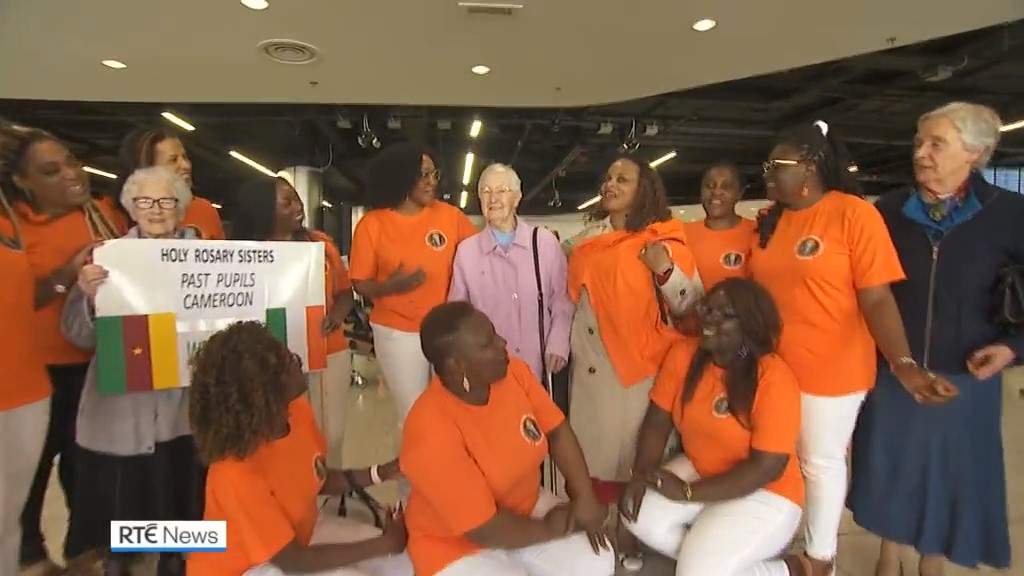
The loss of religion and fulfilment go hand in hand according to a new global survey led by Harvard academics published this week.
Across 22 countries in six continents, over 200,000 participants for five years, the Global Flourishing Study attempted to glean just who in the world actually feels content.
While the questions asked of the survey’s participants were varied, ranging from financial stability to physical health, sense of purpose to childhood experiences and relationships, the report’s authors suggest a widespread correlation can be made between those nationalities who feel most fulfilled and those with the highest religious observance.
“Religious service attendance was one of the factors most consistently associated with present or subsequent wellbeing, across countries and across outcomes,” the report, led by Prof Tyler VanderWeele, outlines.
It highlighted the “declining religiosity of more economically advanced nations” suggesting: “We may need a reconsideration of spiritual pathways to wellbeing.”

There is appetite for a push in the Dail to stop children from preparing for the sacraments in Catholic schools, a Senator has said.
The Social Democrats proposed the move and received strong support from Sinn Fein among others.
However, Aontú Senator Sarah O’Reilly, said the proposal lacks popular support: “children don’t want it, teachers don’t want it, and parents don’t want it. So, essentially, the Social Democrats are bringing forward a motion that nobody has any appetite for,” the Cavan Senator said.
Aontu Deputy Paul Lawless, a former teacher, accusing the Social Democrats of pushing an “anti-pluralist” agenda.
“The Social Democrats are seeking to ultimately deny the rights of thousands of families across Ireland to educate their children in the ethos of their children,” Lawless said.
He added that while his party supports the divestment programme, the Government has faced difficulties because parents are “happy overwhelmingly with faith-based education, and are seeking to support that in the surveys and consultations that happen.”
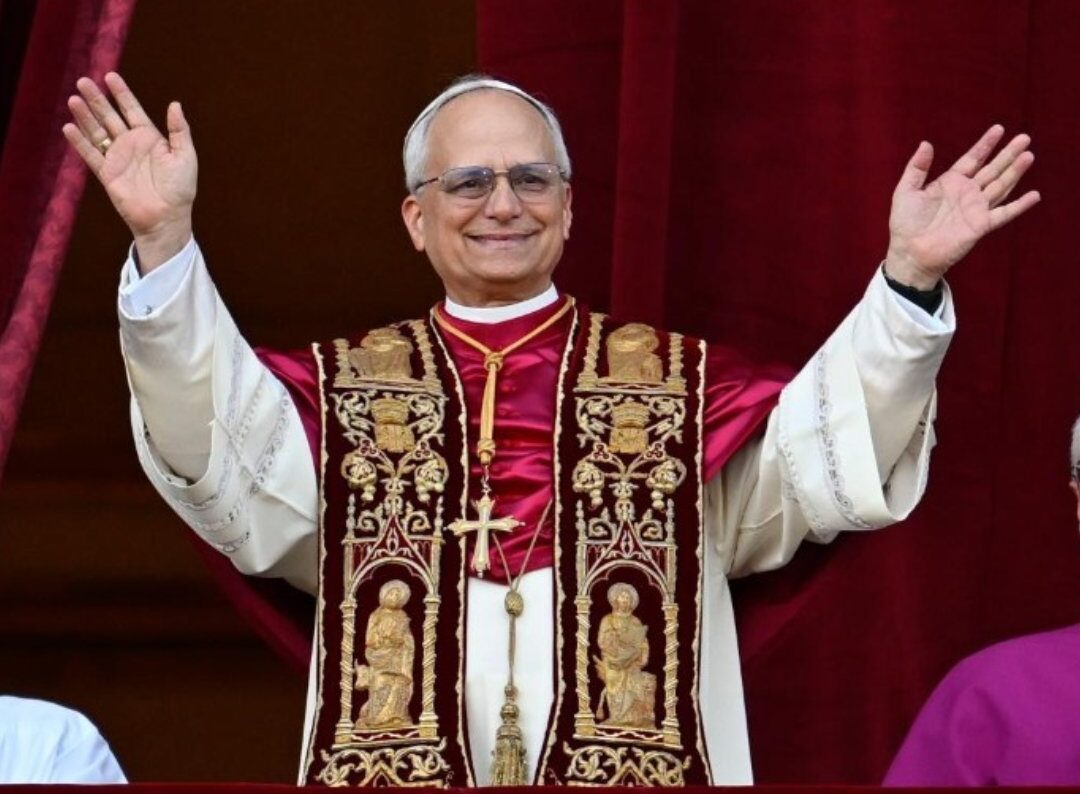
Newly elected Pope Leo XIV has wasted no time in reaffirming traditional Catholic teaching that the family is based on the union of “a man and a woman”.
Leo was speaking to the Vatican diplomatic corps ahead of his formal installation Mass this Sunday.
He emphasised three simple, yet fundamental themes: peace, justice and truth.
He said it is the responsibility of government leaders to build harmonious and peaceful civil societies.
“This can be achieved above all by investing in the family, founded upon the stable union between a man and a woman, ‘a small but genuine society, and prior to all civil society.’”
He added: “no one is exempted from striving to ensure respect for the dignity of every person, especially the most frail and vulnerable, from the unborn to the elderly, from the sick to the unemployed, citizens and immigrants alike”.

A bill to legalise assisted suicide in Scotland has passed its first stage.
Members of the Scottish Parliament (MSPs) voted by 70 to 56 to endorse the general principles of the bill in a wider margin than had been anticipated.
Opponents of the bill say a law change would send a message “that some lives aren’t worth living” and vowed to continue to fight against the plans.
It is still far from certain that the bill will become law. The legislation is opposed by several of Holyrood’s most influential figures and just seven MSPs need to change sides to defeat it.
During an “impassioned” five-hour debate, several MSPs made clear that they voted in favour despite having reservations over some of the details. They have indicated that they may withdraw their support if these concerns are not now addressed before a final vote.

The cost of raising a child has risen by 60 per cent in the past decade and now stands at an average of €169,000 from birth to age 21, or around €8,000 per annum.
The research from Laya Life looked at supporting a child from birth to college age, with costs for everything from nappies and food to rent support climbing.
The survey, which questioned 1,000 parents as part of the Cradle to College Cost Index, found the most financially demanding years for parents were the first year of a child’s life and their teenage years.
Among the major cost increases for parents were food, which has seen a 61 per cent increase in the past decade, while spending on baby formula has also risen sharply.
Families are also paying out more in pocket money to children, which has increased by 86 per cent, while rent support for older children has risen by 37 per cent.

New research says that parental divorce reduces children’s adult earnings and college residence while increasing incarceration, mortality, and teen births.
The paper by Andrew C. Johnston, Maggie R. Jones & Nolan G. Pope was just published by the US National Bureau of Economic Research (NBER)
The researchers used linked tax and Census records for over 5 million children to examine how divorce affects family arrangements and children’s long-term outcomes.
“Following divorce, parents move apart, household income falls, parents work longer hours, families move more frequently, and households relocate to poorer neighborhoods with less economic opportunity,” they write.
This bundle of changes in family circumstances suggests multiple channels through which divorce may affect children’s development and outcomes. In the years following divorce, they write, “we observe sharp increases in teen births and child mortality”.
“To examine long-run effects on children, we compare siblings with different lengths of exposure to the same divorce. We find that parental divorce reduces children’s adult earnings and college residence while increasing incarceration, mortality, and teen births. Changes in household income, neighborhood quality, and parent proximity account for 25 to 60 percent of these divorce effects”.

Leading politicians across the political spectrum have come out against a bill to legalise assisted suicide in Scotland.
The Scottish Parliament is due to vote on the general principles of LibDem MSP Liam McArthur’s Assisted Dying for Terminally Adults (Scotland) Bill, which would introduce the right to assisted death for terminally ill, mentally competent adults.
The Scottish National Party First Minister, Deputy First Minister, and former First Minister, as well as the Scottish Labour leader have all announced their opposition.
Last week John Swinney, the first minister, said his religious convictions meant that, after “agonising” over the decision, he would vote against the proposals.
Kate Forbes, the Deputy First Minister, said she does not think “any amount of legal drafting can prevent people feeling pressured to die”.
Former first minister Nicola Sturgeon said she had concerns about patient-doctor relationships and about society’s attitude to death and caring for people at the end of their life.
In particular she cited fundamental concerns linked to coercion and to the ‘wide’ definition of “terminally ill” in the bill.
Past remarks of new Pope Leo XIV indicate clear support for Church teaching on issues of life, marriage and family while also skewering mass media portrayals as distorting the reality of those same ideals.
In a 2012 address to a synod of bishops in Rome on evangelisation, the then head of the Augustinian Order said “Western mass media is extraordinarily effective in fostering within the general public enormous sympathy for beliefs and practices that are at odds with the Gospel – for example abortion, homosexual lifestyle, euthanasia”.
He also narrated his remarks for a video produced by the Catholic News Service, that featured accompanying footage from movies and TV including ‘Cider House Rules,’ ‘Million Dollar Baby’, and ‘Modern Family’, each of which positively portray those moral choices.
The now-Pope said mass media fostered so much “sympathy for anti-Christian lifestyles choices” that “when people hear the Christian message it often inevitably seems ideological and emotionally cruel”.
“Catholic pastors who preach against the legalization of abortion or the redefinition of marriage are portrayed as being ideologically driven, severe and uncaring,” Prevost added.
He called for a “new evangelization to counter these mass media-produced distortions of religious and ethical reality”.