

A New York state bill that would legalize medical assisted suicide is “a disaster waiting to happen” according to Cardinal Timothy Dolan.
The State Assembly advanced the Medical Aid in Dying Act in an 81–67 vote last week. If passed into law, the legislation will allow terminally ill adults to request medication to end their own lives.
In a statement released on Tuesday, Dolan — the archbishop of the Archdiocese of New York — said: “For people of faith who believe in the sanctity of life from conception to natural death, the very idea of having a doctor give you a prescription to end your life prematurely is contrary to everything we cherish.”
“But one need not be religious to see that assisted suicide is a terrible idea. It is a classic Pandora’s box; once opened, its consequences cannot be contained.”

A Washington State law that threatens priests with up to one year in jail if they fail to report child abuse revealed to them in confession is being investigated by the US Department of Justice (DOJ).
The new law adds clergy to the list of mandatory reporters for child abuse even if it is learned of during “privileged communication”.
Moreover, it does so despite exempting all other mandatory reporters, such as nurses and therapists, when they come by such knowledge during communication that is “privileged”.
In a press release, the DOJ said one of its primary concerns is that the law “appears to single out clergy as not entitled to assert applicable privileges, as compared to other reporting professionals”.
The Washington State Catholic Conference, which represents the state’s Catholic bishops, put out a statement to assure Catholics that “their confessions remain sacred, secure, confidential, and protected by the law of the Church.”
“Catholic clergy may not violate the seal of confession — or they will be excommunicated from the Church,” the statement, signed by Seattle Archbishop Paul D. Etienne, added.
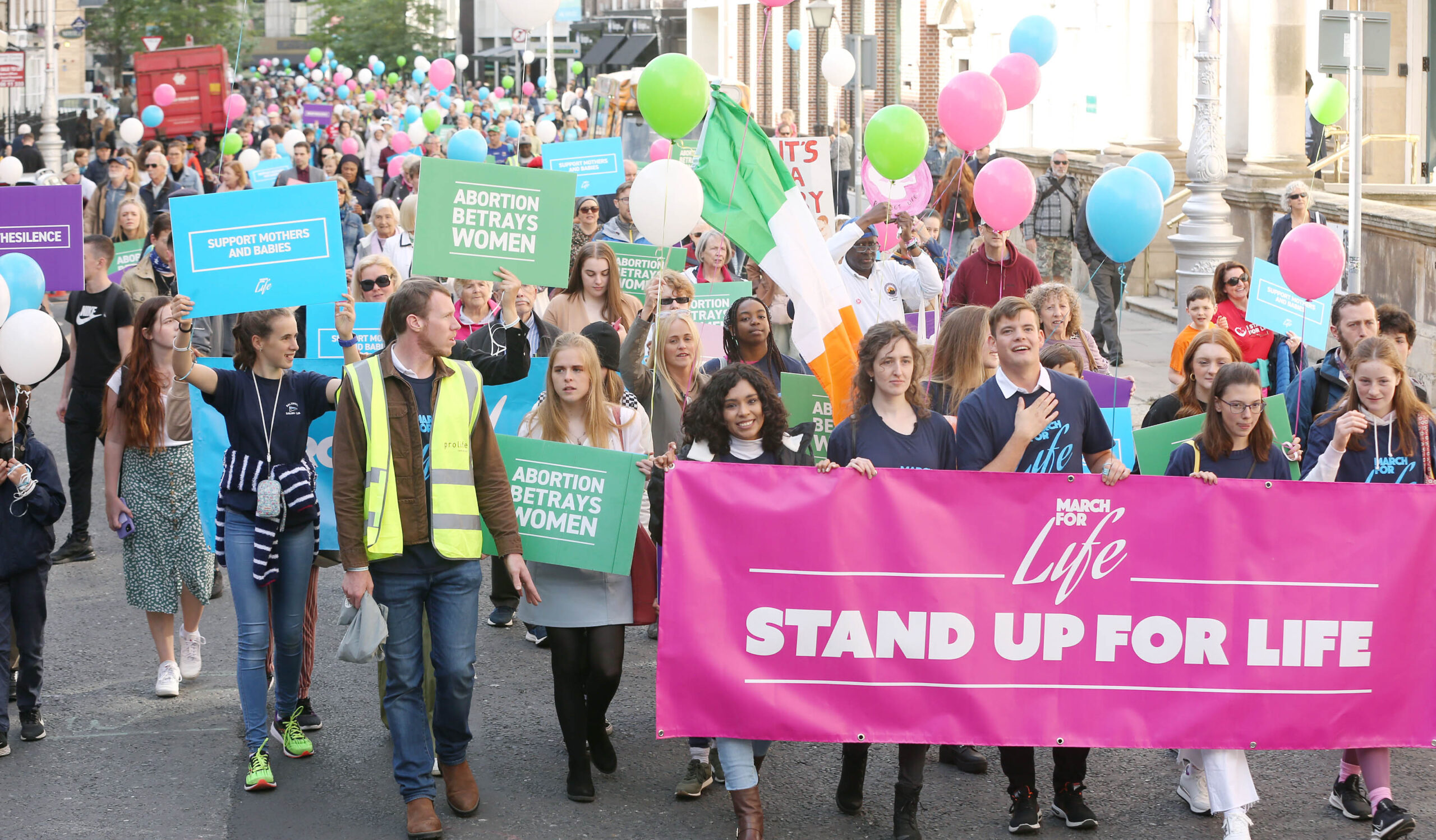
The Government were called upon to take immediate action to curb Ireland’s soaring abortion rate by speakers at the annual March for Life in Dublin on Monday.
The number of abortions rose from 2,879 in 2018 to 10,033 abortions in 2023 and figures for 2024 are expected to show another marked increase.
Several thousand people took part in the demonstration including Aontú Senator Sarah O’Reilly.
Pro Life Campaign spokesperson Eilís Mulroy told the crowd the massive increase in abortions and the refusal of the government to engage with any viewpoint other than the most radical elements of the pro-abortion movement is “proof of the totally skewed discussion that’s taking place”.
Journalist and commentator Wendy Grace said Ms Grace said the “madness” of what the government is allowing to happen cannot continue and she said that room at the decision making table has to be found for voices other than those pushing abortion all the time.

A Quebec Superior Court judge has ruled that limiting the legal affiliation of children to one or two parents is unconstitutional.
This opens the way to granting legal parental rights to three or more people who decide to have a child together.
It further demotes the importance biological parenthood in favour of adults recognised as the legal parents of a child whether they have a biological relationship with the child or not. Some children may now have up to five ‘parents’, that is, the biological mother and father, who might have provided the egg and the sperm, a surrogate mother, that is, the birth mother, and the people who actually raise the child.
In the Quebec cases it applies where a family has multiple adults involved in a relationship before the child’s conception. There were three families who were part of the case before the judge.
The first constitutes a “throuple,” three adults – a man and two women – in a relationship, with four children among them.
The second involves a lesbian couple and a male donor who wished to be part of the child’s life as a father figure.
The third includes a woman living with infertility who allowed her husband to have a child with a friend, who asked to remain on as a mother.

It may be discriminatory to exclude faith-based schools from state-funding for private education, Justices suggested during oral arguments at the US Supreme Court on Wednesday.
A Catholic school in Oklahoma has challenged its exclusion from charter-school funding as unconstitutional and its case was heard by the Court this week.
“You can’t treat religious people and religious institutions and religious speech as second class in the United States,” said Justice Brett Kavanaugh.
He added that to have a program open to all private institutions except those that are religious “seems like rank discrimination.”
Justice Samuel Alito expressed concern about religious discrimination by the state, noting that the rejection of St. Isidore “seems to be motivated by hostility” toward particular religions.
A victory for the school could provide a lifeline for Catholic schools in particular, which have been losing students as tuition rises.

Serious adverse effects from the abortion pill are 22 times more frequent than previously thought, new research claims.
In a first-of-its-kind study, “The Abortion Pill Harms Women”, the Ethics and Public Policy Center (EPPC) says that, following a mifepristone abortion, 10.93 percent of women experience sepsis, infection, haemorrhaging, or another serious or life-threatening adverse event.
By contrast, the current US Federal Drug Administration (FDA) label says less than 0.5 percent experience severe adverse reactions.
The research authors have called on the FDA to revisit its previous research and amend its regulation of mifepristone.
“This study is the statistical equivalent of a category 5 hurricane hitting the prevailing narrative of the abortion industry, said lead author and EPPC President Ryan T. Anderson.
“It reveals, based on real-world data, the shocking number of women who suffer serious medical consequences because of the abortion pill. The Trump FDA should take immediate action to protect the safety of American women by reinstating the safety regulations that the Obama and Biden Administrations removed.”

A number of Fianna Fail and Fine Gael TDs are opposing the Education Minister’s push to convert Catholic schools to multi-denominational patronage, according to a report in the Daily Mail.
FG TD Barry Ward called the renewed push ‘bizarre’, saying if there is one school in a town and it is a Catholic school, it is probably because the majority of parents want it that way.
“I think it would be bizarre to roll out a central diktat on a matter that should not be decided by the State, or by teaching unions, but parents and school boards”.
He said he is not aware of any school being blocked from divesting of a religious ethos, adding that the demand is simply not there.
FF TD Cathal Crowe said that when asked, very few schools actually want to change patronage as parents tend to be happy with their children attending Catholic schools.
One Fine Gael ministerial source was quoted as saying he was ‘surprised’ to see Helen McEntee’s move after she faced sharp criticism for prioritising ‘woke’ policies, such as the failed hate speech legislation, as Justice Minister.

Pornography is fuelling sexual violence that is leaving young women with serious physical injuries, doctors have been warned.
The annual conference of the Irish Medical Organisation (IMO) in Killarney heard Government regulation is critical, as children as young as 10 are being exposed to extreme, explicit material.
Roscommon GP Madeleine Ní Dhálaigh said the “scale and pace of change in pornographic material compared to just a few short years ago has been overwhelming and disturbing”.
She said aggressive intercourse and non-fatal strangulation are among the acts being “normalised” by being widely available to view online.
Dr Ní Dhálaigh said the Government needs to urgently introduce regulations to prevent children viewing this material.

Ireland’s marriage rate dropped to just 3.8 people per 1,000 adults last year, the lowest ever recorded excluding the period of Covid lockdowns, while there was a 4pc drop in the total number of couples who tied the knot, according to the latest figures from the CSO.
This is likely to have a knock-on effect on the country’s fertility rate which is already well below replacement level.
In addition, there were almost as many civil ceremonies as Catholic celebrations.
In total, there were 20,348 marriages registered in Ireland last year down from 21,159 in 2023 and 23,173 in 2022.
Since 2014, the number of marriages has fallen by 7.7pc as there were 22,045 marriages in 2014, despite a big increase in the population.
Canada’s Catholic bishops are highlighting concern for the right to life, care for the vulnerable, and protection of religious freedom in upcoming elections due to take place on April 28.
In a pastoral letter, they ask Catholic voters to “discern which policies best serve the common good”.
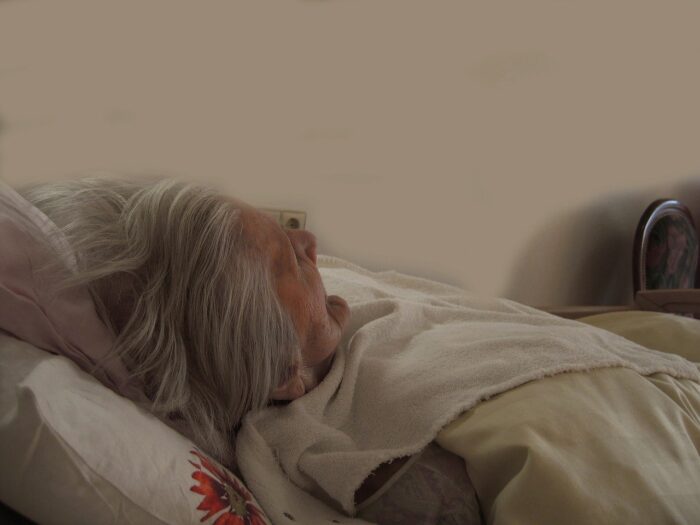
The bishops place particular emphasis on the right to life, stating: “This right is being undermined by the lack of legal protection for the unborn, the ongoing expansion of eligibility for medical assistance in dying (MAID), and the insufficient access to quality palliative care for those who are suffering at the end of life.”
The bishops also warn of “growing intolerance toward religious communities in Canada,” including “threats to remove charitable tax status simply for upholding values rooted in faith that diverge from prevailing secular ideologies.”