

Health Minister Simon Harris has issued a threat to doctors who refuse to refer patients for abortions under the proposed legislative regime. On Monday, GPs with the Medical Alliance for Life had asked the Minister that they might not be prosecuted for refusing to do referrals. However, speaking on Claire Byrne Live Monday night, Harris said he didn’t expect any substantial changes between the already-published outline of the bill and the final legislation.
“I think these have been the most discussed heads of bill of perhaps any legislation ever. I took a conscious decision, along with the rest of the government, to publish the heads of bill before the referendum because people rightly wanted to know, if I voted Yes, what will the law look like?”
People cast their ballots in the full knowledge that this would be the legislation, he said.
Doctors who refused to administer abortions to their patients would be allowed to conscientiously object, Harris said, but added that those GPs would have to refer patients to a doctor who would. “The law of the land will be very clear on that,” Harris said. “Medical Council guidelines already deal with issues of conscientious objection and I expect the Medical Council will deal with that.”
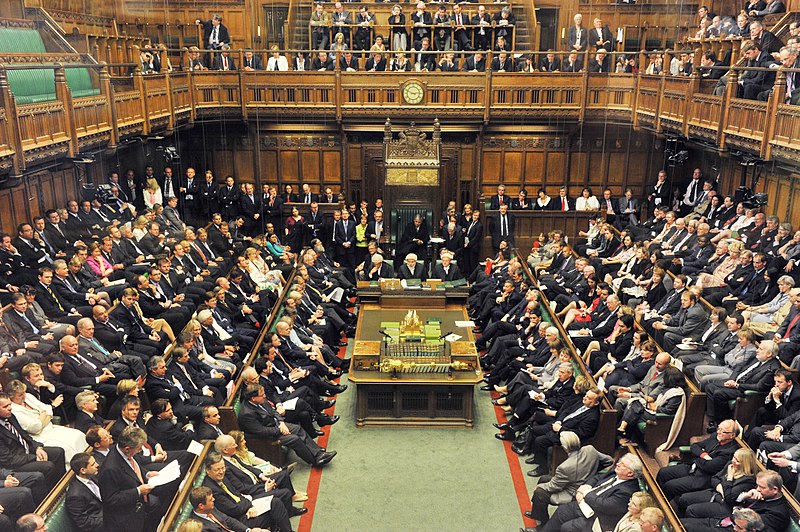
British Prime Minister, Theresa May, has ruled out any legislative diktat from Westminster that would impose a liberal abortion law on the North. She spoke as hundreds of pro-choice activists vowed to hit Northern Ireland like a “seismic wave” as they stepped up their bid for change with a rally in Belfast on Monday. Theresa May’s official spokesman said on Monday that abortion was a devolved matter on which politicians at Westminster should not legislate. “It is important to recognise that the people of Northern Ireland are entitled to their own process which is run by elected politicians. Our focus is restoring a democratically accountable devolved government in Northern Ireland so that locally accountable politicians can make decisions on behalf of the public they represent,” the spokesman said.

A Labour party senator has issued a call for the Citizens’ Assembly to be resurrected to deal with the ongoing involvement of the Catholic Church in the running of schools in Ireland. In a message posted on facebook, Labour senator Aodhán Ó Ríordáin said the next constitutional issue for the country to face is to “break the religious stranglehold over Irish education”. In follow-up comments to media he said: “We have 4,000 schools in the State and there are ongoing issues such as access, employment rights for non-religious teachers, school ethos, sex education and so on. The Citizens’ Assembly could deal with these issues together rather than tinkering with existing laws. This could well be a five- to 10-year process, but it’s a model that has proved to be successful in dealing with marriage equality and abortion.”
His remarks were echoed by the Labour leader, Brendan Howlin, who told the Dail that the school patronage issue was “significant for many right now who want choice in the education they provide for their children. The Citizens’ Assembly model would be a very good way to have that debate and to allow all sides to have an input and be tested in an open way.”
In response, the Taoiseach, Leo Varadkar, said “it is certainly something the Minister for Education and I will consider”. He added that the Cabinet had discussed asking a new assembly to look at the wider issues of gender equality and “to come up with a set of proposals to allow us to follow through in many ways on the result of the referendum and deliver equality between men and women in other areas”. Mr Varadkar said there was work to be done on “the gender pay gap, greater equality in pensions and having far higher participation of women on company boards.
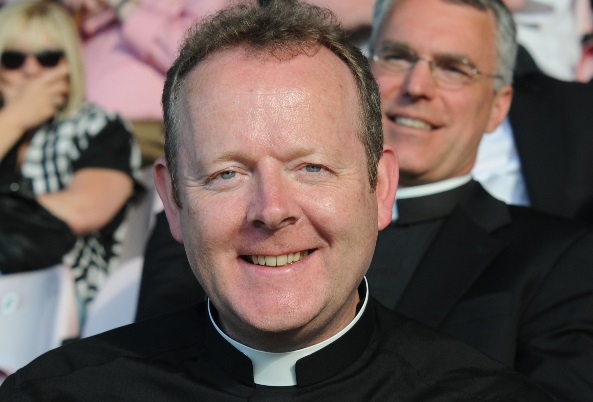
The Archbishop of Armagh, Eamon Martin, has expressed his dismay that the country appears “to have obliterated the right to life of all unborn children from our constitution and that this country is now on the brink of legislating for a liberal abortion regime.”
Speaking in Knock on Sunday, he said he was very concerned about the implications for society of interfering with the fundamental principle that the value of all human life is equal and that all human beings, born and unborn, have inherent worth and dignity. “At a time when scientific and medical evidence is clearer than ever about the beginning of life, we have effectively decided that some human lives – in this case the lives of the unborn – are less significant and deserving of protection than others. We have elevated the right to personal choice above the fundamental right to life itself.”
He added that faithful Catholics could become despondent, but “it remains as important as ever to affirm the sanctity of all human life”, and that the “taking of the life of any innocent human being is always gravely wrong”.
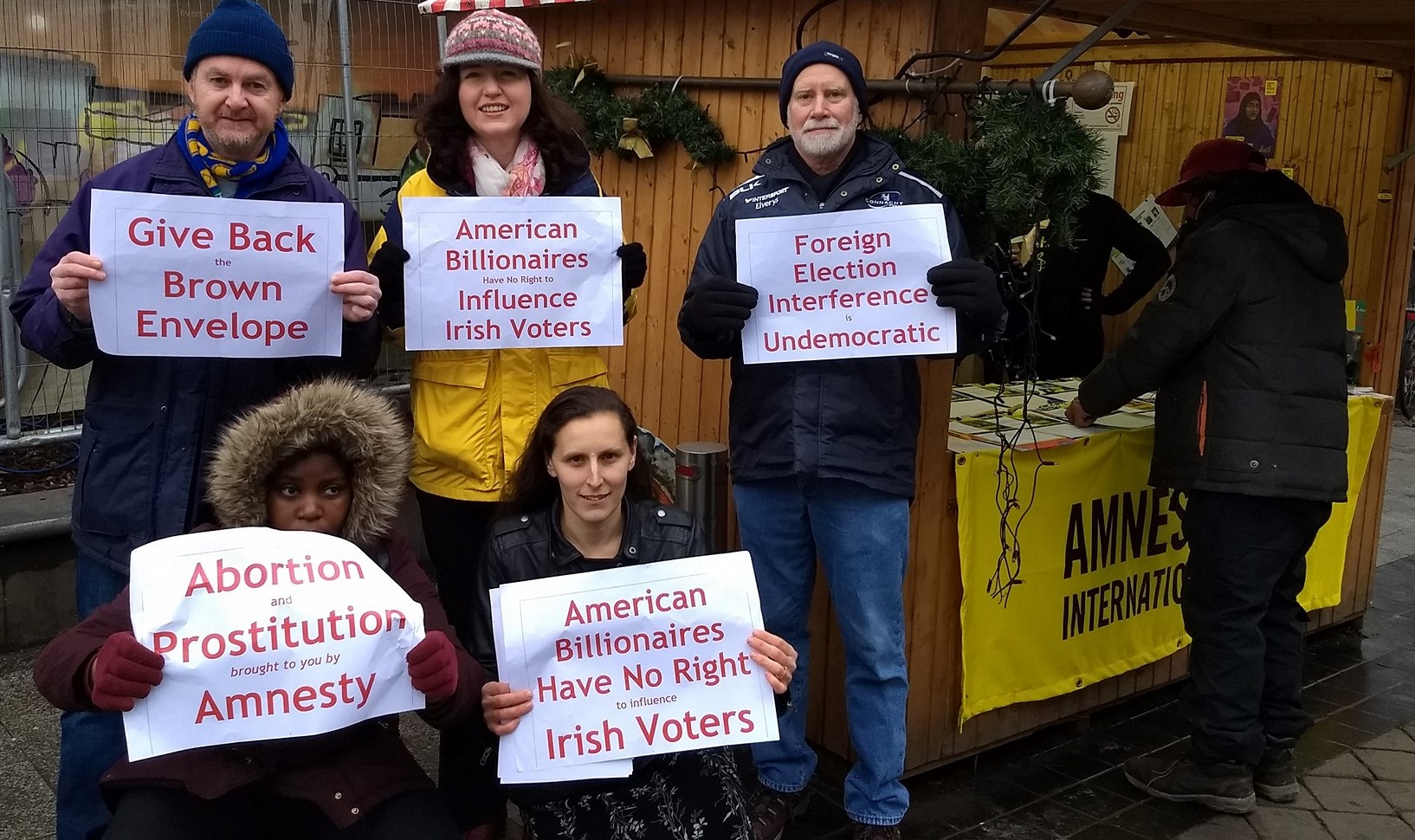
Amnesty International has called on the British government to introduce a liberal abortion regime to Northern Ireland after the Republic voted to remove the right to life of the unborn to pave the way for a radical abortion law. Amnesty’s campaign manager in the North, Grainne Teggart, was speaking on Saturday morning as the vote was still being counted in the repeal referendum. She said the British government can “no longer turn a blind eye and deny us equality”.
“We cannot be left behind in a corner of the UK and on the island of Ireland as second-class citizens,” she said.
“It must not be forgotten that us women in Northern Ireland are still persecuted by a Victorian-era abortion ban. It’s hypocritical, degrading and insulting to Northern Irish women that we are forced to travel for vital healthcare services but cannot access them at home.”
Separately, the London-Irish Abortion Rights Campaign have said they will immediately transfer their focus to changing the law in Northern Ireland in an attempt to continue the momentum achieved during the vote to repeal the Eighth Amendment. They said the decisive Yes vote meant there is a strong mandate to continue campaigning for change north of the Border.
Sinn Féin’s leader Mary Lou McDonald said she wanted urgent action to make abortion more widely available in the North, but that change should not be imposed by Westminster.
“I think it would be a scandal if a woman in Dundalk was to have rights and access to services a woman in Newry was denied,” she said, but the change should be made by Stormont, not by London.
Parents of pre-school children in 16 areas across the country are to be polled over the coming weeks on whether they want multi-denominational patrons to take over the running of their local Catholic primary schools.
The Minister for Education, Richard Bruton, announced the plan on Monday. In areas where parents express a preference for non-Catholic schools, Mr Bruton has proposed that the State lease buildings from the church and provide for “live transfers” of schools.
Minister Bruton said he hoped the Church would support his proposals. “I’m confident there’s support within the Catholic Church for this. There’s support in the community. I’m confident this process will evolve well,” he said.
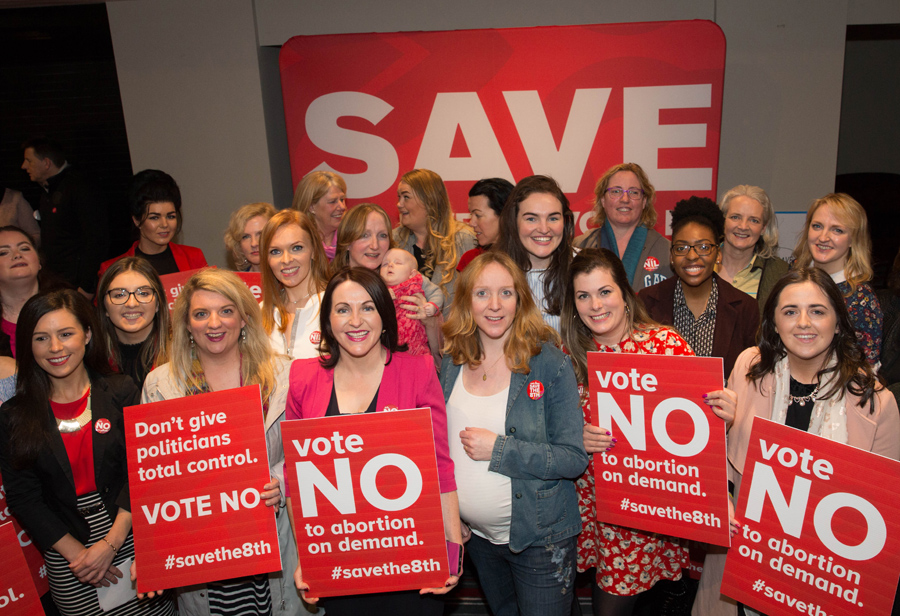
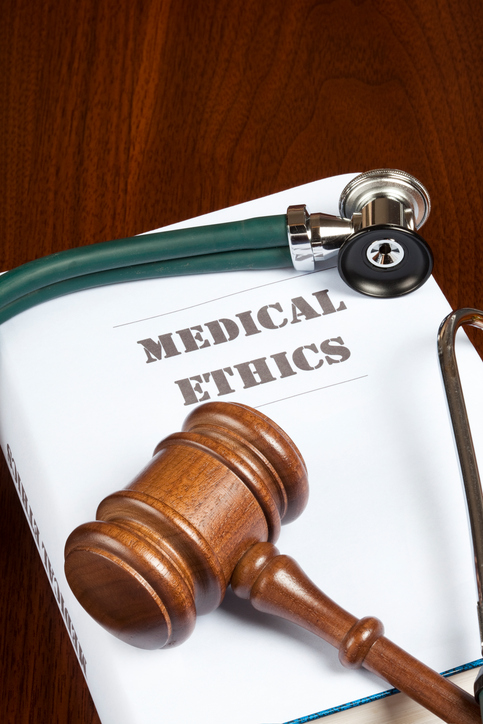
The Medical Alliance for Life has asked the Minister for Health, Simon Harris, to guarantee that medical staff and doctors will not be prosecuted for refusing to facilitate abortions. The published heads of the proposed abortion bill allows GPs to not administer abortions personally to their patients, but obliges them to refer those patients to another doctor who will. A spokesperson for the Alliance, GP, Dr Andrew O’Regan, said they want the Minister “to fully respect and protect the right to conscientious objection for all healthcare professionals and to ensure that nobody can be prosecuted for refusing to facilitate abortion.”
If medical practitioners, nurses and midwives were opposed abortion, then they would be unwilling to be involved in the process and refer women on. “If someone is saying that it goes against my entire conscience and everything I am about, and goes against everything that I understand as good healthcare, then I am not going to refer it either,” he said. “The big buzz word during the campaign was ‘choice’. What about the choice of the doctors who say this isn’t what we signed up for?”
Doctors for Life, another group representing medics which campaigned for a No vote in the referendum, said it would be “a clear voice for those healthcare professionals who do not wish to use their skills against the weakest members of society, of any age.”
“We will not perform any action to deliberately end the life of any of our patients,” said the group in a message posted online after the referendum result.
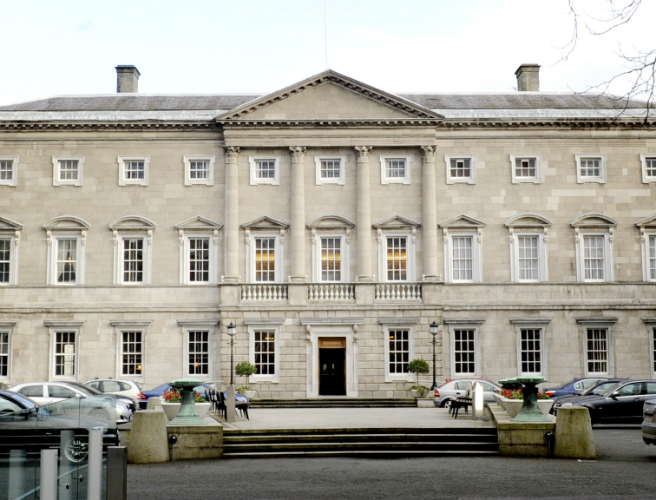
Sinn Féin TD, Carol Nolan, has vowed to oppose a bill legalising abortion up to 12 weeks without restriction and up to six months on broad health grounds. Speaking to the Irish Times, Ms Nolan confirmed she would not vote in favour of Minister Simon Harris’ proposed legislation. She said: “I won’t be supporting the legislation as my position remains the same, as a pro-life TD who is strongly opposed to abortion.”
Ms Nolan is already suspended from the parliamentary party for having opposed the holding of the referendum on whether or not to repeal the Eighth Amendment. She now faces the prospect of additional disciplinary action which will be decided by the part’s Ard Comhairle.
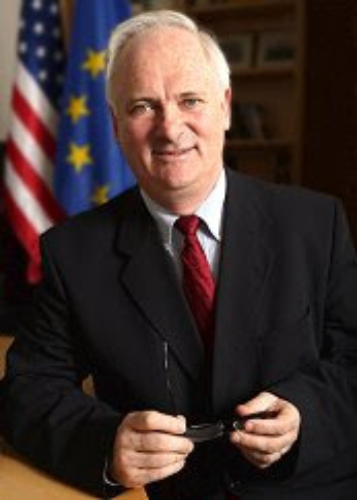
Former Taoiseach and leader of Fine Gael, John Bruton, has urged people to vote ‘No’ in the upcoming referendum on the Eighth amendment.
Speaking on RTÉ’s Today with Sean O’Rourke, Mr Bruton said he trusts the Irish people to uphold human rights and to be recognise that there are two lives involved. He said the Government was going too far to allow abortion without restriction up to 12 weeks and on the grounds of mental health up to six months. “That is the ending of a little Irish life, a little Irish boy or girl.” While Mr Bruton favours retaining the Eighth amendment in its entirety, he said the Government had other options and could have gone for a more restrictive regime. “I cannot understand why they came up with something so liberal.”
He said lives were being saved because abortion was not available in Ireland. People who might have contemplated abortion but did not have one were then happy to keep their baby when they saw it.
On the issue of pregnancy as a result of rape, Mr Bruton spoke of recovery from a trauma, and said “traumatising somebody is awful, but it’s not as final as killing somebody”.
In relation to babies with life-limiting conditions, Mr Bruton said that mistakes can be made, adding: “We should be cautious … when in doubt opt for life”.
Having a law that gives protection to the unborn in the Constitution is entirely consistent with the general philosophy of the Irish people, he said. “I want to ensure that a baby has the freedom to live, and has the freedom to make choices in its own life having been born, because a baby whose life is cut off before it’s born isn’t free to choose anything”.