
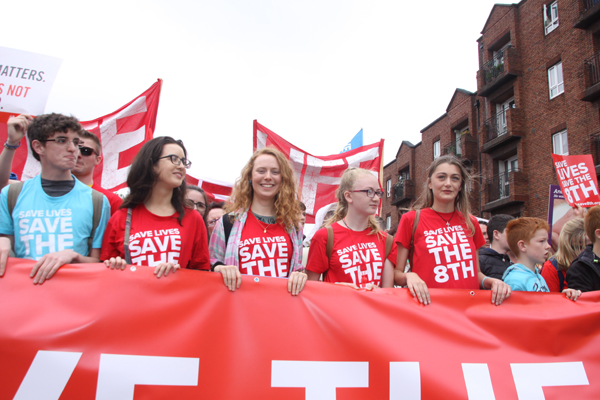
Door-to-door canvassing and social media engagement will be the mainstay of efforts by pro-life groups to keep the Eighth Amendment in the Constitution. The groups say they have made the decision because they feel shut out of the abortion referendum debate by much of the media and the political establishment. “We never ever hear about the thousands of lives saved every year by the Eighth Amendment. We just never see that talked about,” says Cora Sherlock of the Pro-Life Campaign. The groups are canvassing every weekend, campaigners say, and some local groups have been doing so for months. “To us the ground campaign is the most important thing . . . that’s where we’re concentrating our members,” says Niamh Uí Bhriain, spokeswoman for the Life Institute, an anti-abortion group.
A similar complaint was also made by pro-life Fianna Fail deputies who say that their pro-choice colleagues are getting more than their fair share of media time. Carlow-Kilkenny TD, Bobby Aylward, organised a meeting of “like-minded” FF TDs and senators yesterday at which he said “A lot feel we are not getting our view put across [in the media]. We want our fair share.” Eamon Ó Cuív TD strongly criticised “unelected officials” in the party for selecting certain individuals for media interviews. There was a view expressed that only TDs who were close with the leader were chosen to appear in the broadcast media.

Belgian nurses and social workers who specialise in treating dying patients are quitting their jobs because palliative care units are being turned into “houses of euthanasia”, a senior doctor has said. Increasing numbers of hospital staff employed in the palliative care sector are abandoning their posts because they did not wish to be reduced to preparing “patients and their families for lethal injections”, according to Professor Benoit Beuselinck, a consultant oncologist of the Catholic University Hospitals of Leuven. He said that after more than 15 years of legal euthanasia in Belgium “palliative care units are … at risk of becoming ‘houses of euthanasia’, which is the opposite of what they were meant to be”. Prof Beuselinck said palliative care nurses found the demands for euthanasia an “impossible burden” and a “complete contradiction of their initial desire to administer genuine palliative care to terminally ill patients”.
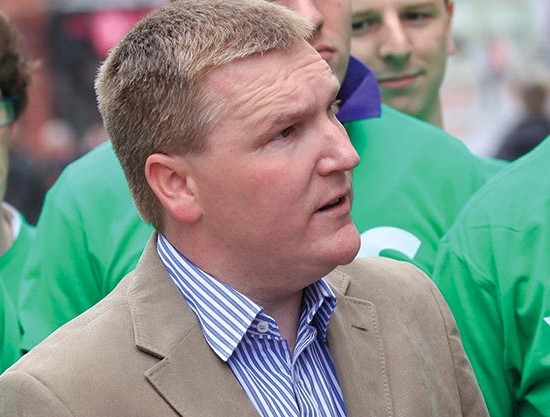
Fianna Fáil Spokesman on Finance Michael McGrath has confirmed he will not support repealing the Eighth Amendment to allow for a widespread abortion regime, branding the proposal made by the Oireachtas committee on the Eighth Amendment as a step too far.
Speaking on Today with Sean O’Rourke on RTÉ radio, Mr McGrath indicated he would support amending the Constitution to allow for terminations in certain cases but insisted the rights of the unborn should not be removed. “I think it is inevitable now that there will be a referendum and I support the holding a referendum. But if the referendum is asking the question that there should be a straight forward repeal of the Eighth Amendment with the intention of replacing with legislation providing for unrestricted access to abortion up to twelve weeks, then that is not something that I can personally support. I think it is a step too far.”

A pro-euthanasia medical ethicist has resigned from a Dutch regional assessment committee for euthanasia due to the expanding interpretation of a law which allows non-consenting, dementia patients to be euthanised. For ten years Berna van Baarsen helped to assess whether euthanasia had been performed in accordance with the law in the North Holland region. She resigned on January 1. “’I do not believe that a written declaration of intent can replace an oral request for incapacitated patients with advanced dementia,” she told the magazine Medisch Contact. Under Article 2.2 of the Dutch euthanasia law, a doctor may euthanize a patient who can no longer make clear what he wants, but who had previously left a written declaration consenting to euthanasia. Van Baarsen is not the only member of a euthanasia review committee to resign over the interpretation of the law. Three years ago ethicist Theo Boer also stepped down and has become a harsh critic of the Dutch euthanasia system.
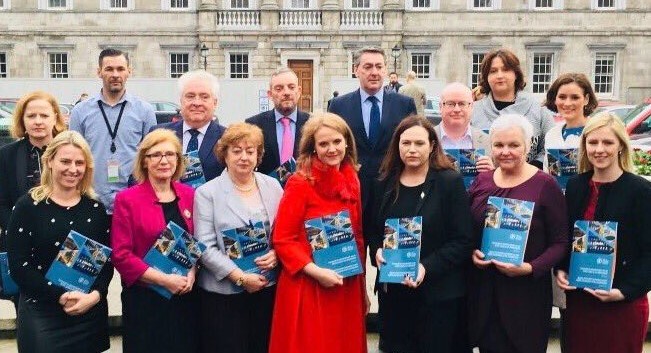
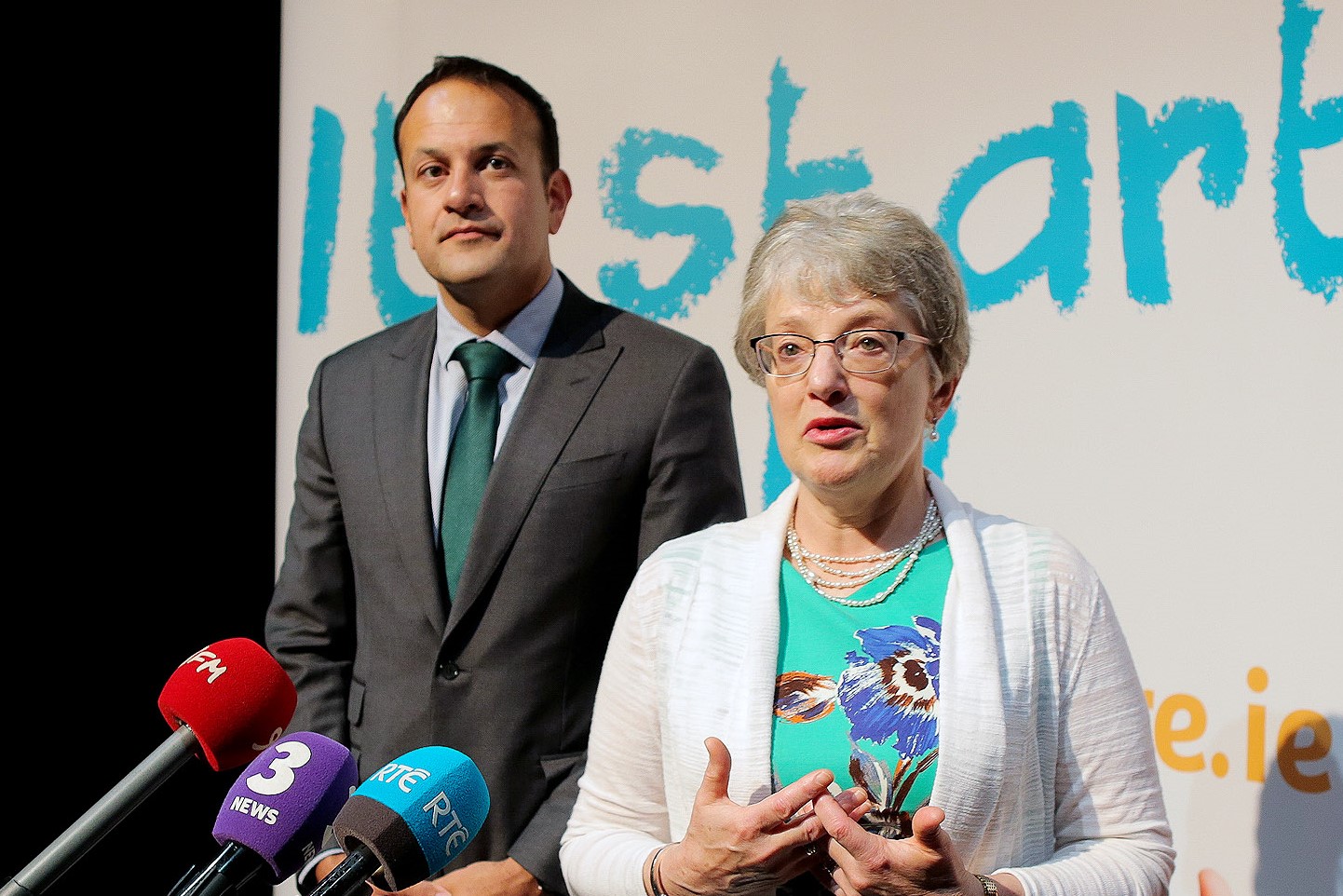

In a massive change from the Oireachtas abortion committee’s recommendations, the Government is now likely to propose a referendum to replace the Eighth amendment, rather than simply repeal it. The replacement text would grant the Oireachtas, not the Courts, sole and exclusive authority in deciding abortion law. It would mean that no portion of the Constitution could be appealed to in order to limit, in any way, legislation passed by the Oireachtas or assert any unborn rights. It was reported Monday that the Government had sought the advice of the Attorney General on the matter, and now, according to sources speaking to the Irish Times, Ministers have been told that the Attorney General is “likely” to recommend replacing article 40.3.3 with a text that would give the Oireachtas the power to make indefeasible law on abortion, impervious to review or challenge by the Courts.
According to sources, there is concern that simply deleting the article would leave open the possibility of legal challenges from both anti-abortion and pro-choice campaigners in the future. Legal challenges could seek to discover additional rights for the unborn in the Constitution or seek wider access to abortion under the right to privacy or bodily autonomy. To avoid this, a provision in the Constitution reserving to the Oireachtas the right to make the law in this area is now likely.
It is also claimed that such a provision may be needed to provide “further reassurance” to voters, and that, that while the legal advice had yet to be finalised, it was likely to recommend a “belt and braces” approach.
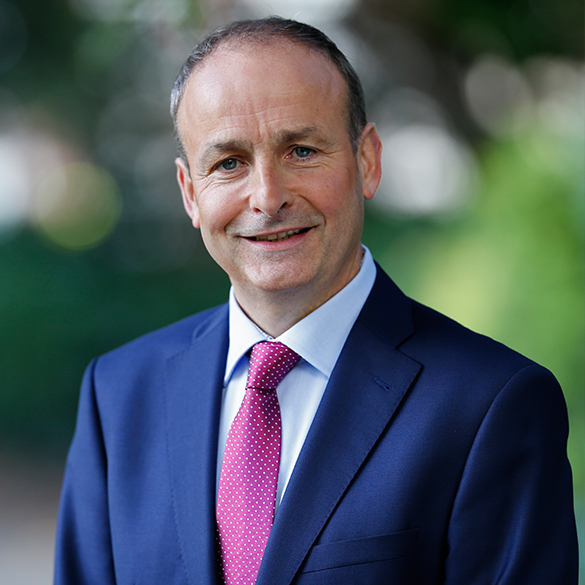
Fianna Fail’s Michael Martin has publicly backed the campaign to repeal the pro-life amendment and legislate for abortion without restriction up to 12 weeks and for mental health reasons up to birth.
Speaking in the Dail yesterday, Mr Martin cited the case of Savita Halappanavar and said in the inquiry into her death “the current law stood indicted for leading to a situation where her care was not as responsive or urgent as it should have been”. He also mentioned other cases “where the law has gone to extreme lengths in the attempt to force women to go to full term with a pregnancy”. Because of cases like this, Mr Martin called for a change in the law: “If we are sincere in our compassion for women and if we are sincere in respecting their choices then we must act. Because the 8th Amendment has been shown to cause real damage to Irishwomen. Because it has caused real harm to the quality of care available to pregnant women at critical moments. Because it has not and cannot change the reality that abortion is a present and permanent part of Irish life.”
Regarding what change the referendum should propose, he said he felt it is “likely” not only that the Eighth amendment be repealed, but that it should be replaced by a text explicitly giving the Oireachtas absolute power to legislate on abortion. Regarding legislation that might follow a referendum, he said he agrees with “the logic and the basic approach proposed by the Committee”.
Citing various events from history, Ms O’Connell said that “Catholic Ireland was a monstrous hoax”.
“When it came to children out of wedlock, the sin of having sex outside marriage was all-encompassing. The products of such sex were seen as the devil’s spawn. As it was women who bore the children, who laboured their births and nursed them at their breasts, it was the women who were unavoidably and visibly the most sinful”, she said. Speaking of the mother and baby homes, and the children who died in their care, she said: “We murdered them in their hundreds through neglect and hate, brutalised them in the name of salvation and enslaved them in the name of redemption”.