
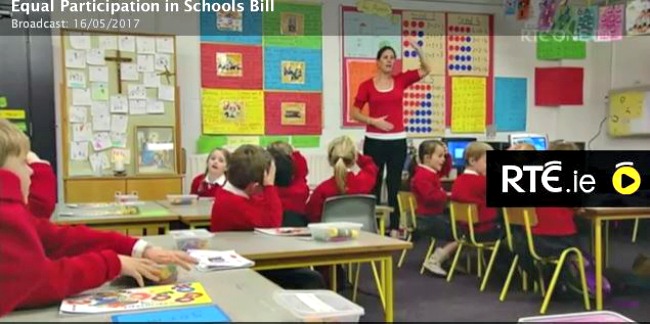
A new survey has found low levels of religious practice among trainee primary teachers. The survey, which was carried out by NUI Galway’s school of education, found that one-third of respondents said they rarely or never practised their religion or attended religious services. While most described themselves as “religious” (58 per cent), the remainder (42 per cent) self-described as either “not religious”, “did not know” or, in a small number of cases, atheist.
Despite this, the vast majority identified as Catholic (90 per cent), a rate higher than the general population at the time (78 per cent). A small minority of respondents (5 per cent) stated they had no religion, which was half the rate of the general population.
The survey examined attitudes towards religion among more than 1,000 teaching entrants and applicants with an anonymous questionnaire in 2014.
On the issue of teaching religion, most respondents said they were strongly in favour of teaching children about all faiths, world views and religions. The researchers found there was much less support for faith-formation-style religious instruction, even among Catholic respondents.

The Pro Life Campaign has described as “deeply divisive and mean-spirited” the Minister for Health’s speech in the Dáil yesterday evening on the recommendations of the Joint Oireachtas Committee on the Eighth Amendment. In his speech Minister Simon Harris talked about a nation turning its back on women as a result of the Eighth Amendment and linked the amendment to “darker times in our history” that included the Magdalene Laundries and Mother and Baby Homes.
Commenting on his remarks, Cora Sherlock of the Pro Life Campaign said: “Minister Harris has chosen to smear an entire group of people as a substitute for real debate. The Eighth Amendment has saved tens of thousands of lives and those responsible for it have every reason to be immensely proud of what they achieved. The people who campaigned for the Eighth Amendment in 1983 did so out of a genuine concern for human rights and respect for the dignity and value of every human life, born and unborn. For the minister to depict those responsible for the Eighth Amendment in the way he did is despicable and wholly unjust. The proponents of the amendment were not just involved in campaigning for its passage, they were also personally involved in different ways in providing care and support to women and families in difficult situations.”
Ms Sherlock added: “Many people involved in the pro-life movement today became involved for very personal reasons. Some are parents who contemplated abortion only to change their minds at the last minute. Others are women who had abortions and now deeply regret the decision. In his speech yesterday evening, Minister Harris also demeaned these individuals and everyone involved in the pro-life movement today. In one breath he called for a calm and reasoned debate and in the next he levelled accusations that demand an immediate retraction and apology.”
The use of frozen sperm, eggs or embryos after a person’s death by their partner will be permitted under draft legislation, the Oireachtas health committee has heard. The State’s chief medical officer Dr Tony Holohan told the committee on Wednesday about the drafting of the forthcoming Assisted Human Reproduction (AHR) Bill. Part of the scheme deals with what is called posthumous assisted reproduction (PAR). This involves the use of frozen gametes or embryos from a deceased person to achieve a pregnancy.
“These provisions enable a surviving female partner to continue a parental project after the death of her partner, provided specific conditions are fulfilled,” Dr Holohan said. “For example, the relevant parties have received counselling and given their informed consent and provided a one-year grieving period has elapsed since the partner’s death.” The deceased person would be recognised as a parent of any child born following PAR provided that child is born within 36 months of the person’s death.

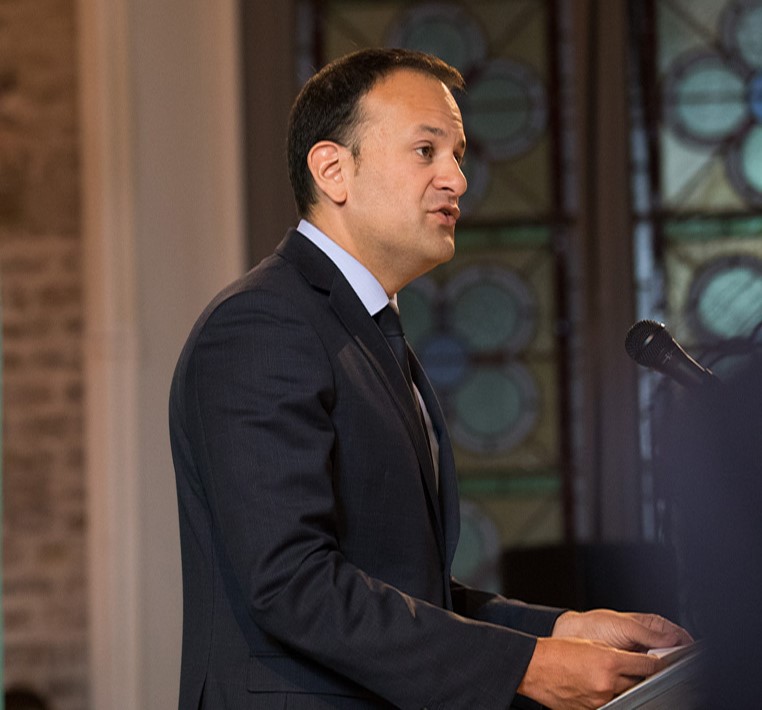
Taoiseach Leo Varadkar has indicated that the Government will accept the recommendations of the Oireachtas committee on the Eighth Amendment. This would pave the way for a referendum to entirely repeal the Eighth amendment to the Constitution recognising the right to life of the unborn child, and enable legislation to be prepared to allow for abortion for any reason up to 12 weeks into a pregnancy, and thereafter up to birth where there is a risk to the ‘mental or physical health’ of the mother. This is more radical than the UK law under which one pregnancy in every five ends in abortion each year. At the opening of a special meeting of the Fine Gael parliamentary party on Monday, Mr Varadkar said the proposals to repeal the Eighth Amendment and allow for abortions up to 12 weeks were a “strong option” for the Government.
According to the Irish Times, however, by the conclusion of the five-hour meeting, the Taoiseach said he believed there was a majority opinion that the Government should not stray too far from the committee’s recommendations. Any departure from the proposals, he said, would require both a very good reason and also the support of the Independent members of the Government.
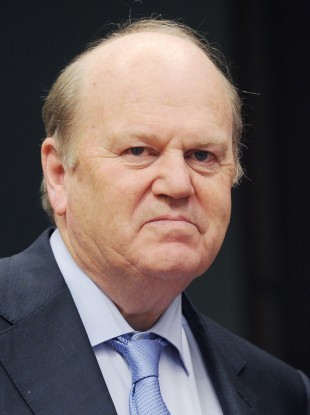
Former Minister for Finance Michael Noonan has issued a warning about the effect of an upcoming Supreme Court case on unborn rights could have on the pro-life debate. Addressing a meeting of the Fine Gael parliamentary party yesterday, he advised his colleagues to be conscious of the case where the Supreme Court is to hear an appeal of a High Court ruling which found the unborn had rights beyond those expressed in the Eighth Amendment. Mr Noonan did not express an opinion on the committee’s recommendations but said the Government needed to be mindful of the legal realities.
The case is due to be heard in late February, but it is not clear whether a ruling might be handed down by the time any potential referendum is held. The outcome of the case could put a wrench in the Government’s strategy as they are planning to publish abortion legislation in tandem with any legislation to hold an abortion referendum. If the Government decide for straight repeal of the Eighth amendment, they will not only be opening the way for widespread abortion, they would also be deleting the constitutional right to life of the unborn. However, any legislation that has been mooted so far has only addressed possible abortion scenarios, and not the rights of the unborn child. After the legislation is published, the Supreme Court could subsequently rule that the unborn child has no rights beyond the right to life. Overnight then, the referendum to repeal the Eighth amendment would become a referendum to remove the last remaining vestige of recognition of the rights of the unborn.
At the meeting yesterday, the Tánaiste, Simon Coveney, also expressed concern about the rights of the unborn. Mr Coveney told the parliamentary party he accepted there was a need for some change but wanted protection for the unborn and the mother.

The EU Competition Commissioner, Margrethe Vestager, has taken a strong position in favour of abortion ahead of the planned Irish referendum on the issue.
Speaking to the Irish Independent, Ms Vestager said: “It is never a thing that comes easy, but it gives you a right to your own body as a woman, to which you are otherwise deprived”. She added that it was “very important people can make their own decision within the family, when [they] want to have children”. In her native Denmark, abortion is available for any reason up to 12 weeks and thereafter for certain reasons and is paid for by the Government. “We think about it as a way to make sure that you are having children when you want to have children, and not when they come in a way when you haven’t chosen it yourself,” she said. Denying that the law harms the social fabric of the country, she said: “We find that the social fabric is made by taking responsibility for the choices you make; not denying people the right to free abortion, but affording them it with caution and the seriousness that people put into that decision”.

A new Penal Code in Bolivia bans religious evangelisation aimed at recruiting new members of faith communities. Religious organisations are classed with terrorist groups in the new law with both threatened with jail time of five to 12 years for attempting to recruit new members.
Specifically, Article 88.11 reads: “Whoever recruits, transports, deprives of freedom or hosts people with the aim of recruiting them to take part in armed conflicts or religious or worship organisations will be penalised 5 to 12 years of imprisonment”. Christian groups in Bolivia fear that a rigorous application of the Penal Code could ban preaching in the streets or even the act of inviting someone to a Christian event.
Several pastors gathered outside the Bolivian national parliament in La Paz to pray for religious freedom. “Will they denounce us if we bring a group of people to a Christian camp? Will I no longer be able to preach the Gospel on the streets?”, pastor Miguel Machaca Monroy, President of the coalition of evangelical churches in the capital city asked.
The National Association of Evangelicals in Bolivia also criticised the new Penal Code. “It is deplorable that Bolivia becomes the first Latin American country to persecute the rights of freedom of conscience and of religion, which are protected by the Universal Declaration of Human Rights, the declaration of San José de Costa Rica, and our Constitution”.
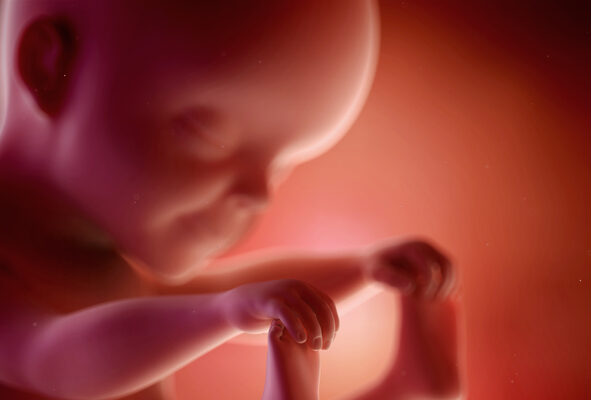
The Supreme Court has agreed to urgently hear the State’s appeal against a High Court finding that the unborn is a “child” with a significant set of rights beyond the right to life recognised by the pro-life amendment. Lawyers for the State told the Chief Justice on Thursday morning they wanted an “extremely early” hearing date because the prospect of an abortion referendum in late May had been raised. Mary O’Toole SC said her side is very anxious the appeal is heard and decided as soon as possible.
The Chief Justice, Mr Justice Frank Clarke, said the courts would likewise be anxious to not have the appeal heard in the middle of the referendum campaign on the Eighth amendment. Because of this, the court would hear the case at the earliest possible date, probably around February 22nd or 23rd.
The Chief Justice was appointed to his position only last summer and this would be the first major case involving the unborn that he would preside over as the Chief Justice. At the time of his elevation, the Irish Times correspondent, Ruadhán Mac Cormaic, described him as a “socially liberal” judge with a radical edge who may be willing to take the Court into a new era of judicial activism.