
A Government oversight body has found that Marie Stopes abortion clinics in the UK paid its staff bonuses to pursue women who had cancelled their abortions in hopes of signing them up for a new appointment. According to the report by the Care Quality Commission, staff felt “encouraged” to ensure women went through with abortions because it was “linked to their performance bonus”. Inspectors found evidence of a policy – in place across all 70 Marie Stopes clinics in the country – whereby staff were told to call women who had decided not to have an abortion, and offer them a new appointment.
Staff at one centre told CQC inspectors the clinic was like a “cattle market” and described a “very target-driven culture”. Parents, partners or friends of women thinking about having an abortion were “seen as an inconvenience” and “their presence strongly discouraged”, the report said.
Reactions from politicians and campaigners were a mixture of shock and condemnation. Conservative MP Fiona Bruce said: “It is shocking to hear that, at what is often such a difficult and stressful moment, abortion clinics are taking advantage of pregnant women by seeking to do as many abortions as they can, rather than seeking to give genuine, non-directional counselling and advice. This completely undermines the legitimacy of these publicly funded organisations, and must be investigated.”
Clara Campbell, from the charity Life, said: “This exposes the true income-seeking nature of the abortion industry. A conveyer-belt culture has pervaded the industry for many years and Marie Stopes International is a good example of this.”
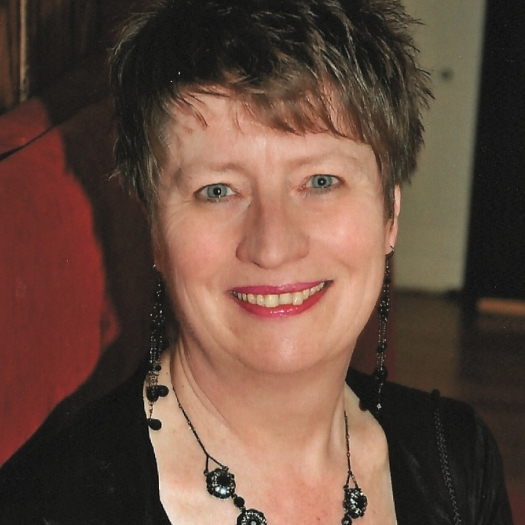
Mater Hospital Consultant Psychiatrist, Patricia Casey, has withdrawn as an expert witness from the Oireachtas Committee on abortion as she is unwilling to legitimise a sham process that she describes as “deeply imbalanced” and manipulated to arrive at a predetermined conclusion. Professor Casey is also a Patron of The Iona Institute.
She was due to present research evidence to the Committee showing that abortion does not protect women’s mental health, but she has now withdrawn. In a statement released to the press, Professor Casey said the process of the Committee has been so arranged as to reach a pre-set decision without a balanced consideration of any contrary evidence. She evidenced the overwhelming number of speakers on the pro-choice side and the paltry number of those with a pro-life or neutral perspective. She continued: “I believe the Committee is failing Ireland’s unique European position in providing protection for the rights of an unborn child and is failing in its duty to Ireland to fairly consider evidence that runs contrary to its fixed and inevitable conclusion that the Constitutional protections for the unborn child should be abandoned.
“I will not add any further credence to this deeply flawed process or to its inevitable and equally flawed conclusion that a referendum is required to repeal the 8th amendment without any meaningful Constitutional protection for the unborn child.”
Professor Casey said in her opinion the committee has adopted as its primary purpose a determination to repeal the 8th Amendment and to that end is intent on advocates of that position being favoured over independent experts. She suggested the Committee had “failed” in its stated purpose of conducting a balanced hearing and concluded: “The great tragedy is that this failure is designed to reduce the Constitutional protection of Irish unborn children. The public are being manipulated and in conscience, I cannot be used by it to legitimatise its pre-determined outcome.”
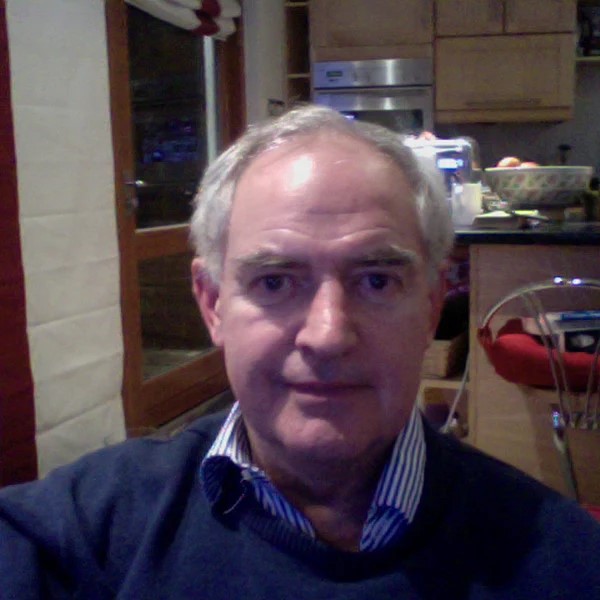
Dr Boylan told the committee that the Eighth Amendment has caused “grave harm to women, including death”, and added that Savita Halappanavar “died as a consequence of the Eighth Amendment”. This was disputed in the hearing itself by one of the members, Mattie McGrath, TD, who said there are “lots of differing opinions” about the cause of Ms. Halappanavar’s death.

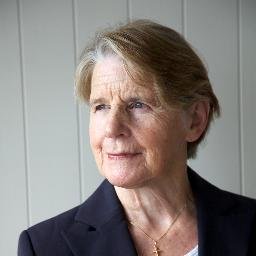
The well-known social justice campaigner and Sister of Charity, Sister Stanislaus Kennedy, was awarded an honorary doctorate by Dublin City University yesterday. In her speech accepting the award, she paid tribute to the founder of the Sisters of Charity, Mary Aikenhead, whose example had taught her “a deep respect for the poor”. She told the conferring ceremony she was “an extraordinary woman who, 200 years ago, gave her life to the service of the poor and who pioneered new ways in health, education and home care”. Besides founding the Religious Congregation, the Sisters of Charity, she also set up many institutions for the care of the sick and vulnerable including St Vincent’s hospital. Sister Stan also paid tribute to the many other sisters and volunteers who helped her in her work on behalf of the homeless and immigrants over the years.
The former Master of the Maternity, Peter Boylan, hospital will speak at the Oireachtas Committee on abortion today where he will give his medical opinion that the availability of abortion pills over the internet makes the pro-life amendment to the Constitution an exercise in futility. The 1983 amendment recognises the equal right to life of the unborn and pledges the State to protect it “as far as practicable”. Prof Boylan will tell the committee that when the Eighth Amendment was enacted, “neither the world wide web nor the abortion pill had been invented.” However, the availability of abortion-inducing drugs online nowadays means that “the genie is out of the bottle.” He will also tell the committee that in the EU, 99 per cent of women have access to abortion up to 10 weeks of pregnancy. The remaining one per cent live in Ireland or Malta.
He will make the additional point that without the availability of abortion in the UK, there would be “an epidemic of illegal abortions and a massive increase in maternal mortality” in Ireland. He expressed no reservations about the UK law which results in almost 200,000 abortions annually in Britain.
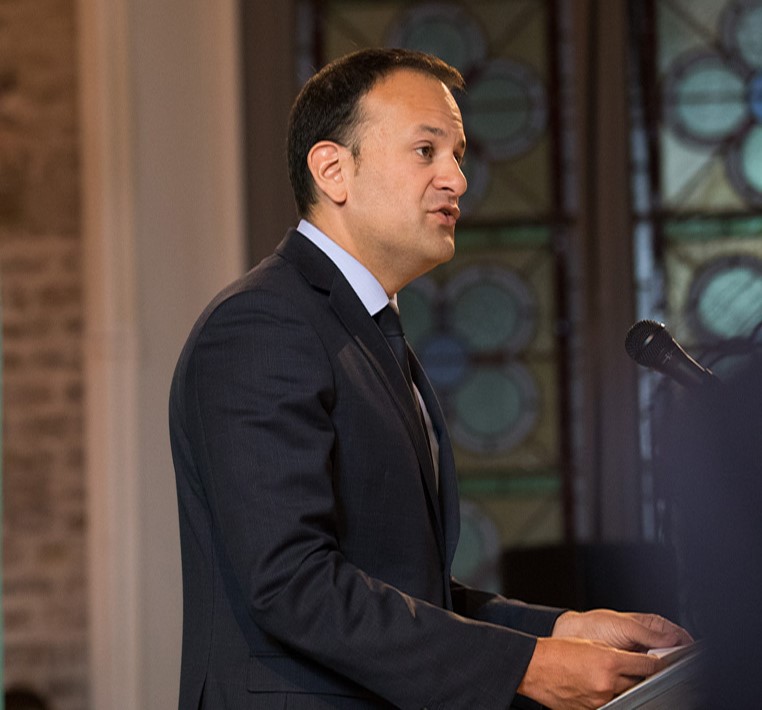
Taoiseach Leo Varadkar has defended comments he made in 2010 when he compared women travelling to the UK for abortions to those who travel to other jurisdictions for other services which are illegal in Ireland. In a 2010 interview in the Sunday Independent’s LIFE magazine, Mr Varadkar was asked if he believed it was a double standard to force thousands of woman to travel to the UK and elsewhere for abortions. The Taoiseach replied: “I don’t think that’s double standards. People travel overseas to do things overseas that aren’t legal in Ireland all the time. You know, are we going to stop people going to Las Vegas? Are we going to stop people going to Amsterdam? There are things that are illegal in Ireland and we don’t prevent people from travelling overseas to avail of them,” he added. Prostitution and cannabis use is legal in both the State of Nevada and the Netherlands.
This weekend, Mr Varadkar defended his comments. “The point I was making was that different countries have different laws,” he said. “Just because something is legal in one country does not mean it should be legal in all countries.
A member of the Commission on Assisted Human Reproduction has criticised as “discriminatory” a plan to impose an age limit of 47 on women accessing such treatment, including the use of donor eggs, embryos, and IVF, but no comparable limit on men. Mary Wingfield, a professor in the Merrion Fertility Clinic in the National Maternity Hospital, said “The upper age limit of 47 for women is reasonable because the risks in pregnancy increase with age,” but added: “Having no upper limit for men but one for women is discriminatory and, while it will cause disagreement, we need one [for men] if we are putting one in for women.”
However, David Walsh, a doctor with the Sims IVF clinic, did not accept that an upper age limit for men was necessary. “Older men are less fertile but they can father a child into their sixties or seventies,” he said. “An age limit on men would ignore biology.”
That difference in biology is also recognised in plans to limit sperm donors to men under 40, while egg donors cannot be older than 35.
The move comes after it was announced that the Census would no longer require people to say whether they were male or female, due to sensitivities toward transgender and non-binary individuals.