
Former Trinity College law professor William Binchy has told the Oireachtas Committee on abortion that Ireland has no obligation under international agreements to change its abortion regime. Human rights expert, Christina Zampas, however, said various international human rights bodies have said Ireland’s anti-abortion laws restricted the rights of women. The Irish Human Rights and Equality Commission went much further again and recommended not only that the eighth amendment be repealed in its entirety but that it should be replaced by a radical abortion regime funded by the public purse. Chief commissioner for the IHREC, Emily Logan, however, rejected the use of the term “abortion on demand”, calling it inappropriate and said she preferred the term “requesting healthcare”.
“I don’t hear anything about men ‘demanding healthcare’, so I don’t see why it should be used for women,” she said.
A women-only college at the University of Cambridge has changed its policy to allow men who “identify” as female to apply. Previously an applicant had to be legally defined as female, but Murray Edwards College has now updated its entry criteria so that it will accept any student “who at the point of application identifies as a woman”. Germaine Greer, a leading feminist and former lecturer at the women-only Newnham College, has described the decision as “ridiculous”.
“It’s a difficult relationship, having a transgender person in an all-female environment. If [Murray Edwards] really don’t believe that gender is binary, then they really shouldn’t be a single sex college. Their position is ridiculous. The only sane thing for them to do is to cease discriminating on the basis of assigned gender of any kind,” she told The Daily Telegraph.
Dr Joanna Williams of the University of Kent said that the decision marked the end of women-only spaces. “If some women want to have a women-only space, if they choose to be there, they should have every right to do that. To then learn that you’re sharing your dormitory, your bathroom with someone who is biologically male is an infringement on your right to choose the right the educational environment [for you].”
Academics from the college defended the move, saying it is a recognition of the fact that “how we define women is changing”.
The Irish Human Rights and Equality Commission has called on the Government to introduce a referendum to entirely delete the Eighth Amendment and to legislate for widespread access to publicly-funded abortion. The proposal is contained in a submission the body has made to the Joint Oireachtas committee on abortion. The commission, set up to monitor and advise the Government on human rights issues, is an independent public body established by statute whose purpose is “to protect and promote human rights and equality in Ireland and build a culture of respect for human rights, equality and intercultural understanding in the State”. Previously, they had only ever echoed the recommendations of UN committees that Ireland should legislate for abortion in cases of serious foetal impairment. Now for the first time, they recommend that abortion should be made widely available and be publicly funded, and that it should be available on demand rather than based on specific grounds. They do not recommend specific term limits but do say that any such limits should be “necessary, proportionate, and should have due regard to a woman’s right to bodily autonomy, and her right to the highest attainable standard of physical and mental health”.
It is understood Mr Harris will commit to outlawing commercial surrogacy and the payment for egg, sperm or embryo donors. The memo will provide for an ethical framework with clear rules for the welfare of the child, woman and informed consent. The proposed legislation would also deal with other aspects of assisted human reproduction including the use of donor gametes and IVF.
The Minister will also commit to detailing a policy direction for State funding for fertility treatment. This will entail outlining the criteria by which an individual, or a couple, can receive financial assistance. It would not be limited to those with medical cards, nor dependent on the level of personal income. The Minister is examining state-funding of fertility treatment in Britain as a model to inform his proposed scheme for this country.
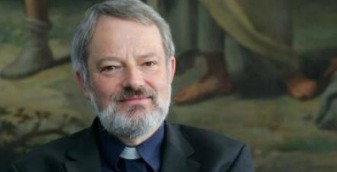
Bishop Doran said politicians were “more immediately removed from the personal ‘crisis’ that provokes the choice of abortion and their particular remit is to serve the common good, which includes the good of all”. On the other hand, he said “Doctors and nurses have a more detailed scientific knowledge of unborn human life and cannot be in any doubt that the unborn child is a unique human being who has already embarked on the path of life.”
Noting that that one in five pregnancies in Britain end in abortion, including 90 per cent of unborn babies diagnosed with Down Syndrome, he attributed many of those abortions to people intent upon clinging to “my plans, my reputation, my social life, my absolute right to control my body”. He said “many more have died because their mothers felt lonely and afraid, rather than supported by their partners, their families, their friends and their society”. Bishop Doran said healthcare professionals and politicians “come under significant pressure at times like this. Sometimes, like the rest of us, they make choices on the basis of a misguided compassion”. However, he said “we must always speak out courageously against unjust laws and practices which conflict with the right to life”.
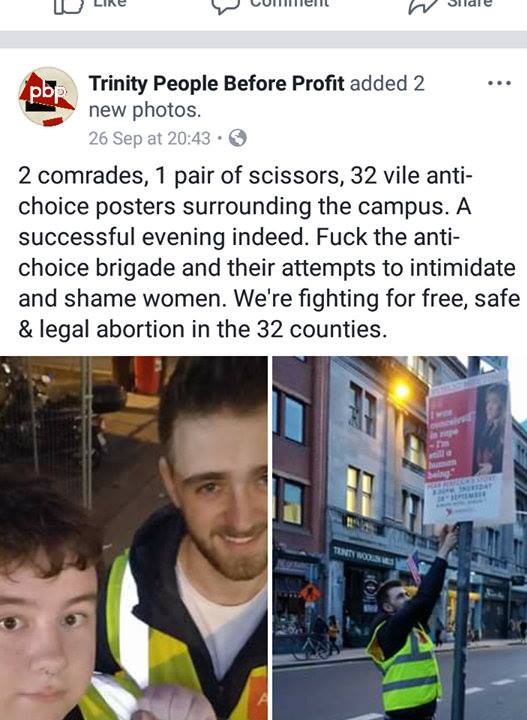
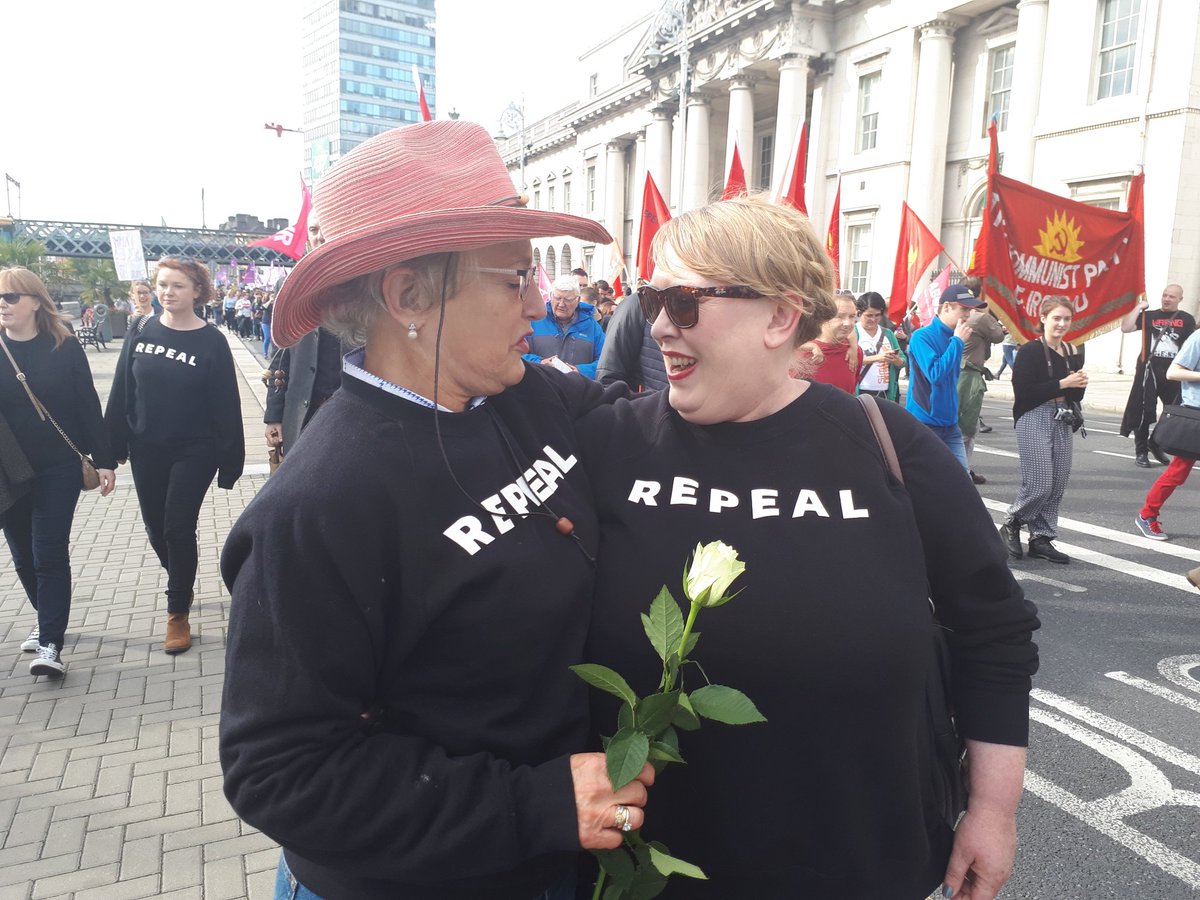
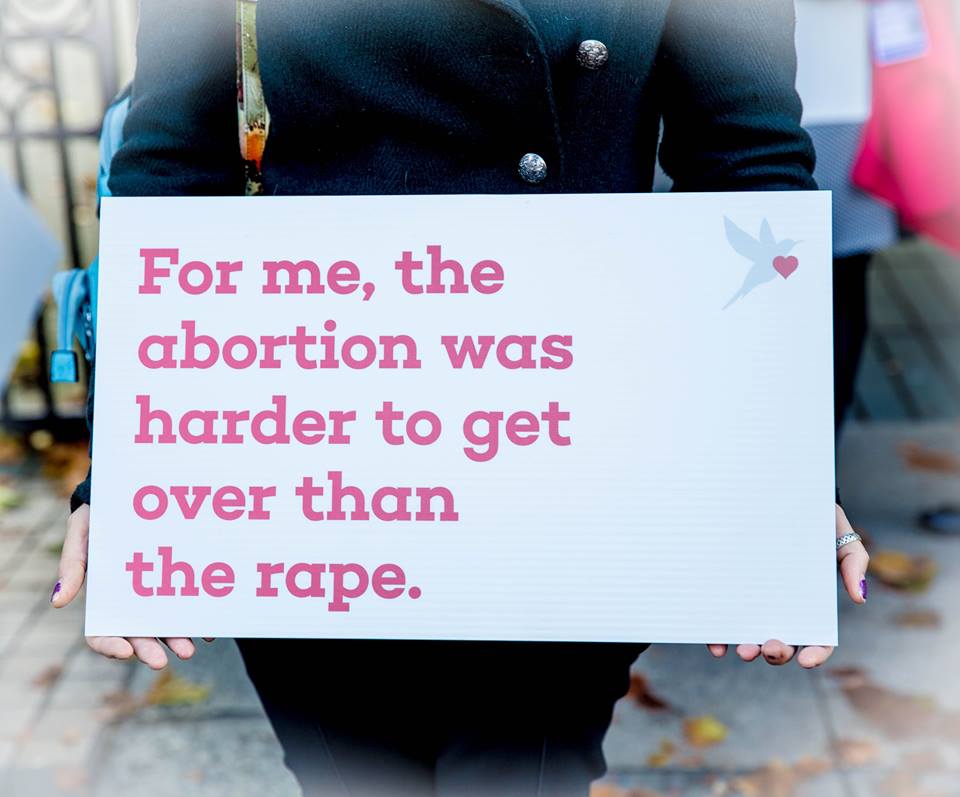
A pro-life event featuring rape survivors was cancelled by a second hotel after members of staff received death threats. The event however went ahead in a public square with a makeshift platform and sound system. Laura Ní Chonghaile of Unbroken Ireland who represent women who became pregnant through rape or were conceived in rape said: “We are tired of being silenced, and we will no longer accept attempts to silence us, or to make us feel ashamed. Is this the 19th century where aggressive men feel they can tear down our message and abuse us for sharing our experiences and having a point of view?” One of the speakers on the night, Louise, a woman from the UK who asked not to be further identified, was 18 when she was raped and found herself “railroaded” into having an abortion. “I grieved terribly for the baby,” she said. “My feeling is at the moment women and babies in Ireland are protected … If the eighth amendment is done away with, women will end up having abortions they don’t want.” The meeting was also addressed by two women who became pregnant through rape but opted to give birth to their babies, and one woman who was conceived in rape.