

In a bizarre turn of events, a Children’s organisation called ‘Having Kids’ has sent an open letter to Prince William and Kate Midleton urging them to stop having kids. In an echo of China’s coercive two-child policy laws, the San Francisco based group believes that couples should limit themselves to having at most two children as a means of promoting sustainable living. In their letter to the Royal couple, they say, “Your discussion of having a larger family raises compelling issues of sustainability and equity. Large families are not sustainable. As degraded as the world’s environment is today, none of us can imagine what the world would be like if fertility rates had not been halved in the 20th Century, below 3 children per woman.”
“We must keep moving in the right direction, especially given the many studies that show family planning has the most potential for mitigating climate change and its impacts. The future of your country will be defined by the impacts of climate change.”
They say that all people, and especially public figures, should plan their families with goal of “producing a smaller and more resilient populace capable of thriving in that environment”.
“Rather than having a third or more children, families consider forgoing another child and taking part of the substantial resources saved to help a different family plan a fair start in life for their child,” they write, adding helpfully, “There are many ways to do this and we can provide more information.”
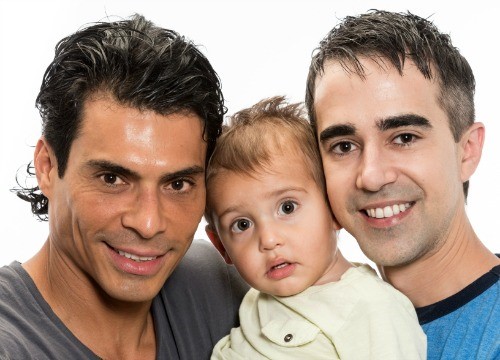
A postal vote will be held in Australia in November to gauge public opinion on whether or not to legalise same-sex marriage. The result will not be binding on parliament, but the Government has pledged to act on the outcome by either moving a same-sex marriage bill or dropping it from the legislative calendar.
Former Prime Minister Tony Abbott has come out against the legalisation of gay marriage, offering several reasons why people should vote “no” in the upcoming plebiscite. Speaking to reporters outside Parliament, Abbott said: “I say to you: If you don’t like same-sex marriage, vote ‘no.’ If you worry about freedom of speech and freedom of religion, vote ‘no’; and if you don’t like political correctness, vote ‘no’ because this is the best way to stop it in its tracks.”
Advocates for same-sex marriage have opposed the postal vote. Green Party LGBTI spokeswoman, Janet Rice, said the “threat of a postal plebiscite” was a “ridiculous distraction”. She warned that mail can go astray and many young people “hardly know how to send a letter … it’s just not the way to be making a decision”.

Pope Francis has launched another attack on gender theory, this time taking aim at the teaching of children in school that they can ‘choose’ their own gender, calling it a form of ‘ideological colonisation’ promoted and funded by international lobbies. Speaking to bishops in Poland, the Holy Father said that in both the developed and the developing world there are real forms of “ideological colonisation” taking place. “And one of these – I will call it clearly by its name – is [the ideology of] ‘gender’. Today children – children! – are taught in school that everyone can choose his or her sex,” he said. “Why are they teaching this? Because the books are provided by the persons and institutions that give you money. These forms of ideological colonisation are also supported by influential countries. And this terrible!”

Euthanasia has become “common practice” in the Netherlands, accounting for 4.5 percent of deaths, according to researchers who say requests are increasing from people who aren’t terminally ill. A 25-year review published in Thursday’s New England Journal of Medicine and compiled from doctors’ questionnaires shows that in 1990, before it was strictly-speaking legal, 1.7 percent of deaths were already from euthanasia or assisted suicide. That rose to 4.5 percent by 2015. The vast majority — 92 percent — had serious illness and the rest had health problems from old age, early-stage dementia or psychiatric problems or a combination thereof. Almost two-thirds of those who died were under 80.
Penney Lewis, co-director of the Centre of Medical Law and Ethics at King’s College London., said the increase in numbers is not surprising. “Doctors become more confident in practicing euthanasia and more patients will start asking for it,” she said.
Scott Kim, a bioethicist at the U.S. National Institutes of Health said the report raises concerns, particularly in regards to elderly recipients. “These are old people who may have health problems, but none of them are life-threatening. They’re old, they can’t get around, their friends are dead and their children don’t visit anymore,” he said. “This kind of trend cries out for a discussion. Do we think their lives are still worthwhile?”

A leading academic has called for an ethical approach to gene-editing that would preserve and protect embryos rather than destroy them in the process. Martin Clynes, Professor Emeritus of Biotechnology at the National Institute for Cellular Biotechnology in Dublin City University, said that such an approach would preserve the possibility of finding medical cures. “If gene editing could be used to eliminate or correct disease-causing genes (such as cancer predisposition genes) in sperm, ova, or individual embryos, thus sparing the individual and their descendants from inherited disorders, this would surely be a worthwhile undertaking,” he said.
“While the technology to do this may not be quite there yet, I believe it will be possible to do this before long and we should distinguish this clearly desirable application from unethical approaches which involve experimentation and destruction of embryos.”
Campaigners and politicians in have expressed confidence that same-sex marriage will soon become a reality in Northern Ireland. Jeffrey Dudgeon, an Ulster Unionist member of Belfast City Council, who has been campaigning on gay rights for more than 40 years said he is confident that same-sex marriage will be introduced relatively soon: “I have always believed that you take the long view, you take your victories when you can and don’t expect too much too quickly. But we are at the end of the road.” SDLP Assembly member Claire Hanna believes that there has been an under-the-radar transformational change in attitudes to same-sex marriage over recent years and that even the DUP leadership would love to see the back of the issue.
Recent political changes also point to vulnerability on the issue. In the last and fifth Assembly vote on it, in November 2015, a majority voted for the first time in favour of same-sex marriage. The DUP, however, used the petition of concern mechanism to veto any change. That mechanism can be triggered by 30 MLAS and it then mandates that 60 per cent of the chamber, with 40 per cent of both unionist and nationalist representatives be required for legislation to pass. A successful petition of concern vetoes legislation only for the lifetime of the Assembly.
In the new, probably more liberal, 90-member Assembly, the DUP has 28 seats so would need the support of two other Unionist members if it wanted to obstruct a prospective sixth attempt to introduce same-sex marriage.
Part of the negotiations to bring back Stormont are about taking the petition of concern away from issues such as gay marriage. But if Stormont does not come back commentators think that British direct rule ministers might introduce same-sex marriage through Westminster.
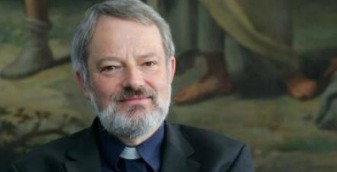
The Bishop of Elphin, Kevin Doran, has said the Church is totally opposed to bio-medical research that reduces embryos purely to research material to be experimented on and destroyed. He was speaking after researchers in the USA used embryos in such a manner to develop gene-editing techniques to remove mutations linked to heart disease.
Bishop Doran, who is chair of the Catholic Bishops’ Consultative Group on Bioethics and Life Questions, said – as part of the research – human embryos were “being deliberately generated under laboratory conditions with a higher than average risk of congenital heart disease”. They were being “deprived of any other purpose than to be used for research and then disposed of”, he said. He cited a recent charter for healthcare workers released by the Vatican that it was “gravely immoral to sacrifice a human life for therapeutic ends”. That charter stated: “To create embryos with the intention of destroying them, even with the intention of helping the sick, is completely incompatible with human dignity, because it makes the existence of a human being at the embryonic stage nothing more than a means to be used and destroyed.”
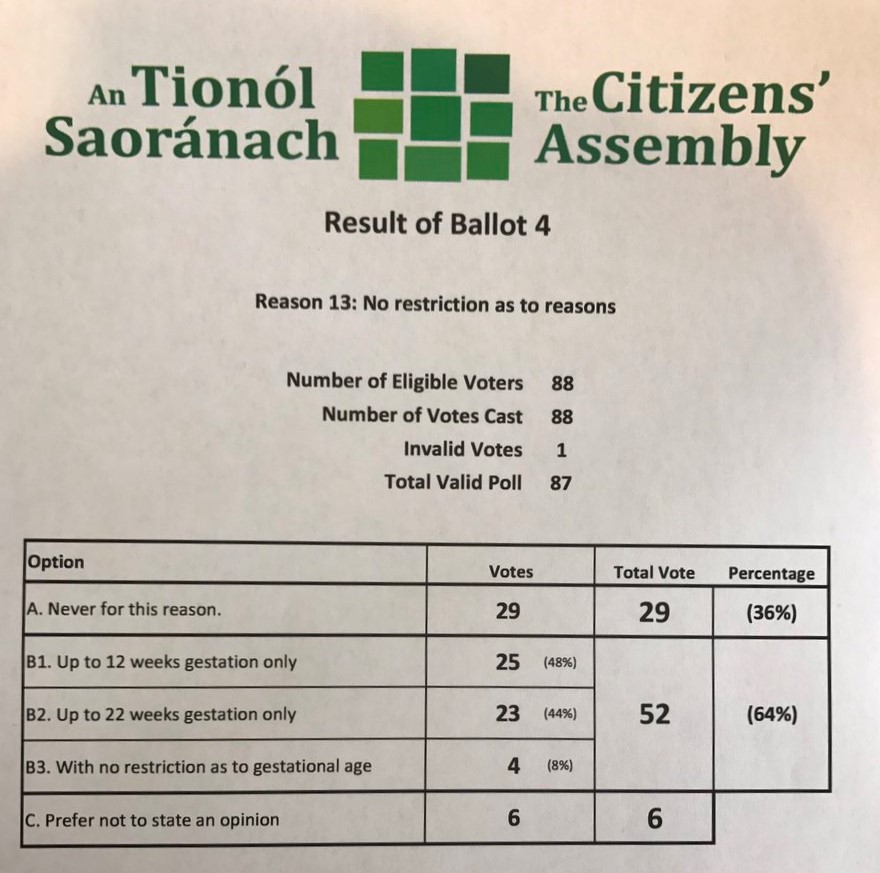
Taoiseach Leo Varadkar has said the Government will seek to avoid holding an abortion referendum in the summer months when many students will be out of the country. “I definitely take the point and get the message that young people would like to have a referendum at a time that they are in the country so they can fully participate. So we will absolutely take that into account in setting a date,” he said.
He added that it was not just a matter of holding a referendum as a wording had to be agreed, legislation had to be put in place and a campaign had to happen.
“What we are planning for is a referendum probably May or June of next year,” he said.
“So if we don’t have it before the summer then we’ll probably have it in the latter part of the year. We haven’t set a date yet”.
If a referendum were not held in May or June next year, then it would likely be timed to coincide with the Presidential election in November 2018, which would be some months after a visit of Pope Francis to Dublin for the World Meeting of Families.
New research has emerged that shows Magdalene Laundries in a more positive light, prompting calls for a more balanced and equitable assessment of their record.
Dr Jacinta Prunty, head of the Department of History, Maynooth University, examined records of two laundries in Dublin run by the Sisters of Charity and found that short-stay and emergency accommodation was in fact the principal role played by these particular homes. Research also revealed that substantial efforts were made by the Sisters to help teenagers and younger women prepare for independent living after their stay in the laundries. A transition hostel for teenagers was opened in 1966 to equip the residents with basic life skills named as “budgeting, nutrition, socialising, coping with jobs and life, self-management and responsibility”. Dr Prunty commented that “The small hostels, training centres and aftercare facilities for older teenagers run by these sisters with minimal, if any, State support, and the efforts made to find them employment, strike the outsider as truly innovative at the time.”
“The sisters were well aware of shortcomings, but it is difficult to deny the genuine interest they had in the welfare of these young persons and the efforts they made to see them safely on the way to independence,” she wrote.
“But the association of the Magdalene laundries with imprisonment, exploitation and cruelty, and with these alone, is so strongly established in the public sphere that it is difficult to know if there is space for a more rounded, fuller-informed and fairer assessment to emerge,” she concluded.

An Australian Broadcasting Corporation (ABC) investigation into domestic violence in Christian Churches has drawn criticism from both the ABC’s own media monitor and Catholic leaders. ABC TV’s ‘Media Watch’ presenter Paul Barry said some of the material covered “tarnished” the investigation and headlines the ABC used to sell the story misrepresented important research.
While little or no Australian data was used, the investigation did cite American research from 2007 that said “conservative Protestant men who are irregular church attendees are the most likely to batter their wives”. However, the investigation omitted the conclusion of the research that “Conservative Protestant men who attend church regularly are found to be the least likely group to engage in domestic violence.”
The Catholic Archbishop of Brisbane, Mark Coleridge, condemned the ABC for its coverage. “It’s time that the ABC took seriously its role to tell the story of the real Australia,” he said. “It should disengage from the group-think that has produced an antagonistic, one-sided narrative about the Catholic Church in this country.”