
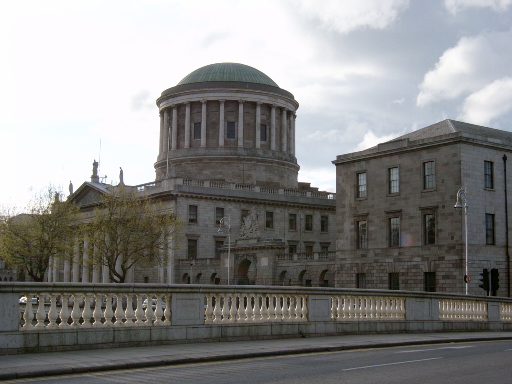
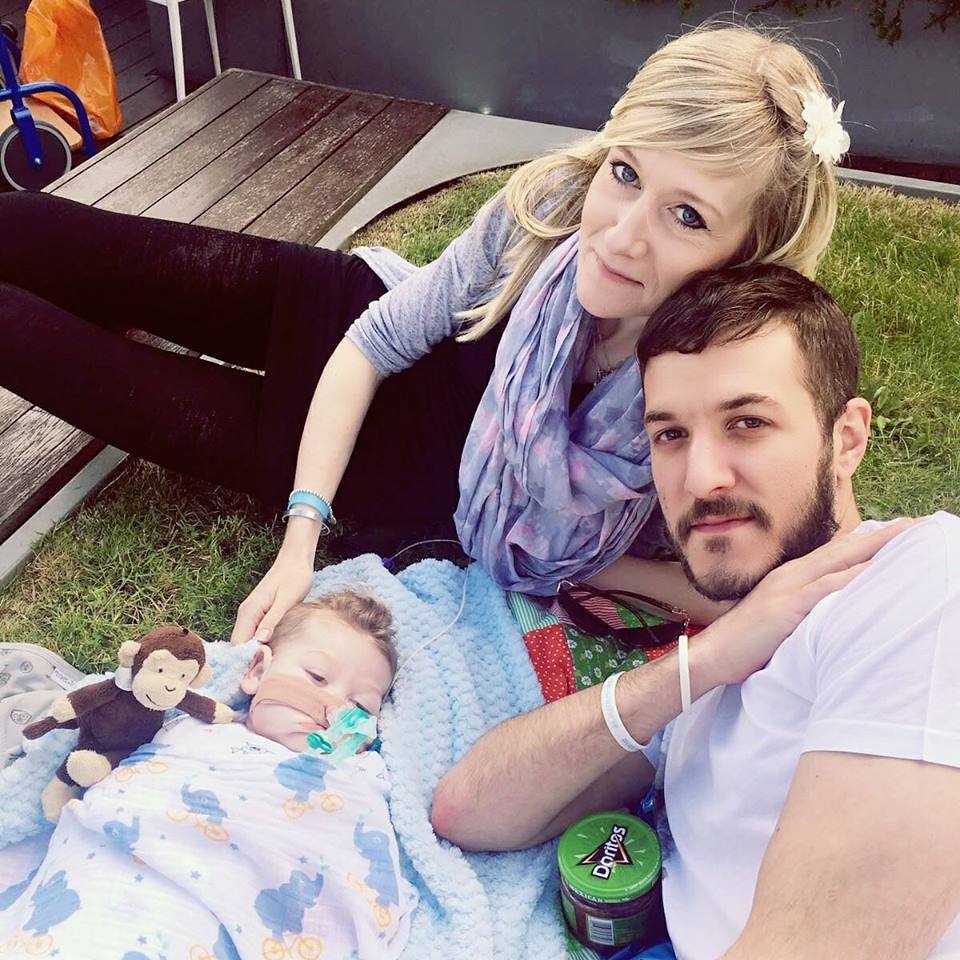
The parents of the baby, Charlie Gard, yesterday announced they were ending their legal fight to enable him to leave Great Ormond Street Hospital and the UK to receive experimental treatment abroad. Their lawyer Grant Armstrong told London’s High Court that time had “run out” for the child as irreversible muscular damage has been done and the treatment could no longer be a success. “Charlie has waited patiently for treatment. Due to delay, that window of opportunity has been lost,” Mr Armstrong said.
Connie Yates, the child’s mother, told the High Court: “We only wanted to give him a chance of life.”
“This is one of the hardest things that we will ever have to say and we are about to do the hardest thing that we’ll ever have to do which is to let our beautiful little Charlie go. Put simply, this is about a sweet, gorgeous, innocent little boy who was born with a rare disease, who had a real, genuine chance at life and a family who love him so very dearly and that’s why we fought so hard for him,” she said.
“There is one simple reason for Charlie’s muscles deteriorating to the extent they are in now — TIME. A whole lot of wasted time. Had Charlie been given the treatment sooner he would have had the potential to be a normal, healthy little boy,” she said.

“They may be doing more harm than good by promoting the idea that suicidality can be used as a currency to obtain rights or benefits and by spreading the false reassurance among the public that psychiatrists can predict and prevent individual suicides,” they write.


Bishop John Kirby of Clonfert has openly pondered whether it is time for the Church to no longer solemnise marriages on behalf of the State given that the State’s understanding of marriage has been so radically redefined. “We are now performing marriages that are not quite what we intended 40 or 50 years ago,” he explained at a conference in Limerick last week, as the civil concept of marriage has been changed by “the introduction of civil divorce, and the more recent introduction of same-sex marriage as meaning exactly the same thing in civil law”. “I just wonder,” he asked, “would it be better for the Church in Ireland to distance itself from the civil understanding of marriage, and celebrate our marriages as a sacrament and emphasise the sacramentality of Catholic marriages?” responding to this question, conference speaker Cardinal Christoph Schönborn of Vienna, Austria, said the key difficulty with separating the two is that even civil marriages have a “natural” dimension.
A group of donor-conceived children in the Netherlands are petitioning a court for access to a DNA sample of a deceased fertility doctor to ascertain whether he is their genetic father. Yonathan Lotte began the search for his sperm-donor father in 2011 but, in the clinic where the IVF that produced him took place, files were in disarray and records not properly kept. Worse again, rumours abounded that the doctor in charge, Jan Karbaat, had himself provided much of the sperm that had impregnated his patients. “We were in shock – it was a feeling of total disbelief. Karbaat was a doctor, and to use his own sperm to get women pregnant would have been totally prohibited,” said Yonathan. He and many others petitioned a court for a DNA sample of the fertility doctor, but this was opposed by the doctor himself. However, he passed away before the court made its decision, which is expected shortly.

Legislation to enable the sale of alcohol in all pubs, restaurants and licensed premises on Good Friday passed the Seanad yesterday. The Intoxicating Liquor (Amendment) Bill was introduced by independent Senator Billy Lawless, who said “the passage of today’s bill is another progressive step in Ireland’s long journey in the separation of church and State.” He added: “Removing this 90-year-old provision from the Statute Book sends another clear message that Ireland is a pluralist, global and forward-thinking country.” Vintners groups had lobbied the Government extensively on this and they welcomed passage of the bill. Only one Senator voiced opposition to the move. Fine Gael’s Joe O’Reilly sharply criticized as a myth that the move would help tourism. “What assists tourism in Ireland is our distinctiveness, our native culture, our difference, our Christian values and our traditions. Maintaining our identity attracts far more people to the country than shredding that identity on the altar of naked commercialism”. He also said the great majority of rural publicans oppose the move: “They would prefer the status quo. This is putting them under further economic pressure with costs. It was a day on which their premises were closed and on which they carried out repairs or whatever. Now they will be under commercial pressure from their peers and their neighbours to open and put in staff for a day.” He also voiced concern for workers rights, and for respecting the sensitivities of religious minded people for whom Good Friday, along with Christmas Day, is sacred and deserves special respect.

The British Prime Minister, Theresa May, has written of her support for introducing same-sex marriage in Northern Ireland though she continues to believe it should be a matter for the devolved Government.
“I want all British citizens to enjoy the fullest freedoms and protections. That includes equal marriage – because marriage should be for everyone, regardless of their sexuality,” she wrote in the PinkNews online newspaper.
“And while that is a matter for the devolved government of Northern Ireland, I will continue to make my position clear – that LGBT+ people in Northern Ireland should have the same rights as people across the rest of the UK.”