
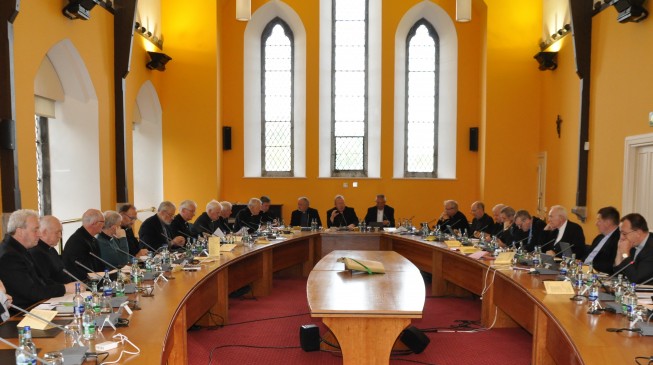
The Irish Bishops have decried the stark contrast between efforts to save lives during Covid with an apparent indifference to life when it comes to the number of abortions in Ireland.
In statement at the end of their Summer 2026 General Meeting, they note the tragic irony that as society was focussed on saving life, protecting the vulnerable, and making sure that people were not forgotten during the pandemic, it also began “the wholesale destruction of human life through abortion”.
“While COVID-19 cost almost 10,000 lives in Ireland, there have been well over 50,000 deaths from abortion since 2019 (equivalent to nearly 2,000 classrooms of children)”.
They further note the lack of interest in finding out why so many opt for abortion:
“Neither the State, nor the mainstream media, seem to have any interest in exploring what leads women to choose abortion or what happens to them afterwards”.
They also lament that some politicians “seem determined at all costs to widen the scope of the present law”.

Families in the UK are increasingly having only one child as fifty per cent more Gen X women report having just one baby compared with their mothers’ generation. A new Iona Institute report projects that one in four young women in Ireland will never have a child.
Official figures show the proportion of women who have one child rose 49 per cent to 18.5 per cent for women born in 1979, from 12.4 per cent for women born in 1953.
The 1979 year group is the latest “completed family” cohort, meaning they are not expected to have more children.
The Office for National Statistics (ONS), which released the data last week, indicated the trend would continue — with those born today expected to have even fewer children again.
An ONS report last month showed that the number of babies born in England and Wales had fallen to the lowest level since 1977, because couples are increasingly delaying having children until their thirties.
Anna Adamecz, of the University College London, said that as families delayed having children, intentions for second children began to vanish as “time and fertility run out before the second child arrives”.

Pope Leo XIV has delivered a forceful defense of the dignity of every human life, declaring that its protection is “a goal of civilization”.
In a sweeping 30 minute address to the Spanish parliament, the first ever by a Pope, he touched upon some of the most debated issues in the country and still received a seven-minute standing ovation at the end of his remarks despite Spain having a left-wing Government which is extremely pro-choice. He also spoke up in favour of migrants and of international law and peace.
Calling life a fundamental value, he asked whether “a community that casts into the shadows the unborn child, the elderly, the sick, those who suffer in silence or those who depend entirely on the care of others be called fully just?”
“Every human life must be recognised and safeguarded from conception to its natural end, in every circumstance of its existence.”
Pope Leo addressed Parliament earlier this week, after holding a private meeting with Spain’s Socialist Prime Minister, Pedro Sanchez, earlier that morning.
His appeal to respect the unborn comes as Spanish lawmakers led by Sanchez are currently pushing proposed legislation that would enshrine abortion as a constitutional right, much as France did in 2024.

The proposal, advanced by a centrist group led by the former prime minister Gabriel Attal, formed part of a wider response to allegations of historic abuse.
The text said ministers of religion would not be exempt from mandatory reporting obligations, even for information received “in the exercise of their ministry”, and that no appeal to the seal of confession could override this duty.
The French Bishops’ Conference expressed “grave concern”, arguing that the measure would infringe freedom of conscience and religious liberty while failing to address the real causes of abuse.
The seal of confession, codified since the Fourth Lateran Council of 1215 and upheld as inviolable under Canon Law, carries automatic excommunication for any priest who violates it. French bishops have repeatedly affirmed their commitment to child protection and co-operation with civil authorities on all matters outside the confessional, while insisting that the sacrament itself remains a privileged space of encounter with divine mercy.

The Italian Senate has voted overwhelmingly to make parental consent necessary for any lessons or projects related to sexuality in Italy’s schools that go beyond core requirements.
Pro Vita & Famiglia, a Catholic lay group, welcomed the measure, saying parents “will be able to learn about, identify and reject in advance inappropriate projects that promote gender fluidity, abortion, surrogate motherhood and an ideological vision of sexuality among minors“.
The Act makes education about respect, relationships, and empathy mandatory in civics classes in all grades of school while science classes will teach the biology of sex.
Moreover, in Italy’s tripartite division of education into elementary, middle and high schools, the latter two (roughly equivalent to ages 11-18) will teach the prevention of risks from sexually transmitted diseases.
Beyond this core education, the new regulations ban any further activities related to sexuality in elementary schools.
Middle and high schools must provide families with at least one week’s notice before any such activities are scheduled to take place, and schools must disclose the identities of any third-party organisations or guest speakers invited to deliver the material.

A majority of young adults say the housing crisis is affecting whether they marry or have children, according to new research by Deloitte.
The study found young people want to build durable foundations before making life-defining moves, and are aligning life choices with realistic conditions rather than ‘traditional timelines’.
It considered both the younger Gen Z (born between 1995 and 2007, and are now 19-31 years of age) and the older Millennials (born between 1983 and 1994 and are 32-43 yrs old).
The study also found that 62pc of Gen Z’s in Ireland said they could not afford to own a home, well above the global average of 51pc.

A little over 14pc of schools would ditch their religious ethos and become non-denominational according to reports of the Department of Education’s survey of parental preferences. This drops to just 7pc once schools with poor participation in teh survey are excluded.
The figures indicate much less demand for divesting Catholic schools than recent headlines suggested.
Late last year, the department asked all households with primary school-going or pre-school children their preference for school patronage.
In April preliminary totals for the whole country were released.
While headlines said 40pc of parents wanted change, only 41pc of those surveyed responded, which meant a much smaller fraction, 16pc, of eligible households actually expressed a desire for change.
Now, local results have been collated with preferences grouped around individual schools.
While those results have not yet been made public, they have been communicated to schools and school bodies.
They show majority support for change in a little over 14pc of schools, according to the Catholic Education Partnership (CEP) . However, this figure falls to just under 7pc once schools with a low response rate (below 40pc) are excluded.
Only 77 schools nationally meet these particular criteria, of which 51 are in Dublin or Cork. If schools with a response rate of under 40% are excluded, that figure falls to around 40 schools.
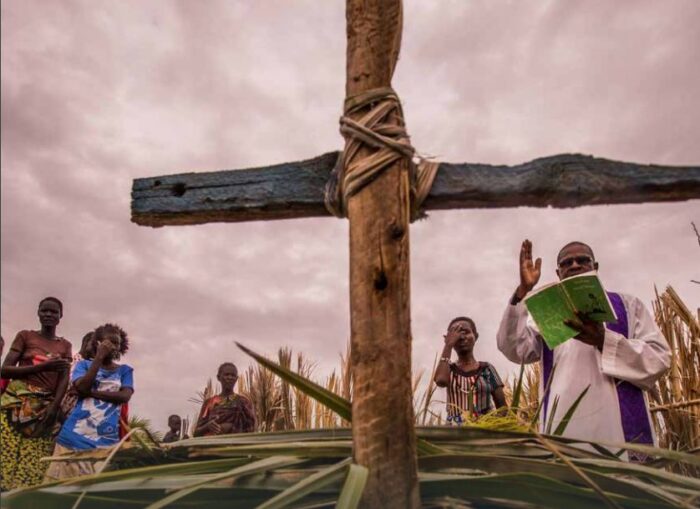
A court in Nigeria has sentenced four men to death and acquitted another for perpetrating a brutal attack on a church in 2022.
Forty-one people were killed and more than 100 injured when the assailants opened fire and set off improvised explosive devices at the St Francis Catholic church in the town of Owo during a vigil mass for Pentecost Sunday.
The court also sentenced the men to 20 years in prison for belonging to a terrorist group.
Presidential assent is required before any death sentence is carried out in Nigeria. There have not been any executions in the country for several years.
One of the witnesses the court heard from was a woman who had her legs amputated from the knees, and had lost her left eye as a result of a dynamite explosion.
A fifth defendant, Momoh Otuho Abubakar, was discharged and acquitted by the court due to insufficient evidence against him.
He was accused of having financed the attack, by allegedly receiving payments from another suspect – who is still at large – and then disbursing the funds to the attackers.

Births in Ireland have fallen by almost 18 per cent in the last decade, according to Central Statistics Office (CSO).
A total of 65,909 births were registered in 2015, but this fell to 54,125 last year, according to the CSO’s Vital Statistics Yearly Summary for 2025.
However, there was a small increase (63) in the number of births between 2024 and last year.
The figure for last year represented an annual birth rate of 9.9 per 1,000 of population, down from 14.1 per 1,000 of population in 2015.
In the same period, the fertility rate dropped sharply, from 1.9 in 2015 to 1.5 in 2025. A value of 2.1 is usually considered replacement rate, ignoring migration.
A majority of Canadians near the end of their fertile years have smaller families than they wanted, according to new research.
This shows Canada’s record low fertility rate of 1.25, well below the replacement rate of 2.1, is partly caused by millions of people having fewer children than they desired.
“Home Alone: Why Most Canadians Have Fewer Children Than They Want” is a new research paper from Cardus, a pro-family think tank.
Among Canadians aged 40-44, it found that 59pc of men and 53pc of women said their family was currently below their desired family size.
The study also found gender differences in obstacles to family formation. Women are more worried about the degree of support for parenting, childcare, and sharing housework. Men are more worried about finances, employment conditions, or the state of the economy.
Notably, Canadians who achieve their fertility desires tend to be far happier, both with their family life, and their overall life satisfaction.