

There has been a surge in popularity in both explicitly religious books and other literary works that reference religious ideas and themes.
Last year, in Britain, there was a 10.5 per cent rise in the sales of books in the “Religion” category, according to figures from the publisher SPCK Group. Bible sales, in particular, are climbing to record highs – up 106 per cent since 2019.
TV personality Bear Grylls’s “The Greatest Story Ever Told” topped hardback bestseller lists last year.
Fiction writers are also more inclined to use religious themes into their stories: the retired priest Richard Coles is finding enormous success with his crime series, The Canon Clement Mysteries. Poet Martha Sprackland is about to release a new translation of writings by the 16th-century mystic John of the Cross.
Penguin Random House recently launched its first Christian imprint, Ebury Vine.
Three of its first four books have charted in the New York Times bestsellers list.
Commissioning editor Charisa Gunasekera believes sales are being driven by Gen Z readers, especially those “who haven’t been raised in religious environments, and are trying to find a deeper wisdom at a time that feels increasingly uncertain. They’re looking for comfort and guidance and peace.”

Religious belief, prayer and sacramental confession can serve as a powerful support for young people’s mental wellbeing, according to new research from Mary Immaculate College.
Dr Lydia Mannion, a Lecturer in Inclusive and Special Education, says that religion “can provide a sense of purpose, a framework for understanding life’s challenges, a source of comfort in times of distress, and a community of belonging”.
Her research involved questionnaires completed by over one hundred students in Transition Year, Fifth Year and Leaving Certificate classes and follow-up in-depth interviews with seven students.
The findings revealed that students who believed in God and held strong religious beliefs were more likely to report higher levels of wellbeing. Similarly, those who engaged in positive religious coping tended to report a stronger sense of purpose in life.
In contrast, students who relied more on negative religious coping methods were more likely to experience lower levels of wellbeing
Prayer, such as saying the rosary, emerged as one of the most significant ways that faith supports mental wellbeing. Many students described it as a calming and grounding practice during times of stress and anxiety.
Religious practices such as Confession were also highlighted as beneficial in terms of processing guilt and personal struggles.

A population decline of 11.7pc is expected to hit the countries of the European Union between 2025 and 2100, according to the latest projections from Eurostat.
This translates to a predicted decrease of 53.0 million people in the EU by the start of the next century. The decline would be steeper without immigration.
At the same time, the population will continue to age with those over-65 growing in number from about 95 million today to 109 million in 2100. The number under 18 is project to fall from about 80 million now, to 60 million at the end of the century. This means the over-65s will outnumber children by almost two-to-one.
In 2025, the EU population was estimated at 451.8 million, having resumed its growth trend in 2022, after the COVID-19 pandemic disruption in 2021. Looking ahead, the population is projected to continue to increase over the next three years, peaking at 453.3 million in 2029, before gradually declining to 398.8 million by 2100.
The projected change will not be uniformly distributed as some countries will have larger populations in 2100 compared to 2025, while most will see declines.
Latvia, Lithuania, Poland and Greece are projected to record the largest declines, all above 30pc.
Meanwhile, the total fertility rate for 2024 was 1.34 live births per woman in the EU, down from 1.38 in 2023. This is the lowest rate since 2001, the first year for which the EU figure is available. Replacement level is 2.1.
In 2024, 3.55 million babies were born in the EU, a 3.3% decrease from the 3.67 million in 2023.

Rita Rubovszky has worked in teaching, school management and European-level policy work.
Her academic credentials include a degree in Hungarian–French comparative literature, followed by scholarship studies at the Sorbonne University in Paris.
She has taught in several Budapest secondary schools, served for a decade on a language examination board, and spent 12 years as vice-president of the European Association of Catholic Teachers.
She also worked in Brussels as an EU distance-learning specialist.
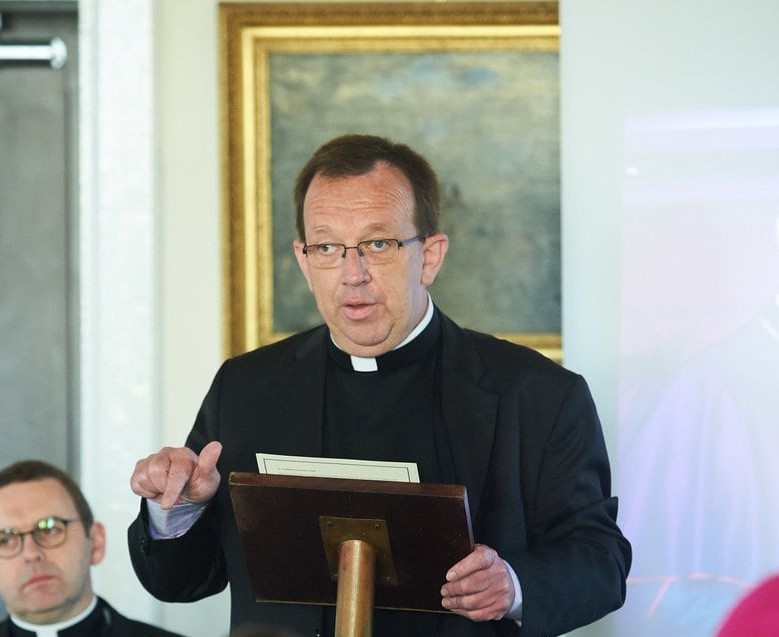
A false narrative cultivated by ideological groups and amplified by the media has unfairly denigrated Catholic schools, according to the lead Irish Bishop on education.
Speaking at Saint Oliver Plunkett Primary School in Navan, Bishop of Meath, Tom Deenihan, said the portrayal of Catholic schools has not been on what they do—on the education, support and care that they provide. Neither is that they are popular, well supported, and serve their community while being genuinely inclusive.
Instead, he said, it has been “a more negative, ideologically driven and adversarial depiction of Catholic schools, . . . as being grim places of indoctrination that children are forced to attend by Church and State”.
“And of course, that discourse and narrative has been ill-informed and false”.
He added: “Many of us have known this narrative to be untrue but, various groups, supported by funding from ideological philanthropical entities, many from outside the State, continue to lobby politicians and media with a rather narrow, nuanced and distorted narrative”.
In their defence, Bishop Deenihan said that independent research has indicated that Catholic schools are “the most inclusive, not just in terms of religion but in terms of ability, socio-economic background, ethnic background and nationality”.

Hungary violated EU law when it restricted the portrayal and promotion of LGBTI+ content, including that aimed at children, the Court of Justice of the European Union ruled this week, ordering Budapest to scrap the legislation.
The case concerns Hungary’s 2021 law restricting or banning the “promotion” of homosexuality and gender transition in media accessible to children, which Budapest introduced when it adopted the EU’s audiovisual rulebook and its provisions on protecting children from harmful content.
The Court concluded that protecting minors is a legitimate aim, but the measures used must be proportionate and non-discriminatory.
Hungary’s law, it said, went beyond what is necessary, effectively targeting a specific group.
It found that the legislation “Stigmatises and marginalises” LGBTI+ persons and creates unjustified restrictions on the provision of services and content across the EU.
Spokesperson for Law firm, ADF International, Carmen Correas Lopez said the case highlights tension between national authority over education, culture, and family policy, and supranational enforcement of rights and non-discrimination norms.
“It raises great concerns about whether courts are narrowing the space for Member States to legislate on moral or child-protection grounds”.
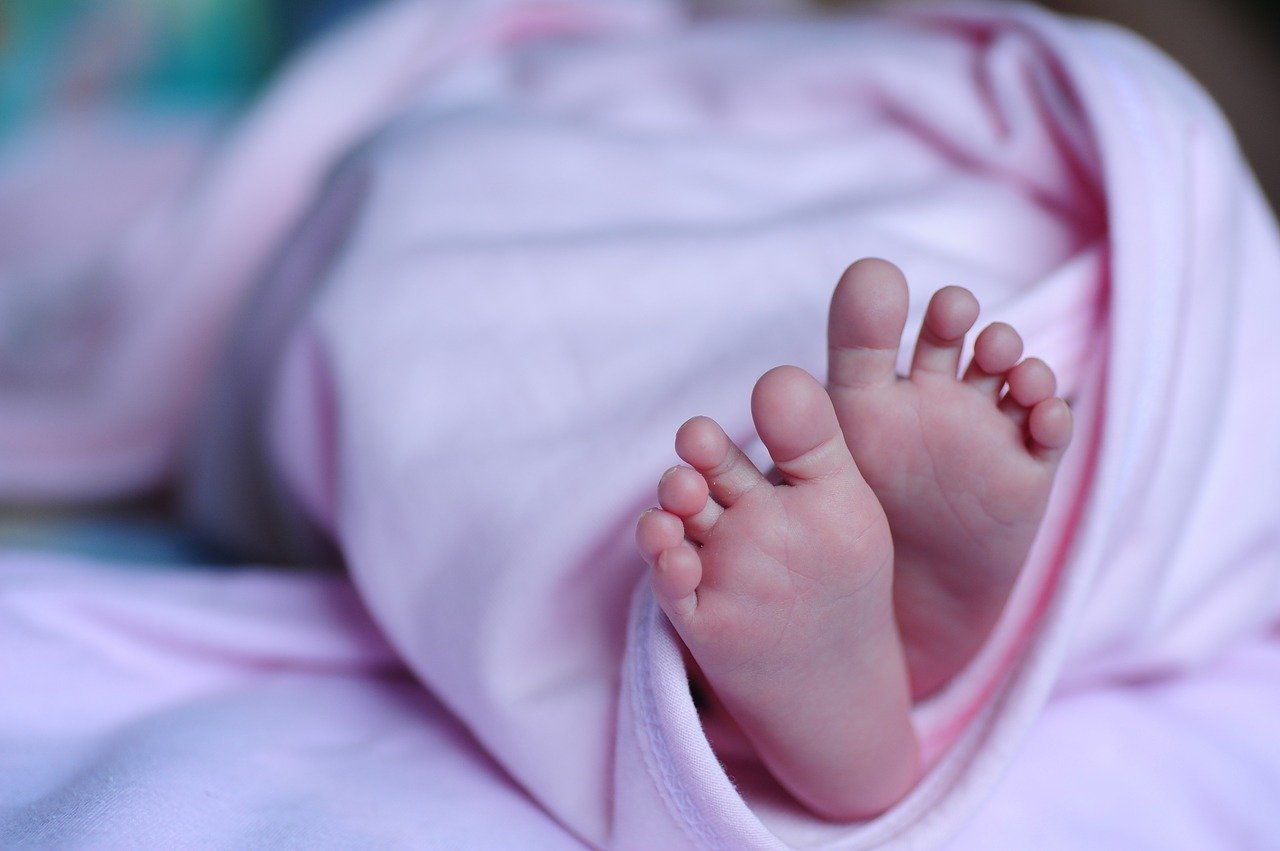
Less than half of young Dutch adults want children, according to a new survey.
The online poll by the media outlet RTL, conducted among over 19,000 panel members in February 2026, found that 53% of 18 to 35-year-olds either have no desire for children or remain undecided.
The Netherlands’ birth rate has already dropped from an average of 1.8 children per woman in 2010 to just 1.4 in 2024, far below the replacement rate. Ireland’s fertility rate is 1.47.
Respondents point to a mix of factors for not desiring children: no natural pull towards parenthood, worries about climate change, health problems, the absence of a stable partner and difficulties in finding a suitable place to live.
Economist Jona van Loenen warns that at the current pace the Dutch population could halve within 75 years.
The worker-to-retiree ratio, once seven to one, could fall as low as two to one, piling pressure on healthcare and the broader economy simultaneously.

Two Israeli soldiers have been pulled from combat duty and given 30-day jail sentences after one photographed the other hitting the head of a statue of the crucified Christ with a sledgehammer, the Israeli military said on Tuesday.
Other troops who stood by but did nothing to intervene have also been summoned and could face disciplinary action.
The military replaced the damaged statue with a new crucifix.
The swift administration of military justice by Israel was a tacit acknowledgment of the reputational damage done to the country.
The incident occurred in Debl, a Christian village in Lebanon a few miles from the Israeli border.
Cardinal Pierbattista Pizzaballa, the Latin patriarch of Jerusalem, had condemned the destruction of the statue as “a grave affront to the Christian faith” and said the action “adds to other reported incidents of desecration of Christian symbols by IDF [Israeli Defence Forces] soldiers in southern Lebanon.”

There has been a sharp rise in the share of men under 30 who say that religion is “very important” to them, from 28pc in 2023 to 42pc last year, according to a new Gallup poll.
The survey, which combined polling data across multiple years, adds more evidence to the claim that there is a religious revival among Gen-Z adults.
The poll also found a surprising gender gap: while 42pc of men aged 18 to 29 said religion is very important to them, this compared with 29pc of women of the same age cohort. This gap reverses what used to be a greater interest in religion among women.
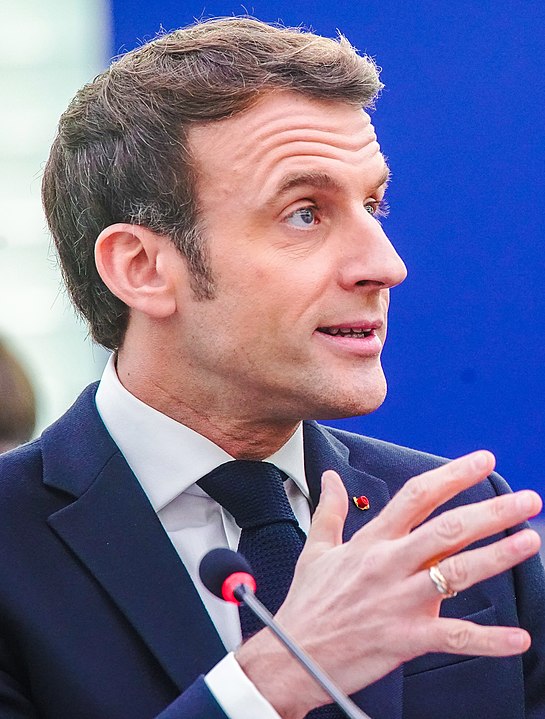
The French government has said there is a “general mobilisation” against anti-abortion activism following a spate of attacks against premises belonging to pro-choice organisations,
The Minister Delegate for Gender Equality, Aurore Bergé, spoke in the National Assembly last week, denouncing groups that never accepted the ‘right’ to abortion enshrined in the constitution in 2024.
“They continue to vandalise, threaten, intimidate, fund, and attempt to mislead young women who simply wish to access their freedom, now constitutionally guaranteed,” she said.
There was, she added, a “general mobilisation” for “our freedoms, our rights, our choices, to access abortion everywhere in the territory, support for our associations and a very clear fight against those who prefer to disinform, disorient, manipulate and who in France must not be able to win.”
Alongside providing protection for facilities, Bergé also said that resources allocated to pro-abortion associations have more than tripled over the past ten years.
French MP Sandra Regol said that Family Planning centers had been attacked six times in the last five years, including a center in Strasbourg which was covered with graffiti saying “Planning assassin.”