
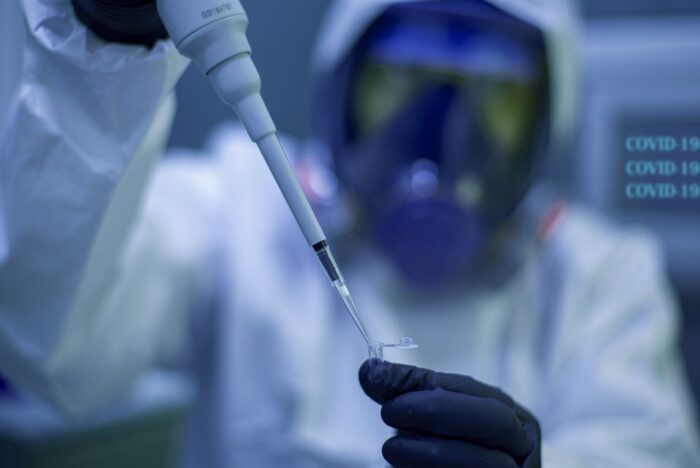
The Government has ‘no plans’ to pay for egg-freezing for all young women.
The question arose after the French Government wrote to all 29-year-olds to remind them that their chances of having a child lessen greatly as they get older. This campaign highlighted an existing state-funded scheme in France that pays the expenses of egg-freezing for women aged 29 to 37, regardless of medical need.
While some commentators in Ireland panned the French campaign, Labour TD, Conor Sheehan, asked if the Government would fund a similar egg-freezing scheme here.
Minister for Health Jennifer Carroll MacNeill has responded that there are “no plans” to do so.
The State does fund egg-freezing for medical reasons such as “in cases where a cancer diagnosis has been made” and the Department was considering expanding the scheme to other conditions that affect fertility. But not to a generalised offer unrelated to medical need.
Ireland’s fertility has plummeted to 1.5 in recent years while those struggling with fertility issues has surged, thought the cost of treatments are often prohibitive.

The legal killing of young Spanish woman, Noelia Castillo Ramos (25), by lethal injection at her own request last week has been attacked as a ‘social defeat’ by the Spanish hierarchy. The woman was not terminally ill although she did suffer chronic pain, had a history of mental health problems and was a victim of rape.
She had previously attempted to kill herself and was left a paraplegic afterwards. She repeatedly requested to die by euthanasia. Her parents were opposed to the request. Critics of euthanasia point out that the grounds for euthanasia and assisted suicide always expand once it is introduced and it comes to be seen as a ‘solution’ to suffering in general.
“When life hurts, the response cannot be to shorten the path, but to walk it together. Only in this way can we build a truly just society, where no one feels alone or discarded,” the bishops said in a statement.
They said human dignity should not depend on one’s health or subjective perception of life, and that it has “an intrinsic value that demands to be recognised, protected, and promoted in all circumstances.”
“Therefore, the truly human response to suffering cannot be to cause death, but to offer closeness, accompaniment, adequate care, and integral support,” the statement said.
They assured Ramaos’ family of their prayers and renewed their “commitment to a culture of care that abandons no one.”

Multiple Catholic dioceses around the US are reporting an upsurge in new members, according to an informal survey by the New York Times.
This Easter the Archdiocese of Detroit will receive 1,428 new Catholics into the church, its highest number in 21 years. The Archdiocese of Galveston-Houston will have its most in 15 years. In the Diocese of Des Moines, the count is jumping 51 percent from last year, from 265 people to 400.
Bishops are talking excitedly among themselves about the surge, and are perplexed as to what is behind it, reports the paper.
“Of course we think the Holy Spirit is,” Cardinal Robert McElroy of Washington said. “But we are kind of stymied.”
His own archdiocese is set to have 1,755 people enter the church this Easter, up from last year’s 1,566, which had already been the highest number in at least 15 years, according to the archdiocese’s records. Others have noticed similar trends.
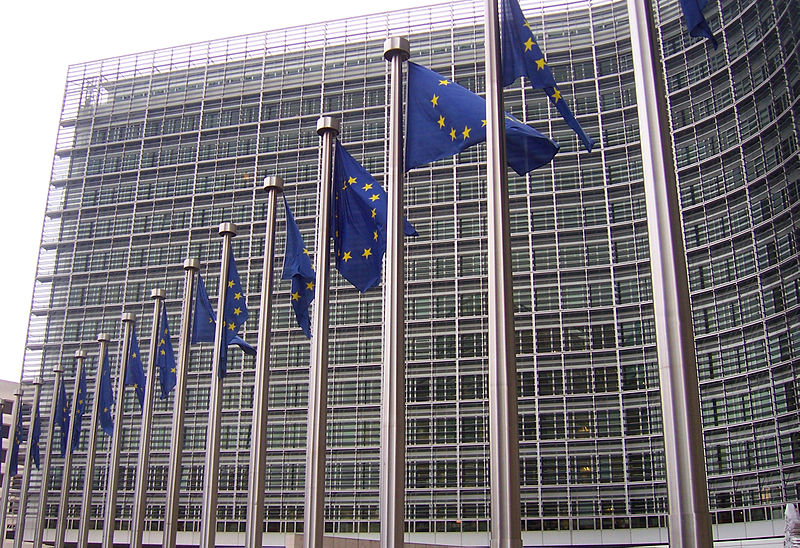
The European Commission has appointed Mairead McGuiness, as the new EU Special Envoy for the Promotion of Freedom of Religion outside the EU.
The appointment has been welcomed by advocates, although it took a long time to be filled.
“Over the past year, violations of religious freedom have escalated significantly across the globe—from discriminatory government crackdowns on Christians in India to the extreme and often deadly violence faced by Christian communities in Nigeria. The prolonged absence of an envoy raised concern among human rights advocates who warned that the EU was leaving a critical tool of its human rights diplomacy unused,” said religious freedom advocates, ADF International.
The position had been vacant since the beginning of the current Commission term in December 2024, and indeed, for about four of the ten years since the position’s inception in 2016.
Last month McGuinness who previously served as Ireland’s EU Commissioner and as a Vice-President of the European Parliament said she withdrew from last year’s Irish presidential election campaign as a result of a severe bout of post-viral fatigue syndrome, but she now feels “hale and hearty”.
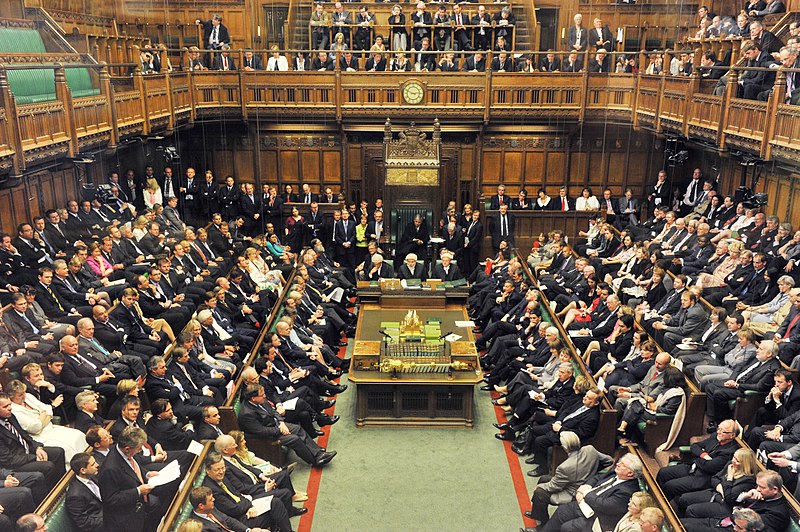
A cross-party group of 79 MPs and Peers have called for delaying the commencement of the ‘abortion up to birth’ law change until an impact assessment and guidance, for police, prosecutors and healthcare professionals, has been published and approved by both Houses.
Clause 246 of the Crime and Policing Bill removes all criminal sanctions from women who self-induce abortions, at any time up to birth. It was controversially approved by the House of Lords last week after having been approved in the House of Commons after minimal debate.
A large number of high-profile MPs and Peers have joined the call including multiple signatories from Labour, the Conservatives, Reform UK and the Liberal Democrats.
The calls coincide with Baroness O’Loan, former Police Ombudsman for Northern Ireland, supported by a large cross-party group of Peers, tabling a Regret Motion at Third Reading of the Crime and Policing Bill in the House of Lords.
Even if agreed to, the motion will not stop or amend the legislation, but gives members an opportunity to put on record their dissent.

A man suspected of links to an anarchist group has been arrested after throwing a petrol bomb at a March for Life in Lisbon.
Around 500 people were gathered outside the Assembly of the Republic in the Portuguese capital, including several minors and babies, when the petrol bomb was thrown.
The device, however, failed to ignite.
Police said the suspect was immediately intercepted at the scene, allowing for his swift arrest. “Several individuals who were allegedly part of a group with anarchist affiliations fled the scene; three members were later identified,” the statement added.
The Archbishop of Lisbon, Rui Valério, released a statement saying the attack was “absolutely unacceptable.”
“Violence is never the answer. It does not build, it does not dignify, it does not serve the truth. And it becomes even more painful when it threatens the most vulnerable, especially children, who should always be a beacon of hope and never exposed to fear,” he said.

Young people newly open to the Catholic faith must be engaged with and led to participate in the Church, a Bishop has said.
Bishop Michael Router, Auxiliary Bishop of Armagh, was commenting on a recent report from the bishops called ‘The Turning Tide?’ which used polling data from the Iona Institute and the European Social Survey, showing that there is an ‘uptick’ in interest in faith among members of ‘Gen Z’.
The study by Professor Stephen Bullivant of Saint Mary’s University, London, and Emily Nelson of Queen’s University, Belfast, suggests more young adults are seeking meaning, belonging, and purpose. In many cases they are encountering faith through online engagement in podcasts and videos.
This search for faith and belonging provides the Church with an opportunity, the bishop said.
“Many young people and families are often absent from our communities not through disinterest but through a slow disconnection over time. We need to create spaces of engagement to counter this, but belonging must not be reduced to mere activities or social gatherings. It should lead young people and families into real participation in the Church’s mission and to discover their baptismal identity as co-responsible disciples”.

The number of Catholics formally disaffiliating from the Church in Germany has fallen for the third year in a row, while the percentage of Catholics attending Mass has risen for the fourth consecutive year.
However, the figure had been as low as 162,093 as recently as 2016, before it spiked in 2022.
Meanwhile, the percentage of baptised Catholics attending Mass which fell from 10.4pc in 2015 to a low of 4.3pc in 2021 during the covid pandemic, has gradually recovered to 6.8pc in 2025.
Last year also saw a slight rise in the total number attending mass, as well as first communions and confirmations. However, baptisms and ordinations were both down,

The Holy See has called for the complete eradication of surrogacy to protect women and children from exploitation.
An envoy told a UN panel the practice risks reducing children to “commodified products” and women to “service providers”.
“The issue of surrogacy is an urgent one — the technology and practice have run laps around law and ethics,” Archbishop Gabriele Caccia, told the UN Commission on the Status of Women in New York last week.
Although prohibited as a form of human trafficking in most European countries, commercial surrogacy remains widespread in the USA, Asia, and Latin America, and so-called ‘altruistic surrogacy’ is even more widely practiced.
In his address, Archbishop Caccia said that the global “surrogacy industry” was fuelled by poverty. He said that the demand for children exceeded supply, and that many women were “pressured or even forced” by family members into acting as surrogates.
Women who agreed to be employed as surrogates could find themselves in a “perverse competition for commissioning parents”, he said, while a child diagnosed with a disability became “a flawed product or problem to be solved”.
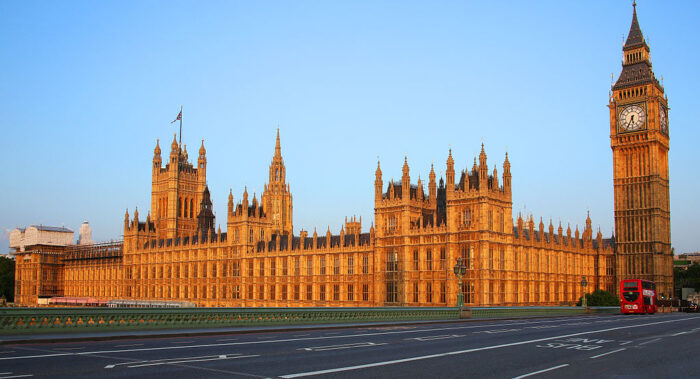
The UK’s House of Lords voted by 185 to 148 to remove criminal sanctions when a woman induces her own abortion at any stage of pregnancy, for any reason.
The controversial change had passed the House of Commons in June last year after just 46 minutes of debate, but was opposed by a wide swath of society, including major newspapers such as The Times of London.
Another amendment that would have reinstated in-person consultations prior to prescribing drugs for an at-home abortion, was rejected by Peers who voted by 191 to 119 against it.
The double blow was met with dismay by pro-life groups.
Catholic Archbishop John Sherrington said the move is “likely to lead to more late-term abortions putting pregnant women and their babies at risk”.
He added: “Many women could likely also face even greater risks of isolation, coercion, and pressure”.