
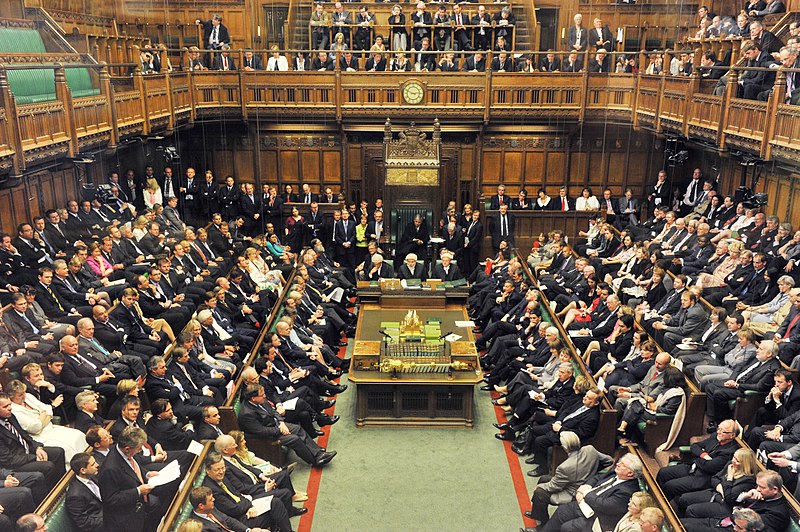
Controversial legislation to legalise euthanasia and assisted suicide in England and Wales is set to fail because of a lack of parliamentary time.
The Private Members Bill was proposed by a Labour MP, but did not have the official backing of the Government. While it narrowly passed the House of Commons, it has met with a barrage of resistance in the House of Lords.
The Labour chief whip in the Lords, Roy Kennedy, said this week that the government would not give the Terminally Ill Adults (End of Life) Bill more time before the May deadline, when all legislation must have passed or automatically falls.
The team behind the bill also confirmed they now expected the legislation in its current form to fail.
The debate will now focus on what happens after May, with proponents of a change in the law saying the public polling and the repeated backing of MPs means that this legislation should be given a second chance.
However, the government is likely to continue keeping the issue at arms length, since there is no single cabinet position on the issue and ministers like Wes Streeting and Shabana Mahmood are implacably hostile to the change.

Letting people work from home would be the most effective and cheapest way to help reverse falling birth rates, a new report has said.
In many countries across the globe, birth rates have fallen well below the 2.1 replacement rate required for a stable population. Ireland’s is 1.5 and is projected to fall to 1.3 by 2037.
A working paper by economists at King’s College London and Stanford found that in the US, remote work led to 291,000 more births a year, based on figures from 2024. It accounted for 8.1pc of all births that year.
The study found that when both partners worked from home, women’s fertility rate rose by around 0.5 children.
The economists said, in the US, this one change had a bigger impact on birth rates than government spending on early childhood care and education.
Prof Cevat Aksoy, of King’s, said the UK and other countries experiencing sinking birth rates should take lessons from the study’s observations.

Ireland’s education system should resist ideological capture and short-term novelties, the National Conversation on Education has been told by an agency of the Catholic Bishops.
In a submission, the Catholic Education Partnership suggests starting the conversation with a focus on purpose, offering that education should be “ordered to ordered to the flourishing of the person and to the common good”.
This means a focus on “the kind of person it helps to form: truthful, resilient, compassionate, and capable of responsibility”.
This involves adopting an integral vision of the person with a definite ethos.
It underlines that “Ethos matters as education is never value-neutral, and when values are unnamed, they are imposed without accountability”.
By contrast, a “transparent statement of ethos builds trust with parents and enables respectful dialogue”.
It added that education “should pursue an integral humanism, rooted in the dignity of every child, honouring parental primacy, supporting real plurality of ethos, and investing in teacher formation and leadership.”

One of Ireland’s leading journalists said he was ‘Catholic shamed’ by anti-religious ‘bigots’ after he received a torrent of criticism on social media for having worn ashes on his forehead while appearing on TV on Ash Wednesday last week.
Fionnán Sheahan, Ireland Editor of The Irish Independent, was a guest panellist on Virgin Media’s The Tonight Show last week discussing the day’s political events while bearing the unmistakeable sign of the ritual that marks the beginning of Lent. And viewers noticed and proceeded to comment and criticise him on platforms such as X.
Writing in The Sunday Independent, he said that thoughtless critics mattered little to him, but what did surprise him were those who said he “should have expected to be subjected to negativity”.
Why, he asked, “in liberal, secular Ireland, it is now normal that someone should be ridiculed for identifying as a Catholic?”
Speaking on Newstalk Breakfast this week, he added: ““I went down the [social media] rabbit hole and was looking at some of the comments and it was people who look back to their other posts and go, ‘Okay, you’re claiming to be kind of a person of liberal and open-minded thought – but when it comes to this, you become a bigot’”.
He asked rhetorically if Irish people are “not as open-minded as we claim to be?”
A recent Amarach poll commissioned by The Iona Institute found that a quarter of Irish people would be happy to see the Catholic Church vanish from Irish society completely.

Only one in ten Gen Zers in the UK have had children at 23 compared with almost one in four millennials at a similar age, while the former are also far less likely to have left home in young adulthood, a study has revealed.
The Millennium Cohort Study (MCS) follows the lives of about 19,000 young people across the UK classified as Gen Z, who were born between 2000 and 2002.
However, despite the significant decrease in younger people having children, the vast majority of Gen Z still expressed a strong desire to become parents in the future. Some 61 per cent said they would definitely like to have children or have more offspring if they were already parents.
The MCS also found that more than two thirds of Gen Z, or 68 per cent, were living with their parents at the age of 23. This number is three times the proportion of millennials who were living at home at a comparative age a decade earlier.
Lead researcher, Charlotte Booth, said the findings suggested Gen Zers were delaying adult milestones compared with previous generations. She said this was “partly due to challenging economic conditions and the high cost of living, making it unaffordable for young people to move out”.

The Catholic Archdiocese of Dublin is set to receive the largest ever cohort of new faithful this Easter.
Nearly 130 catechumens and candidates were presented at the Rite of Election in St Mary’s Cathedral in a ceremony led by Archbishop Dermot Farrell, yesterday.
Catechumens are seeking baptism as Catholic Christians, while candidates are already baptised, but are seeking full communion with the Catholic church.
The figure of 130 is a big rise on last year’s class of 80, and an even bigger increase from the pre-covid number of 22 who presented themselves in early 2020 before the pandemic hit.
Dublin has 197 parishes serving a Catholic population of about 996,000 people.

The number of adult baptisms in Belgium is expected to rise by almost 30pc this year after dioceses reported a significant increase in candidates compared to 2025.
The Catholic Church in Belgium said that the number of adults seeking baptism has risen to 689 in 2026, from 534 in 2025.
Ten years ago, the figure was just 229. Belgium is one of the most secular countries in Europe so any reversal of the trend, no matter how small, is still notable.
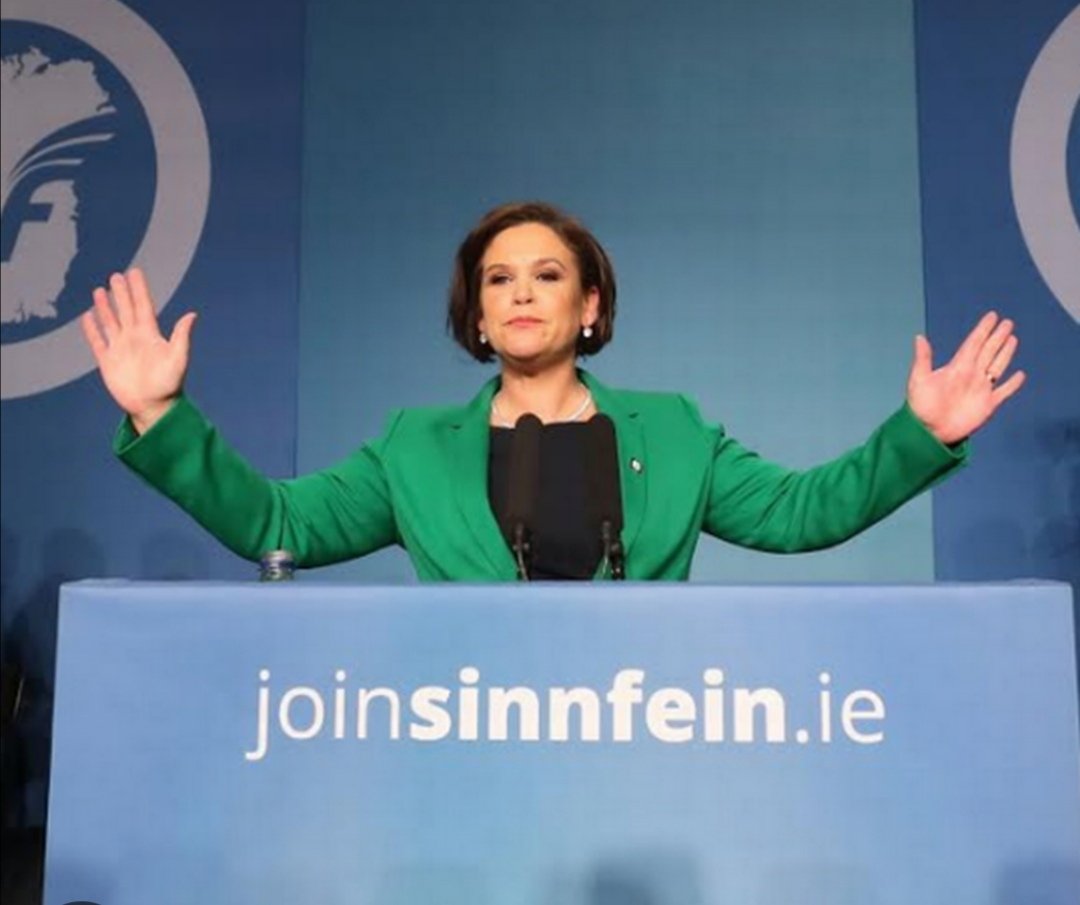
“Everything should be on the table” to ensure religious orders contribute to future redress schemes, up to and including the seizure of their assets, a Sinn Fein TD has said. This is despite the fact that orders such as the Jesuits and Spiritans have already paid millions to abuse victims. It is not clear if such a move would be constitutional.
The Government established a commission of investigation last July into the handling of historical child sexual abuse in schools, after a scoping inquiry suggested the potential scale of such abuse, not just in Catholic schools, was very significant.
Meath East TD, Darren O’Rourke said the Government should consider taking legal action against Church bodies if they refused to contribute to any redress scheme that might result from the commission.
O’Rourke, Sinn Féin spokesman on education and youth, welcomed what he called “a commitment to a comprehensive assessment of options” by the Government, but said religious orders must be “held accountable”.
His comments echo similar moves by the Labour Party.
In December, the party introduced a Bill that would facilitate civil proceedings against unincorporated bodies such as religious orders and provide a mechanism for recovering damages from trusts associated with these organisations.
The grieving parents of a 26-year-old man say Canada’s euthanasia laws failed their ‘vulnerable’ son who was killed despite not being terminally ill.
Kiano Vafaeian suffered with Type 1 diabetes, losing vision in one eye in 2022, and struggled with his mental health after a car accident at 17.
The family said Kiano was rejected by multiple doctors in Ontario before he sought out a prominent euthanasia provider in British Columbia. Kiano’s mother believes the doctors “coached” her son on what to say to meet the criteria for “Track 2” patients — those whose natural deaths are not reasonably imminent.
Kiano’s parents say they were not notified of the approval and only learned of his death days after it occurred. They noted his medical records did not back up the “severe peripheral neuropathy” listed on his death certificate as a qualifying factor.
MAiD was legalised in 2016 for adults with “enduring and intolerable suffering” and whose death is foreseen. Euthanasia deaths in Canada have soared in the meantime to over 16,000 per annum and the grounds for eligibility keep widening.
In 2021, the law was changed to no longer require the person be suffering a terminal illness or be near death.
The latest annual report for Canada revealed nearly 23pc of people overall reported “isolation or loneliness” as a reason for seeking euthanasia. Medical practitioners reported that about 50pc of people requested it because of being a “perceived burden on family, friends, or caregivers.”
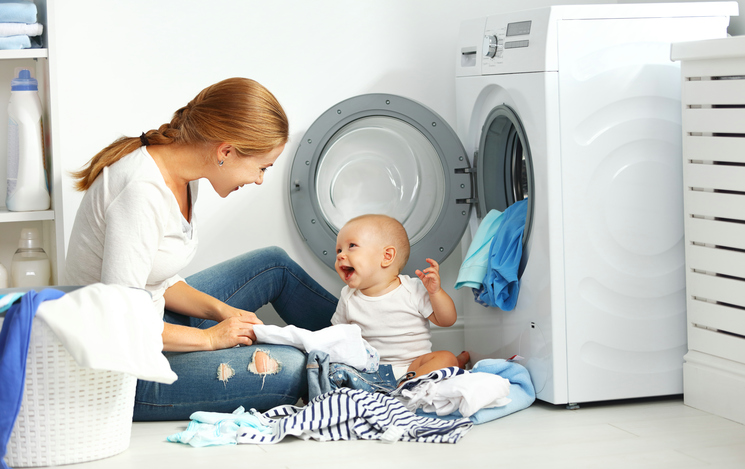
The work done by a stay-at-home parent is worth over €60,000 per annum, but most people significantly underestimate its value, according to new research.
The study by insurance and pension company Royal London Ireland reviewed the range of daily tasks carried out by stay-at-home parents such as childcare, cleaning, cooking, teaching assistance, gardening and transporting children to activities.
It calculated it would cost €60,112 to hire someone to take on these responsibilities, using current wage rates as a benchmark.
The role’s estimated annual equivalent value has increased by 5.2% since 2024, when it stood at €57,140.
It has risen by 48% from €40,560 when the study was first conducted ten years ago in 2015.
A survey of 1,000 adults was also conducted which showed that 82% of respondents failed to recognise the true financial worth of such work.
Less than one in five of those surveyed put the cost at over €50,000.
On average, adults estimated the cost at €34,477, a shortfall of more than €25,000.