

There has been a significant uptick in couples attending the marriage preparation courses of the Catholic Bishops while newly-published research shows a growing desire among Gen-Z for church weddings.
The Bishops’ marriage agency, Accord, reported that the numbers attending their courses last year was up 16pc from 2024.
Furthermore, a survey carried out by Amárach found that religious faith is rising among younger generations.
Up to 69 per cent of adults aged 18 to 24 identify as Roman Catholic as opposed to 53 per cent of 25- to 34-year-olds and 76 per cent of all adults.
A substantial 60 per cent of unmarried Catholics want to marry in a Catholic Church including 63 per cent of those aged under 35.
Nonetheless, marriage and fertility is still very much on the wane in Ireland, with one economist describing their decline as a “recession”.
According to David Higgins, almost a third of Irish men are over 40 when they tie the knot.
“I call it the milestone recession – where fewer people are obtaining the milestones of marriage and family or, if they are, it is at later ages,” he said.
Meanwhile, Bible sales in Ireland have reached their highest in a decade. Nielsen Bookscan says 29,755 bibles were bought last year, up by 11pc on 2024. It is the highest volume of sales since 2013 when 30,465 copies were sold. Nielsen speculated the surge might be due to “a growing interest in spirituality among younger generations”.

Primary schools in the UK can now officialy use the preferred pronouns of transgender pupils, according to new proposals from the Labour Government.
This ends an outright ban on such pronouns for primary aged children instituted by the Tory Government in 2023. This means a biological female can be addressed as ‘he’, ‘him’ or ‘they’ if they wish and a biological male as ‘she’, ‘her’ or ‘they’.
The new guidance says children under 11 should be supported to socially transition only in “exceptionally rare” circumstances and argues that early social transition can have significant psychological and practical consequences and should not be treated as a neutral act.
Secondary schools will have more discretion but are still told that parents must be involved. Only in cases where seeking parents’ views would create a safeguarding risk, such as in cases of abuse, can schools proceed without informing families.
Children over eight should not be permitted to use toilets for the opposite biological sex, while those over 11 should not access opposite-sex changing rooms.
Mixed-sex sleeping arrangements on residential trips are also ruled out.
And a child’s birth sex must be accurately recorded in records.
However, Maya Forstater, chief executive of Sex Matters, said it was a “dangerous fairytale” to let children be treated as the opposite gender at all.
“Schools are still being left with the idea that they can facilitate ‘social transition’ — which remains undefined — and that they should negotiate this on a case-by-case basis,” Forstater said.
“It should be clear by now that allowing children and parents to think that a child who starts their education as a girl can graduate as a boy, or vice versa, is a dangerous fairytale.”
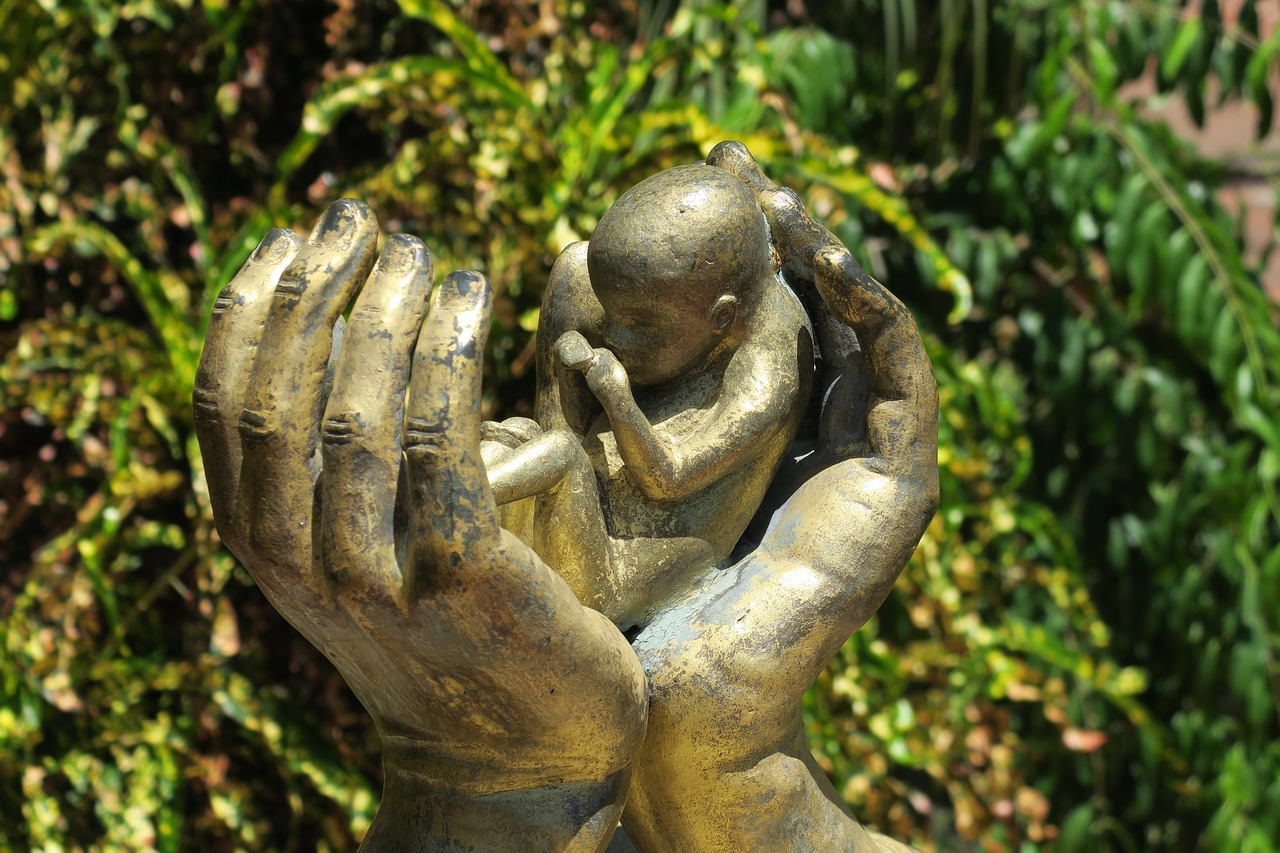
A man forced his former partner to take abortion-causing pills, leading to the death of her nine week old unborn child, Letterkenny Circuit Court has heard.
The incident occurred in Donegal on Valentine’s Day, 2020. The man pleaded guilty in November and a sentencing hearing was held this week.
The court was told the accused had met the woman on Snapchat and she initially became pregnant with him in October 2019. On that occasion they both decided to abort the baby with help from a GP who prescribed abortion drugs.
In January 2020 she became pregnant again by the same man. While she considered another abortion, she ultimately decided against it and skipped an appointment with her doctor on February 6.
Upon hearing this, the man lured her to his home in Donegal and forced her to take five misoprostol 200mg tablets which he had procured from a pharmacy in Dublin.
A recording of their conversation played in court revealed him telling her: “It’s either you eat this or I beat that kid out of you tonight.”
In a victim impact statement, the woman said: “When he wrongfully imprisoned me and caused the termination of my nine-week pregnancy, he took far more than my freedom. He took my child”.
She added: “I had hopes, dreams, and a bond with the life that was growing inside me, and all of it was violently stolen from me in a moment of cruelty that I will never forget.
His subsequent denials made matters worse, she said: “I was left feeling invisible and alone. I lost friends through him denying what he did to me and my unborn child”.
Incredibly, the woman said she had since found healing and faith “in Christ, who carried me when I could not carry myself”, and added that she had chosen to forgive her attacker.
Nonetheless, she said “I will always grieve my child. I will always remember what was taken from me. Healing does not erase the loss, it only means I learned how to live with it.

Jimmy Lai, the 78 year old former media mogul and outspoken critic of Communist China’s crackdown on Hong Kong’s pro-democracy movement, has been given a virtual ‘death sentence’ of 20 years in prison.
Lai, an ardent Catholic who converted in 1997, was one of Hong Kong’s foremost human rights advocates, using his small media empire to oppose the increasingly repressive policies imposed by Beijing.
In December he was convicted under a controversial National Security Law from 2020.
The court said Lai had colluded with foreign forces and published seditious material, citing evidence that he had encouraged the US and other countries to impose sanctions on Hong Kong and the government in Beijing in response to the crackdown on pro-democracy demonstrations.
His sentence has been condemned by Governments around the world, including the US, the EU and Britain. NGOs such as Human Rights Watch and Amnesty International added their voice to the condemnations.
[Photo shows Senator Ronan Mullen with Sebastien Lai, son of Jimmy Lai]

The French government has launched a series of measures to help slow declining birth rates, including writing to all 29-year-olds with advice on improving their chances of having children.
Almost one in eight couples in France is struggling to conceive.
The French Health Ministry says the aim of the plan fertilité is to enable young adults make informed personal choices, “without coercion or social pressure,” about reproductive health, fertility and contraception, and to avoid later regret in an ‘if only I had known’ scenario.
The action comes as birth rates in France have dropped to 1.56, their lowest level since 1918. A figure of 2.1 is needed to sustain a population.
Last year, more deaths than births were recorded for the first time since World War Two.
Some, however, are not impressed by the initiative.
Paul Brunstein-Compard, a 29-year-old stand-up comedian in Paris, said the idea smacks of “treating them like children”.
He also voiced environmental concerns.
“Procreation is creating one more human who is going to pollute and consume. It is a secondary reason for me, but I have friends who are clear they do not want children because of that,” he added.
In the first ever malpractice verdict against transgender surgeries, a jury in New York State has awarded a woman $2 million in damages for a double mastectomy she received as a teenager that she said left her disfigured.
The plaintiff had accused a psychologist and a plastic surgeon of failing to properly inform her about the risks and obtain adequate consent before she agreed to undergo the procedure in 2019.
Ms. Fox Varian, who was 16 at the time, was born female, but as a teenager began ‘to identify as’ a man. She later came to regret the transition and reverted to her natural state, an example of a process known as detransitioning.
Dr. Alfonso Oliva, a plastic surgeon, told EWTN News that “patients are often not given full information of the risks associated with medical transitions,” citing “very high complication rates”.
In addition, he said, aolescents “will likely become sterile, they are highly likely to have sexual dysfunction, especially young boys, many of whom won’t have sexual function or the ability to orgasm in the future.”
“These are not reversible interventions. Normal brain development, which is not completed until 25, is interrupted through hormone therapy. Problems such as obesity and diabetes, and problems with the skeletal system, which will not develop as it should, are not discussed during medical evaluations. Nor is there a significant psychiatric evaluation of these children, who are suffering, but we don’t get to the bottom of the suffering,” he said.

Some Catholic children are being refused enrolment to Catholic schools due to a 2018 schools admissions law, according to an Independent Ireland Councillor.
The Education (Admission to Schools) Act 2018 prevents Catholic primary schools from offering places to Catholic children ahead of others in cases of over-enrolment. The change was sometimes described in ideological terms as “banning the baptism barrier”. Other faith schools can admit their own children first evem in the event of over-subscription.
Writing on X, Councillor Bill Clear of Kildare County Council, said one result of the 2018 law is that “Catholic families are being pushed out of Catholic schools by non-Catholics, while those same schools are still expected to uphold a Catholic ethos”.
“That is not fairness. That is policy failure”.
He added: “Faith-based schools are being stripped of the very right that justifies their existence, yet parents who actively support and practise that ethos are left without places for their children”.
He said the legislation was never honestly debated and ideology trumped common sense, with the result that ordinary families are paying the price.
He concluded that “a school’s ethos matters or it doesn’t. You cannot have it both ways”.
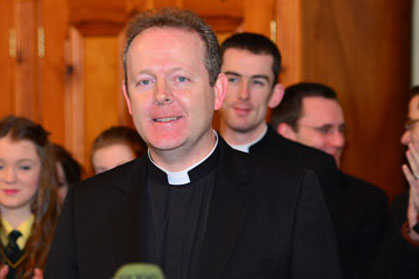
Saint Brigid’s example is needed to navigate contemporary issues such as commercial sorrogacy which run the risk of “dehumanising” us, according to the Archbishop of Armagh, Eamon Martin.
In a homily marking the feast of St Brigid, Archbishop Martin said, “we live in a world where the personal dignity of women is too often threatened by violence, abuse, inequality, commercial surrogacy, pornography, and now by the manipulation of female images online, gender ideology, the false promise of abortion on demand and other forms of exploitation”.
He said that Saint Brigid “challenged people not to cling to the superficial and empty promises of pagan gods and goddesses”, pointing them instead to the one “true God”, Jesus Christ.
She herself lived a life “of mercy towards the poor, the sick, the vulnerable, those people who struggled with diseases or disabilities, the weak, the sinner, the lost”.
Like Jesus, the Archbishop added, she wanted “to promote their dignity at all times, to welcome them, to be with them, to accompany them”.

A Swiss politician has been convicted for firing a sports pistol at a poster featuring a Madonna and child artwork and posting images of the damage online.
Sanija Ameti, 33, an independent Zurich council member formerly of the Green-Liberal party, was found guilty of “disturbing freedom of religion and worship,” the Zurich district court said in its ruling.
She was handed a suspended fine totalling 3,000 Swiss francs (about €3,275), and a penalty of 500 francs. Prosecutors had sought a larger fine.
In September 2024, Ameti fired the sport pistol at an auction poster that showed details of the work “Madonna with Child and the Archangel Michael” by 14th-century Italian painter Tommaso del Mazza.
Ameti afterward apologised, but the shootings and posting caused an uproar and she lost her job in public relations.
She said she had been practicing shots from about 10 meters and found the poster as “big enough” for a suitable target, and only afterwards realised the religious character of the target.

Almost 6,500 fewer pupils were enrolled in primary schools in Ireland last year, reflecting a decade of declining births, according to to the latest data published by the Department of Education and Youth.
Births in Ireland peaked in 2012 at 74,000 and are now about 20,000 per annum lower than that, with the consequences playing out in reduced school numbers. Ireland’s fertility rate at 1.5 children per woman is now well below replacement level of 2.1
Primary school enrolment had fallen by almost 4,000 the previous year and by just over 2,000 the year before that
The decline in enrolment places further pressure on many small rural schools which fear closure or the loss of teachers as a result.
Eleven primary schools have closed permanently since last June due to low enrolment making them unviable.