

An advisory body has warned that Ireland’s population is at risk of a “vicious downward cycle” due to the cascading effects of a declining birth rate and the Government must act to reverse it.
The statement is contained in a report by the National Economic and Social Council (NESC), which researched recent demographic shifts across the country. Ireland’s fertility rate is currently at 1.5, well below the replacement level of 2.1 children per woman.
While lower population growth and migration may be tempting, the report said, this could create a “vicious cycle”.
“The effect of this is that fertility declines further, emigration rises, and the population continues to age,” the report said.
“Fiscal and pension pressures mount, constraining future investment and creating a downward spiral of stagnation, as well as intergenerational and regional unfairness. Once established, such dynamics can be very difficult to reverse.”
Instead, the NESC recommended planning for a “virtuous cycle” which sees demographic growth “as an opportunity and invests accordingly”.
This will require far greater investment in services.
“Fertility may be stabilised through stronger family supports: affordable childcare and housing, adequate parental leave, and income and welfare policies that de-risk family formation,” it said.

Mothers are more likely to have a clear sense of purpose in their lives, according to a new report by the Institute of Family Studies and the Wheatley Institute.
This aligns with past research which consistently shows mothers pulling ahead on a number of well-being metrics. That is despite a popular narrative that single women without children are happier than married mothers.
Data from the Women’s Well-Being Survey (WWS) of 3,000 U.S. women, ages 25 to 55, conducted by YouGov in early March 2025, showed that 28% of married mothers strongly agreed that their life has a clear sense of purpose, and 25% of unmarried mothers reported the same. This compares to 14% of married childless women and 16% of unmarried childless women on the same metric.
These findings square with research that shows, across the world, parents are more likely to report having a meaningful life.

A charity volunteer has been criminally charged in the UK for having stood and silently prayed outside an abortion facility, where attempts to “influence” those seeking an abortion is prohibited.
Isabel Vaughan-Spruce had previously been wrongfully arrested under local ordinance laws n Birmingham and received a settlement from West Midlands Police of £13,000.
This time she was charged under a new national “buffer zones” law.
It prohibits “influencing any person’s decision to access, provide or facilitate abortion services” within 150m of abortion facilities.
The Crown Prosecution Service’s guidance on the law stipulates that silent prayer on its own is not enough to meet the threshold of criminality unless it is accompanied by “overt” activity. The “overt” activity seems to be the act of standing publicly near the clinic.
Ms Vaughan-Spruce commented that “despite being fully vindicated multiple times after being wrongfully arrested for my thoughts, it’s unbelievable that I have yet again been charged for standing in that public area, and holding pro-life beliefs”.
“Silent prayer – or holding pro-life beliefs – cannot possibly be a crime. Everyone has the right to freedom of thought.”

TDs rejected an attempt to put a radical pro-abortion bill on the Dail agenda by a vote of 73 to 71 on Tuesday night.
The Private Members Bill, if it went into law, would completely decriminalise abortion, abolished the mandatory three-day waiting period and loosened restrictions on abortion up to birth where the unborn child has a life limiting condition.
While the bill was touted by People Before Profit TD, Paul Murphy, it received the support of some Government Ministers, including Jennifer Carroll MacNeill, Helen McEntee, Jack Chambers and James Lawless.
The Pro Life Campaign warmly welcomed the result with spokesperson, Eilís Mulroy, saying it “shows that many TDs are taking stock of the dramatic increase in abortions since the law changed and of the disturbing realities now emerging under the current legislation”.
“This includes the many testimonies of women who regret their abortions and who say they felt pressured under the current system toward abortion and weren’t offered any information beforehand about alternatives”.

A Department of Education survey determining the kind of primary schools parents want for their children closed on Tuesday night with over 230,000, or 47pc of eligible households, having filled out the questionnaire.
The survey – the largest of its kind ever undertaken in Ireland – was school-specific and assessed parental preference regarding patronage/ethos, co-education or single-sex schools, and language of instruction (English or Irish). It may lead to more divestment of Catholic schools.
Parents and guardians of children who are either in, or have yet to start, primary school were eligible to participate, as were school staff and boards of management.
The department says it will use the survey results to input into its analysis of national, local and school-specific data, to help it plan for schools into the future.
It says that where there is clear support for change to be considered, a further process of inclusive dialogue will begin.

Jimmy Lai, the pro-democracy former Hong Kong media mogul and outspoken critic of Beijing, was convicted in a landmark national security trial in the city’s court this week, which could send him to prison for the rest of his life.
Lai, an ardent Catholic who converted in 1997, was one of Hong Kong’s foremost human rights advocates, sitting at the helm of a small media empire in a political environment that was increasingly controlled by the Communist Party of China.
His plight has drawn support from around the world, including among prominent Catholic leaders. In 2021 he was honoured with an award by organisers of the US National Catholic Prayer Breakfast, while the next year he was given an honorary degree from The Catholic University of America.
In 2023 Lai was nominated for the Nobel Peace Prize alongside Cardinal Joseph Zen and numerous others for their work in promoting human rights in Hong Kong. That same year nearly a dozen bishops and archbishops from around the world called for Lai’s release, criticizing the “cruelty and oppression” to which he had been subject for years.
Among the attendees at his trial was Hong Kong’s retired Cardinal Joseph Zen.
[Photo shows Senator Ronan Mullen with Sebastien Lai, son of Jimmy Lai]
Legislation providing for the complete decriminalisation of abortion and the abolition of the mandatory three-day waiting period is scheduled for a preliminary vote in the Dáil tonight.
The Health (Regulation of Termination of Pregnancy) (Amendment) Bill 2023, had been proposed by former People Before Profit TD Bríd Smith, during the last Dail, but lapsed at the end of the session.
It is now being reintroduced by Paul Murphy TD.
As well as decriminalising abortion and ending the 3-day waiting period, the bill would also provide for abortion on demand prior to foetal viability, which is around 22 weeks; and expand the time period for abortion for so-called ‘fatal foetal abnormality’ to where a medical condition is likely to lead to the death of the child within a year of birth.
The Pro Life Campaign is asking its supporters to lobby politicians to oppose the bill, saying it “would allow abortion on request through the entire nine months of pregnancy”, and would “certainly lead to a big increase to the already massive numbers of babies lost and women hurt by abortion”.

Marriage reduces the risk of being the victim of domestic violence compared with other live-in relationships, new figures suggest.
Around 3.8 million over-16s in England and Wales suffered domestic abuse in the year ending March 2025, according to the UK’s Office for National Statistics.
This included approximately 2.2 million women and 1.5 million men.
The statistics regulator noted that victims who were married accounted for a “significantly lower proportion” of those experiencing domestic abuse, in contrast to people who were “cohabiting, single, separated or divorced”.
The most common marital status of victims was “separated” (22.7 per cent), followed by “divorced/legally dissolved partnership” (16.3 per cent). Marriage accounted for just 4.4 per cent.
Dr Tony Rucinski of campaign group Coalition for Marriage said that for years a ‘gendered narrative’ has painted the traditional family as dangerous.
The official figures show “the safest place for women is a stable marriage to a man who keeps his promises. The safest place for men and for children is the same.”
Founded in 1997, and headquartered in Brussels, the Federation of Catholic Family Associations in Europe (FAFCE) represents 33 national and local associations. It holds a participatory status with the Council of Europe since 2001 and is a member of the Fundamental Rights Platform of the European Union.
Their advocacy work ranges from drawing attention to plunging birth rates, to work-family balance, protection of children, the harms of pornography, and matters of life and human dignity.
Hungarian MEP, Kinga Gál, deplored the move saying FAFCE is “being punished simply for defending family as the fundamental unit of society”, a view which is now treated as “unacceptable” in Brussels due to “gender ideology”.
Separately, the well known World Youth Alliance (WYA) saw their funding rejected on the basis of their pro-life views. The WYA campaigns for human dignity “from conception till natural death” and has been advocating on behalf of life at major United Nations events since 1999.
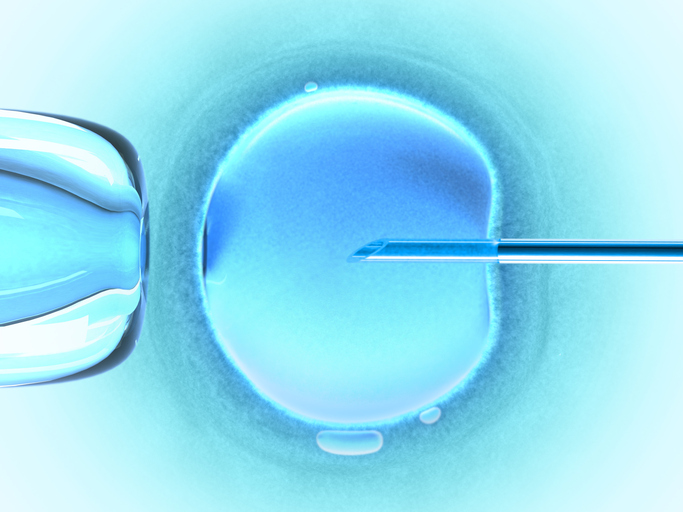
A Danish donor whose sperm was used to create at least 197 children across 14 countries in Europe, passed a cancer-causing gene to them, a major investigation has found.
Many of the children developed cancer, with some dying at a very early age.
The donor’s sperm was also sold to Ireland, though records do not show any children having been born from it.
The case highlights the lack of controls over the number of children one donor can procreate, and the danger of using eggs and sperm bought on a commercial market without full knowledge of its genetic heritage.
Sperm from Donor 7069, alias ‘Kjeld’, was made available by the European Sperm Bank (ESB) to 67 clinics between 2006 and 2023, when it was blocked from the market.
‘Kjeld’ was a student in 2005 when he started donating at the Copenhagen branch of the ESB after passing all medical tests.
In 2023, however, a gene mutation which dramatically increases the risk of cancer was discovered in a portion of his sperm cells, after doctors reported seeing children he fathered with the TP53 mutation.
It led to the issuing of an international alert to health authorities and fertility clinics.