
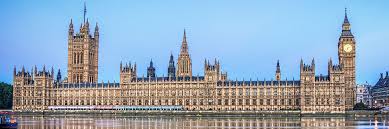
The Presbyterian Church has repeated its “total opposition” to Westminster imposing a radical abortion regime on Northern Ireland. It fully decriminalises abortion and is more permissive than the regime in England.
Yesterday, the Northern Secretary issued an order compelling the Department of Health to make the procedure widely available, despite the opposition of some Stormont Ministers.
Brandon Lewis said he had a “moral obligation” to do so.
A statement from the Presbyterian Church said there is nothing ‘moral’ about his order, nor indeed the original legislation that he previously inflicted on the people of Northern Ireland.
The DUP has said that the Westminster direction to Stormont “undermined” devolution.
But Sinn Féin, the Alliance Party and Green Party have welcomed the move.
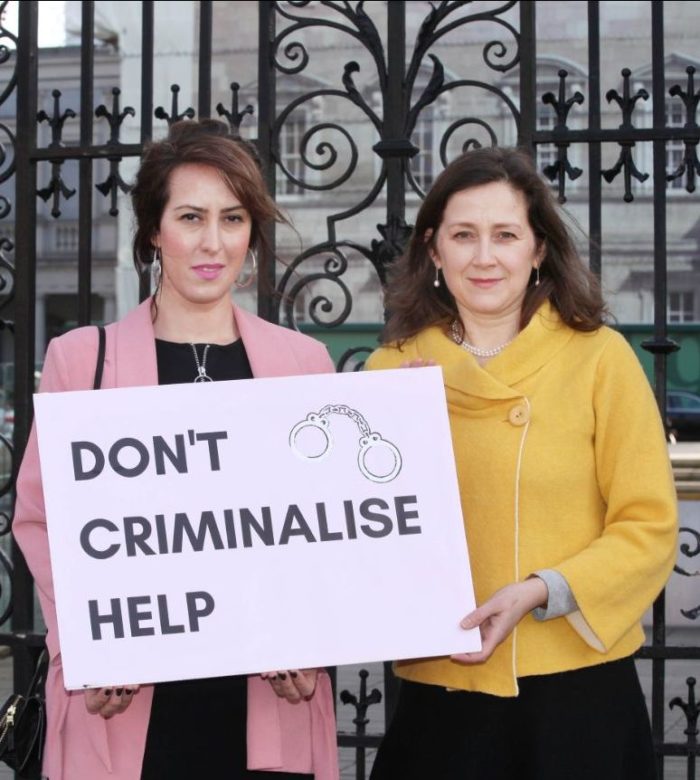
Health Minister, Stephen Donnelly has failed to answer a direct question about promised legislation to introduce exclusion zones preventing pro-life protests or vigils outside of clinics or hospitals that perform or administer abortions. No country in Europe has a nation-wide law imposing such restrictions on the right to protest.
Green TD, Holly Cairns, had asked the Minister about the status of the so-called “safe access to termination of pregnancy Bill”.
In his written response, Stephen Donnelly said it was originally intended to provide for exclusion zones in the Abortion Act of 2018.
“However, a number of legal issues were identified which necessitated further consideration,” he acknowledged, also noting that since the abortion regime began there had been “a limited number of reports of protests or other actions relating to termination of pregnancy.”
He added: “Where problems do arise with protests outside healthcare services, there is existing public order legislation in place to protect people accessing services, staff and local residents,” he said.
Pro-Life groups have taken the non-answer to mean that the legislation has hit an immovable roadblock and will not be resurrected.

Secondary school pupils will be taught about the abuses suffered in industrial schools, Magdalene laundries, and mother and baby institutions under a new national pilot programme.
NUI Galway’s Irish Centre for Human Rights has published secondary school teaching materials on Ireland’s institutional abuses, which have been created with survivors and school teachers, pupils, activists and artists.
The education resources include a guidebook for teachers, PowerPoint presentations, lesson plans and as well as a workbook and an online database for students.
“It is our hope that, in the future, the Irish State will incorporate historical abuses into the Irish Leaving Certificate curriculum. Until then, our pilot programme is available to teachers all over Ireland,” said Emily O’Reilly, one of the five post-graduate students who developed the resources.

The so-called Dying with Dignity bill by far-left TD, Gino Kenny, would permit anyone likely to die from an illness to avail of assisted suicide no matter how far from death they actually are.
Serious legal concerns had been raised about the bill by the Office of Parliamentary Legal Advisers.
In a report published yesterday, the Justice committee said the Bill “has serious technical issues in several sections, that it may have unintended policy consequences – particularly regarding the lack of sufficient safeguards to protect against undue pressure being put on vulnerable people to avail of assisted dying – that the drafting of several sections of the Bill contain serious flaws that could potentially render them vulnerable to challenge before the courts, and that the gravity of such a topic as assisted dying warrants a more thorough examination which could potentially benefit from detailed consideration by a Special Oireachtas Committee”.
It concluded then that the Bill “should not progress to Committee Stage but that a Special Oireachtas Committee should be established, at the earliest convenience, to progress the matter”.
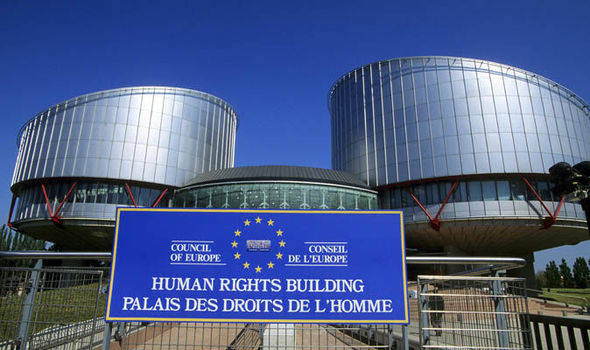
Russia has deemed a call by the European Court of Human Rights (ECHR) as foreign “meddling” in the country’s domestic affairs.
The court had ruled that Russia should respect and acknowledge same-sex couples by providing a legal framework for their relationships.
The ruling “contradicts the foundations of Russian rule of law and morality,” Vasily Piskarev, a lawmaker who heads a parliamentary commission dedicated to investigating foreign interference.
Kremlin spokesman Dmitry Peskov had also said that the court’s request would contradict Russia’s constitution.
Last year, Russia adopted a set of constitutional amendments that emphasized the primacy of Russian law over international norms. It also stipulated that “institution of marriage is a union between a man and a woman.”
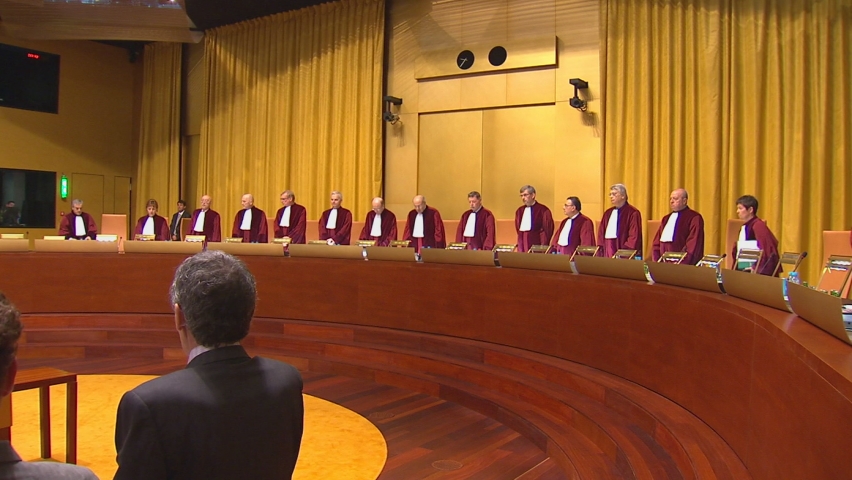
The European Court of Justice, the EU’s highest court, ruled last week that employers can forbid their staff from wearing visible symbols of religious or political belief, including headscarves, in order to present an image of neutrality.
The Court decided on the matter following referrals from the Labour Court of Hamburg and the Federal Labour Court of Germany, which had requested the Court consider whether the dismissal of two Muslim women from their employment over their non-compliance with orders to refrain from wearing their hijab was compliant with EU law on equal treatment in employment and occupation.
The Court held that certain prohibitions could be justified under specific circumstances. Specifically, the Court held that: “indirect discrimination on the grounds of religion or belief resulting from an internal rule of an undertaking prohibiting, at the workplace, the wearing of visible signs of political, philosophical or religious beliefs with the aim of ensuring a policy of neutrality within that undertaking can be justified only if that prohibition covers all visible forms of expression of political, philosophical or religious beliefs”.
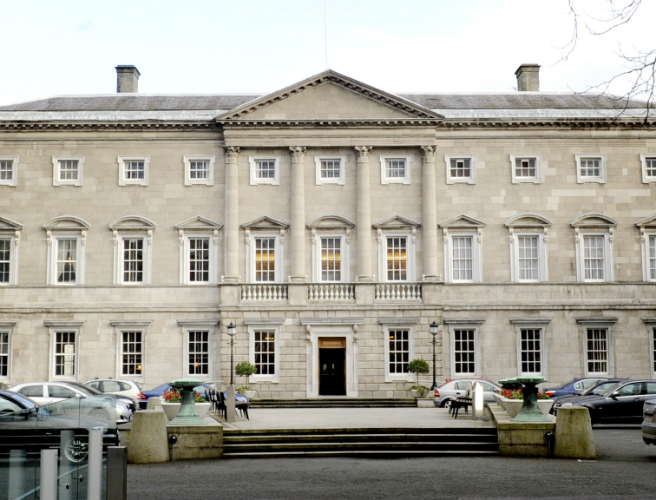
An Oireachtas committee will likely put a hold on a Private Members’ bill that would have made assisted suicide legal in Ireland, according to the author of the bill. However, he says the topic could now go before either a special Oireachtas committee or a Citizens’ Assembly meaning it is still very much on the cards.
People Before Profit TD for Dublin Mid-West, Gino Kenny, said in a tweet that it’s becoming evident that the Justice Committee will not be recommending the progress of the Dying with Dignity bill.
The far-left TD added: “This is a complete prevarication of the issue and the bill. There was no policy scrutiny just a legal opinion which could have been overcome. A shambolic process”.
His bill would permit anyone likely to die from an illness to avail of assisted suicide no matter how far from death they actually are.
Serious legal concerns had been raised about the bill by the Office of Parliamentary Legal Advisers.
A confidential memo to the Justice Committee raised a range of issues including that parts of the Bill would be vulnerable to a constitutional challenge due to an “overdelegation of ministerial power”.
It identified “ambiguities and serious drafting errors” in several sections of the Bill, containing flaws that could render them vulnerable to challenge before the courts.
It also found that it had no enforceable compliance or offence provisions, “which is hugely problematic for this legislation given the statements from both the Irish Supreme Court and the European Court of Human Rights on the utmost importance of safeguards in legislation such as this”.
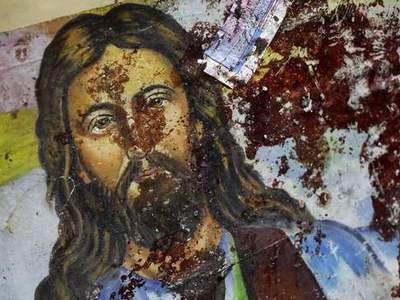
A pastor who assists displaced communities in southern Kaduna, Nigeria, has received a death threat on the same night local communities were attacked by armed assailants thought to be Fulani herdsmen.
Pastor Gideon Agwom Mutum received a threatening letter on Monday, accusing him of insulting the Fulani tribe in the media. The author claimed they would kill him and his family “like goats”.
“We know your house, your church and even your family.
“Your movement is known by us. Tell your people to get ready for us. We will come unless you go back and tell the world you are sorry for all that you have said concerning the Fulanis. We are coming. Nigeria is our land. Southern Kaduna is our land,” the letter warned.
The Southern Kaduna Peoples Union (SOKAPU), of which Pastor Mutum is a member says the recent attacks have left 33 people dead, 215 homes destroyed, and four churches demolished.
Christian Solidarity Worldwide is calling on the Nigerian Government to “address the threat posed by this militia swiftly and decisively, prioritising the protection of vulnerable individuals and communities, and bringing attackers to justice”.

Half of teenage mothers in Scotland opted to abort their babies in 2019, Public Health Scotland (PHS) figures have revealed.
Of the 3,814 women under 20 who became pregnant, 50.3 per cent had an abortion.
The PHS report noted how the proportion of teens opting to abort had “increased gradually over time and is now the more common of the two outcomes”.
Responding to the report, The Christian Institute’s Scotland Officer Nigel Kenny said the statistics were “nothing short of a tragedy”.
Earlier this year, PHS announced that there were 13,815 abortions in Scotland last year – the highest in the country since records began in 1968.

The Minister was speaking during a debate on the Health Amendment Bill, which restricts access to indoor dining to those who have been fully vaccinated, or recovered from Covid-19, plus staff and children under 18.
Independent NUI Senator, Ronan Mullen said there is a fundamental injustice underpinning the Bill. “The notion of intergenerational solidarity, so extensively promoted by the Government when it suits, has been abandoned. A commitment made and restated by the Tánaiste as recently as four weeks ago that there would be no discrimination between the vaccinated and the unvaccinated has been cynically abandoned. All it took was a wave of the magic wand by NPHET for a set of apocalyptic projections to be accepted by the Cabinet virtually without question”, he added.
In the Minister’s summation at the end of the debate he said: “The only Senator who I will refer to directly is Senator Mullen. I will not take any lectures from Senator Mullen, who campaigned against gay marriage. He can keep his lectures on solidarity to himself”.
In a response on twitter, Senator Mullen said he “didn’t preside over a ‘health’ régime that caused the death of a little child in Holles Street, and fail to investigate and fail to apologise. I think my record on solidarity bears comparison with that of @DonnellyStephen”.