

In the space of just two days, almost all the ecclesiastical personnel of the apostolic prefecture of Xinxiang in China were removed when police forces arrested the bishop Msgr. Zhang Weizhu, seven priests and 10 seminarians.
Following the directives of the New Regulations on religious activities, the factory was closed and the director of the company, a Catholic, was arrested.
The apostolic prefecture of Xinxiang is not recognised by the Chinese government. As a result the activities of priests, seminarians and faithful are considered “illegal” and “criminal”.
The civil authorities believe that there are other seminarians who have managed to escape and are looking for them in the surrounding area.
Public security and police are going from house to house in search of them. If they discover that there are signs attributable to the Catholic faith (crosses, statues, sacred images, photos of the pope, etc.), the owners are fined and the objects seized and destroyed.
According to many observers, since the signing of the provisional agreement between China and the Holy See, the persecution of Catholics – especially the unofficial ones – has increased. For many faithful “the Agreement has been betrayed”.

Sex and relationships education that places the marriage of a man and a woman at the top of a family ‘hierarchy’ should not be permitted, even in Catholic schools, according to Sinn Fein’s education spokesperson.
Donnchadh Ó Laoghaire, TD, was commenting on the new RSE supplementary resource for Catholic primary schools called ‘Flourish’.
He told RTE’s Drivetime that the State effectively delegates the teaching of RSE to patrons and school management bodies, by offering a basic outline while schools fill in the blanks and teach through the prism of their ethos.
“What I don’t believe Irish parents want, is that RSE is being taught through this prism for 90% of children . . . there is a very clear statement there about a hierarchy of what a relationship should be, it should be between a man and a woman married”.
He added that it was “wrong” of the State to have delegated this task to school patrons and management bodies.
He said there should instead be a minimum standard that should be taught and that should include that “there is no ‘hierarchy’”.
He welcomed the current review of RSE by the NCCA, but fears that legislation protecting the “characteristic spirit” of schools might frustrate change.
He accepted that it is currently legal for Catholic schools to teach a program such as Flourish, but said “I wish that it was not the case”. He wants a far more prescriptive course from the NCCA and if other legislation were to block it, then that other legislation should be changed also.

So-called ‘hate speech’ laws can be used to diminish the presence of religion in public life, according to the Catholic bishop of Down & Connor, Noel Traenor.
Responding to comments on the same topic from a Vatican official, he told The Irish Catholic: “Where faith and religion are either eroded in the public square or banished from it, they can sometimes be banished by what is effectively hate speech, total misrepresentation of religion and faith.”
He said that the equation of religious language with intolerance is problematic.
“We must be attentive lest the limitations of freedom of speech are used in a way that would erode the proper and appropriate place of religious faith or the expression of a religious voice from the public square,”
Msgr Janusz Urbanczyk, permanent representative of the Holy See to the Organisation for Security and Co-operation in Europe (OSCE) said he regretted “many preoccupying instances where private individuals and public officials or bodies seek to frighten or intimidate Christians, Jews, Muslims and members of other religions from expressing their faith-based opinion in the public sphere and hinder them from taking an active part in society”. This intolerance, he said, is often advanced through accusations of “hatred” or “hate speech”, equating religious beliefs to hate and thus depicting religion as a problem.

Critics of a new Catholic RSE resource called ‘Flourish’ should not make children into a battleground in the conflicts of others, according to the Catholic Archbishop of Dublin.
Speaking on RTE’s Drivetime, Dr Dermot Farrell said parents are the primary educators of their children, a role which teachers respect, and it is not justifiable to replace parents in that role.
“Sometimes what happens here is, I think—its important that we try to serve the children and that they are not made into a battleground in the conflicts of others.”
RTE presenter, Sarah McInerney said “Absolutely, I think everyone would agree on that”, to which the Archbishop replied: “But not everyone is agreed with it”.

A Federal Court in California has approved a settlement of a religious freedom lawsuit on behalf of a church and its related ministry against Gov. Gavin Newsom (D-California).
The implication of the settlement is that it is the first statewide and permanent injunction in the country against COVID-19 restrictions on churches and places of worship.
It is also the first time a governor will have a permanent injunction against him on behalf of houses of worship.
In addition to easing statewide restrictions that pertain to religious gatherings, California will now also pay $1.35 million to compensate the legal group that filed and won the lawsuit.
In California churches and other place of worship were fined over $3 million. Due to the injunction those fines will now all be revoked.
On May 14, the Honorable Jesus G. Bernal wrote in part: “[C]hurches and places of worship may never again have discriminatory restrictions placed on them that are not equally applied to a long list of ‘critical infrastructure’ or ‘essential services’ as outlined in several Supreme Court precedents cited in the settlement agreement.”
The judge’s order further clarified that it did “not prohibit the State from issuing recommendations, best practices, precautions, or other measures, as long as such promulgations make clear to the public that they are voluntary and not enforceable.”
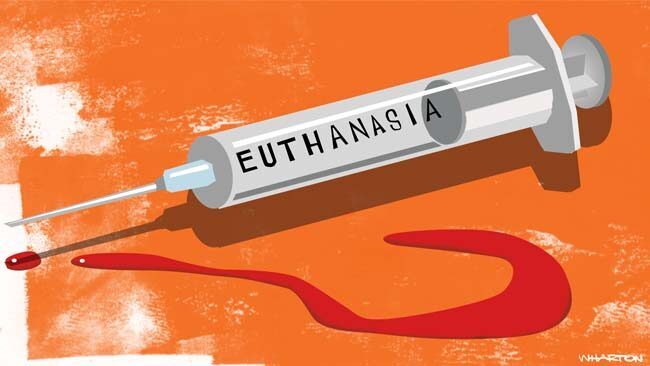
The availability of euthanasia in the Netherlands has over time fueled demand for it, according to one former supporter of the law.
Theo Boer is a Professor of healthcare ethics in Groningen and a former member of a euthanasia review committee.
He agrees with proponents that the law is well-monitored, but he disagrees with its significance.
In a letter to the Irish Times on Wednesday, he said in 1972 his own (Protestant) church was the first worldwide to support it.
“However, with hindsight, many regret supporting the law, including me. Since 2006, the numbers have increased incessantly. Last year 7,000 people received euthanasia, and in some neighbourhoods one in every five deaths is preceded by euthanasia. Is this the “last resort” we once advocated?”
Given the excellent quality of palliative care in the Netherlands, he says there is only one explanation: “supply creates demand”.
“Right-to-die societies have successfully made us believe that euthanasia is the most, if not only, dignified death. Let’s not romanticise the Dutch experiment”, he adds.

A scientist who used the Crispr gene-editing technology in an experimental way to edit the genes of two babies put the children at risk of harm and outraged colleagues around the world.
In an interview with the Irish Times, Henry T Greely, director of the Stanford Center for Law and Biosciences at Stanford University, said He Jiankui, a scientist from China, “played out the Frankenstein myth. He is Victor Frankenstein, this guy that nobody knows about, who is doing something in secret, who does something that shocks the world, and does it apparently for no good reason”.
“There is outrage over the risk the Chinese scientists put these babies under and definitely damage to the reputation of science”, he said.
Greely’s new book “Crispr People: The Science and Ethics of Editing Humans” has just been published by MIT Press. He said regarding the case of the world’s first Crispr babies, “we are really in the dark”.
“The scariest thing about writing this book was that I became sure of almost nothing in terms of what actually happened. The testimony we have – the evidence we have – all comes from Jiankui and his colleagues, and from around four press releases issued by the official Chinese news agency. And really, that’s about it.”
“It’s similar to what we’ve seen more recently with the WHO’s investigation into the source of the Covid pandemic. The Chinese government are just not very transparent”.

The constitutional challenge to the restrictions on public worship should proceed despite the most onerous measures having already been lifted.
That’s according to a prominent expert in Constitutional law at Trinity College Dublin.
On Tuesday, Judge Charles Meenan said he saw no point in hearing the case, but he agreed to consider submissions on whether he should rule it moot or not and gave the parties until Jun 22nd to return to court.
Weighing in on the matter, Professor David Kenny said the case should proceed for numerous reasons: “1. the State agreed it wouldn’t raise mootness; 2. there is no guarantee these restrictions won’t be reintroduced; 3. using mootness like this would make almost any COVID regs impossible to challenge… on constitutional grounds as you couldn’t possibly get a full hearing in time; and 4. the fact that the issue is now moot doesn’t at all impact on the court’s ability to judge it’s constitutionality or proportionality. This case should go ahead”.
Maltese President George Vella has said he would rather resign than sign a bill concerning abortion.
“I will never sign a bill that involves the authorisation of murder,” Vella said in comments to Net News, stating that his position on the matter has always been clear.
“I cannot stop the executive from deciding, that is up to Parliament. But I do have the liberty, if I don’t agree with a bill, to resign and go home, I have no problem doing this.”
Vella, who is a doctor by profession, has frequently spoken out against abortion. Asked whether there were any exceptions where one might consider abortion permissible, Vella said there were no half measures to murder.
“You have either killed or not killed, there can be no half death. I’m very clear, there are no ifs and buts.”
Last week independent MP Marlene Farrugia presented a bill to parliament calling for the decriminalisation of abortion, a move lauded by pro-choice activists and condemned by pro-life organisations.

The bill by the liberal FDP was voted down 181 to 461, while the Green’s draft was defeated 118 to 456. Both called for a system that would allow self-determination for those aged 14 and above.
Germany already allows for a change of one’s legal sex, but activists complain that the process is onerous.
A person must show that he or she has lived for at least three years as their preferred gender and that there is a high possibility that this will not change. They also require two assessments from two different psychological experts that confirm that it is a serious request. After that, they have to apply to a judge and if everything is approved, the change can proceed without requiring any sex reassignment surgery.
Trans identified males are already competing in women‘s sports and have access to many women-only spaces.