

A High Court judge is considering whether to throw out a case by businessman Declan Ganley over a Covid-19 prohibition on religious worship as the restrictions have now lapsed.
Mr Justice Charles Meenan has said he sees no point in fixing a hearing date for the action as he considered it to be moot now.
However, he agreed to receive submissions from both sides on whether the case should continue regardless.
The matter will return to court “for mention” on June 22nd where he is expected to issue his ruling.
The case was first taken last November. In December, the question of mootness was raised when the ban on public worship was briefly ended, but the case was allowed to continue.
Counsel for Mr Ganley said the State then took some four months to put in its evidence by which time the regulations which replaced the ones initially challenged had also lapsed.
There is no guarantee there will not be further lockdowns and Mr Ganley has been very prejudiced by how the State has gone about the litigation, he added.
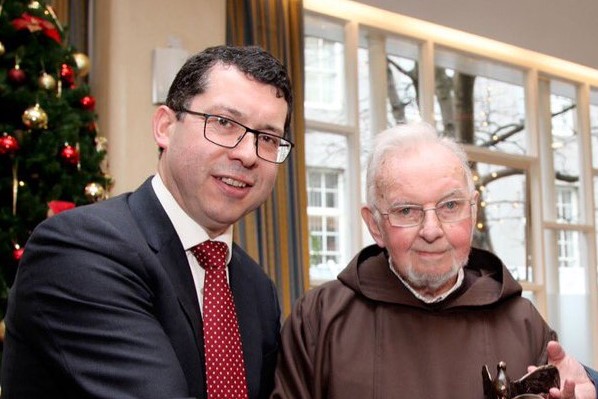
A Christian ethos in education can be a help rather than a hindrance in the fight against bullying, an Oireachtas committee has heard.
Independent NUI Senator Ronan Mullen was speaking at a session of the Oireachtas committee which focused on bullying and the impact on mental health.
He said he disagreed with attempts to draw a “causal link” between RSE in schools – where it did not meet the aspirations of some students and parents – and bullying.
The Christian Gospel “has provided much of the inspiration and the rationalisation of so much that we take for granted as being necessary for an education system, particularly in the whole area of inclusion”.
He said while the ethics around human sexuality will always be contested, it remained that the Christian gospel was one of unconditional love and inclusivity.
“It seems to be that they are among your biggest allies in the fight against bullying and there is a real danger of demonising them if you portray their ideas and values as somehow causative of bullying.”

There are grave concerns that some “Do Not Resuscitate” (DNR) notices were invalid and could have cost lives.
Aontú Leader & Meath West TD Peadar Tóibín raised the issue after speaking with many concerned families and constituents.
He said he found it deeply concerning that there are increasing numbers of families alleging that DNR notices have appeared in the medical files of their family members despite never having given their consent.
“This raises serious question as to how this seems to have happened with far too much regularity to be accidental. Is there a lack of clear guidelines or protocol around the consent required? Or, are medical personnel taking matters into their own hands in terms of DNR notices? One family spoke to me, told me how the Mater Hospital had recorded in their mother’s medical file that their mother should not be resuscitated if the circumstance should arrive. However, this consent was not given by any of those family members. When the matter was raised with the Mater Hospital, they stated DNR consent had been discussed with the family. The family dispute this and claim it never was discussed. How can there be such a divergence in accounts of that consent when it comes to such a fundamental issue such as whether or not to save a person’s life or not?”
“How widespread is this issue? Why is it occurring? How many lives have been lost because a DNR Notice was incorrectly inserted in their medical file? There needs to be a comprehensive review of these allegations to ensure that lives are not lost against a family’s wishes.”

Family structure has a significant and consistent relationship with adolescent behaviour, with poorer outcomes for those in lone-parent families or families that experienced separation, according to a new report from the ESRI.
The ‘Risk and Protective Factors in Adolescent Behaviour’ Report examines the role of family, school and neighbourhood characteristics in (mis)behaviour among young people.
It found a significant pattern of difference between boys and girls: “Marked gender differences were found in the types of behaviour analysed. Males were more likely to display externalising, antisocial and school (mis)behaviour; females had higher levels of prosocial behaviour but were more likely to internalise difficulties”.
The Report noted that while difficulties were found to be more prevalent among young people from families with lower levels of education and who had experienced financial strain during the last recession, it said “there were few consistent relationships between family advantage (measured in terms of social class, parental education and income) and school-based or antisocial behaviour”.
However, it said: “Family structure emerged as having a significant and consistent relationship with adolescent behaviour, with poorer behaviour across all domains for those in lone parent families or families that experienced separation during the young person’s adolescence. This pattern held even taking account of the socio-economic characteristics of these households and was not fully explained by other factors”.

The US Supreme Court is set to hear a major abortion case that will give the justices an opportunity to reconsider the precedent set by the landmark Roe v. Wade and Planned Parenthood v. Casey decisions.
The Court on Monday announced it would examine a Mississippi law passed in 2018 that bans abortions after 15 weeks with limited exceptions.
The law was blocked by the 5th U.S. Circuit Court of Appeals as under existing precedent, states may not ban abortions before foetal viability, which is typically around 22 weeks or later.
The Justices agreed to hear only one of three parts of an appeal—whether all pre-viability restrictions on abortion are unconstitutional—setting aside two broader questions.
However, legal analyst Ed Whelan said the Court certainly did not foreclose itself from determining wider issues such as what standard of review applies to Mississippi’s law—whether the validity of a pre-viability law “should be analyzed under an ‘undue burden’ standard or a ‘balancing of benefits and burdens’”.
“Indeed, it’s difficult to see how the Court could decide the case without addressing that threshold issue,” he said.
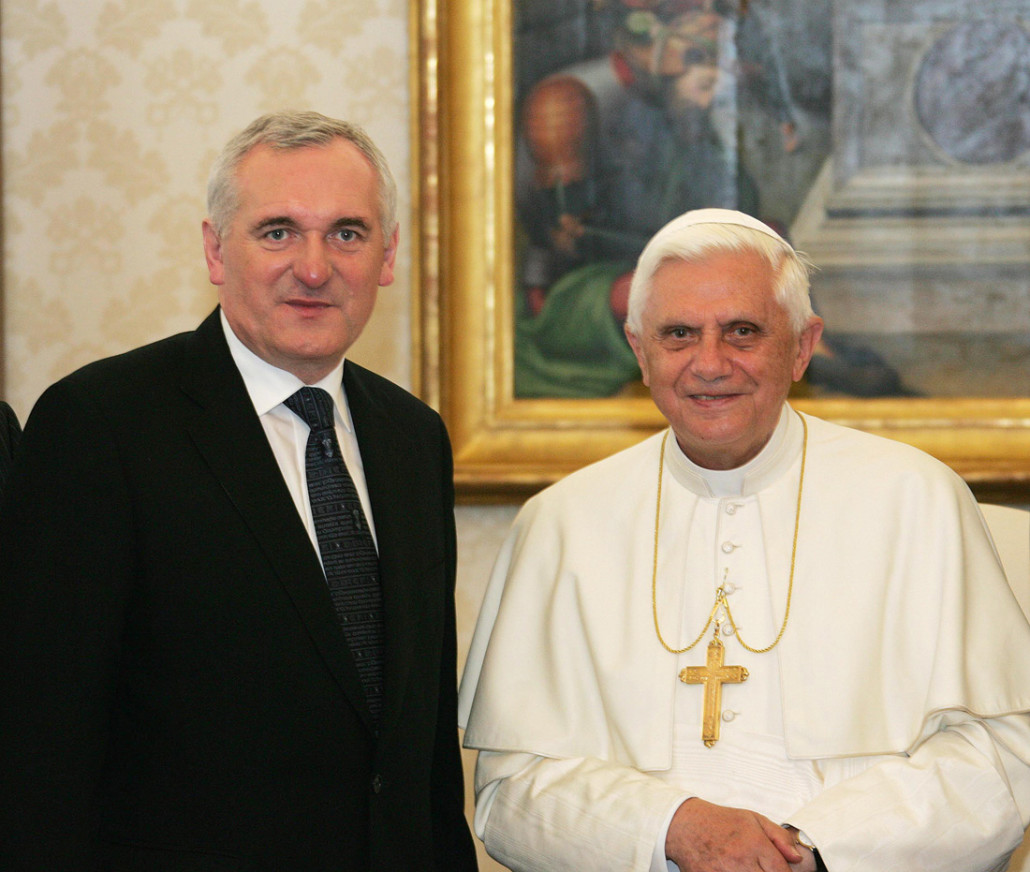
People should remember the contribution religious orders have made to Irish education and other services, according to former Taoiseach Bertie Ahern.
Speaking on a Podcast with Martina Purdy and Elaine Kelly, Mr Ahern spoke of the extensive religious presence in his native Drumcondra in Dublin as he grew up.
Asked what his parents would think of the Ireland of today, Mr Ahern said he thinks they would have difficulty with the lack of recognition religious orders get for the work they’ve done and the institutions they’ve put in place.
“I think it’s important for people nowadays, and this is where my mother and father would have difficulty,” Mr Ahern said, continuing, “all of these religious orders and institutions ran very important services for the State, whether they were priests or whether they were students doing education.
“Where the Rosminian fathers are now is ChildVision, but they educated the people with visually impaired eyesight, but all of these things at one stage were run by religious orders and I think sometimes people forget that we mightn’t have a lot of these educational institutions or services if it wasn’t for religious orders,” he said.
“I think people should remember that.”
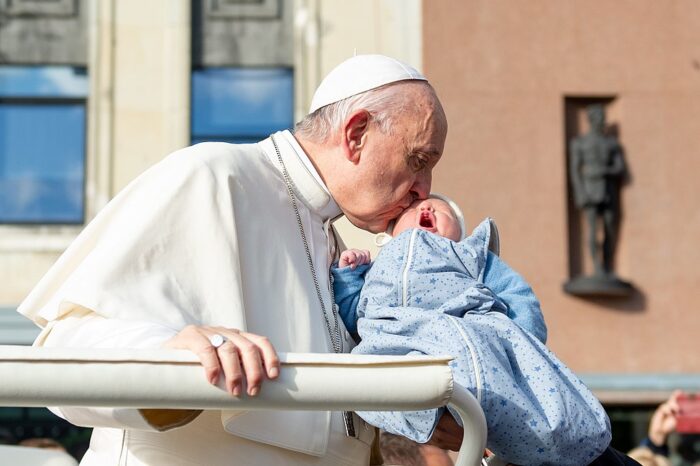
Pope Francis urged Europeans to see children as a valuable gift.
Speaking at “The General State of the Birth Rate” event in Rome on Friday, he said the very low number of births and the appalling numbers of the pandemic call for change and responsibility. The birth rate in all European countries, including Italy is well below replacement level.
He encouraged people to instill in the young a desire to pursue their dreams, to sacrifice themselves for others, and to do good in the world.
Sometimes, he said, the message that is transmitted is that “fulfillment means making money and success, while children seem almost a diversion, which must not hinder their personal aspirations.”
“This mentality is gangrene for society and makes the future unsustainable,” he underlined.
The live-streamed event included presentations from company executives, journalists, actors, athletes, and Italian political leaders, including Prime Minister Mario Draghi, reflecting on the problem of Italy’s birth rate, which is one of the lowest in Europe at 1.24.
In his address, Pope Francis said that “if families are not at the center of the present, there will be no future; but if families restart, everything restarts.”

A Vatican letter to the US Bishops on how to respond to pro-abortion politicians who present themselves for Communion presents a roadmap for taking a tougher line, according to one prominent commentator.
Cardinal Luis Ladaria Ferrer, prefect of the Congregation for the Doctrine of the Faith, wrote to USCCB president Archbishop Jose Gomez about the U.S. bishops’ plans to address ‘Eucharistic coherence’, and specifically the question of the public witness of Catholic politicians, like President Joe Biden, who make political capital out of their religion, while driving policies which go directly against Church teaching on issues like abortion.
Canon Lawyer, Ed Condon, of the Pillar says despite widespread media presentation of Ladaria’s response to Gomez as a slap-down, “reading the full text presents a more rounded picture”.
Rather than proposing that they drop the subject, Ladaria actually suggests that the bishops’ engage in “extensive and serene dialogue” and begin with basic principles:
“The bishops should affirm as a Conference,” wrote the cardinal, “that ‘those who are directly involved in lawmaking bodies have a grave and clear obligation to oppose any law that attacks human life.’”

The UK’s largest grouping of Evangelical Churches has welcomed the announcement of a Government consultation on a proposed legislative ban on so-called ‘conversion therapy’.
By contrast, groups seeking the ban expressed dismay.
Lynas added that a clear definition of conversion therapy “would really help everyone because often, we’re arguing at cross purposes by different understandings.”
“There are people already contacting us saying they’re concerned about praying for somebody else, because it could fall under this or be misinterpreted so we’re asking for clear guidance to make sure that people can pray with one another.”
While the ban was promised in 2017, Lynas believes the Government have discovered that a legislative prohibition would be much more difficult to effect than they imagined.

A bill to ensure unborn babies undergoing late-term abortions are given pain relief was introduced in the Dáil yesterday by Independent TD Carol Nolan.
Co-sponsored by ten other TDs, the ‘Foetal Pain Relief Bill 2021’ seeks to ensure that no baby dies experiencing excruciating pain or discomfort from the abortion procedure.
Speaking in the Dáil, Deputy Nolan said: “The infliction of unnecessary and avoidable pain on human beings – especially on those with no capacity to resist – is something all compassionate societies should seek to avoid”.
She added: “Medical science has known for some time that unborn babies can experience pain from 20 weeks gestation. However, an increasing body of scientific research from about 2007 onwards has suggested that the brain and nervous system develop at a rate which means that unborn babies may feel pain as early as 13 weeks. The latest such study was published just last year in the Journal of Medical Ethics.”
Commenting on the introduction of the new bill, Síle Quinlan of the Pro Life Campaign said it is a humanitarian bill that should be supported by every parliamentarian of goodwill.
“The new bill won’t end late-term abortions, but it will introduce a modicum of compassion towards unborn babies whose lives are being ended by abortion”.
She added: “There is absolutely no justification in having a law (Animal Health and Welfare Act 2013) that compels vets to administer pain relief to animals during any procedure that might cause them pain or distress and not having a law that ensures unborn babies are at least treated with the same mercy”.