
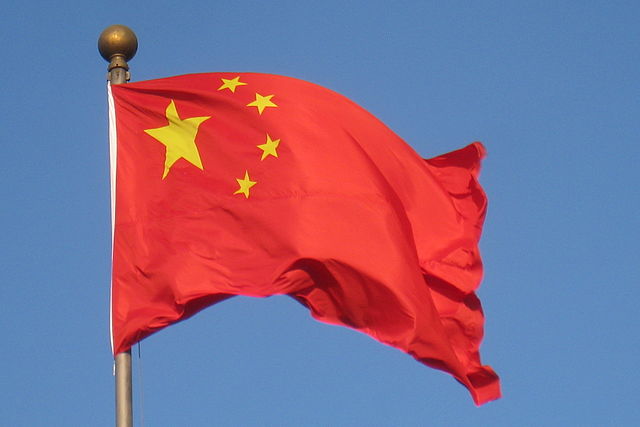
Across much of China, the authorities are encouraging women to have more children, but in the Xinjiang region, China is forcing them to have fewer, tightening its grip on Muslim ethnic minorities and trying to orchestrate a demographic shift that will diminish their population growth.
Birthrates in the region have already plunged in recent years as the use of invasive birth control procedures has risen, according to reports by a noted researcher, Adrian Zenz, along with The Associated Press.
While the authorities have said the birth control procedures are voluntary, interviews with more than a dozen Uyghurs, Kazakhs and other Muslim women and men from Xinjiang, as well as a review of official statistics, government notices and reports in the state-run media, depict a coercive effort by the Chinese Communist Party to control the community’s reproductive faculties. The authorities pressured women to use IUDs or get sterilized. As they recuperated at home, government officials were sent to live with them to watch for signs of discontent; one woman described having to endure her minder’s groping.
If they had too many children or refused contraceptive procedures, they faced steep fines or, worse, detention in an internment camp. In the camps, the women were at risk of even more abuse. Some former detainees say they were made to take drugs that stopped their menstrual cycles. One woman said she had been raped in a camp.
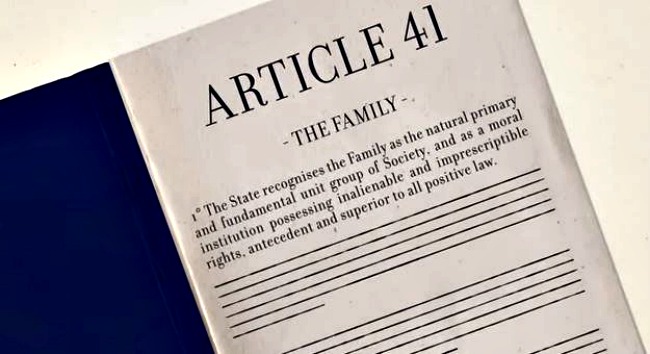
The Tánaiste has said the Constitution’s understanding of family as based on marriage is out of date and should be ‘modernised’.
Leo Varadkar was commenting in the Dáil yesterday on the report from the Citizens’ Assembly on gender equality.
He said as far as he was concerned, “the definition of family in Bunreacht na hÉireann, the 1937 Constitution, is out of date”.
“It is based on a traditional, more Christian or Catholic view of a family, which is not wrong. It is a man and a woman, although that was changed to allow two men and two women. However, it is based on two married people, as it were, with children. That is what constitutes a family under the Constitution. If that were ever true, we all know it is not true anymore. There are many different forms of families in our society, and there is great diversity in what family means. I believe we should update, modernise and change that definition”.
He was responding to a request from Labour’s Alan Kelly on behalf of a man who lost his partner and now wants to claim the widower’s allowance, even though that is only available after marriage.
Mr Kelly said the couple “did not get around to getting married”.
Mr Varadkar said he would ask the Minister for Social Protection to see if changes can be made to provide benefits in cases of long-term unmarried couples where one person dies.
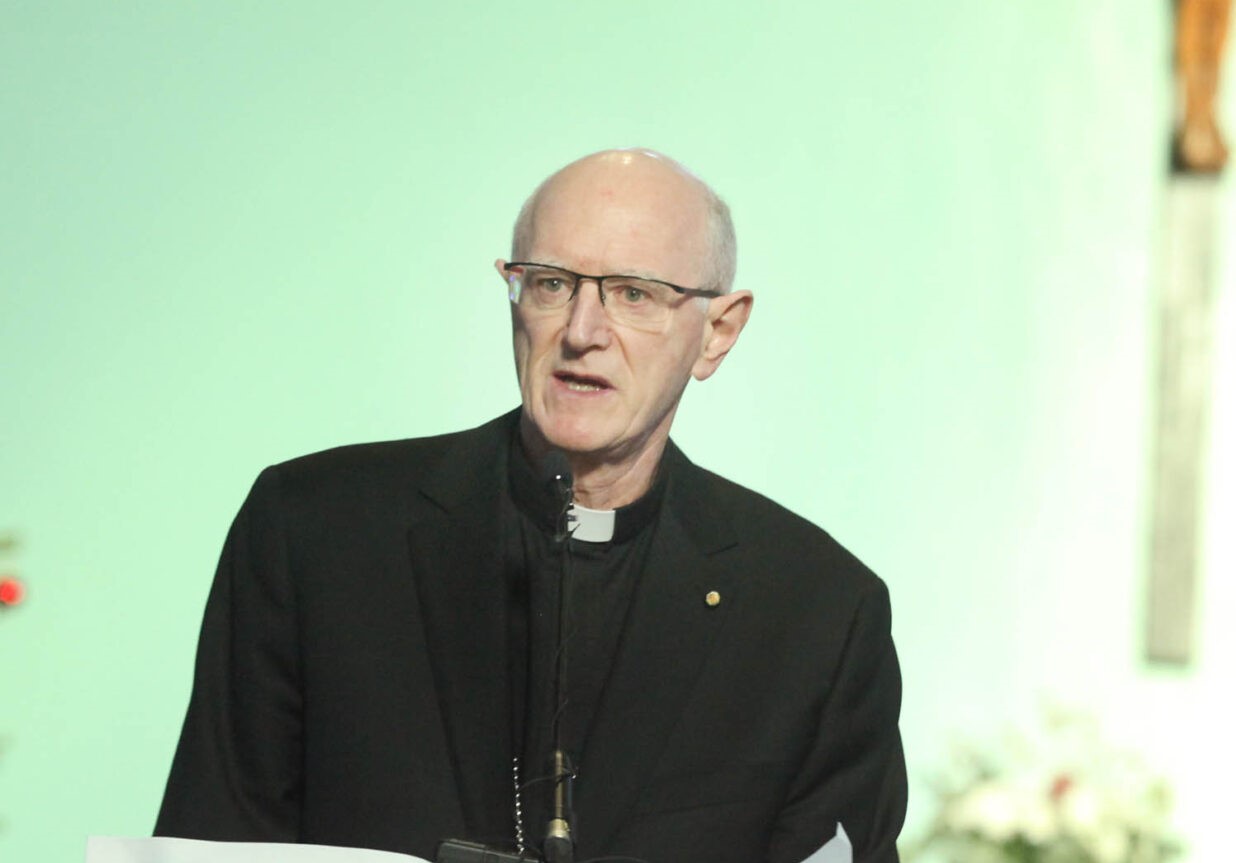
The Christian faith requires presenting young people with an understanding of marriage as being between a man and a woman, according to the Catholic Archbishop of Dublin.
Dermot Farrell commented on a new RSE resource for Catholic primary schools called ‘Flourish’ while addressing the Catholic Primary Schools Management Association.
He said sacramental marriage between a man and a woman is one way of flourishing in life.
“This does not mean that sacramental marriage in Church is for everyone, but our faith asks that we put before our young people and their families, such an understanding of marriage as part of their formation for life, and in the faith”.
He said that ‘Flourish’ affirms that every human being is made in the image and likeness of God and is loved by God as they are.
He added: “The resource material clearly states that any young person grappling with questions around their own gender identity or sexual orientation is be treated with the utmost care and respect. Flourish addresses the issue of family type and acknowledges that love is at the heart of family life, no matter what type of family it is”.

People who are adopted will be able to access their birth certificates irrespective of the wishes of their birth mothers under a law to be introduced by the Government.
Access to birth certificates is to be facilitated by way of a mechanism where surviving mothers can register their consent or their opposition to being contacted, but cannot veto the process, Minister for Children Roderic O’Gorman said.
In cases where the mother has registered her opposition to being contacted, the person seeking their birth certificate will attend a meeting where the wishes of the parent will be outlined, and the need to respect the mother’s privacy rights will be emphasised, prior to the information being released.
There will be no sanctions for anyone who contacts their birth mother against her stated wishes, the Minister added.
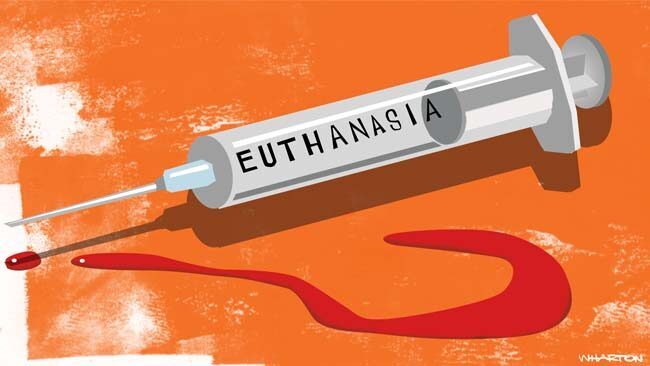
Germany has made a further step towards legalising assisted suicide after the country’s doctors’ association deleted from its code of conduct a ban on the practice.
Last year Germany’s highest court ruled unconstitutional a law that prohibited assisted suicide. Since then two separate draft Bills to legalise it are working their way through parliament. A final vote is expected before the end of next month.
The issue is particularly sensitive in Germany, given the Nazi regime murdered at least 300,000 people with mental and physical disabilities it dubbed “unworthy of life”.
German doctors held an emotional debate on the issue at their annual gathering on Wednesday. One camp urged the association to regulate the existing reality of assisted suicide in Germany, while another camp warned of “opening Pandora’s box”.
In a subsequent vote, a majority voted in favour of removing from their charter the sentence: “A doctor may not provide any assistance for suicide.”
The federation said it accepted its members’ “individual questions of conscience and no longer want to pursue this as breach of professional obligations”.

China’s new regulations for religious personnel went into effect May 1st, obliging those who hold any formal role in a religious group to pledge allegiance to the Chinese Communist Party and to resist foreign interference.
Many Catholic observers have voiced fear the new rules not only violate China’s agreement with the Vatican on bishops’ appointments, but that they make reconciliation between the so-called “underground” church and the official government-sanctioned church more difficult.
Initially published in November 2020, with a final draft released in February, the new rules provide for the creation of a national database containing information on religious personnel, including rewards and/or punishments they’ve received, and details on whether their ministry has been revoked.
The new rules stipulate that anyone exercising a religious function in China must “love the motherland, support the leadership of the Chinese Communist Party, support the socialist system, [and] respect the Constitution, laws, regulations and rules.”
Religious personnel are also required to “practice the fundamental values of socialism, adhere to the principle of independence and self-management of religion and adhere to the religious policy of China, maintaining national unity, ethnic unity, religious harmony and social stability.”
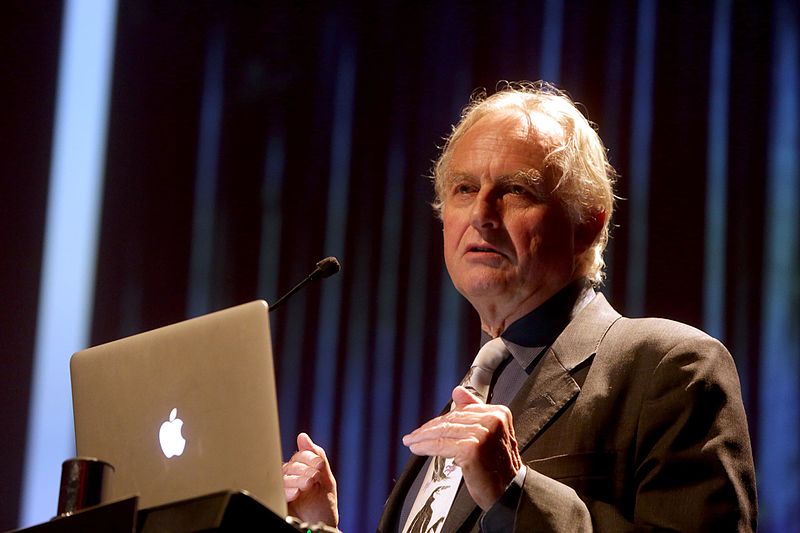
World famous author, Professor Richard Dawkins has defended past comments where he advised a woman it would be “immoral” to not abort a child with down syndrome.
Speaking to Brendan O’Connor on RTE radio 1 on Sunday, the atheist-scientist said using the word ‘immoral’ “was probably putting it a bit too strongly, but given that the amount of suffering in the world, probably does not go down, probably does go up, compared to having another child who does not have Down Syndrome, that’s what I meant”.
When asked how he “knows” that, he replied: “It seems to me to be plausible that if a child has any kind of disability, then you probably would increase the amount of happiness in the world more by having another child instead”.
But he admitted he had no “direct evidence” to back up that belief.
When asked what other imperfections he would screen out, he replied: “Well, I think deafness, blindness. It seems to me, to be … when you have the choice, when it is early in pregnancy and the foetus has hardly started to develop, almost everybody as a matter of fact does abort a child if it has an easily diagnosable disability”.
When again pushed on whether it would be “immoral” to not do so, he said he would take back that word, but added: “I think it would be wise and sensible to abort a child which had a serious disability which was diagnosed early in pregnancy. That is what almost everybody does in practice.“
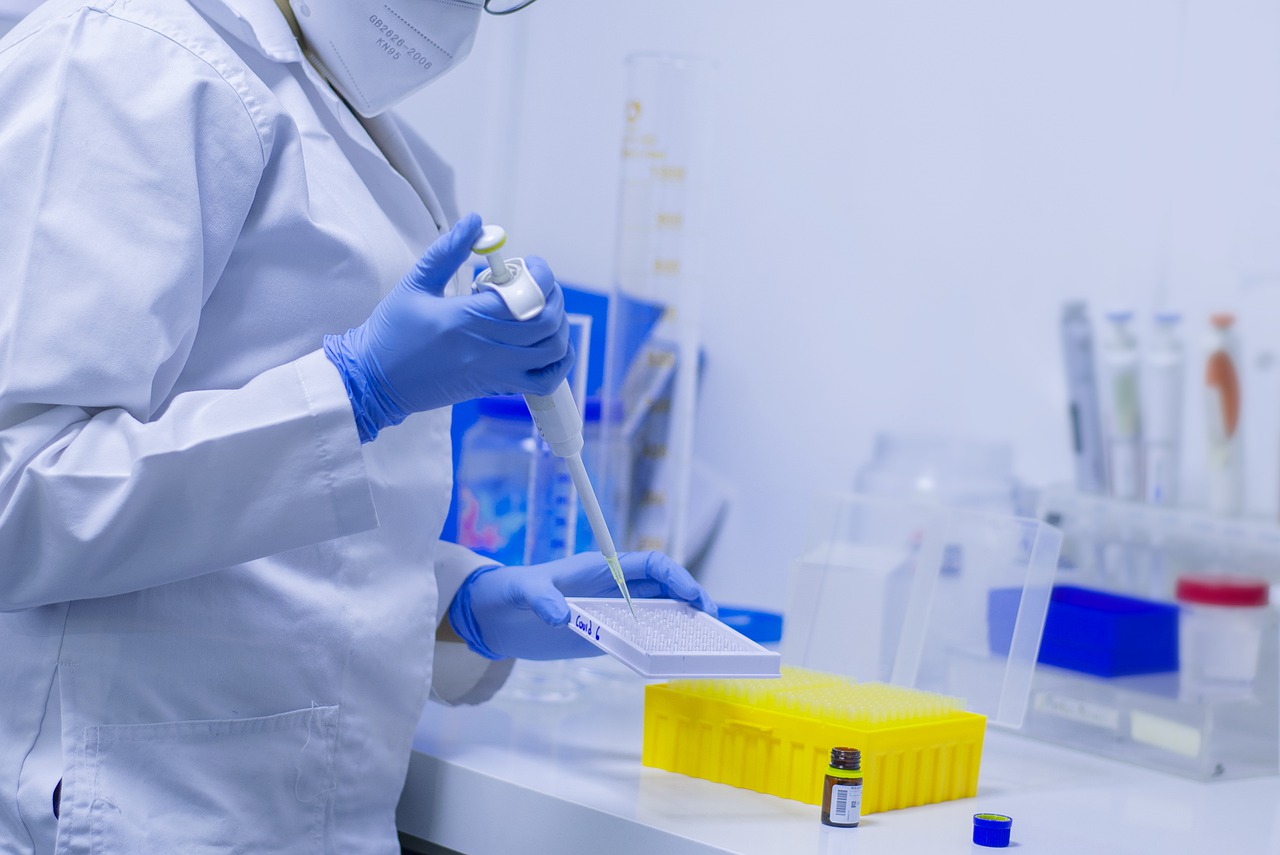
The generation of human-animal embryos is not prohibited by any legislation, a TD has discovered on the back of a parliamentary question concerning the procedure.
This comes after a team of American and Chinese scientists created a human-monkey embryos, some of which were kept alive for up to 20 days.
Laois-Offaly TD Carol Nolan asked the Minister for Health if “chimeric” human-animal hybrid embryos are subject to regulation in Ireland and heard that currently there is no specific legislation concerning this practice.
Deputy Nolan said she finds it “incomprehensible” that none should be in place and said it “must be addressed as a matter of urgency”.
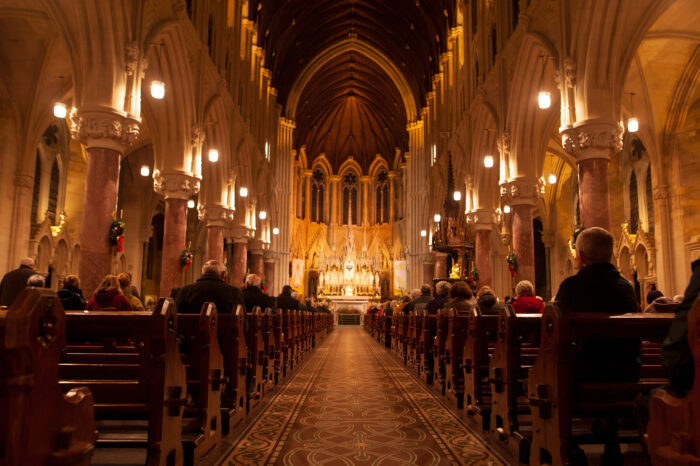
A parish priest has defended staging regular Sunday morning masses during the Covid-19 lockdown saying that no person has got the virus from attending.
Fr Willie Cummins, parish priest of Ennistymon, was speaking Sunday after 48 people attended 11am mass at the local Catholic church in the north Clare town.
There was one person in each row separated by two rows to the next person with the vast majority of mass goers wearing facemasks.
Fr Cummins has been saying mass publicly throughout the current lockdown, and he told the Irish Independent he would often have more than fifty people attending.
He told a reporter that people attending were not put at risk because of the sheer size of the building:
“Look at the size of the church. It is all sanitised and the doors are left open all day”, he said.
An Ennis man who is a regular at the 11am mass during the lockdown said he had no concerns over his health: “I’ve no worries. Absolutely none. It is a big church. We are all socially distant from each other. I never had a moment’s worry and I would have underlying conditions but I never had any concern in here. None whatsoever.”
The most recent Covid-19 figures for the north Clare electoral area that contains Ennistymon show it has one of the lowest Covid-19 rates in the country with fewer than five cases in the most recently fortnightly period to May 3.

Belgium has been challenged on the human rights implications of its euthanasia law at a meeting of the UN Human Rights Council in Geneva, Switzerland last week.
Undergoing a “Universal Periodic Review”, during which states are scrutinized on their human rights record and called to consider reforms, various states urged the government to improve treatment of the elderly and of persons with disabilities. Since legalization in 2002, the country has experienced a hundredfold increase in registered euthanasia deaths. In February 2014, the law was expanded to enable doctors to end the lives of children of any age.
Bangladesh was among those to raise concerns, asking that the Belgian government commit to “protect and promote the right of life of all people until natural death, without discrimination on the basis of age, disability or any other grounds.”
Additionally, Haiti urged the government to “ensure that patients receive palliative care of high quality.”
Egypt, in its general remarks, noted specific concerns about the legality of euthanasia being in violation of human rights treaties which affirm and protect every human being’s inherent right to life.