
Same sex couples in Northern Ireland are able to convert their civil partnerships into marriage from Monday of this week.
More than 30 couples are expected to make the change initially.
Under legislation that came into effect on Monday more than 1,300 same sex couples will be able to convert their partnerships into marriage.
Such civil partnerships have been legal in Northern Ireland since 2005 but it was only earlier this year that same-sex marriages were permitted.
That same legislation allowed complementary-sex couples to also engage in civil partnerships.
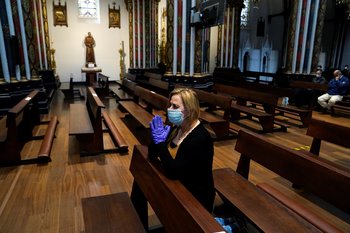
The HSE’s Health Protection Surveillance Centre (HPSC) have released updated COVID-19 guidance for religious services, along with a new set of guidelines specifically for “the holiday season”.
It sets out how “overcrowding” at mass or other religious services could be prevented over the Christmas period.
Recommendations included running additional services, increased stewarding of parishioners, and for churches to set up an “advance booking system where necessary” for places at services. Parishes have been successfully abiding by public health guidelines since March.
Mass should not exceed one hour, including the time it takes people to enter and exit the church, the guidance stated. There should be at least one hour between services to allow time to clean surfaces, and ventilate the church.
Due to the increased risk of Covid-19 transmission from people singing in proximity to others, the guidance stated carol singing will not be permitted at religious services.
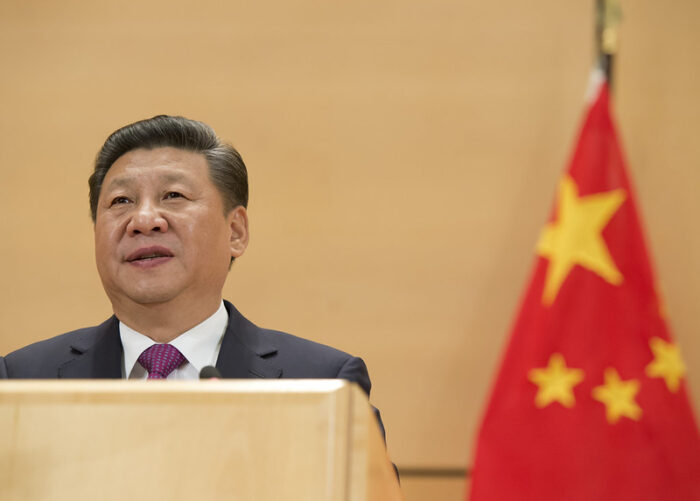
Ireland should take a lead role in raising the Chinese government’s campaign of “genocide” against the Uighur people when it takes its seat on the UN Security Council in January, the chairman of the executive committee of the Uighur World Congress has said.
Addressing a webinar organised by Senator Rónán Mullen, Omer Kanat called on Ireland to use its position on the Security Council to help his people, and referenced the Nazi extermination campaign against the Jews.
“The world said never again, but never again is happening now in China and no-one can claim they don’t know,” he said.
Mr Kanat said he “would like to ask Ireland to take the lead in organising support for a UN Security Council agenda item to propose a commission of inquiry.”
“Everyone should be shocked that such a resolution has not even been proposed so far.”
He added that Ireland should also support EU sanctions against Chinese officials and companies aiding surveillance and forced labour in Xinjiang, and ban government procurement from Chinese companies involved in the surveillance operation.
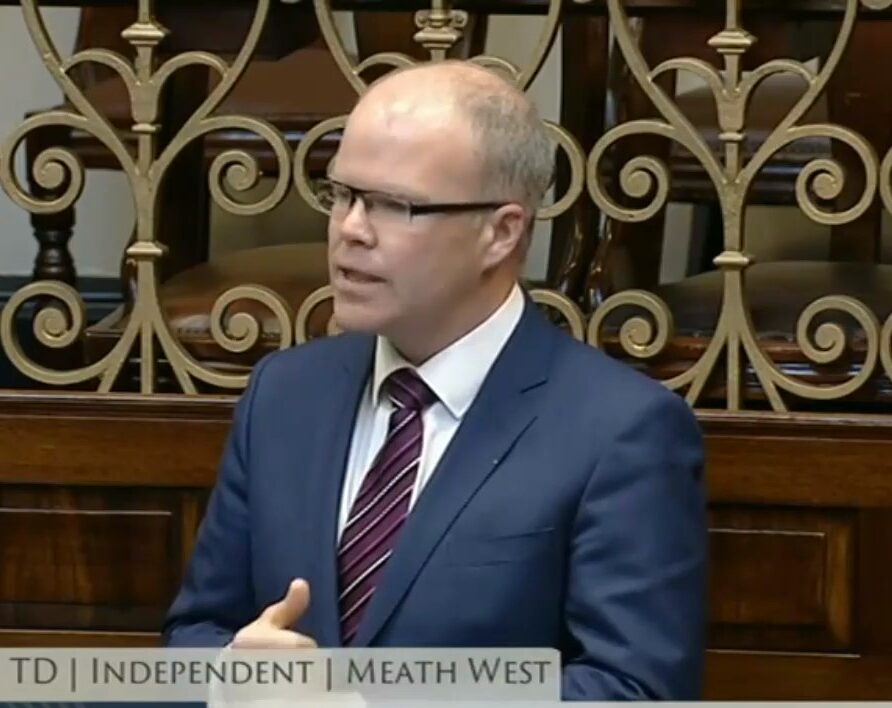
Several TDs demanded answers from the Government after a report indicated that babies who survive late-term abortions in Ireland are being left to die without receiving medical care.
They also pushed the Government to ensure that babies undergoing late-term abortions would be given pain relief.
Carol Nolan TD said his response was “disappointing” as “the Minister of State has not dealt with anything we raised here”.
Deputy Seán Canney said the Minister “dodged the questions”.
The leader of Aontu, Peadar Tóibín said the hundreds of words spoken by the Junior Minister “add up to nothing”.
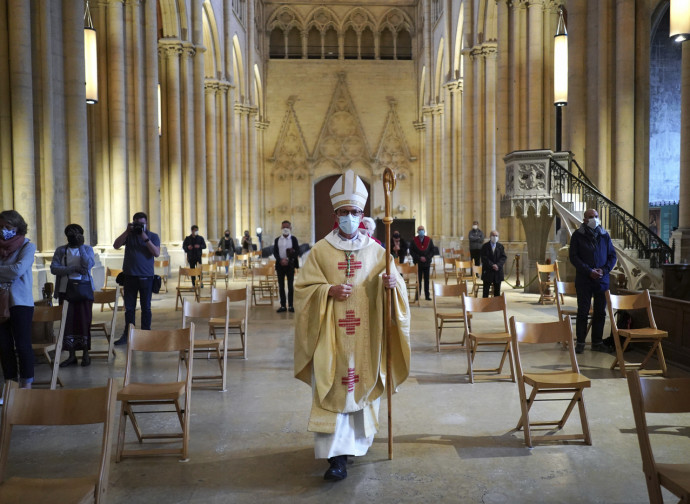
Geneva’s total ban on religious services and events has been suspended by the Swiss Constitutional Chamber of the Canton of Geneva.
The court deferred a decision on whether the ban is a violation of the right to freedom of religion after a group of concerned citizens filed a legal challenge against it. While the suspension does not serve as a final ruling, it indicates that the ban is not proportionate and means that religious services and gatherings are now permitted until a final judgment is handed down. The Chamber indicated that the likelihood of the case ultimately succeeding is “high or very high.”
“This ban is a serious violation of the fundamental rights Switzerland is committed to protect in a number of international human rights agreements,” said Jennifer Lea, Legal Counsel for ADF International, a global human rights group with offices in Geneva that supported the case.
“Religious freedom is a fundamental human right and governments seeking to restrict it carry the burden of proving the restriction is truly necessary and that a less restrictive approach would not work. Favouring commercial establishments over religious services is not only discriminatory but ignores the robust protection that exists in national and international law for religious freedom

The Catholic Bishops have appealed to people to “keep Christ at the centre of Christmas this year”.
Nonetheless, in a message at the conclusion of their winter meeting on Wednesday night,
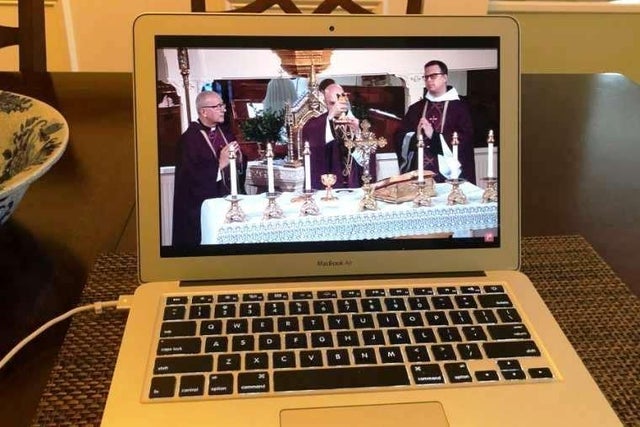
they described it as “impossible” for the usual large numbers to attend Christmas Masses later this month due to Covid-19 and have reminded people that such Masses would be “widely available over webcam”.
They “strongly encourage families to ‘tune in’ from the ‘domestic churches’ of their living rooms and join with those who are gathering in their local churches in welcoming the birth of the Christ-child”.
Christmas was “about more than just one day. Families are welcome to attend Mass at some point during the 12 days from Christmas Eve to Epiphany (January 6th),” they said.

The laws governing maintenance after divorce should drop a presumption of lifelong financial obligation, according to an expert in divorce and family law.
Geoffrey Shannon believes the issue of maintenance now requires a fundamental review, as it is still operating according to laws that date back to 20 years before the 1995 referendum.
“In the context of divorce, what you have is the marriage ceases, but your obligations continue indefinitely,” he says. “No single concept alone can govern the system of maintenance, yet we have a system where the focus is on lifelong spousal maintenance.”
A couple might only be married for four or five years, and have no children, yet the Irish system presumes the possibility of one spouse having a lifelong financial obligation towards the other.
“Really what I am saying is that the payment of maintenance between former spouses should facilitate a smooth transition from dependence to economic independence, ensuring that the dependent spouse is provided for until he or she is self-sufficient.”
Maintenance should be calculated in a way that reflects the duration of the marriage, and the commitments that are required.

Spain is set to become the sixth country in the world to legalise euthanasia.
It is expected that the law will be approved in the first quarter of 2021, despite unanimous opposition from the members of an agency of the Ministry of Health, Social Care and Equality, who declared that “solid health, ethical, legal, economic and social reasons” existed to reject euthanasia and assisted suicide.
A report presented by the Socialist Party’s Justice Committee, which outlines the law, has been approved with 22 votes in favour, although it was opposed by the Partido Popular and Vox, who already presented amendments which were rejected in the Congress of Deputies.
The proposal may be approved as soon as January. It would allow people to be euthanized in their own homes and not only at health centres.