

The Constitutional Court of Bulgaria is conducting a review of a new Social Services Act amid claims that the legislation’s provisions could marginalize the role of parents and allow unjustified and disproportionate interventions by the state in family life.
Some of these provisions are similar to laws in Norway, which have been widely criticized for eroding parental rights. Norway’s actions have resulted in a number of cases at the European Court of Human Rights.
The legal advocacy organization, ADF International, submitted a friend of the court brief highlighting the strong protections which exist in international law for parental rights.
Lidia Rieder, Legal Officer for ADF and one of the authors of the brief said that Bulgaria must ensure any new law respects the rights of parents. “Children deserve the loving care and protection of their parents. International law is clear that parents have the responsibility for raising children. The state should not interfere with those relationships unless there is clear evidence of a real risk of serious harm”.
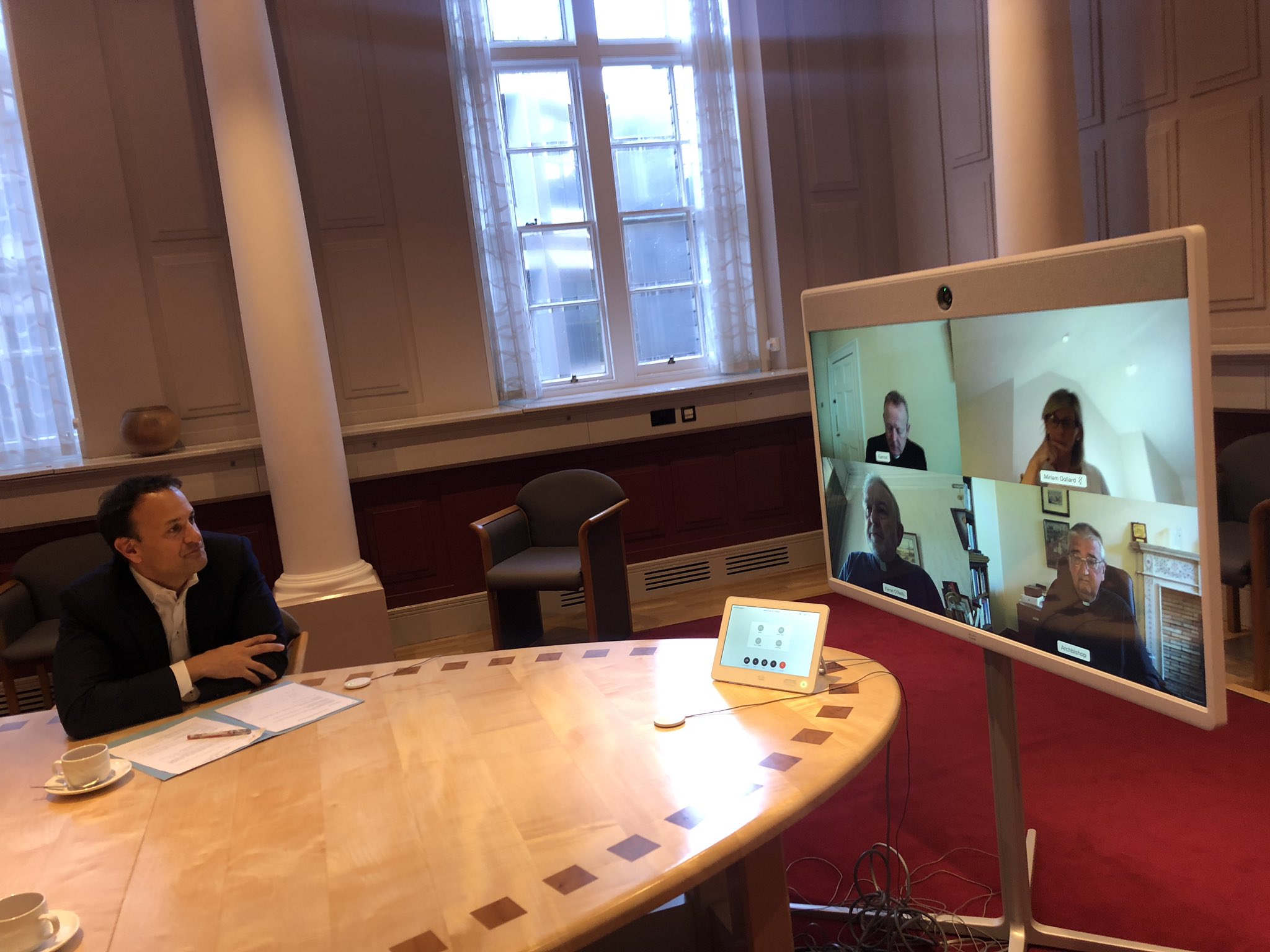
Leo Varadkar described the meeting as a good initial discussion “on how to resume Mass and sacraments safely over the course of the summer”.
Archbishop Eamon Martin, Archbishop Diarmuid Martin and Archbishop Kieran O’Reilly who are respectively President, Vice President and Secretary of the Irish Episcopal Conference, represented the hierarchy.
In a press release, after the meeting, they said the purpose was “to share thoughts on the reopening of places of worship over the course of the summer”.
“The Church shared information on the work that is being done at all levels to develop a national Church plan for the safe reopening and emphasised it will play its part in applying public health measures to ensure the health and safety of its congregation”.
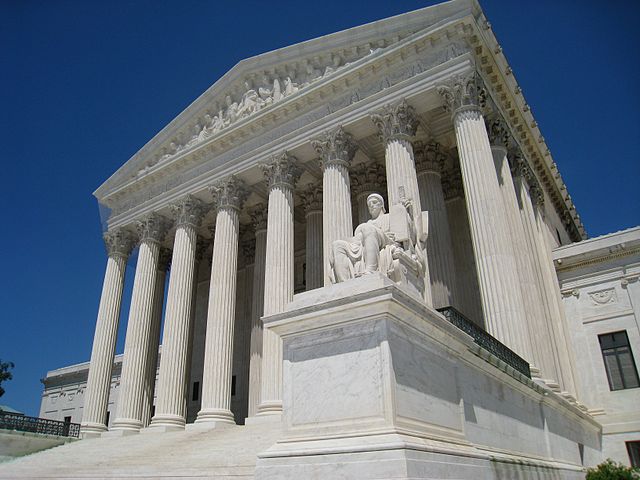
The US Supreme Court on Monday heard arguments for and against extending the Civil Rights Act’s “ministerial exception” to religion teachers at Catholic schools.
The exception protects the right of churches and religious ministries to select and terminate ministers without government interference.
The case at hand would decide whether religion teachers at two Catholic schools could be considered religious ministers.
In 2012, the Supreme Court had decided unanimously in the case Hosanna-Tabor v. EEOC that a Lutheran church school firing a teacher, who taught the full curriculum including religion, was exempt from the Civil Rights Act because the teacher was considered a religious minister.
At Monday’s oral arguments, Supreme Court justices questioned just how broad the ministerial exception was, and whether it could be argued to extend past religion teachers at religious schools to include science teachers or coaches at religious schools who lead the students in prayer.

Faith leaders from Dublin gathered online yesterday at noon for a special Covid19 prayer service.
The group included the Catholic Archbishop Diarmuid Martin and Church of Ireland Archbishop Michael Jackson as well as members of the Jewish, Muslim, Hindu, Sikh, Bahá’í and Zen Buddhist communities.
The service was a response to an appeal made Pope Francis. Speaking earlier this month, the Pope announced that “[He had] accepted the proposal of the ‘Higher Committee for Human Fraternity’ for believers of all religions to unite spiritually this 14th May for a day of prayer, fasting, and works of charity, to implore God to help humanity overcome the coronavirus pandemic”.
The “Higher Committee for Human Fraternity” was established at a Conference held in February 2019 on the occasion of the visit Pope Francis and His Eminence Dr Ahmad At-Tayyeb, Grand Imam of Al Azhar Al Sharif to the United Arab Emirates to discuss the promotion of human fraternity and world peace.
The Dublin service was coordinated by Mr Adrian Cristea of the Dublin City Interfaith Forum.
Ending the widespread stay-at-home orders under the coronavirus pandemic would align with Catholic social teaching and respond to the needs of vulnerable people, including the young and the poor, two Catholic economists said.
Government regulations generally are developed “with the interests and lifestyles of the upper class in mind,” while poor people “do not have a seat at the regulatory table, said Casey B. Mulligan, professor of economics at the University of Chicago, during an online event on May 5th organized by the Lumen Christi Institute at the university.
The economic costs of such regulatory actions to poor people “are getting neglected and the benefits, to the extent there are benefits, are going to a very different group,” said Mulligan, former chief economist of the White House Council of Economic Advisers.
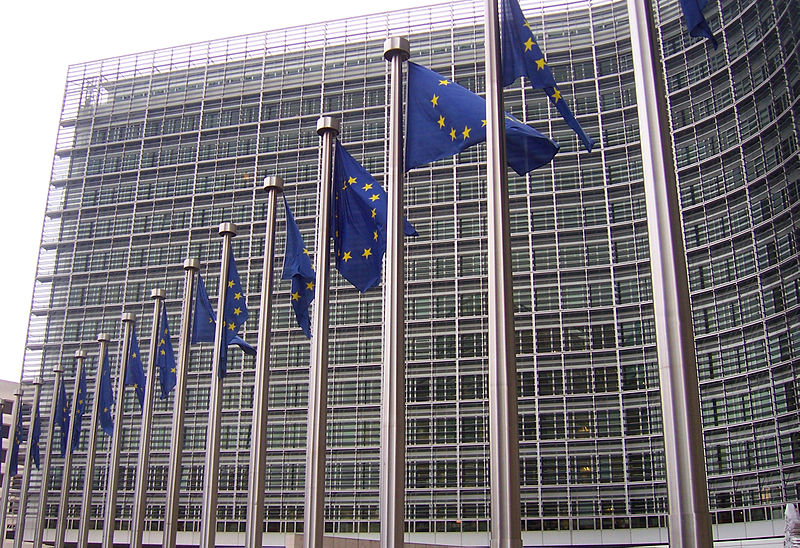
The EU should do more to protect the fundamental right to religious freedom across the globe.
That’s according to an open letter from international religious freedom experts.
The letter urges Ursula von der Leyen, President of the European Commission, to continue the mandate of the Special Envoy for the promotion of religion or belief outside the EU, a role created by the former Commission in 2016. Participants of the International Religious Freedom Roundtable signed the letter requesting the extension of the position. The letter also highlights the increasing attacks on freedom of religion or belief all over the world.
“Nobody should be persecuted because of their faith”, said Kelsey Zorzi, Director of Advocacy for Global Religious Freedom at ADF International.
“The role of the Special Envoy for the promotion of religion or belief outside the EU has been vital in standing up for those who are unable to freely practice their faith. In a time when freedom of religion is specifically threatened and violated, roles such as this one must be strengthened and not cancelled. Through the Special Envoy, the EU can lead international efforts in protecting those persecuted for their faith and continue being a leading voice on universal human rights”.
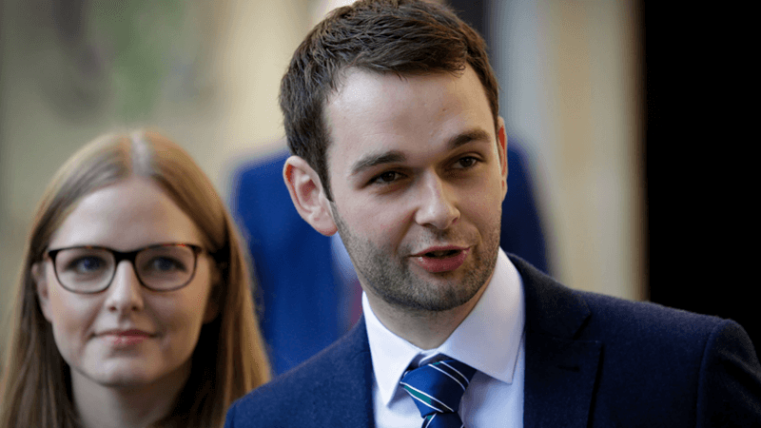
The legal representatives of a Northern Irish Bakery will intervene in the ‘Support Gay Marriage’ wedding cake case as the original complainant is taking the UK to the European Court of Human Rights.
In 2018, the UK Supreme Court upheld the fundamental right to freedom of conscience of Ashers Baking Company after a lengthy lawsuit for refusing to produce a cake promoting a message contrary to their deeply held Christian beliefs about marriage. ADF International seeks to intervene in Lee v UK to highlight the international legal protections which exist and the way similar cases have been approached in other countries.
“Nobody should be forced to act against their deeply held beliefs. The right to freedom of religion and conscience must contain the right to act accordingly, including in a professional setting. Personal beliefs and conscience influence all areas of a person’s life and are not simply laid down in a professional setting. In its judgment in 2018 the UK Supreme Court rightly upheld the conscience rights of service providers,” said Lorcán Price, Legal Counsel for ADF International in Strasbourg.
“The reopening of churches must be implemented by civil authorities in dialogue with ecclesial institutions”, states Fr. Barrios Prieto, General Secretary of COMECE. He was expressing a widespread feeling within the Catholic Church in many EU Member States.
COMECE, the Commission of the Bishops’ Conferences of the European Union, is made up of Bishops delegated by the Catholic Bishops’ Conferences of the 27 Member States of the European Union.
“Freedom of religion, including freedom of worship, is a fundamental right and a real necessity for many people – states Fr. Barrios Prieto. “The reopening of churches, in compliance with the rules of sanitary caution, must be implemented by civil authorities in a clear and non-arbitrary way, in full respect of and in dialogue with ecclesial institutions”, continues the COMECE General Secretary.
The ‘Joint European Roadmap towards lifting COVID-19 containment measures’ recently published by the EU Commission lacks any explicit mention of religious services. “This is disappointing – states Fr. Barrios Prieto – as it neglects the key role of religion in European societies”.
COMECE reiterates that religion is not a merely private issue, it also has a public and collective dimension, as clearly expressed in all main human right texts, including the EU Charter. The aggressive approach of certain secularist actors against the role of religion in the public square may have contributed to its marginalisation in the context of the current crisis.

New research adds to the growing body of evidence that sex differences account for variations in children’s academic trajectories.
“Overall sex difference in the pattern of adolescents’ achievement and academic attitudes is relatively large and similar across countries,” wrote Gijsbert Stoeta and David C. Geary in the July-August 2020 edition of the journal Intelligence.
Using academic ability and attitudes data from over 50 developed countries, they found that the sex of 15 and 16 year olds students can be reliably predicted, indicating a common (universal) sex-specific component.
Specifically, they found the sex of 69% of students can be correctly classified using this approach, corresponding to a large effect. Moreover, the universal component of these sex differences was found to be stronger in countries with relative income equality and women’s participation in the labour force and politics.
“We conclude that patterns in academic sex differences are larger than hitherto thought and appear to become stronger when societies have more socioeconomic equality”.
In the paper, they explore reasons why this may be the case and possible implications.

Abortion regulations introduced in Northern Ireland remain in place despite a previous report in the Irish News that they had been withdrawn before a crucial Westminster vote.
The Northern Ireland Office (NIO) said they are being ‘remade’, which means introducing the same regulations back into parliament at a future date. This allow for the amending of some typographical errors, but it does not allow for any significant changes.
An NIO spokeswoman said in a statement: “Given the unprecedented situation created by the Covid-19 pandemic and the impact this has had on parliamentary proceedings, we intend to re-make these regulations on Monday May 11, giving parliament an additional 28 sitting days to consider them”.
It is understood the ‘remaking’ will ensure that the regulations will apply continuously, and has no effect on the provision of abortion services in Northern Ireland.
Grainne Teggart, Amnesty International’s Northern Ireland campaign manager, said: “The minor technical issue identified with the regulations does not change anything – abortion remains legal and can be lawfully carried out in line with the current regulations.
Aontú’s councillor for Foyle, Dr Anne McCloskey, criticised the relentless push to force through the regulations. She said it was “abhorrent that the British parliament in conjunction with Sinn Féin and the SDLP leadership would attempt to railroad through regulations”.
“The message is still not getting through to the SDLP, Sinn Féin, and the British Government – only the people of the north of Ireland have a right to decide this law. This is a devolved issue. London has no right to impose this extreme regime on the north against the wishes of the people of the north,” she said.