
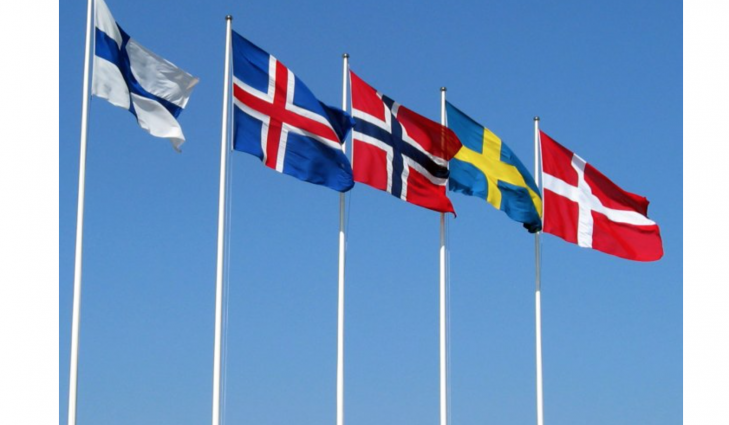
Finland is the world’s happiest nation for the third year running, experts at the United Nation have declared.
Researchers for the World Happiness Report asked people in 156 countries to evaluate their own levels of happiness, and took into account measures such as GDP, social support, personal freedom and levels of corruption to give each nation a happiness score.
Ireland has dropped to 16th place on the latest list, down two spots on the previous list.
As in each of the previous seven reports, Nordic states dominated the top ten, along with countries such as Switzerland, New Zealand and Austria.
Luxembourg also edged into the tenth spot for the first time this year.
The happiest countries are those “where people feel a sense of belonging, where they trust and enjoy each other and their shared institutions,” John Helliwell, one of the report’s authors, said in a statement. Issues like family breakdown are not included.
“There is also more resilience, because shared trust reduces the burden of hardships, and thereby lessens the inequality of well-being”, said Helliwell.
The Bishop of Elphin has told Ocean FM that he and other bishops of the Tuam province are preparing a plan to enable public mass to safely resume in churches before the 20th of July.
Under the government’s roadmap of phased re-openings, restrictions on public worship won’t be lifted until the third week in July.
Kevin Doran says any earlier opening would be contingent on approval from the public health authorities.
Bishop Doran says the size of congregations would have to be reduced in size – and signalled that some parish may consider staggering mass attendances by townland or area over the course of a weekend, to enable all parishioners attend church again.
He stressed that parishes will be relying on members of their congregations to assist with stewarding and cleaning, as churches begin to re-open.

A large majority of people believe the Covid-19 pandemic has made the public rethink their attitudes toward the dying, a new survey by the Irish Hospice Foundation has found.
The poll by market research firm Behaviour & Attitudes found that 68 per cent of people felt that the virus had made people rethink how it deals with dying, death and bereavement.
Chief Executive of the Irish Hospice Foundation, Sharon Foley said: “We know from our work over 30 years that Irish people want a society where death and bereavement is openly talked about and not hidden away, where people can die with dignity and that supports and services are in place for end of life and for loved ones who are bereaved”.
The research also showed the significant impact of lockdown measures restricting the numbers at funerals. 89% of people said that being with extended family and friends is key to grieving.
Ms Foley added: “We know that grieving in isolation has resulted in doubtless suffering for many individuals and families. That is why we have written to the National Public Health Emergency Team calling on them to increase the number of people allowed to attend funerals while maintaining social distancing and other public health measures.”
In addition the charity has called for “a national response” in the wake of the pandemic and for the next government to develop a new “whole of government strategy” to “end of life care.”
Among the proposals in a seven-point policy document published by the charity is a suggestion that end of life and palliative care services be set up in nursing homes, the sector worst hit by the pandemic, and that people be allowed to die at home or their place of preference.
https://hospicefoundation.ie/irish-rethink-death-and-bereavement-post-covid-19/
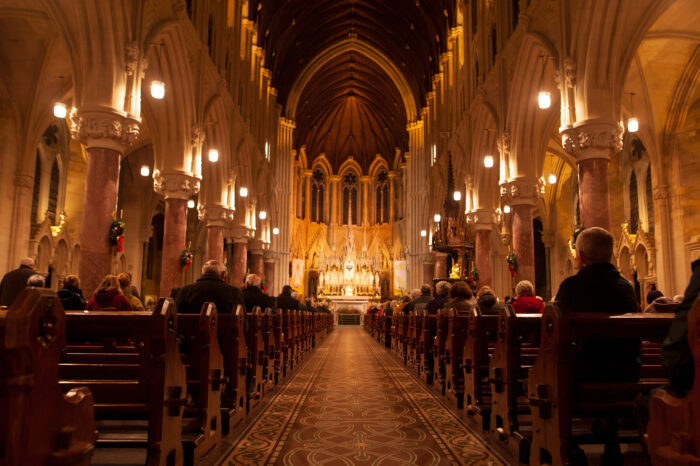
In Rome on Monday tears were shed as people returned to mass for the first time since lockdown.
One woman told Rome Reports that it was a moment of great joy when she heard she could go to church and receive the sacrament. Another expressed her happiness at being able to “return to church and participate at Mass.”
While mass attendance is now allowed, stringent health safety measures could prove frustrating for some.
“Yesterday, I was struck when I returned and saw the division in the pews. It hurt to see that”, said one woman.
Parish volunteers must ensure there aren’t too many people inside the church at once. Hand sanitiser must be provided at the entrance. If the building allows, the entrance and exit doors must be different. Parish priests have put markers on the pews to avoid filling them completely and to guarantee safety distances are respected.
Holy water is no longer available, and the sign of peace is no longer given. It is recommended that priests distribute communion wearing a mask and gloves, and that the church be cleaned thoroughly as often as possible. The military is helping out in some Roman parishes. Other parishes have hired specialized cleaning companies to prevent damaging works of art.
The Vatican also fulfilled its responsibility, disinfecting the basilica before reopening. It also placed warnings in the square to avoid breaking social distancing norms. Air traffic is practically nonexistent, as are tourists, leaving Rome to the Romans. For now, they’re the only ones who will be able to visit or pray in the basilica. That’s because in Italy, people won’t be allowed to travel to different regions until June.
The Highest Court in France has ordered the Government to lift the ban on public worship.
The ban had been imposed in the Covid-19 lockdown in March, and remained in place when some restrictions were eased last week.
In a judgement on Monday, the Council of State said the ban is no longer proportionate, and now represents a “serious infringement” of freedom of religion
It has given the French Prime Minister, Edouard Philippe, eight days, starting on Monday, to lift the prohibition.
At the end of April, the French Catholic Bishops had expressed their displeasure when it was announced that churches were to remain closed for public mass until June 2nd.
“Honestly, we are extremely disappointed,” Paris Archbishop Michel Aupetit said. “They don’t trust us. Why can markets, little museums and mediatheques open up and churches can’t? That doesn’t make sense.”
Bishop Matthieu Rougé from Nanterre had said “The Catholic Church in France wants a responsible ecclesial ease of lockdown, at the pace of the rest of the society, and we presented a very rigorous plan in terms of distance between the faithful inside churches, at the entrance and exit, during processions, proposing liturgical adaptations and the possibility of wearing masks”
He lamented that the Prime Minister, Edouard Philippe, made the announcement without even having explicitly responded to the bishops’ proposed plan for Phase 2.
He suspected “an anticlerical bias in general, maybe anti-Catholic in particular”.
A poll of Catholics in the Campania region of Italy found the majority supportive of the Government’s restrictions on religion during the first phase of the Covid19 lockdown in March. Public worship with limits on number returned in Italy on Monday.
4,032 responded to a poll conducted by a research team from three universities in Benevento, Caserta and Naples.
Regarding the Government’s limitations on religious practice, 33% considered it an expression of the right collaboration of State and Church; 26% thought it a necessary measure that the government had to adopt; and 20% said it was a fair limitation of a person’s rights, as inspired by personal and social responsibility. On the other hand, 8% said it was a violation of religious freedom; 3% an abuse of Government; while 6% said it was the responsibility of bishops and priests who were not able to defend their reasons.
Regarding specific limitations, 49% said the ban on funerals was the one they agreed with the least. Next was not being able to attend mass on Easter which registered with 13%.
Regarding what they missed the most, 32% indicated the lack of holy communion; ahead of 29% who pointed to the lack of religious comforts and a funeral if they or a relative were to die.
Children, those under the age of 18 years, were the confirmed or suspected perpetrators in almost 20 per cent of all sexual crimes reported to the Garda last year, according to the Irish Times.
Newly-released figures also show 83 per cent of the complainants of the total number of sexual crimes reported to the Garda in 2019, were alleging they had been sexually abused when they were children.
81.1% of victims of sexual violence recorded in 2019 were females, while 18.9% were males. In addition, 98 per cent of the perpetrators in sexual offences are male, according to the new set of crime data released by the Central Statistics Office (CSO).
Some of the information released on Friday relates to 2019 and some to 2018.
Of the sex crimes that were reported to the Garda in 2019, 62 per cent of the offences had occurred within a one-year period before they were reported.
24 per cent occurred 10 years or more before the victims went to the Garda.

A hospital has secured interim High Court orders allowing it not to resuscitate a brain-injured woman, aged in her 50s, with “a litany of conditions” and a “very poor” prognosis.
The woman is tube-fed, non-ambulant, sleeps some 22 hours daily and is doubly incontinent.
David Leahy BL said it was an application to permit clinicians not to ventilate or resuscitate the woman should she suffer cardiac arrest as they considered that would further deteriorate her already very compromised position, was not in her best interests and would not alter her prognosis.
The hospital’s treatment plan involved what was “likely to be end of life care” with ward-based management, conventional oxygen therapy and no ICU admission or CPR, he outlined.
The woman’s family had expressed opposition to that plan and had argued she should be resuscitated if required but there was a more recent indication their position may alter and they had sought more information on the hospital’s proposals, he said.
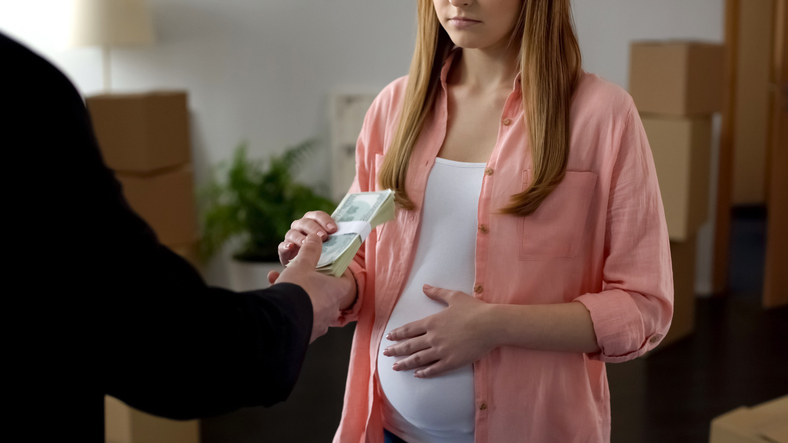
The Government should prioritise the legalisation of surrogacy in this country so couples who have struggled to have a baby no longer need to travel abroad to access the service, a leading international campaigner on surrogacy has said.
Sam Everingham, founder of the Growing Families charity, says the legal uncertainty around surrogacy in Ireland should be “urgently addressed” and called for legislation to be introduced.
His comments follow reports that dozens of babies born to surrogate mothers in the Ukraine were being cared for by nurses in hotels and hospitals because the individuals and couples who commissioned them cannot enter the country to collect them due to Covid-19 border restrictions.
The call comes as Irish families due to travel to Ukraine in the coming days for the birth of their child via surrogacy are unable to secure permission to enter because of the covid19 lockdown.
The practice of foreigners using the Ukraine as an international surrogacy destination as come under fire as 51 babies born to surrogate mothers lay uncollected due to coronavirus lockdown restrictions. Clients from all over the world including the United States, China, Britain, Sweden and Ireland commission women in the Ukraine to carry pregnancies for them, often using eggs harvested from other Ukrainian women.
Now, however, they find themselves unable to travel to the country and so the babies they commissioned remain unclaimed.
A fertility company, BioTexCom, is maintaining care of the newborns at a location in Kiev called the Hotel Venice which is surrounded by a high fence with barbed wire. The building is usually where parents stay while picking up their babies. At BioTexCom, a surrogate mother receives about $15,000-$17,000 (€13,600-€15,400).
The company released footage of the babies to spur the Government into easing restrictions on the prospective parents. It had the opposite effect however.
Lyudmyla Denisova, the human rights ombudsman for the Ukrainian parliament, said the video showed the country had a “massive and systemic” surrogacy industry where babies were advertised as a “high quality product”.
She suggested looking into changing the law to allow only Ukrainian parents to use such services.
Separately, the Ukraine’s Catholic Bishops called the practice a trampling of human dignity and urged the Ukrainian authorities “to condemn and ban this shameful phenomenon”.
“In recent days, we have witnessed a video posted on the BioTexCom clinic page from the Venice Hotel in Kyiv, which shows an improvised children’s room and 46 crying babies, deprived of maternal touch, parental warmth, selfless care, much-needed love, but are seen as a purchased product for which the buyer did not come. Such a demonstration of contempt for the human person and his dignity is unacceptable,” they wrote.