
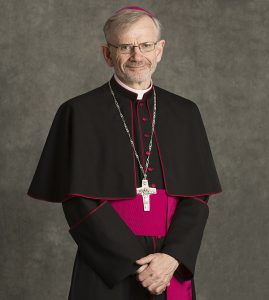
The home of the Bishop of Raphoe was broken into in the early hours of Easter Sunday morning.
A large number of windows and doors had been smashed on the premises, it is alleged.
Gardaí arrived at the house after reports of a break-in just before 3am.
Inside the property, gardaí also allegedly found damage to the building and contents, including a number of religious statues.
The parochial house is adjacent to St Eunan’s Cathedral from where RTÉ has been broadcasting Mass during the coronavirus crisis.
A 24-year-old man was arrested at the scene by gardaí and was taken to Letterkenny garda station.
Nobody was injured in the break-in and it is not believed that anything was stolen.
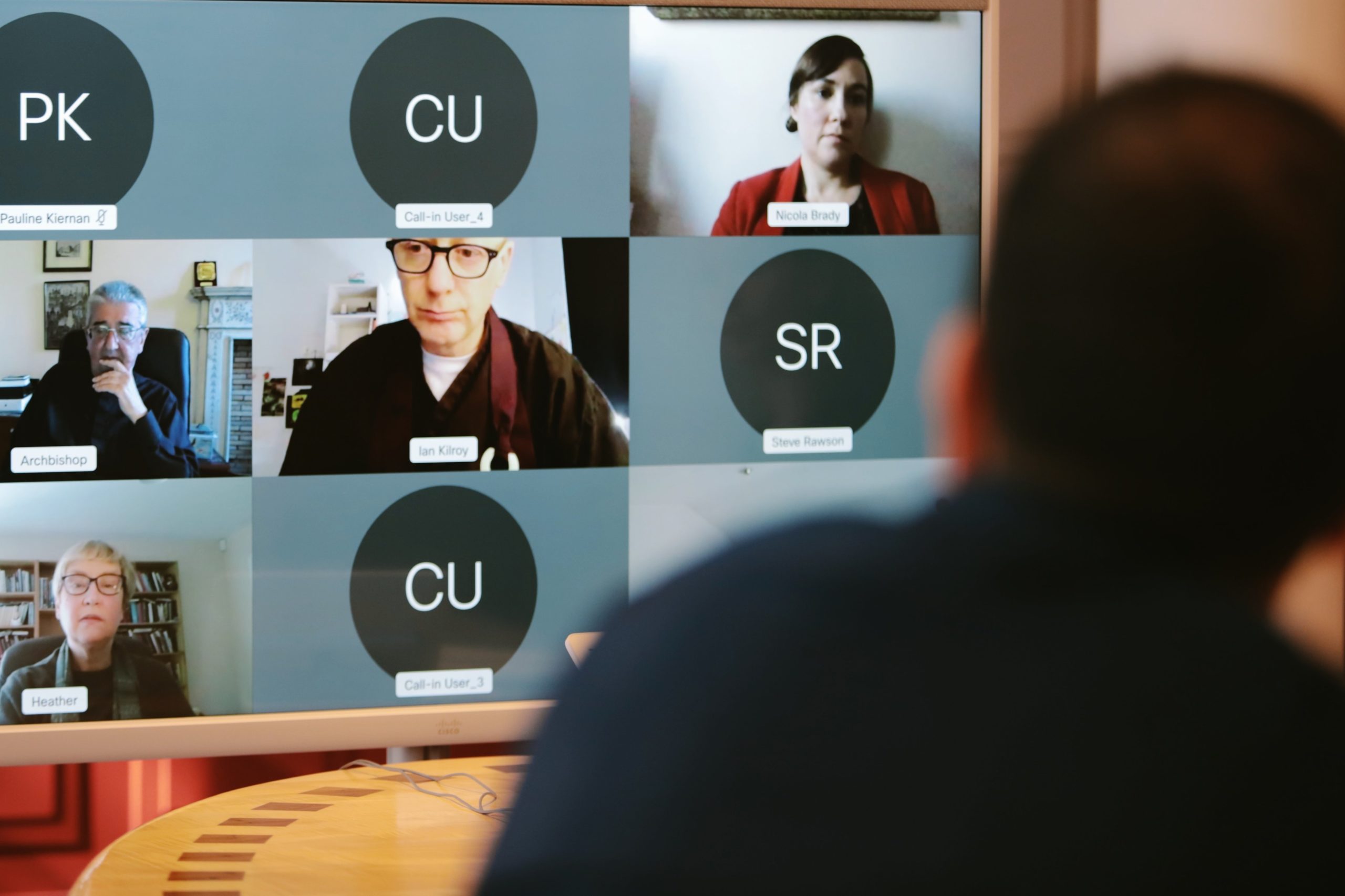
Religious leaders from a number of faiths discussed the Covid-19 emergency with Taoiseach Leo Varadkar on a conference call on Wednesday.
Mr Varadkar sought the views of religious leaders on how communities and the most vulnerable can be cared for.
They were also due to discuss the changes brought in to reflect current public health guidelines for funerals and burials, and the impact of this on families at this difficult time.
It is understood that Mr Varadkar thanked those in religious life for their contribution throughout the emergency so far, especially as some are prevented from doing all they would like because of age or health.
After the meeting the Taoiseach tweeted: “At times of trial, many of us turn to faith for meaning and for comfort. Was a real privilege to talk to religious and spiritual leaders today and thank them their contribution during this Emergency”.
The discussion was part of the Structured Dialogue initiated by the Taoiseach following the visit by Pope Francis in 2018.
It is designed to foster a new covenant for the 21st century between State and faith communities, recognising their place in society and the valuable contribution they make to communities.

The chief social officer for Northern Ireland has insisted that it would be wrong for any hospital or care home staff to put up “do not resuscitate” (DNR) notices for patients without consulting their families first.
Sean Holland made his comment at the Stormont health committee on Thursday after a number of politicians complained that some families were being pressurised to agree to no resuscitation stipulations for their loved ones in Northern Ireland hospitals and care homes.
DUP North Down MLA Alex Easton said on Thursday morning he received an email from the family of a woman at the Ulster Hospital in east Belfast who said a DNR notice was put against that patient even though she was “conscious and she was not told this was happening”.
Mr Easton said her family was not contacted about the DNR notice. He asked the chief social officer Mr Holland for assurance “that people’s lives are not being decided without consultation with their loved ones because if that is the case that it totally unacceptable”.
Sinn Féin Assembly member Martina Anderson who referred to accounts of such action happening at some care homes and said such reports were “deeply worrying, against clinical guidance and are simply unacceptable”.
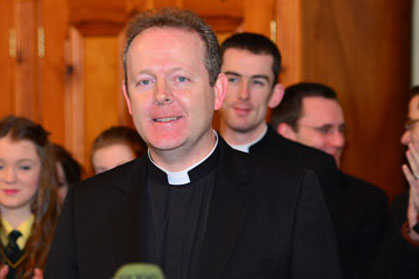
The coronavirus pandemic had struck at the very heart of the ministry of priests, curtailing their normal outreach to the sick, the elderly and the dying, the Catholic Archbishop of Armagh, Eamon Martin, has said.
The Archbishop was speaking on Thursday morning at Holy Thursday Chrism Mass, commemorating the founding of the priesthood at the last supper, in the Cathedral of St Patrick and St Colman in Newry, Co Down.
“Perhaps saddest of all, it has cruelly restricted our capacity to draw close to families who are bereaved,” he said.
He also said it had “driven our congregations indoors, forced us to stay apart, prevented us from having the public celebration of Mass and hindered us from offering the healing sacraments of reconciliation and anointing in the normal manner.
Nonetheless, he said “Our calling as priests remains strong in this crisis: to be with our people, to encourage them, to bring them the hope and consolation”.
But he added that “there will be more sacrifices for our people and ourselves to make before this Covid-19 crisis is all over”.
Meanwhile, Easter liturgies will take place behind closed doors across Ireland due to the coronavirus restrictions.
In addition, many clergy are cocooning. The Dublin Catholic archdiocese has almost 200 priests unavailable as they are over 70 and cocooning. In Kildare and Leighlin, 58 priests are cocooning, with 47 in active ministry. In Killaloe diocese 44 of its 93 priests are in active ministry with 49 cocooned.
Women seeking an abortion during the coronavirus outbreak will not need to visit a GP in most cases, under guidelines issued by the Department of Health on Tuesday evening. The easing of restrictions are meant to apply only for the duration of the Covid-19 emergency.
Instead of face to face meetings with their GP, women seeking abortions will instead consult with their GPs on the phone or via video chat.
Responding to the new Department of Health guidelines, Pro Life Campaign spokesperson Eilís Mulroy said it is “utterly reckless” that Minister Simon Harris has approved these new guidelines. “When ushering in his new abortion law in 2018, he repeatedly gave assurances about how safe his new abortion law would be for women, citing the two visits that the pregnant woman would have to make to her GP before any abortion took place. But in the blink of an eye, the Minister has done a complete about turn in order to facilitate abortions taking place during the Covid-19 lockdown. Abortion is never safe for the baby as it directly ends his or her life, but now we have a situation where women’s lives are also being put at risk”.
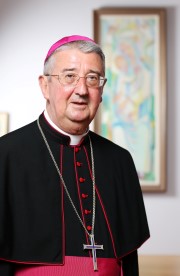
The Archbishop of Dublin, Diarmuid Martin, turned 75 on Wednesday and was expected to mark the day by offering his formal resignation to Pope Francis. According to the Catholic Church’s Code of Canon Law, diocesan bishops are required to offer their resignations to the pope when they turn 75.
However, it does not signal an automatic or immediate retirement.
In a message of hope marking the beginning of Holy Week last weekend, Archbishop Martin said it is the first year in his 50 years of ministry, that he will be unable to participate in or lead Easter services due to restrictions around the coronavirus.
Born in Dublin in 1945, Archbishop Martin was ordained a priest on 25 May 1969. He succeeded Cardinal Desmond Connell as Archbishop of Dublin in April 2004.
The oldest Catholic diocesan school on the island is being repurposed to temporarily provide parking, changing and showering facilities for staff at a Belfast hospital during the covid19 emergency.
St Malachy’s College, which was opened in 1833, stands next to the Mater Hospital which is the main hub for coronavirus patients in Belfast.
Two holes are being cut in a wall that separates the buildings so that medical staff may freely move between the two without encountering members of the public.
One of the doorways will be used for staff to enter the hospital after putting on Personal Protective Equipment.
The other will be used at the end of their shifts to enter the school to shower and change before going home.
The College principal Paul McBride said the move will enable staff to get suited and booted before going into work and then get cleaned up and changed so they are infection-free before getting into their cars and going home.
A parish priest and spokesman for the Association of Catholic Priests, has called on the Government to be more flexible in its application of the Covid-19 Pandemic Unemployment Payment.
Priests are eligible for the payment if they are under 66 and lost their employment due to the pandemic.
However, Fr Collins said this would mean dioceses would have to make priests redundant, which will not happen as they are carrying out funerals and tending to the sick, as well as conducting Masses online.
Fr John Collins told the Irish Independent that he is self-employed and pays his taxes.
“If I get into difficulties, I should be entitled to whatever supports are there for the self-employed,” he said.
A curate in the Archdiocese of Dublin earns around €23,000 per year, while parish priests earn up to €27,000.
Priests often supplement their incomes with stipends from weddings and other occasions which have been cancelled in recent weeks because of the Covid-19 crisis.
Fr Collins warned the drop in church basket collections will begin to be felt from May and June onwards. The collections go to the diocesan common fund that pays for priests’ salaries among other things.
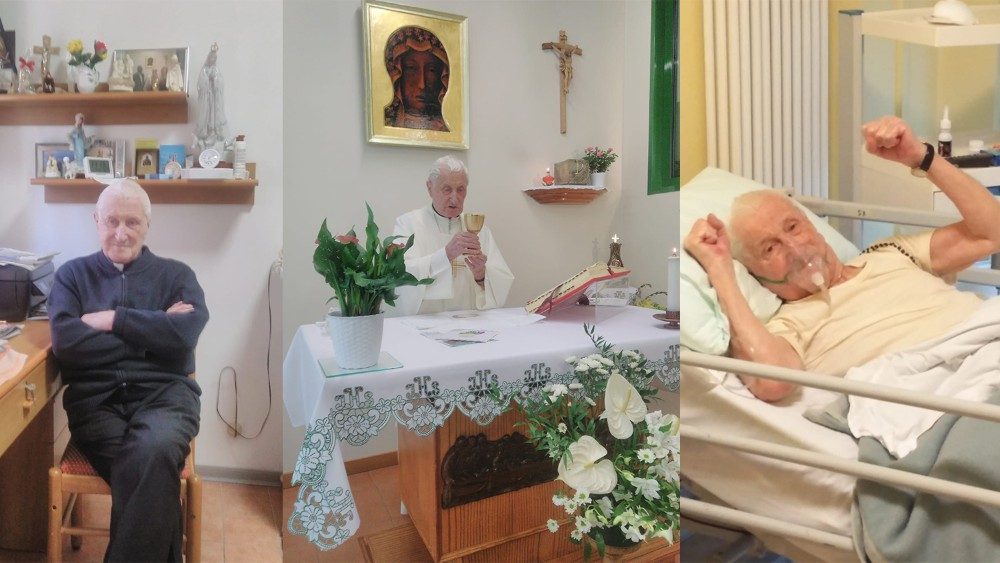
In Italy, dozens of priests have succumbed to the coronavirus as they tend to the dying, trying to offer comfort in the absence of loved ones, who are not allowed to say a final farewell for fear of being infected.
“They die alone,” said Aquilino Apassiti (84), a priest from Bergamo who spent 25 years as a missionary in the jungles of Brazil and now works in a chapel attached to the city’s hospital. “In the Amazon, I dealt with leprosy and malaria, but I have never seen scenes as shocking as those of recent weeks,” he said.
The pandemic in Italy has taken a terrible toll on medical staff, with more than 10,000 infected, and nearly 70 doctors losing their lives. But what has received less attention is the impact it has had on clergy, killing more than 90 priests, as well as dozens of missionaries, monks and nuns. Many worked in hospitals, prisons and care homes, and were particularly exposed.
“The deaths of doctors get our attention, but there are many priests who have fallen victim while working as well,” said Alessandro Rondoni, spokesperson for the Archdiocese of Bologna.
The coronavirus outbreak has led to almost half of Dublin’s Catholic priests being confined to their homes as they are aged over 70, Archbishop Diarmuid Martin has said.
The most recent figures showed that 413 priests and 22 deacons were serving in Dublin. Dr Martin said about 200 of these were in isolation following the Government’s direction that people aged 70 and over stay indoors to limit their risk of infection – a process called cocooning.
The archbishop said this scenario was “placing a great strain on those who remain active in ministry” and that priests were not immune to “the fears and anxieties” many are feeling at the moment and “deserve our support”.
The 74-year-old said he was among the clerics cocooning as a result of the pandemic.