

One of Asia’s top prelates has laid the blame for the coronavirus on the doorstep of China’s communist government, saying it has the “primary responsibility” for the pandemic which has put much of the world under lockdown.
“The Chinese regime led by the all-powerful [Chinese President] Xi Jinping and the Chinese Communist Party (CCP) – not its people – owes us all an apology, and compensation for the destruction it has caused,” said Myanmar Cardinal Charles Bo, the president of the Federation of Asian Bishops’ Conferences [FABC].
“At a minimum it should write off the debts of other countries, to cover the cost of COVID-19. For the sake of our common humanity, we must not be afraid to hold this regime to account,” the cardinal continued.
“International voices are raising against the negligent attitude showed by China, especially its despotic Chinese Communist Party (CCP) led by its strong man Xi,” Bo said, citing the March 29 article in The Telegraph accusing China of hiding the true scale of the coronavirus pandemic.
“An epidemiological model at the University of Southampton found that had China acted responsibly just one, two or three weeks more quickly, the number affected by virus would have been cut by 66 percent, 86 percent and 95 percent respectively. Its failure has unleashed a global contagion killing thousands,” the cardinal claimed.

The law was condemned by the state’s Catholic leaders.
“The action by the legislature and governor to legalize monetary contracts for surrogate motherhood stands in stark contrast to most other democratic nations across the globe,” Kathleen Gallagher, director of pro-life activities for the New York State Catholic Conference said in a statement Friday.
“[Other countries] have outlawed the practice because of the exploitation of women and commodification of children that inevitably results from the profit-driven surrogacy industry,” she said.
New York had been one of only four states where commercial surrogacy had been expressly prohibited by law, and contracts for non-commercial surrogacy were legally unenforceable.
The law includes some robust protections for surrogate mothers who carry and gestate babies for nine months on behalf of their intending parent clients, but surrogacy advocates balked at those measures, calling them “complicating factors”. A surrogate must be at least 21 and the intended parents — those who will raise the child — must pay for legal counsel for their surrogate, plus for a surrogate’s health and life insurance during the pregnancy and a year after their surrogate gives birth.
Melissa Brisman, a reproductive lawyer in New Jersey who runs one of the largest gestational surrogacy agencies in the United States said “It’s a great step forward, but there are some complicating factors”. Surrogacy already comes with an eye-popping price tag of $80,000 to $250,000, which includes a minimum compensation of $35,000 for the surrogate, Brisman said. Adding a year’s worth of health and life insurance afterward would raise that price, she said.
New York’s long-held resistance stems from a tumultuous surrogacy battle in neighboring New Jersey, known as the Baby M case. In 1985, a woman who was struggling financially, Mary Beth Whitehead, agreed to be a surrogate and be inseminated with sperm from William Stern, a man whose wife had multiple sclerosis, for $10,000.
When the girl, referred to as Baby M in court papers, was born, Whitehead changed her mind and decided she wanted to give back the money and keep the baby — half of whose DNA was hers. A protracted legal battle followed and the child was eventually given to the Sterns, with the New Jersey Supreme Court ruling in 1988 that paying women to bear children was illegal and “potentially degrading.”
Since then, nearly all surrogacies in America have been gestational, meaning they use a donor egg — either from the woman who will raise the child or from an outside donor — rather than the carrier’s egg (called traditional surrogacy), to avoid a similar legal quagmire.
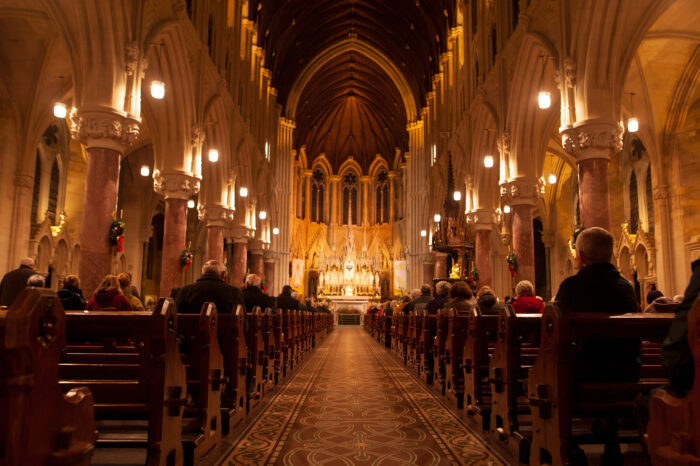
RTE started broadcasting the daily liturgy after the cancellation of public masses due to the coronavirus.
The mass is followed by a short religious message from representatives of other churches and faith communities.
Roger Childs told Spirit Radio that the figures show the desire among people for faith-based programming at this time.
“Just at a time when many people are feeling most isolated, anxious and in need of some encouragement and community, they are least able to get those things because their own churches, and not just churches, but synagogues, temples, gudwaras, and mosques, are prevented from physical gathering”. He said they started the daily mass and multi-faith reflective slot to meet that need.
“65,000 people is an awful lot of people, so clearly it is fulfilling a need and I am delighted if people are finding something of value and succour and sustenance in that”, he added.

Many dioceses are continuing to hold funeral masses while individual priests are hearing confessions in person.
Last week, the diocese of Down and Connor, and Clogher, both cancelled funeral masses, with the latter also cancelling weddings, baptisms and individual confession.
On Tuesday, however, the Irish Government said up to 10 members of the immediate family of a deceased person can attend funerals, burials and cremations, once social distancing protocols are followed. This applies to all funerals, including those who have died with Covid-19 symptoms.
The six West of Ireland Catholic bishops decided that funeral Masses can continue but in accordance with the Government guidelines, and with younger priests designated to take over the duties of clerics over the age of 70.
Meanwhile, many individual priests are continuing to hear confessions. In Dublin, the Carmelites in Clarendon street and Whitefriar Street, and the Domincans in St Saviours are hearing confession by appointment. The latter have also advertised three hours of confession on Saturday afternoon.

The leaders of Ireland’s main Churches, together with other denominations and Christian organisations, have issued a call to prayer on Palm Sunday, 5 April from 3pm-4pm.
In a joint statement today, following a video conference, the leaders of the Church of Ireland, Methodist Church in Ireland, Roman Catholic Church, Presbyterian Church in Ireland and the Irish Council of Churches, also paid tribute to everyone in the health and social care services and those in the frontline, for their courage in the battle against the Coronavirus (COVID-19) pandemic.
“As Christians, we believe that prayer sustains our life as followers of Christ. In the midst of this global pandemic, we turn to Jesus in our time of need. As Church leaders, we join together in calling all our people to pray. As we begin the journey through Holy Week towards Good Friday and Easter, we invite all Christians from across the whole Church to join in prayer on Palm Sunday, 5 April, from 3pm to 4pm – remembering that we should only gather to pray within our own households, in line with government advice,” they said.
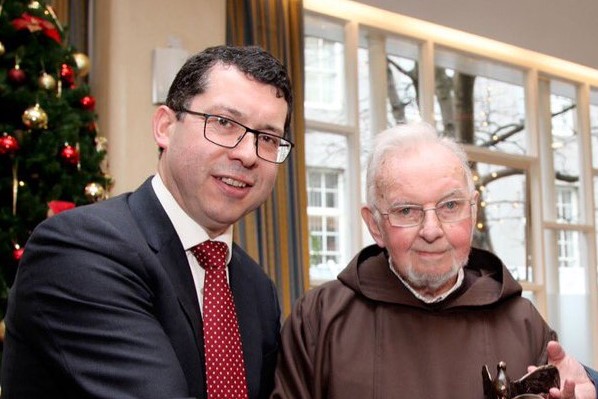
“I’m honoured to be re-elected in this way,” Mullen said at his home in Galway after the result was declared.

Denying the elderly access to intensive care units simply because of their age would be “discriminatory, ageist and morally wrong”, a coalition of UK charities for older people has warned.
Decisions over which coronavirus patients receive priority treatment, they say, cannot “be blanket ones, based on age alone or with a person’s age given undue weight as against other factors, such as their usual state of health and capacity to benefit from treatment”.
Governments across the world are developing ethical guidelines and decision tools to help their doctors to prioritise patients for hospital admission and treatment during the coronavirus pandemic.
The signatories of the open letter said that assessments should continue to be made on a case-by-case basis through honest discussion with the patient, their family and relevant professionals.
The open letter comes days after the National Institute for Health and Care Excellence (NICE) issued an “algorithm” to help doctors decide who should be admitted to critical care and who should not. It does not categorise potential patients by age but instead asks doctors to score patients on a nine-point “clinical frailty scale” [CFS].
The scale ranks patients from one [very fit] to nine [terminally ill] and divides patients at a score of five, [mildly frail].
Those with a score of less than five who would like critical care are considered well enough to benefit, subject to a review of any underlying conditions and the severity of their illness.
Those scoring over five are put through a process where doctors must decide if critical care is “considered appropriate” before proceeding.
Robert Clarke, Deputy Director of ADF International, welcomed the clarification and said the RCP had “taken a step in the right direction and pushed back against those who have sought to misrepresent and instrumentalise the 2019 vote to push for a change in UK law”.
“The detrimental effects of euthanasia on individuals and society have become very clear in countries that have already gone down this path. There is nothing progressive about a society that refuses to care for its most vulnerable members. Given what the RCP represents, it would have been disappointing to see the organisation abandon its established opposition to euthanasia – especially when the change is promoted by a small minority with political motives,” he said.
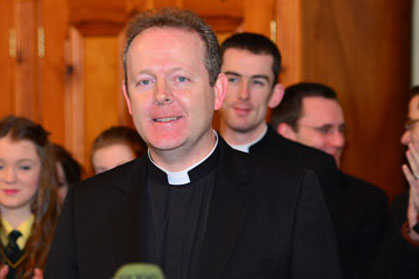
The Catholic Bishops of Northern Ireland are “saddened and dismayed” at the implementation of a radical abortion regime in the North, the regulations for which came into effect on Tuesday. It is even more far-reaching than the law in the rest of the UK where there is one abortion for every three births.
In a statement released yesterday, they say the regulations “go far beyond what is legally required by the Northern Ireland Act (2019), (‘the Act’), and utterly ignore the views of many citizens – women and men – who responded to the consultation exercise last December”.
They add that their “implementation will facilitate one of the most liberal abortion regimes anywhere in the world”.
“During the pandemic when so much is being done to protect lives, these regulations do not reflect the overwhelming will of most people in Northern Ireland to protect the life of every human being.”

The Porn industry’s leading website have given users in Italy, Spain and France free access to its premium service for a limited time in response to those countries strict national lockdowns. Pornhub’s premium service includes high-speed downloads, no ads, faster streaming, increased video quality and “discreet billing,” plus anytime cancellation.
Pornhub also announced that they would be donating a portion of their profits in March to help Italy during the coronavirus outbreak. According to the company, their numbers spiked after the offer of free premium content, and as of March 17 were up 11.6 percent.
Regarding Ireland specifically, figures obtained by the Sunday Independent show Pornhub reported an almost 20pc spike in searches from Irish people during the emergency, peaking on St Patrick’s Day. Searches containing the word ‘coronavirus’ and ‘porn’ on the site have also become 80pc more popular in the last 30 days, with Ireland being in the top three countries worldwide where those terms were searched.
One Sinn Fein Senator also encouraged the use of porn as an alternative to casual sexual encounters. “Social distancing applies to hook ups and sex. So explore other ways to satisfy your needs. Phone sex, cam-sex, reading erotica, watching porn or just plain old masturbation”, Senator Fintan Warfield wrote on twitter.
He also recommended advice from HIV Ireland whose patron is President Higgins and is funded by various State agencies and private bodies. While first recommending porn, they add: “If you continue to hook-up, consider reducing the number of guys you have sex with.” While underlining that the best thing to do would be “to consider a break from hooking-up”, they add: “we acknowledge that not all of us will be able or want to do so. In that situation consider all of the harm reduction tips above.”